Pilates Studio Membership Agreement: The Equipment Clauses That Survive EU Consumer Law
A pilates studio membership agreement in the EU cannot make a member responsible for their own injuries. The sentence most studios paste into their contract — “the member uses all equipment at their own risk and the studio accepts no liability for injury” — is unfair by law under the Unfair Contract Terms Directive (93/13/EEC), and a court will simply refuse to apply it. That leaves the studio with a piece of paper that looks like protection and provides none. What does hold up in a claim is duller: an induction record, equipment rules the member provably received, a damage clause tied to fault, and a health declaration collected with proper consent.
I have read a lot of these agreements while working with studios across Spain, Portugal, Italy and the Nordics. The pattern is always the same. A US template gets copied, translated badly, and signed without anyone reading the equipment section. Then a spring snaps, or a client falls off a carriage mid-class, and the insurer asks for documentation the studio never kept.
Why the American waiver does not travel
US fitness waivers work because many states let adults sign away their right to sue for ordinary negligence. EU consumer law goes the other way. Article 3(1) of Directive 93/13/EEC makes a term unfair when, contrary to good faith, it causes a significant imbalance in the parties’ rights to the consumer’s detriment. Annex point 1(a) then names one category outright: terms that exclude or limit the trader’s liability for death or personal injury caused by the trader’s own act or omission.
That is not a grey area. It is on the list of terms that may be regarded as unfair in every member state, and most have implemented it as always unfair, not sometimes. In Spain the route is Ley 7/1998 on general contract terms; in Germany it lands in § 307 and § 309 BGB; France uses the Code de la consommation. The wording differs, the outcome does not. The clause is void, and under Article 6(1) the rest of the contract survives without it.
Two consequences studios underestimate:
- A court can raise this on its own. The CJEU has repeatedly held that national courts must examine unfair terms ex officio. You cannot count on a member never complaining, or on the clause being read as “agreed” because it was signed.
- The exposure is regulatory, not just civil. Since the 2019 modernisation directive, member states must set maximum fines for widespread breaches at no less than 4% of annual turnover. Consumer authorities in Spain, Italy and France do run sweeps on fitness contracts.
There is also a commercial cost. An agreement stuffed with void clauses reads, to any lawyer or insurer, like a studio that never thought about risk. That is a bad first impression when you file a claim.
The four things that actually carry weight
None of these are disclaimers. They are evidence.
1. An induction record, not a signature line
Replace “member confirms they are competent to use the equipment” with a documented induction: 60 to 90 minutes, who ran it, which machines, which settings, which level the member was cleared for, and when it gets refreshed. Keep the paper or the digital record for as long as the membership plus the local limitation period.
In practice this is the single most useful document you own. When a member hurts their shoulder doing a move nobody taught them, the induction record shows what they were cleared to do. It does not eliminate liability, it repositions the argument.
2. Equipment rules the member provably received
Annex point 1(i) makes terms unfair when the consumer had no real opportunity to become acquainted with them before signing. A rules sheet stapled to the back of a PDF nobody opened does not count.
Put the machine rules in their own annex, hand it over as a separate document, date the version, and log the handover. Two pages is enough: which classes each level can book, no solo use unless inducted for unsupervised hours, maximum user weight per the manufacturer’s plate, no standing on the carriage without the jump board in place, report frayed straps and odd noises before the next class.
3. A damage clause with a fault test and a ceiling
This is where studios lose goodwill and, sometimes, cases. Annex point 1(e) treats as unfair any term requiring a consumer who fails an obligation to pay a “disproportionately high sum in compensation”. A flat €250 “equipment damage fee” per incident, with no assessment and no fault test, is exactly that.
What survives scrutiny:
- The member is liable for repair costs caused by misuse or negligence, not for wear.
- Normal wear is defined explicitly: spring fatigue, upholstery compression, rope fray, carriage wheel wear, cosmetic scuffs on the frame.
- The charge is the actual documented repair cost, capped at a stated figure, assessed in writing with photos and a parts quote before any invoice.
- The member gets the assessment and a right to dispute it.
Two sentences, a cap and a defined wear list do more than a page of warnings.
4. A health declaration with GDPR-grade consent
Health information is special category data under Article 9 GDPR. You need explicit consent, a stated purpose, a retention period and a named person responsible. “I agree to the terms and conditions” does not cover it, and a checkbox that bundles marketing consent with health data is worse than no consent at all.
The health declaration is not there to protect you from claims. It is there so you can decide which class levels a member can book, and so a physio referral has something to work from.
The clauses that keep ending up in court
| Clause as usually written | Why it fails | What to write instead |
|---|---|---|
| “Member uses all equipment at own risk; studio not liable for any injury” | Annex 1(a): liability for death or personal injury cannot be excluded | Delete it. Add an induction and supervision clause instead |
| “Studio may change prices, timetable or equipment at any time” | Annex 1(j) and 1(k): unilateral alteration without specified valid reason | Index-linked increase with a formula, 30 days’ notice, right to cancel without penalty |
| “Membership renews automatically for 12 months unless cancelled 60 days before” | Annex 1(h): auto-extension with an unreasonably early opt-out deadline | Rolling renewal, 30 days’ notice, reminder sent 45 days before |
| “Late cancellation charged at full class price, plus €15 admin” | Annex 1(e): disproportionate compensation | Charge the class credit only, with a stated cut-off (12 or 24 hours) |
| “Member pays €250 per damaged machine, no exceptions” | Annex 1(e) plus no fault test | Actual repair cost, capped, assessed in writing, wear excluded |
| “All disputes go to arbitration” | Annex 1(q): hindering the right to take legal action | Ordinary courts, or mediation offered as an option, not a condition |
| “Studio may substitute any reformer or accessory” | Annex 1(k) | Substitute of equivalent specification, member informed in advance |
None of this is exotic. It is the difference between a contract written to look tough and a contract written to be enforceable.
Cancellation, price rises and the 14-day trap
Two consumer-law mechanics catch studios that sell online, which since 2020 is most of them.
The withdrawal right. Directive 2011/83/EU gives consumers 14 days to withdraw from distance contracts, and that includes a class pack bought through your booking system or website. Article 16(a) removes the right for services once the service has been fully performed, but only if the consumer gave prior express consent and acknowledged that the right would be lost. If you did not tell them, Article 10(1) extends the withdrawal period by up to 12 months.
The practical fix is a tick box at checkout: express consent to start before the 14 days expire, plus acknowledgement that the right is lost once the pack is used. If someone withdraws after two classes, Article 14(3) lets you charge for the proportion delivered.
Price changes mid-term. A membership is a fixed-price contract. Raising it without an exit right is the classic Annex 1(l) problem. Index-linked clauses are defensible when the index is named, the formula is stated, notice is given, and the member can leave without penalty. “We may adjust prices at our discretion” is not.
Unsupervised hours change the agreement, not just the timetable
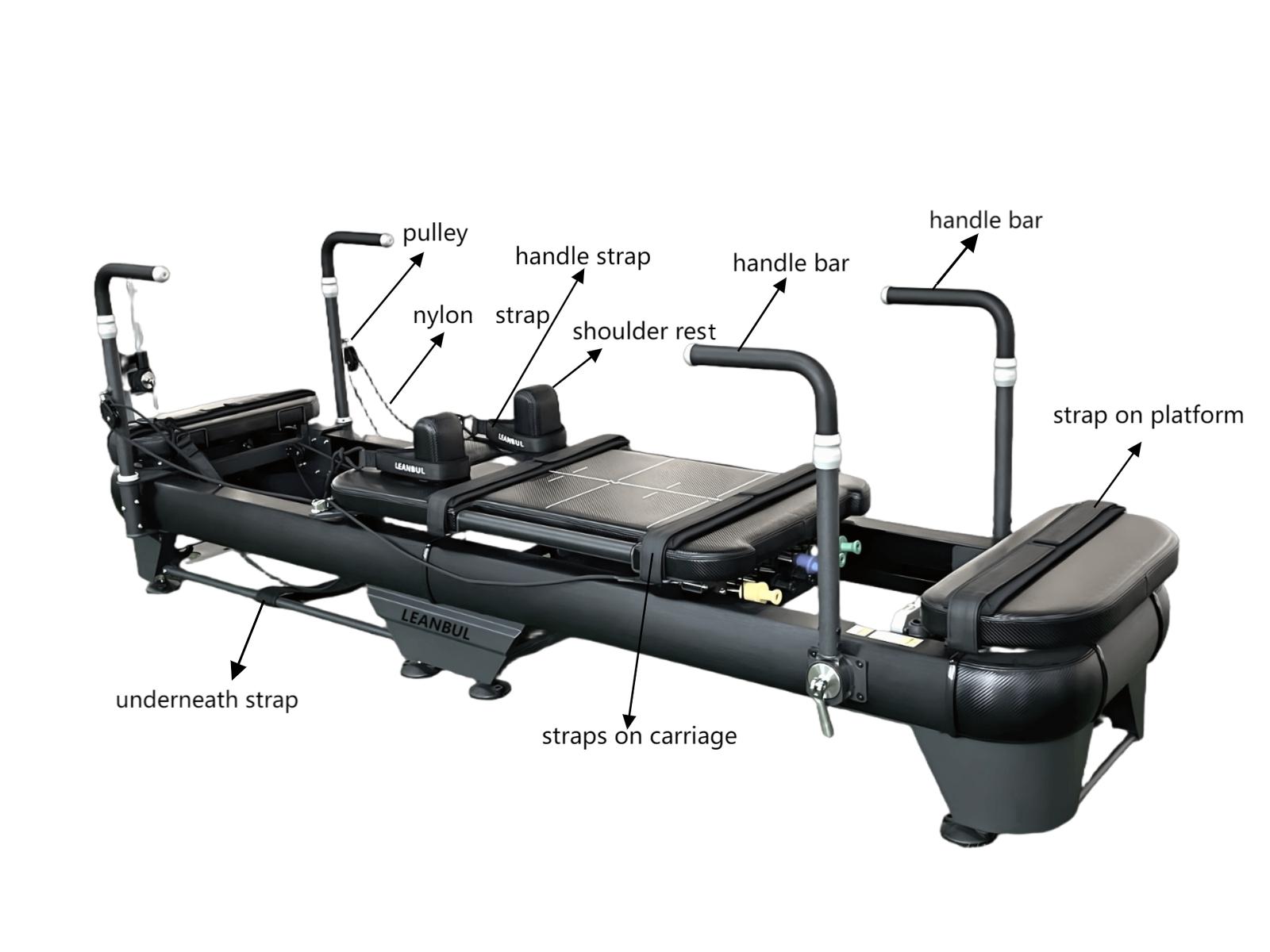
If you sell self-guided reformer sessions, the agreement is the control mechanism that keeps the setup defensible. EN ISO 20957-1:2024 defines Class S equipment as machines in studios or clubs where access and control is specifically regulated by the owner, which is exactly the argument you need if a member is training alone at 06:40.
That means the contract has to carry:
- The induction level required before a member can book unsupervised slots, and what each level unlocks.
- The duty to report a fault and stop using the machine — with the specific instruction (“tag it, message the studio number, use machine 3 instead”).
- Capacity rules, sign-in, and the emergency procedure posted in the room.
- Notice that the space is monitored, if it is, in language that satisfies GDPR transparency requirements.
Our longer piece on self-guided reformer pilates covers the operating protocol, and the downtime and red-tag process covers what happens the morning a machine fails.
Consumer or business? Write two templates
A studio member is a consumer. A physiotherapy clinic booking 20 hours a month, a hotel buying class blocks for guests, a company paying for staff sessions — none of those are consumers, and the Unfair Contract Terms Directive does not apply to them. You have much more freedom on liability, payment terms and termination.
The trade-off is that B2B clients negotiate. They will ask for a service level, named instructors, a substitution clause for equipment, and evidence that your machines meet the standard their procurement policy requires. Keep the two templates separate or you will end up offering consumer-grade protections to a clinic that wanted an SLA, and B2B-style waiver language to a walk-in member.
One more thing that catches studios out: if you resell old reformers, you are placing second-hand goods on the market as a business. Since 13 December 2024 the General Product Safety Regulation (EU) 2023/988 covers that, including traceability and the safety information the buyer needs. Selling six machines to another studio is not the same as selling a used bike on a marketplace.
What the machine needs written into the agreement
This is where a supplier can save you an argument. The equipment annex should quote the manufacturer’s documentation rather than guessing:
| Item | What to write | Why it matters |
|---|---|---|
| Fleet register | Serial number, model, install date, service history per machine | Every warranty claim and every incident starts here |
| Rated user weight | The figure from the manufacturer’s plate, not an estimate | Overstated capacity is a liability you invented yourself |
| User height range | From the spec sheet | Prevents the “the machine is too short for me” refund argument |
| Duty cycle | Maximum class hours per day the machine is rated for | Two studios on one machine is normal, four is abuse |
| Prohibited use | Standing on the carriage without a jump board, unsupervised level jumps | Makes the misuse test concrete instead of vague |
| Upholstery care | Cleaning agents allowed, heat room limits, no oils | Vinyl breakdown is the most common wear dispute |
| Spring replacement | Interval in hours or months, plus visual check schedule | Ties to a maintenance log you can produce |
| Spare parts | Who holds the kit, who may swap a spring, lead time | Turns a two-week outage into a two-hour fix |
Ask your manufacturer for a one-page clause-ready summary of these fields. Ours exists for the K30 studio reformer and the K38 premium reformer, and it is the document studios hand to their insurer.
A note on insurance
The agreement and the policy have to say the same thing. If your public liability cover excludes unsupervised use and your membership agreement sells unsupervised hours, the contract is a written record of uninsured activity. Our guide to pilates studio insurance in Europe covers the seven questions underwriters ask, and this is the first one.
FAQ
Is a Pilates liability waiver enforceable in the EU? Not the version most studios use. A clause excluding liability for death or personal injury caused by the studio’s own act or omission is unfair under Annex 1(a) of Directive 93/13/EEC and will not be applied by a court. Clauses that document what the member was taught, and that set fault-based obligations, are enforceable.
Can I charge a member for damaged equipment? Yes, if the clause passes three tests: the charge reflects actual repair cost, it applies only where misuse or negligence is shown, and it excludes normal wear. A flat fee with no assessment risks being treated as a disproportionately high sum under Annex 1(e).
Do I need a written membership agreement for class packs? Legally you can sell a pack with minimal paperwork, but you cannot prove anything afterwards. Written terms also satisfy the information duties in Directive 2011/83/EU when the pack is bought online, including the withdrawal right.
Can I raise membership prices during a fixed term? Only with a clause that names the index and the formula, gives notice, and lets the member cancel without penalty. Discretionary increases are the clearest example of an unfair term in fitness contracts.
Who is liable when a spring breaks and a client is injured? Liability is decided on evidence, not on the waiver. Maintenance records, spring replacement intervals, induction records and the manufacturer’s specified service life all matter. A studio that can show a service log and a documented induction is in a very different position from one that cannot.
Is a health questionnaire allowed under GDPR? Yes, with explicit consent under Article 9(2)(a), a defined purpose, a retention period and restricted access. Keep it separate from marketing consent and tell members who reads it.
Getting the equipment side right
Most of the clauses above only work if you know your machines: rated loads, service intervals, which parts wear, what a repair actually costs and how fast a replacement arrives. We build reformers in Spain for European studios, and we ship with the documentation that makes a membership agreement annex straightforward rather than aspirational.
If you are rewriting your agreement for a new season, start with the studio solutions overview, or send us your fleet list and we will return the specification and service data you need to fill in the blanks.
