Self-Guided Reformer Pilates: How to Run Unstaffed Studio Hours Without Breaking the Machines or Your Insurance
Self-guided reformer pilates is not a loophole or a discount product. Studios across northern Europe already sell unstaffed reformer hours at roughly 60% of the class price, and the margin beats a taught class because nobody is paid to stand there. Whether it works for you depends on three things, none of them marketing: access control tied to a real induction, a machine specified for people setting their own springs, and an insurer who has confirmed the arrangement in writing. Get those right and unstaffed hours fill the dead middle of the day. Skip one and the first injury claim, or the first snapped spring at 06:40 with nobody on site, lands on you.
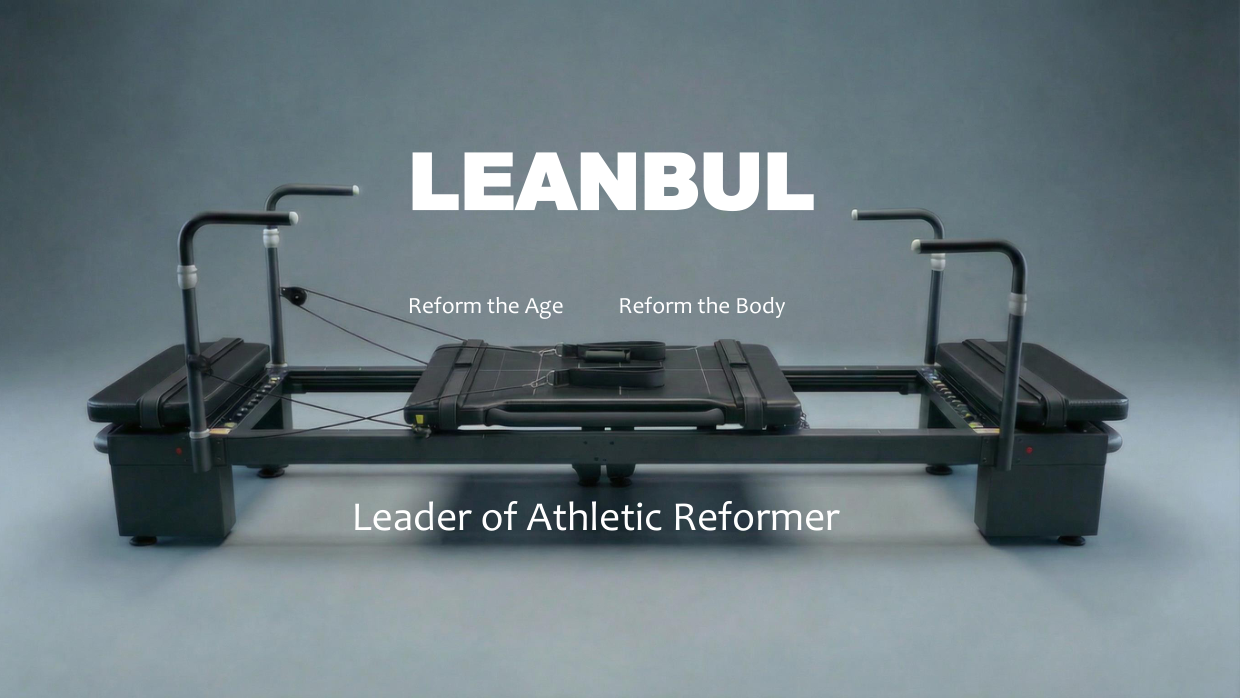
Why European operators are opening the room when no one is teaching
A reformer studio has a brutal utilisation curve. Classes cluster at 07:00-09:00 and 17:30-20:30. Between 10:00 and 16:00 the most expensive asset in the business sits idle while rent accrues. An instructor-led class costs you a teaching fee whether two people turn up or eight.
Self-guided hours attack that gap directly. The clearest published price ladder I have seen comes from Cœur Studios in Finland, which sells both formats side by side:
| Product | Price |
|---|---|
| Single self-guided practice visit | €15 |
| Single instructor-led group class | €25 |
| Unlimited self-guided practice, monthly | €79 |
| Unlimited instructor-led classes, monthly | €189 |
Self-guided access at 42% of the class price, with no teaching cost attached, is not a discount promotion. It is a second product built on the same six machines. The studio monetises machine hours instead of instructor hours.
The supplier side has noticed. Peak Pilates launched its StudioConnect format in Europe with Pilates Project, positioning it as 24/7 access without an instructor present. Your Reformer sells a kiosk-and-headphones setup aimed at operators with no group classes at all. Connected reformers from NordicTrack and others now ship with enclosed resistance systems explicitly marketed for unattended use. When three hardware vendors build product lines around a business model, the model is no longer experimental.
EuropeActive and Deloitte put the European fitness market at 75.5 million members, 67,515 clubs and €39.1 billion in revenue for 2025, with 9.3% population penetration. Reformer capacity inside existing clubs is one of the few growth routes left that does not require building another building, and unstaffed hours are how you add it without adding payroll.
The honest warning first
The IDEA Health & Fitness Association, in its guidance on Pilates equipment liability, is blunt about this model. It advises studio owners to exercise particular caution with any “open studio” policy or use of equipment by clients without trainers, calling it an area of high-risk exposure, because correct use of Pilates equipment requires specialised training and misuse can cause injury.
Read it as a design brief. Risk in an empty room concentrates in four places: people who were never properly inducted, machines that cannot be set up without a teacher, faults nobody reports, and a policy nobody updated. Each is fixable with a document, a sticker or a purchase decision.
What changes about the machine when the teacher leaves
This is where most imported studio reformers quietly fail. They were designed for a room where a qualified instructor sets the springs, checks the ropes between classes and watches every transition. Remove that person and the machine’s design assumptions stop holding.
| Requirement | Class-only studio | Self-guided hours |
|---|---|---|
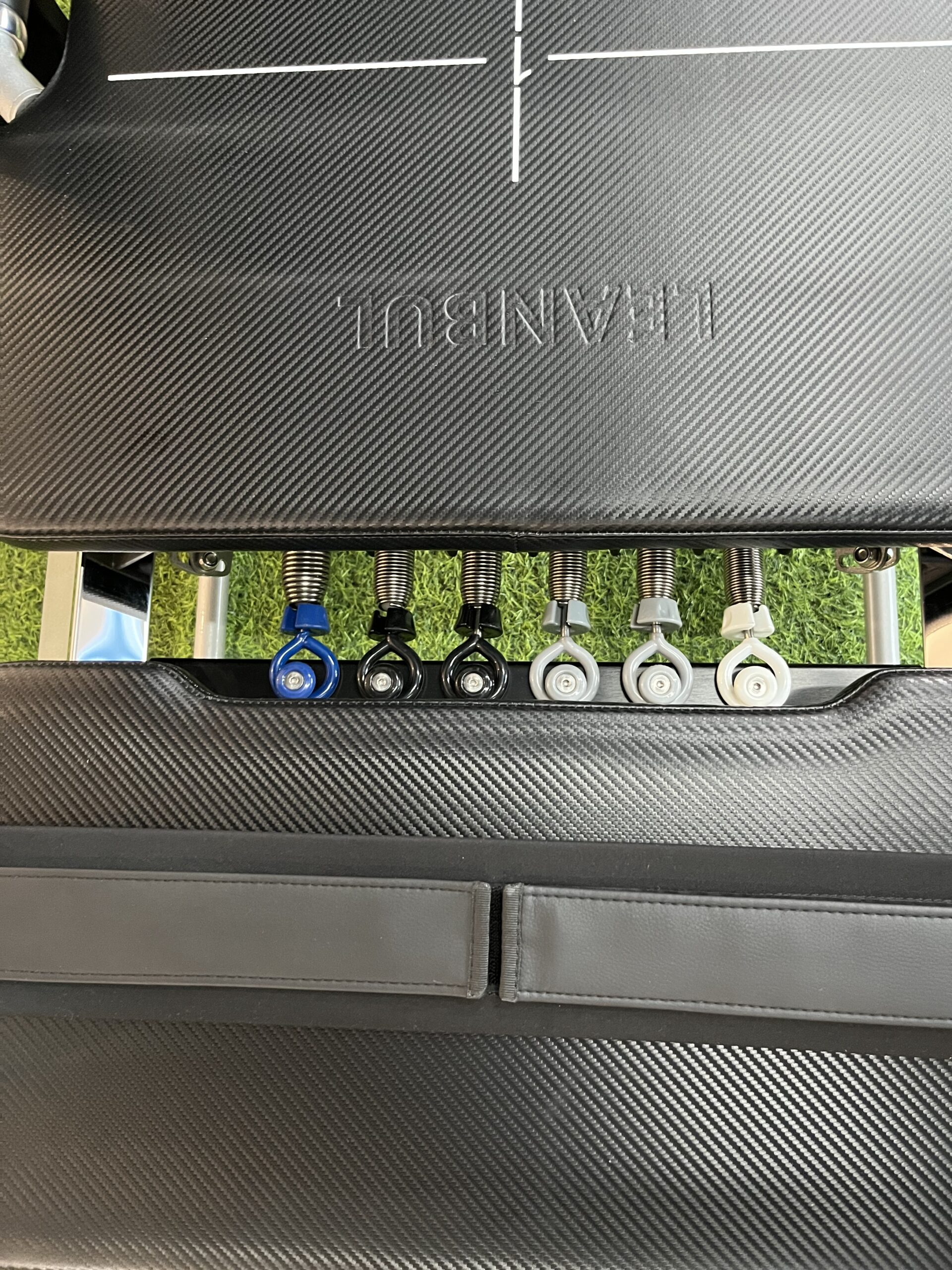
| Spring identification | Instructor counts by feel | Printed spring chart per level, numbered spring bar, colour-coded springs |
| Repeatable setup | Instructor sets it | Marked carriage stops, labelled footbar positions, wall chart |
| Pinch and shear points | Watched during transitions | Enclosed spring system, no exposed coils near hands or clothing |
| Footbar and shoulder rest lock | Quick change, teacher verifies | Positive single-hand lock that cannot half-engage |
| Rope and strap condition | Checked before each class | Weekly documented check plus a spare set on the shelf |
| Upholstery | Wiped down by staff | Wipe station at the door, cover that survives daily disinfectant |
| Fault reporting | Member tells the teacher | Red fault tag on the machine, booking blocked until cleared |
| Safety information | Explained verbally | Pictograms and manual in the local language, posted in the room |
| Duty cycle | 25-30 sessions per week | 45-60 sessions per week |
The duty cycle row is the one that hits your maintenance budget. A self-guided regular trains three to five times a week. Six machines running 45 sessions each per week means a spring set that was specified for a two-year life may be done in twelve months. Buy the spare set with the fleet, not after the first failure.
The standards detail most operators miss
Commercial studio equipment in Europe is certified against the EN ISO 20957 series. Part 1, in its 2024 edition, sets the general safety requirements and the classification system, and it replaced the 2013 edition in November 2024, so a certificate referencing the older version is worth questioning at the point of order.
The classification is where it gets interesting for anyone running unstaffed hours. Class S covers professional and commercial use, and the standard’s scope describes equipment used in studios and clubs “where access and control are specifically regulated by the owner”. Class H is domestic equipment in a private home.
That sentence is your compliance architecture. The standard does not forbid members training at 23:40 with no staff present. It assumes the owner controls who gets in and under what conditions. If your access control is a door code texted to anyone who pays, you have a class S machine in a building that no longer meets the assumption behind the class S certificate. If your access is gated on a completed induction, an occupancy cap and a signed competency record, you can defend the arrangement.
Two practical consequences:
- Ask for the declaration of conformity by part and class. “CE marked” and “EN ISO 20957 compliant” on a brochure mean almost nothing. You want the part number, the class and the edition, for example EN ISO 20957-1, class S, 2024 edition.
- The standard’s scope does not cover unsupervised use by children under 14. Family hours, teen memberships and “bring your daughter” promotions need a taught format.
If your building also runs as a fitness club, the newer EN 17229 club standard adds operational requirements that sit alongside the equipment certification.
Insurance: the conversation to have before you open the doors
Most studio policies are written around taught classes. General liability covers the premises. Professional liability, sometimes called errors and omissions, covers claims that your instruction caused harm. In an unstaffed room there is no instruction, and that changes which part of the policy responds.
What underwriters tend to ask when you describe this model:
- Opening hours and how members get in, including whether access logs are kept
- Maximum number of people in the room at once
- What induction a member must complete before receiving access, and where that record lives
- The machine inspection schedule and who signs it off
- Emergency arrangements: how someone alone in the room at 06:00 gets help
- Whether there is CCTV, and whether it covers the reformer floor
- Whether members sign a self-directed practice agreement
Get the answer as an endorsement on the policy, not a verbal “should be fine” from a broker. An unendorsed claim is the expensive way to discover a supervision exclusion.
One more thing worth saying plainly: a waiver is evidence, not immunity. In most EU jurisdictions you cannot contract out of liability for injury caused by your own negligence. What actually protects you is being able to show that the member was trained, that the machine was inspected, and that the fault was reported and fixed. A signed induction card does more work in a claim than three pages of waiver language.
The induction protocol that makes unstaffed hours defensible
Treat induction as a gate, not an onboarding step. If it is optional, it is not a control.
- 90 minutes, on the machine, maximum three people. No exceptions for experienced practitioners. Experience on a different brand is not experience on your springs.
- Level-gated access. Level 1 covers three approved spring settings and six exercises. Level 2 unlocks the full repertoire after eight supervised sessions. The access system enforces the level.
- A signed competency card. The member demonstrates spring change, carriage entry and exit, footbar adjustment, and what to do when something feels wrong. You sign it, they sign it, it goes in the file with a date.
- Access tied to the record. Badge, app or door code activated only after that signature exists. This is the “control regulated by the owner” the standard is talking about.
- The room explains itself. Spring chart per level, a 90-second setup video behind a QR code in the local language, and a one-page fault procedure at each station.
- A fault loop that works without staff. Red tag on the machine, member moves to another reformer, the app blocks the tagged machine until someone clears it. If a fault can only be reported by email, it will not be reported.
Worked example: does the arithmetic actually work
Numbers below are ours, built from a six-reformer room open 07:00-22:00 with taught classes in the morning and evening peaks. Treat it as a model to redo with your own rent, not a forecast.
| Line | Assumption | Monthly figure |
|---|---|---|
| Self-guided capacity | 6 reformers × 3 hours × 26 days | 468 machine-hours |
| Realistic utilisation | 35% in months 1-6, 55% later | 164 visits |
| Average yield per visit | €14 net of platform fees | €2,296 |
| Cleaning and consumables | Wipes, towels, laundry | -€180 |
| Insurance uplift | Endorsed unstaffed access | -€60 to -€120 |
| Incremental wear reserve | Springs and upholstery, front-loaded | -€150 |
| Contribution before rent | ≈ €1,850 |
Compare that with the same three hours sold as taught classes. Twenty extra classes a month at six clients and €22 each grosses €2,640, but costs a teaching fee of roughly €35 per class, so around €1,890 contribution. The two formats land in a similar place on contribution. The difference is that self-guided hours scale without hiring, and they serve the member who cannot make a 18:30 class.
Where the model goes wrong financially is pricing it as a cheap alternative to classes. Sell it as access, price it per month, and keep class packs priced on instruction. Studios that price self-practice at €8 a visit train their class members to stop booking classes.
Maintenance when nobody is watching the room
A taught studio inspects by accident: a teacher walks the room eight times a day. An unstaffed one has to inspect on purpose.
| Interval | Task |
|---|---|
| Every session (member) | Wipe upholstery, check ropes are seated, report anything unusual |
| Weekly (staff, 10 minutes) | Spring set check for gaps and deformation, rope and strap wear, footbar lock, carriage wheels and track, all bolts |
| Monthly | Full spring measurement against spec, upholstery seams, shoulder rest lock, headrest ratchet |
| Quarterly | Replace the highest-wear spring positions, check carriage stops, review fault log for repeat issues |
| Annually | Full service, re-cover assessment, documentation review for the insurer |
Keep the log where the insurer can see it and keep it for the life of the policy. A four-minute weekly checklist is the cheapest risk control in the project.
Five ways this model fails
- Induction as paperwork. A five-minute walkthrough and a signature produces members who set springs by guesswork, and guesswork is where injuries come from.
- Buying a class machine. Open spring coils, unmarked carriage stops and no printed chart turn every session into a setup experiment.
- No fault loop. A creak that nobody reports becomes a snapped rope in month nine, usually with a member on the carriage.
- Insurance never told. The claim arrives, the underwriter finds a supervision clause, and the policy responds to nothing.
- Cannibalising classes. If self-practice is priced close to a class, your best members downgrade and your revenue per machine hour falls.
FAQ
Can you run a reformer studio with no instructor at all?
Legally, in most EU countries, yes, provided the equipment is certified for commercial use, the space meets local safety and accessibility rules, and your insurance covers the arrangement. Commercially, a fully unstaffed studio is harder than a hybrid one. Induction, fault handling and member support all need a human somewhere, even if that human is on call rather than on site.
Is unsupervised reformer training allowed under EN ISO 20957?
The standard does not prohibit it. Class S equipment is intended for commercial settings where access and control are regulated by the owner, so your access system and induction record are part of how you meet that condition. What the standard does exclude is unsupervised use by children under 14.
What insurance do I need for self-guided reformer hours?
General liability for the premises, plus a policy that explicitly acknowledges member use of equipment without an instructor present. Ask for the endorsement in writing and confirm how the policy treats claims where no professional instruction was being delivered. Requirements vary by country, so this is a broker conversation, not a blog post decision.
How many self-guided sessions per reformer per week is too many?
Above roughly 45 sessions per week per machine you should shorten the spring replacement interval and inspect weekly rather than fortnightly. The machine will not fail suddenly. It will drift: springs lose tension, carriages get noisier, upholstery seams open. The weekly check catches drift before a member does.
Which specification matters most for unstaffed hours?
Enclosed springs and a readable spring system. Everything else is secondary. Pinch points near hands and clothing are the most common avoidable injury in an unattended room, and a member who cannot identify spring positions from the machine itself will set it up wrong.
Do I need CCTV in a self-guided studio?
Not legally in most of Europe, but it helps in three ways: it deters misuse, it supports an insurance conversation, and it settles disputes about what happened. If you install it, publish a clear notice and follow GDPR rules on retention and access.
Specifying a fleet for self-guided hours?
We build commercial reformers in Spain and ship them across the EU with the CE declaration, the EN ISO 20957-1 class S documentation, printed spring charts and a spare parts list in the box. If you are planning taught classes plus unstaffed hours, send us the room plan, the session format and how members will get in, and we will come back with a layout, a spec and a quote in euros. Start with the K30 commercial reformer for volume rooms, the K38 premium reformer for boutique spaces, or the compact K10 where the room is tight. The full pilates studio solutions range covers mixed layouts, and you can contact us when you want the numbers.
