How to Open a Pilates Studio in Italy in 2026: Legal Steps, Costs and Equipment
To open a pilates studio in Italy you file a SCIA with your local SUAP office, register a Partita IVA or set up an SRL or SSD, get your premises cleared for health and fire safety, sign a 6+6 commercial lease, and buy EN ISO 20957 Class S reformers. Italy does not license the job of pilates instructor the way it licenses a plumber, but it regulates the business, the building and the tax with more paperwork than most of northern Europe.
Budget €35,000 to €110,000 for a small reformer studio in a secondary city-centre unit, and more in Milan or the historic centre of Rome. The lease, the fit-out and the fleet are the three lines that decide whether the numbers work. The rest is smaller, but it is where most first-time owners lose a month.
What follows is the order you actually do it in, and the Italian-specific details that trip up people who have read a generic “how to open a studio” article.

Why 2026 is a good year to open a pilates studio in Italy
Italy is a large, under-penetrated fitness market that is moving upmarket. Around 6 million people hold a gym or studio membership and the country has roughly 11,300 clubs and pools, with penetration near 9% of the general population and about 10.6% of people aged 15 and over. That is below Germany and the Nordics, which is the point: there is room to grow, and the growth is coming from specialised, instructor-led formats rather than budget gym floors.
Two forces push reformer demand in particular.
- A shift to quality over volume. Operators are opening smaller rooms with premium machines and selling class quality, not cheap access. Pilates and reformer studios are the clearest example of that shift in Italian cities.
- A public health tailwind. Italian sport participation keeps rising, and physical activity is being promoted hard for posture, backs and healthy ageing. That is reformer language, and it pulls in physio-adjacent and medical-adjacent clients.
For context on the wider market, the 2026 European Health & Fitness Market Report from EuropeActive and Deloitte put Europe at 75.5 million members, 67,515 clubs and €39.1 billion in revenue for 2025. Italy is one of the markets where per-capita spend still has room to climb, which matters when your business model sells machines, not memberships.
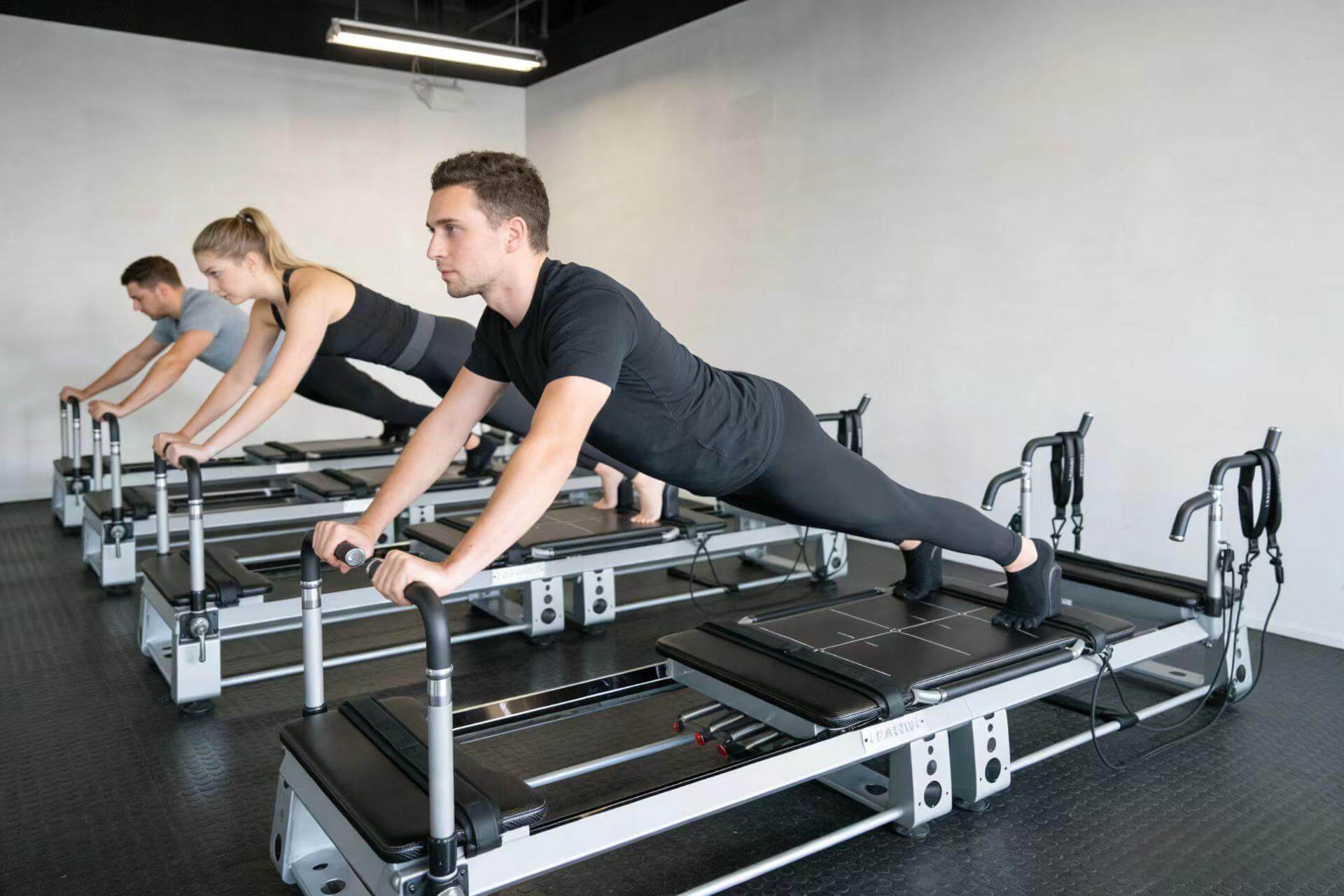
Step 1: Choose your legal form
Three structures cover almost every new Italian studio. The choice is about controls, tax and how much of a real business you intend to run.
The impresa individuale (sole proprietorship) is the fastest and cheapest to start. You register a Partita IVA, and you are personally liable for the business and its debts. Suitable if you teach alone from a rented room.
The SRL (società a responsabilità limitata) is the limited company. It gives you legal separation and lets you trade like a proper business, sell retail, take on partners and open new locations. Setup runs through a notary and costs more to maintain, with annual accounts and filings.
The ASD/SSD route is the Italian sports association or sports club model that grew out of the Riforma dello Sport (D.Lgs. 36/2021). It can look attractive because amateur sports bodies get favourable treatment, but be careful. A pilates studio that sells memberships, markets itself commercially and pays instructors is usually a business, not an amateur sports association. Many pilates professionals argue a commercial studio should be structured as a professional practice or a company, not an ASD. Get an accountant to sign off on this one before you build around it.
| Impresa individuale | SRL | ASD / SSD | |
|---|---|---|---|
| Liability | Unlimited, personal | Limited to the company | Depends on form |
| Setup | Partita IVA at Agenzia delle Entrate | Notary deed + Registro Imprese | Statute + sports register |
| Ongoing admin | Low | Annual accounts, filings | Sports-body filings |
| Best for | Solo instructor | Commercial studio with staff or growth plans | Genuine amateur/social clubs |
My read: start as an impresa individuale if you teach alone, and move to an SRL as soon as you sign a multi-year lease or hire instructors. If someone pitches you an ASD to save tax, ask what happens if you are inspected and classified as a commercial business, because that is the risk you are taking.
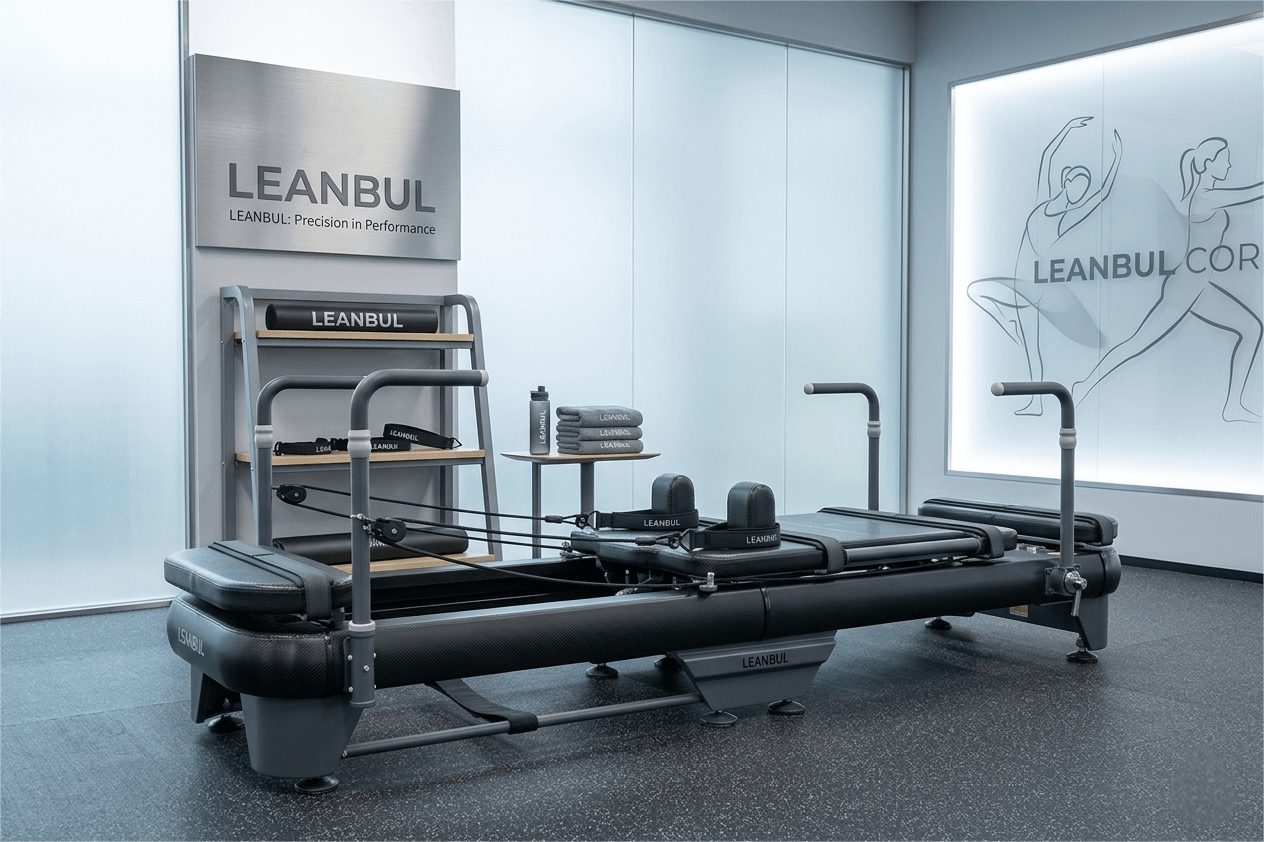
Step 2: Open the Partita IVA and pick the right ATECO code
Once you register with the Agenzia delle Entrate you get a Partita IVA, and with it an ATECO code that sets both your paperwork and your tax.
The two codes a pilates business lands on are 93.13.01 (yoga, pilates and Tai Chi studios) and 85.51.09 (sports and recreational training). This matters more than it looks, because if you use the flat-rate regime (regime forfettario) the code sets the coefficient the tax office applies to your revenue.
- ATECO 93.13.01 carries a flat-rate coefficient of 67%.
- ATECO 85.51.09 carries a coefficient of 78%.
The regime forfettario itself is available if your revenue stays under €85,000 a year. Instead of deducting real costs, the tax office applies the coefficient to your turnover and taxes that result, at 5% for your first five years if you qualify, then 15%. If you keep two ATECO codes, the coefficient of your main activity applies.
Pilates instructors and studios often get this wrong, and which code is correct depends on what you actually do. A room-based studio that runs classes every day is a different activity from an instructor who teaches scattered courses. Take an accountant’s view, because the 11-point gap between 67% and 78% is real money at €60,000 of turnover.
Contributions go to INPS. If you are a professional without a dedicated pension fund, you are in the Gestione Separata, which for 2026 charges 26.07% of your taxable income, with a minimum contribution base of €18,808 and a ceiling of €122,295. You are also required to register in the national register for sports workers before teaching sport for pay, and to hold a recognised technical qualification. The practical point is simple: budget for INPS from month one, because it is owed even in a slow first year.
Step 3: The permits, and why the SCIA is not the end of it
To open a studio you file a SCIA (Segnalazione Certificata di Inizio Attività) with the SUAP office of your comune, usually through the online “impresa in un giorno” portal. The SCIA is a self-certification that you meet the requirements for a gym or training room; the comune does not approve you in advance, it checks afterwards.
That self-certification is where people get caught, because you are asserting things you have to be able to prove. Four items sit behind it.
- Health and hygiene clearance from the ASL. The local health authority checks changing rooms, toilets, showers, common areas and cleaning procedures.
- Fire safety. Under DPR 151/2011, gyms fall within the fire-safety regime, and premises have to be assessed accordingly, with a fire-safety SCIA to the Vigili del Fuoco where it applies.
- A certificato di agibilità, showing the premises meet safety, health and accessibility standards. Accessibility in particular is a legal duty for spaces open to the public.
- A qualified technical lead. For facilities open to the public, a qualified instructor or technical director is required, typically a degree in sports science or an equivalent recognised qualification, with the exact requirement varying by region.
Do not sign a lease on a unit that cannot be brought up to these standards. Change of use, ceiling height, ventilation, an accessible entrance and a fire exit all have to work before you spend a euro on fit-out.

Step 4: The 6+6 lease
Italian commercial leases follow Legge 392/1978, and the headline rule is the duration: for industrial, commercial, artisanal and tourism-related premises the minimum term is 6 + 6 years. You are on the hook for six years unless the contract says otherwise, so treat the signature as a six-year commitment.
Two terms are worth understanding before you negotiate.
- Rent review. Indexation is tied to ISTAT’s FOI consumer-price index, and increases are capped at 75% of that variation. That cap is fixed by law and cannot be waived, so a landlord who wants more will try to push it into a separate side deal.
- Deposit and fit-out. Deposits commonly sit at around three months, and the negotiating room is usually in a rent-free fit-out period rather than the headline rent.
On rents, plan around real numbers rather than a city average. Asking-based figures for commercial space in September 2026 sat near €23.9 per m² per month in Milan and €20.2 per m² per month in Rome, but that is the city-wide average across all types of commercial unit. Prime high-footfall streets in Rome run several times higher, and a good residential-neighbourhood location for a studio sits well below the centre average. A suburban or smaller-city unit can be a fraction of it. Plan each reformer with roughly a 3 m × 1.5 m working area once you allow for the carriage travel, the client and the instructor, plus circulation. A six-reformer boutique with a small reception and back of house wants about 90 to 130 m².
Step 5: Insurance
Italian studios carry two policy families, and insurers increasingly ask about the certification of the equipment itself.
- RC professionale covers claims arising from your professional activity, including injury to a client caused by negligence.
- RCT/RCO covers civil liability to third parties and to the people who work for you, which becomes relevant the moment you have an employee.
Basic professional policies start around €100 to €300 a year, with more complete cover including retroactive protection costing €500 and up. Federations and instructor associations often bundle cover for a nominal annual fee. For a studio using equipment, the sensible limit is at least €1,000,000 per claim, because a physical-injury claim on a reformer will not be small. This is also where CE marking and EN ISO 20957 classification stop being paperwork and start being commercial: an insurer or a referrer will ask, and a non-compliant machine is the kind of detail that turns a claim into a dispute.
Step 6: Equipment, bought inside the EU
The specification is settled. You want EN ISO 20957 Class S machines, the commercial classification, and CE marking with the technical file behind it. Class H machines are rated for home use, and a home-rated reformer in a shared studio is both a compliance problem and, if something goes wrong, an insurance problem.
Because Italy is in the EU, buying from a European manufacturer is clean on tax and logistics. A purchase from a Spanish or other EU supplier is an intra-Community acquisition: no customs duty, no import clearance, VAT self-accounted under the reverse charge and reclaimed on the same return. You also get machines that arrive on EU pallets, spare parts held inside the EU, and a warranty you can enforce without shipping a machine to another continent. For a studio, the cost of a machine that breaks and takes eight weeks to return is far higher than a slightly cheaper sticker price.
What commercial reformers cost in Europe in 2026:
| Fleet size | Typical price per reformer | Notes |
|---|---|---|
| 1–2 machines | €3,500–6,500 | Retail or showroom, single-unit pricing |
| 3–5 machines | €2,400–3,800 | Small-boutique tier, some room to negotiate |
| 6–12 machines (direct) | €1,900–3,500 | Manufacturer-direct or EU dealer, freight and install quoted separately |
Price the fleet, not the machine. Freight, installation, the spare-spring set you will replace every couple of years, and a realistic service commitment belong in the budget. If you plan a second or third location, lock a written spec sheet with your supplier and hold to it, because fleet consistency is what keeps a multi-room brand feeling like one brand.
What it costs: a planning budget
These are planning ranges for a six-reformer boutique in an Italian secondary city-centre unit, not quotes. The lease line will move more than any other.
| Item | Typical range | Notes |
|---|---|---|
| Deposit and first rent | €6,000–15,000 | Around three months, plus service charges |
| Fit-out, flooring, accessibility | €15,000–40,000 | Acoustic floor, mirrors, lighting, reception |
| Six reformers (direct) | €12,000–21,000 | Class S commercial, excl. freight and install |
| Accessories, springs, smalls | €2,000–5,000 | Spare springs, boxes, straps, mats |
| Notary, accountant, P. IVA setup | €500–3,000 | SRL adds notary and Registro Imprese costs |
| Permits, technical work | €1,000–4,000 | Fire, agibilità, technical documentation |
| Insurance, first year | €600–2,500 | RC professionale, RCT/RCO, contents |
| Website, booking, branding | €2,000–8,000 | The booking system is where people cut too deep |
Two levers most owners miss. First, the rent-free fit-out period, often worth more over six years than a discount on the headline rent. Second, the VAT position: as a business registered for VAT you reclaim the 22% IVA on your reformers and fit-out, which on a €20,000 fleet is about €4,400 back. That is the argument for not sitting inside a flat-rate or amateur structure you have outgrown.
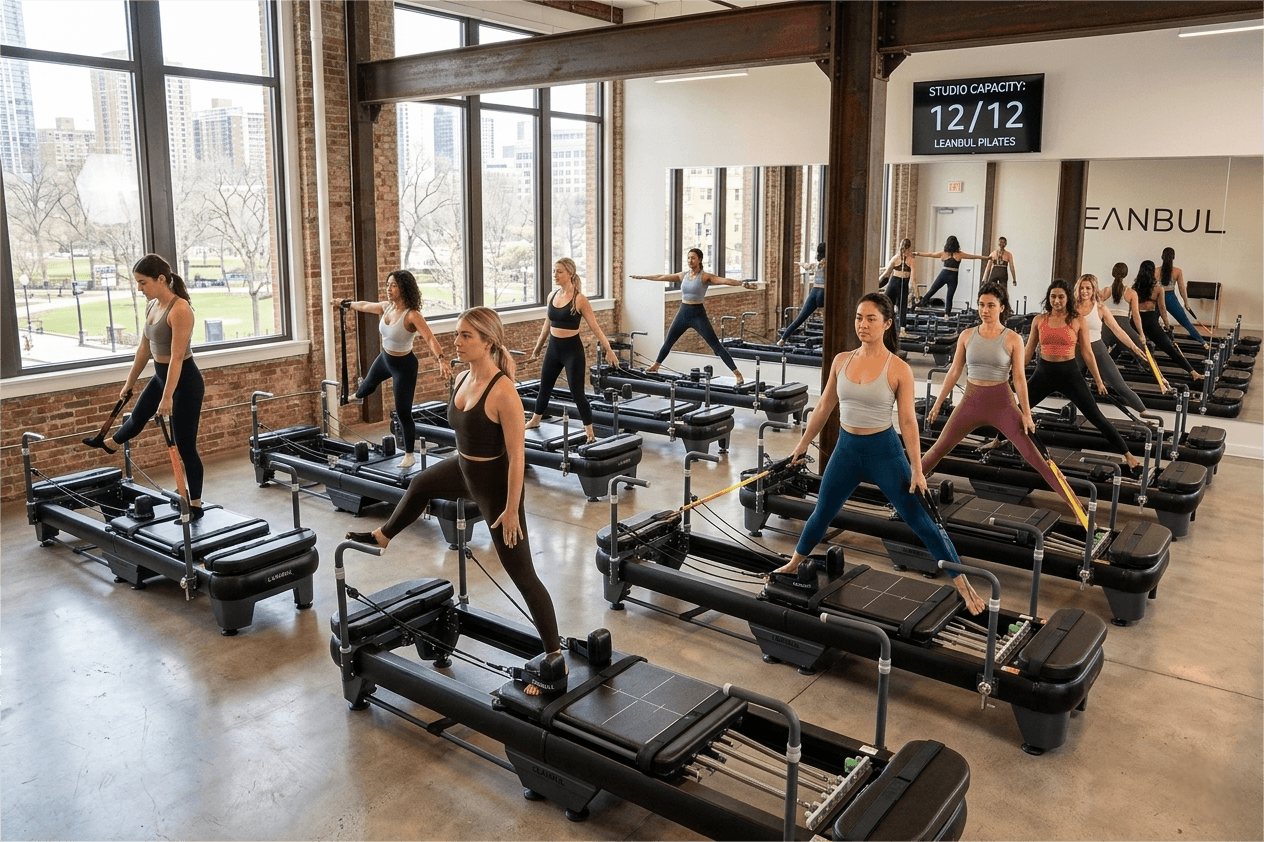
Frequently asked questions
Do I need a licence to open a pilates studio in Italy? You do not need a licence for the job title, but you file a SCIA with your comune’s SUAP office, and you need ASL health clearance, fire-safety compliance and a certificato di agibilità for the premises. If the facility is open to the public, a qualified instructor or technical director is required.
Which ATECO code should a pilates studio use? Most land on 93.13.01 (yoga, pilates and Tai Chi studios) or 85.51.09 (sports and recreational training). The code matters because under the flat-rate regime it sets your coefficient, 67% and 78% respectively. Confirm it with an accountant based on what you actually do.
How much does it cost to open a pilates studio in Italy? Small mat-based rooms can start from €10,000 to €30,000. A reformer studio typically needs €35,000 to €110,000 once you include the lease deposit, fit-out, a six-machine fleet, permits and insurance. Milan and central Rome push the top of that range.
How long is an Italian commercial lease? For commercial use the minimum under Legge 392/1978 is 6 + 6 years. Rent indexation is tied to the ISTAT FOI index and capped at 75% of the variation, and that cap cannot be waived.
Can I reclaim the VAT on my reformers? Yes, if you are registered for VAT rather than inside a flat-rate or amateur structure. Buying from another EU country is an intra-Community acquisition, self-accounted under the reverse charge and reclaimed on your return, with no customs duty and no import clearance.
Next step
If you are planning an Italian studio and want to compare specs, sizes and fleet pricing before you sign a six-year lease, start with the Leanbul reformer collection or the commercial models built for studios: the K30 commercial reformer for full-size studio rooms, the K38 premium reformer for premium and rehab programmes, and the K10 compact reformer where floor space is tight. Leanbul is a Spain-based manufacturer, so your fleet ships from inside the EU with no customs and no import clearance. See pilates studio solutions for fleet layouts, or contact us for a quote.
