How to Open a Pilates Studio in the Netherlands in 2026: Legal Steps, Costs and Equipment
To open a pilates studio in the Netherlands you register with KVK, choose between a sole proprietorship (eenmanszaak) and a private limited company (BV), decide whether the small-business VAT scheme helps or hurts you, check whether your unit needs an environment and planning permit, sign a Dutch commercial lease, and buy commercial-rated reformers. There is no state licence for teaching pilates. The Netherlands regulates the business, the premises and the tax, not the job title.
Budget roughly €60,000 to €150,000 for a boutique opening in an Amsterdam, Utrecht or Rotterdam catchment. Rent, fit-out and the machine fleet are the three numbers that decide whether it works. Everything else is smaller, but the small items are where first-time owners lose weeks.
Here is the order you actually do it in.

Why the Netherlands is still worth opening in
The Netherlands is one of Europe’s most mature fitness markets, and that cuts both ways. Penetration sits near 18% of the population in 2026, close to double the European average of 9.3%, and around 3.3 million people hold a membership. You are not creating demand. You are taking share from operators who already have it.
That is not a reason to stay away. It is a reason to be specific. Three things push reformer demand in the Netherlands even while headline membership growth flattens.
- A shift from activity to quality. The Dutch industry body NL Actief has pointed to members wanting mental wellbeing, injury prevention and long-term health, not just a workout. That is reformer language, and it favours controlled, instructor-led studios over generic gym floors.
- Prevention and exercise referral. The Dutch system leans toward keeping people out of care, and reformer work is easy to justify for backs, hips and posture. Physio-linked and medical-adjacent studios pull equipment demand with them.
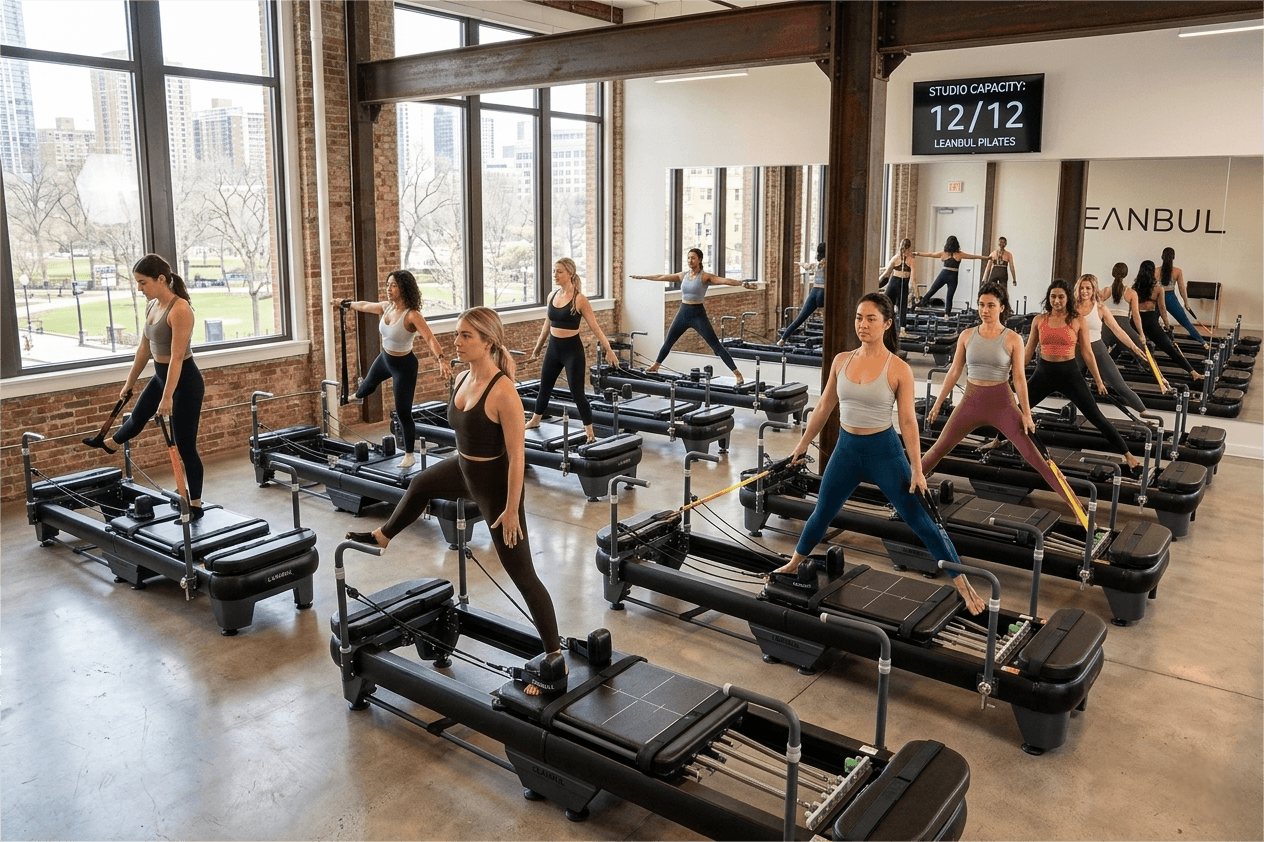
- A squeezed mid-market. Budget chains own the low end, so independents have moved upmarket. More boutique rooms with eight to twelve premium machines, fewer generic gym floors.
For the wider picture, the 2026 European Health & Fitness Market Report by EuropeActive and Deloitte put Europe at 75.5 million members, 67,515 clubs and €39.1 billion in revenue for 2025, up 9.1% on the year. The Netherlands is not the fastest-growing market in that picture. It is one of the highest-value markets per capita, and per-capita spend is what matters when you sell machines rather than memberships.
Step 1: Pick your legal form
Two structures cover almost every new Dutch studio. The choice is mostly about liability, not tax tricks.
The eenmanszaak is a sole proprietorship. It has no legal personality, you alone are responsible for the business and its debts, and your private assets are exposed to a claim or an unpaid supplier. There is no capital requirement and no notary. You can only have one eenmanszaak, though you can trade under several names and from more than one location.
The BV (besloten vennootschap) is the private limited company. It has legal personality, so the company is usually liable rather than you personally, and since 2012 there is no minimum share capital. You incorporate through a civil-law notary, who draws up the articles of association and registers the BV with KVK. The notary’s fees, not capital, are the real cost. The trade-off is ongoing: a BV files annual accounts, and you generally pay yourself a market-rate salary as a director.
| Eenmanszaak | BV | |
|---|---|---|
| Legal personality | No | Yes |
| Minimum capital | None | None since 2012 |
| Liability | Unlimited, personal | Limited to company assets |
| Setup | Register with KVK | Civil-law notary + KVK |
| Annual accounts | Not filed at KVK | Filed |
| Best for | Solo instructor testing the market | Studio with a lease, staff or investors |
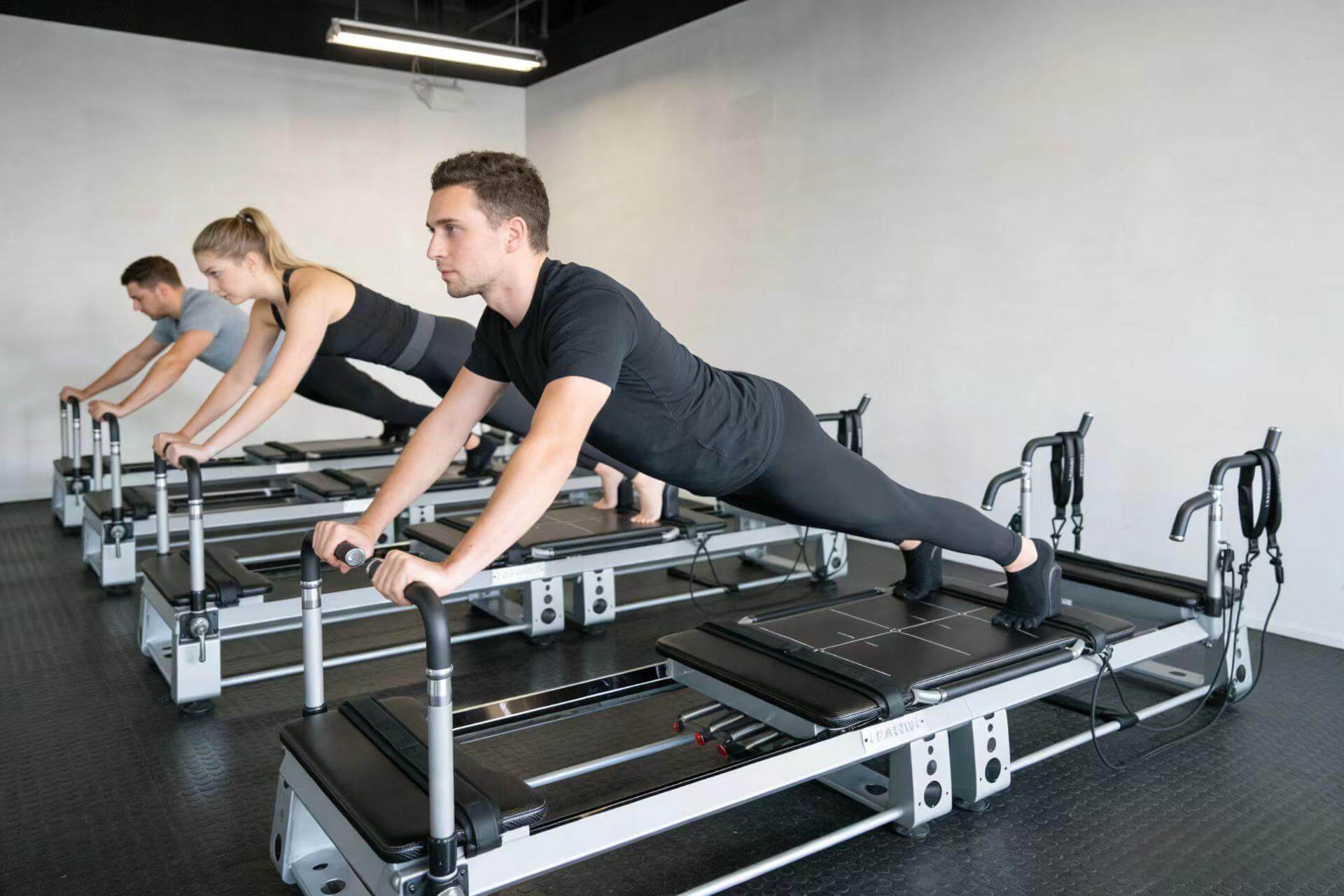
My honest read: start as an eenmanszaak if you teach alone from a rented room, and move to a BV when you sign a multi-year lease or put instructors on payroll. A studio that carries a commercial lease and two employees on a sole-trader structure is a liability with no upside.
Step 2: Register with KVK
Every new company in the Netherlands must be entered in the Business Register (Handelsregister) at the Netherlands Chamber of Commerce, KVK. You do not register separately with the tax authority: KVK passes your details on and the Belastingdienst decides whether you are an entrepreneur for VAT (btw) purposes, then sends your VAT identification number and VAT tax number by post, usually within two weeks.
Four things have to be in place first.
- A citizen service number (BSN). You need one to register. If you live in the Netherlands you get it by registering with your municipality; if you stay for less than four months you register in the non-resident records database (RNI).
- A Dutch business address. This can be your own address or a business address, for example your accountant’s, with signed permission to use it.
- A trade name. It must match what the business does and must not clash with existing names. Check it first with the KVK Name Check, which also searches Benelux trademarks.
- A legal structure. See Step 1.
You register online with DigiD and then complete the process at a KVK office by appointment. The one-off registration fee is €85.15, and it is tax-deductible for entrepreneurs. The fee is adjusted each year with inflation, so check the current figure on KVK before you budget.
One detail worth knowing if you teach from home or from a sensitive address: as a sole proprietor you can shield your visiting address in the register by giving a separate postal address. Do this at the time of registration, not after.
Step 3: Get the btw decision right
Dutch VAT has three rates: the standard 21%, a reduced 9% for specific goods and services, and 0% for certain cross-border supplies. Pilates classes and studio services are subject to the standard 21% unless you qualify for an exemption, so treat 21% as your default.
The decision that matters is whether to use the small-business scheme, the kleineondernemersregeling (KOR). If your turnover is €20,000 or less per calendar year, you can opt into the KOR. In return you do not charge VAT to clients and you stop filing VAT returns. The price is that you cannot reclaim input VAT on your costs or your investments. There is also an EU variant (EU-KOR) for small businesses trading across borders, available where your total annual turnover stays under €100,000.
For a solo instructor in a rented room, the KOR is usually the simpler and cheaper route. For a studio buying a fleet it usually is not. Run the numbers, because the result is not obvious. Eight commercial reformers at €3,000 each is €24,000, and at 21% the input btw alone is about €5,040. A studio that fits out a room and buys machines will often come out ahead by registering for VAT voluntarily and reclaiming that tax, even though it then charges 21% on classes. Ask a Dutch accountant to model both paths; the answer flips on fleet size.

Step 4: The unit, the permit and the lease
The Netherlands is more predictable than most of Europe here, but there are two things to check before you sign anything.
The environment and planning permit. If your plans affect the environment, for example converting a unit, renovating, or placing advertising at the front of the building, you will usually need an environment and planning permit (omgevingsvergunning). Whether you need one depends on the activity and the location, and the municipality’s environment plan sets out what is allowed where. You check this through Omgevingsloket, the national environment and planning portal. It asks detailed questions in Dutch, so get a native speaker to help the first time. If your plans do not fit the environment plan, the municipality can sometimes grant a deviation.
Municipal rules. Every municipality sets rules for public space and safety in its General Municipal By-law (APV), covering things like signage, terraces and parking. Pilates is not a licensed sector, so unlike hospitality or healthcare you do not need a sector permit to open. Check your own municipality’s APV for anything that touches your frontage or your signage.
The lease. Dutch commercial leases are not the same as residential ones, and protection depends on the type of space. You only get statutory rent protection if you rent medium-sized business premises (middenstandsbedrijfsruimte), which fits most street-level studio units. Those agreements commonly run in five-plus-five year structures and cannot be ended early at will. Smaller or non-retail spaces offer far less protection. Rent is typically quoted per square metre per year, net of service charges, with a deposit of around three months.
Two terms are worth more than a discount on the headline rate: a rent-free fit-out period while you build the room, and clarity in writing on permitted use, opening hours and any noise limits, which matter if you sit in a mixed residential building. Plan the room around the machines rather than the square metres. Each reformer needs roughly a 3 m × 1.5 m working area once you allow for the moving carriage, the client and the instructor, plus circulation. A six-reformer boutique including a small reception and back of house wants about 90 to 130 m².
Step 5: Insurance
Business liability insurance (bedrijfsaansprakelijkheidsverzekering, or AVB) is not generally mandatory in the Netherlands, but for a studio it is close to essential. A client slipping, a broken mirror, a reformer damaging a rented space: AVB is the policy that responds when your business injures someone or damages their property. Dutch insurers also increasingly ask about the certification of the equipment itself, which is where CE marking and the test reports behind it start to matter commercially, not just legally.
Three more policies are worth pricing.
- Contents and goods insurance. Ten commercial reformers represent a serious asset. Insure the replacement value, not what you paid second-hand.
- Professional indemnity (beroepsaansprakelijkheidsverzekering, BAV). AVB covers damage your business causes. BAV covers professional errors that cause a client financial loss. If you give programming or rehab advice, this is the one people forget.
- Recall cover. If you resell or rebrand equipment you could face a product recall, and recall costs are usually excluded from standard AVB without an extension.
Bookkeeping and accounting are another line item people underestimate. Outsourcing a sole proprietorship’s administration typically costs €500 to €1,000 a year in the Dutch market, and you are required to keep your records for at least seven years.
Step 6: Equipment, bought inside the EU
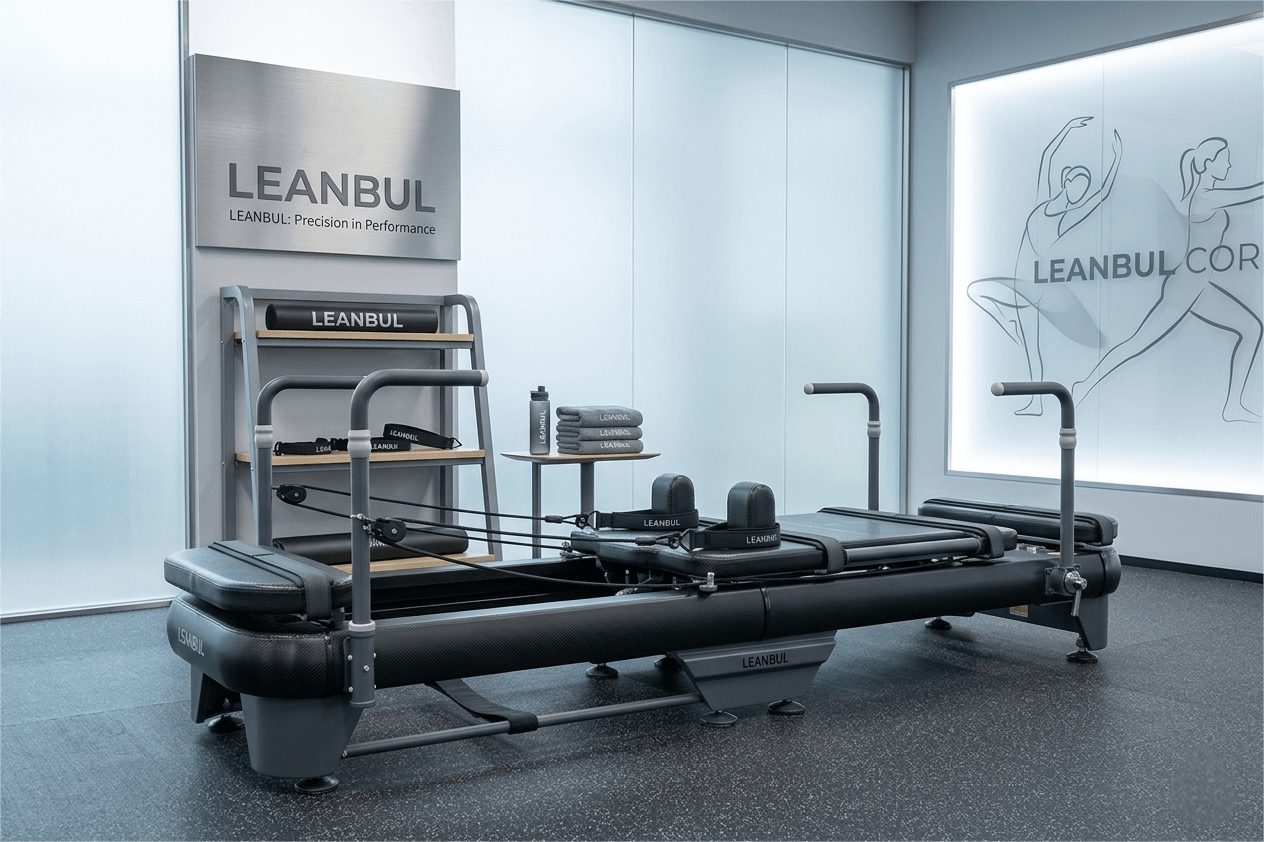
For a studio the specification is settled: you want EN ISO 20957 Class S machines, the commercial classification and the one Dutch insurers and physio-linked referrers expect. Class H is home use. A home-rated reformer in a shared studio is a compliance problem, and after an incident it is an insurance problem.
Because the Netherlands is inside the EU, buying from a European manufacturer is straightforward on tax and logistics. When you buy from a Spanish or other EU supplier, the sale is an intra-Community acquisition: no customs duty, no import clearance, and the btw is self-accounted under the reverse-charge mechanism, then reclaimed on the same return. You also get a fleet that arrives on EU pallets with EU delivery times, EU spare parts and a warranty you can actually enforce.
What commercial reformers cost in Europe in 2026:
| Fleet size | Typical price per reformer | Notes |
|---|---|---|
| 1–2 machines | €3,500–6,500 | Retail or showroom, single-unit pricing |
| 3–5 machines | €2,400–3,800 | Small-boutique tier, some room to negotiate |
| 6–12 machines (direct) | €1,900–3,500 | Manufacturer-direct or EU dealer, freight and install quoted separately |
Model the total, not the sticker. Freight, installation, the spare-spring set you will need every couple of years, and a realistic service commitment are all part of the cost of ownership. For a fleet that has to stay identical across two or three locations, ask for a written spec sheet and hold the supplier to it, because a Dutch operator running several rooms in one metro area lives or dies on fleet consistency.
What it costs: a planning budget
These are planning ranges for a six-reformer boutique in a secondary Dutch city-centre unit, not quotes. Your lease channel and city will move the first line more than anything else.
| Item | Typical range | Notes |
|---|---|---|
| Deposit and first rent | €8,000–20,000 | Around three months’ rent plus service charges |
| Fit-out and flooring | €15,000–35,000 | Acoustic floor, mirrors, lighting, small reception |
| Six reformers (direct) | €12,000–21,000 | Class S commercial, excl. freight and install |
| Accessories, springs, smalls | €2,000–5,000 | Spare springs, boxes, straps, mats |
| KVK, notary, accountant setup | €300–2,500 | €85.15 KVK fee; BV adds notary fees |
| Insurance, first year | €1,000–3,000 | AVB, contents, and BAV if you advise |
| Website, booking, branding | €2,000–8,000 | Booking system is the piece people scrimp on |
Two cost levers most owners miss. First, the rent-free fit-out period, which is often worth more than a discount on the headline rent. Second, the btw decision in Step 3, which can swing your equipment cost by roughly a fifth depending on whether you can reclaim it.
Frequently asked questions
Do I need a licence to open a pilates studio in the Netherlands? No general licence is required to teach pilates or run a studio. What you need is a KVK registration, a legal structure, a btw decision and, for many units, an environment and planning permit. Some units need no permit at all if the use and fit-out do not change.
Should I choose an eenmanszaak or a BV? Teach alone from a rented room and the eenmanszaak is cheaper and faster to set up. Sign a commercial lease or hire instructors and the BV’s limited liability is worth the extra administration.
Which VAT rate applies to pilates classes in the Netherlands? The standard 21% rate, unless a specific exemption applies. If your turnover is €20,000 or less you can use the small-business scheme (KOR) and stop charging btw, but you then lose the right to reclaim input VAT on your reformers.
Can I reclaim the VAT on my reformers? If you register for VAT rather than using the KOR, yes. Equipment bought from another EU country is self-accounted under the reverse charge and reclaimed on your btw return. On six machines that input VAT is often several thousand euros, so model the KOR decision carefully.
Do I need to buy Class S reformers? For a studio, yes. EN ISO 20957 Class S is the commercial classification, and it is what insurers and referral partners ask for. Class H machines are rated for home use and create a compliance and insurance risk in a shared studio.
Next step
If you are planning a Dutch studio and want to compare specs, sizes and fleet pricing before you sign a lease, look at the Leanbul reformer collection or the commercial models built for studios: the K30 commercial reformer for full-size studio rooms, the K38 premium reformer for premium and rehab programmes, and the K10 compact reformer where floor space is tight. Leanbul is a Spain-based manufacturer, so your fleet ships from inside the EU with no customs and no import clearance. See pilates studio solutions for fleet layouts, or contact us for a quote.
