How to Open a Pilates Studio in Austria in 2026: Legal Steps, Costs and Equipment
To open a pilates studio in Austria you register a Gewerbe, pick a legal form, decide whether the small-business VAT scheme helps or hurts you, register with the SVS for social insurance, secure a business premises that passes the trade-authority test, and buy commercial-rated reformers. There is no state licence for teaching pilates itself. Austria regulates the business, the premises and the tax, not the job title.
Budget roughly €60,000 to €150,000 for a boutique studio in Vienna or a provincial capital. Rent, fit-out and the machine fleet are the three numbers that decide whether it works; the small items are where first-timers lose weeks.
Here is the order you actually do it in.

Why Austria is worth opening in
Austria is a mature, high-income fitness market, and that shapes how you enter it. You are not creating demand. You are taking share from operators who already have it.
The 2026 European Health & Fitness Market Report from EuropeActive and Deloitte put Europe at 75.5 million members, 67,515 clubs and €39.1 billion in revenue for 2025, up 9.1% on the year. Austria sits inside a well-developed, German-speaking part of that market, and its studio scene leans toward the boutique end rather than budget gym floors. Vienna is the hub, but Graz, Linz, Salzburg and Innsbruck all support reformer studios.
Three things push reformer demand here even while headline membership growth flattens.
- Quality over volume. Austrian members increasingly want injury prevention, posture work and long-term health, not just a workout. That is reformer language.
- A prevention culture. Austria has a strong tradition of health-oriented exercise, and reformer work is easy to justify for backs, hips and everyday mobility.
- A squeezed mid-market. Budget chains own the low end, so independents have moved upmarket into boutique rooms with eight to twelve premium machines.
Step 1: Choose your legal form
Three forms cover almost every new Austrian studio. The choice is mostly about liability, not tax tricks.
The Einzelunternehmen (sole proprietorship) is the default. It has no separate legal personality, you alone are responsible for the business and its debts, and your private assets are exposed to a claim or an unpaid supplier. There is no minimum capital and no notary, and you register it yourself. This is the fastest, cheapest way to start, and the right one if you teach alone from a rented room.
The GmbH (Gesellschaft mit beschränkter Haftung) is the limited company. Liability is confined to company assets, which matters once you sign a multi-year lease or put instructors on payroll. The minimum share capital is €10,000, half of it paid in cash before registration, confirmed by a bank. You found it through a notarial deed, or digitally via the USP if you are the sole shareholder and managing director and use the standardised declaration. The company only exists once it is entered in the Firmenbuch.
The FlexKapG (FlexCo) is a newer form built for startups and investors. It mirrors the GmbH, including the €10,000 minimum capital and half-in-cash rule, but splits equity into voting shares and non-voting “company value” shares, which makes it easier to bring in investors or reward staff. For a single independent studio it is usually overkill. For a studio that intends to raise money or open a second site, it is worth a look.
| Einzelunternehmen | GmbH | FlexKapG (FlexCo) | |
|---|---|---|---|
| Legal personality | No | Yes | Yes |
| Minimum capital | None | €10,000 (half paid in) | €10,000 (half paid in) |
| Liability | Unlimited, personal | Limited to company assets | Limited to company assets |
| Founding | Register with the authority | Notarial deed + Firmenbuch | Notarial deed + Firmenbuch |
| Annual accounts | No Firmenbuch filing below thresholds | Filed | Filed |
| Best for | Solo instructor testing the market | Studio with a lease or staff | Studio that plans to raise money |
My read: start as an Einzelunternehmen if you teach alone, and move to a GmbH or FlexCo when you sign a commercial lease or hire staff. A studio carrying a long lease and two employees on a sole-trader structure is a liability with no upside. 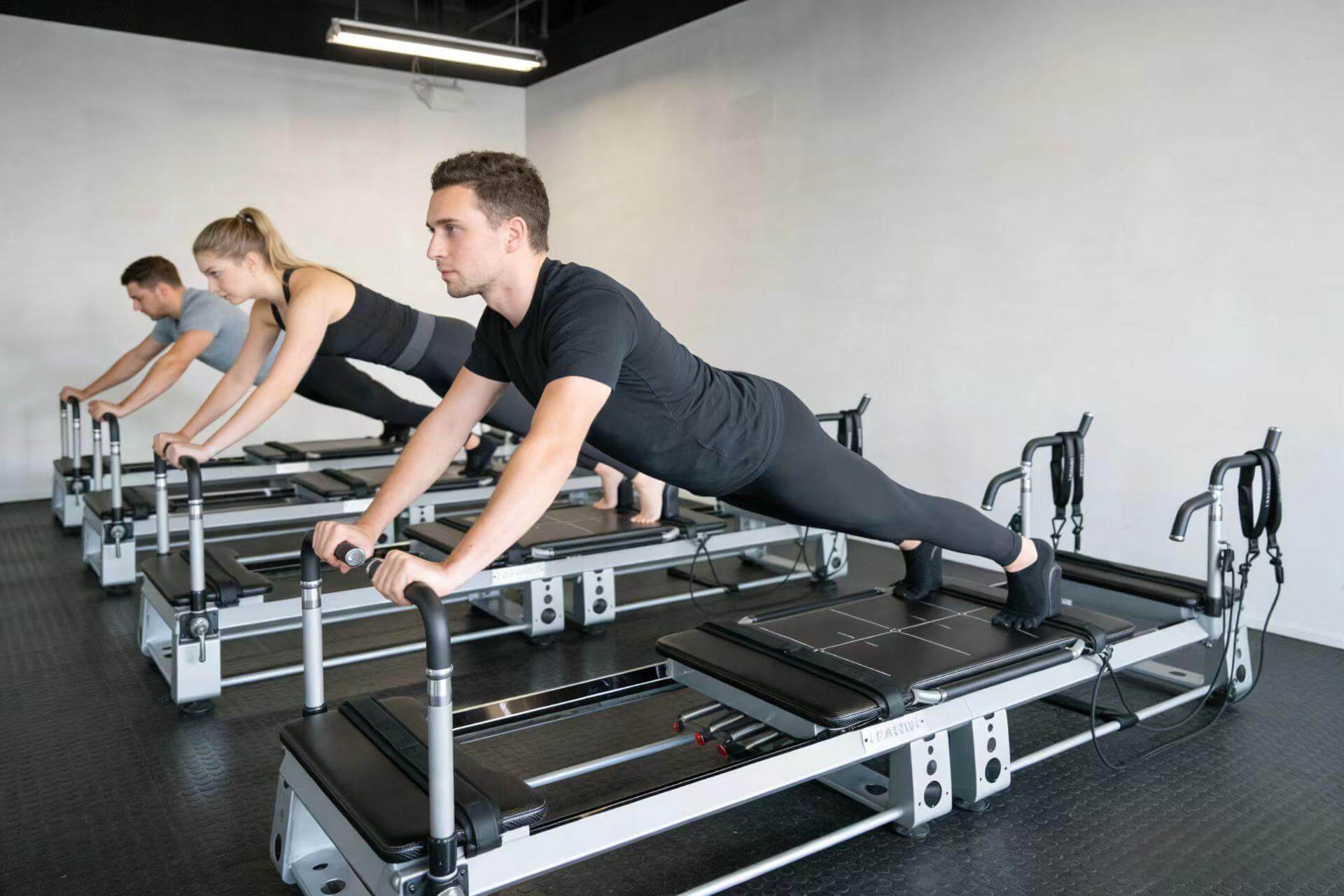
Step 2: Register the business
Austria splits trades into free and regulated ones. A free trade (freies Gewerbe) needs no proof of qualification, as long as you meet the general conditions. A regulated trade requires a Befähigungsnachweis, an approved qualification. Fitness instruction normally sits in the free-trade camp, but the moment you move into therapeutic territory, or offer a service that belongs to a regulated trade, you need that qualification or a qualified manager on the licence. Confirm the exact wording of your trade with the Wirtschaftskammer before you file, because a mislabelled trade is a headache to unwind.
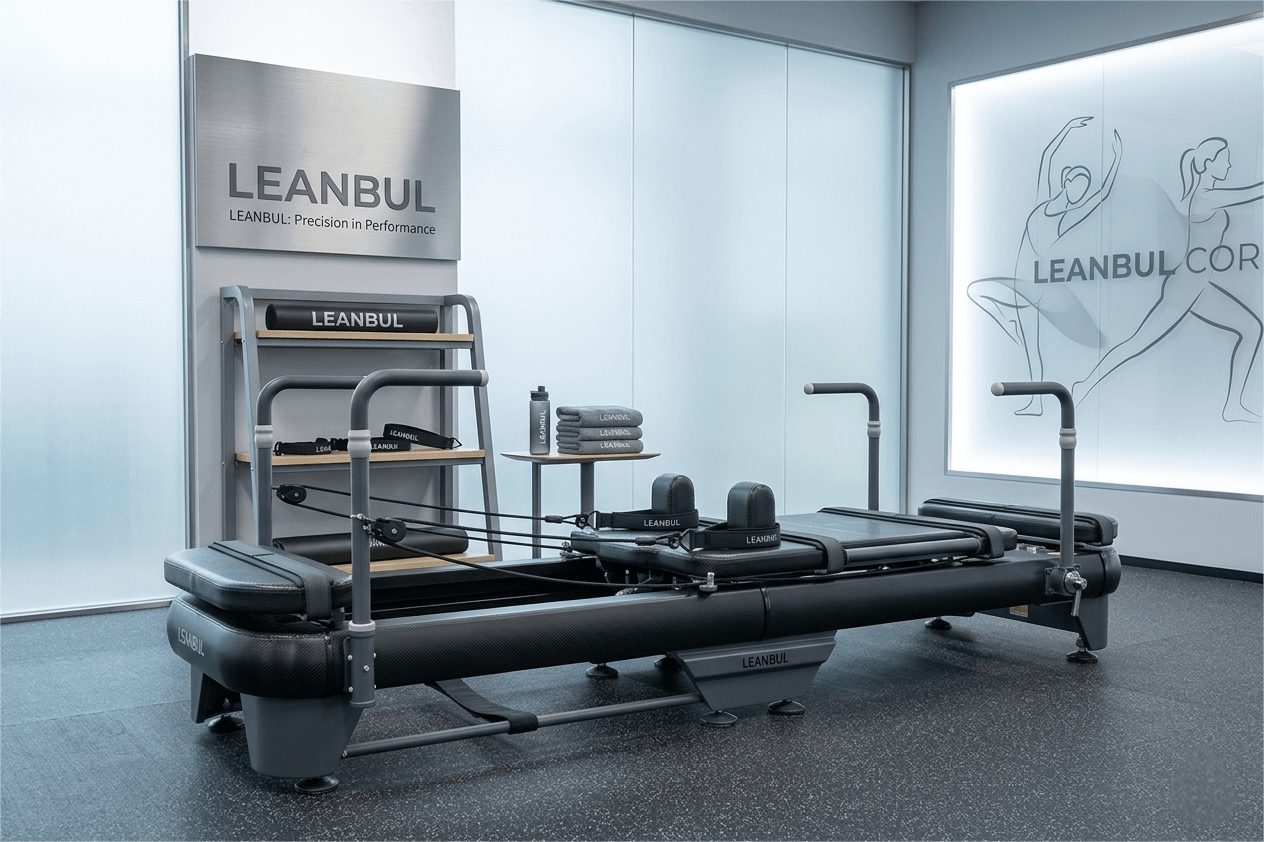
The registration itself is a Gewerbeanmeldung, filed with the district administrative authority (Bezirkshauptmannschaft or Magistrat) depending on where the business sits. You can do it through the Gründerservice or your regional Wirtschaftskammer office, or electronically through GISA, the trade information system. For sole traders and one-person companies, the Unternehmensserviceportal (USP) lets you handle the Gewerbeanmeldung, the tax registration and the social-insurance registration in one place.
Three things to line up first: a trade description that fits what you will actually do, a business address checked against the zoning plan (Flächenwidmung), and your personal documents, plus the qualification paperwork if the trade is regulated. Ask about fee relief too. New founders can apply for exemption from certain fees and charges under the Neugründungs-Förderungsgesetz (NeuFöG).
Two deadlines catch people out. You must notify the Finanzamt of the business opening within one month, using the Betriebseröffnungsbogen. And once annual turnover passes €15,000 with more than €7,500 in cash sales, Austria’s cash-register rule (Registrierkassenpflicht) applies. Membership of the Wirtschaftskammer is compulsory for Gewerbe, charged annually on profit, so build it into your overheads.
Step 3: Get the VAT decision right
Austrian VAT (Umsatzsteuer) has a standard rate of 20%, with reduced rates for specific goods and services that do not touch pilates. Treat 20% as your default.
The decision that matters is whether to use the small-business scheme, the Kleinunternehmerregelung. If your turnover stays within €55,000 in the current and previous calendar year, you are exempt from charging VAT. There is a 10% tolerance on top: if you overshoot by no more than a tenth, you can still issue VAT-free invoices until year end. Cross the tolerance and every invoice from that point is taxable. Non-EU businesses cannot use the exemption.
The trap is the input VAT. As a Kleinunternehmer you do not charge VAT, but you also cannot reclaim the VAT on your costs, including your reformers. Run the numbers before you decide, because the answer flips on fleet size. Six commercial reformers at €3,000 is €18,000, and at 20% the input VAT alone is about €3,600. A studio that fits out a room and buys machines will often come out ahead by opting into normal VAT liability and reclaiming that tax, even though it then charges 20% on classes. The turnaround point is lower than most people guess, so ask a Steuerberater to model both paths.
Step 4: Register for social insurance
As a Wirtschaftskammer member running a Gewerbe, you are compulsorily insured with the Sozialversicherung der Selbständigen (SVS). That covers health, pension and accident insurance, and it is not optional.
The 2026 rates are 6.8% of your contribution base for health insurance and 18.5% for pension, plus 1.53% for the Selbständigenvorsorge, the self-employed pension provision the SVS collects and passes to your chosen fund. Accident insurance is a flat €12.95 a month, whatever you earn. The contribution base is your income from the trade, from the annual income-tax assessment.
Two reliefs matter early on. Under the Neuzugänger rule, your first two calendar years as a Wirtschaftskammer member carry a fixed, income-independent health-insurance contribution of €37.48 a month; pension back-charges can still arrive once your assessment is final, but the health side is capped. And the Kleinunternehmer exemption lets you drop health and pension insurance altogether, leaving only the accident contribution, if your income stays at or below €6,613.20 and your turnover at or below €55,000.
One warning: the GSVG has a minimum contribution base. You pay something even in a year when you earn little or make a loss. Budget for it from month one.
Step 5: Premises, permits and the lease
Your premises are where the trade law and the building law meet.
If your operation counts as a gewerbliche Betriebsanlage, it needs a Betriebsanlagengenehmigung from the district authority before you build or operate. The authority runs either an ordinary procedure, which includes an on-site hearing with neighbours, or a simplified procedure for minor installations. Not every studio needs one; the test is whether the installation harms the protective interests covered by the trade code, chiefly noise, and there is a list of exempt installations. Get this checked before you sign, not after.
Two other layers sit on top: the Flächenwidmung (zoning) must permit a studio at that address, and in mixed residential buildings you will need to think hard about music, footfall and carriage noise.
Then there is the lease. Austrian commercial leases are typically fixed-term and not easy to exit early, so negotiate fit-out rights, permitted use and opening hours in writing rather than chasing a discount on the headline rent. A rent-free fit-out period is often worth more than a lower rate.
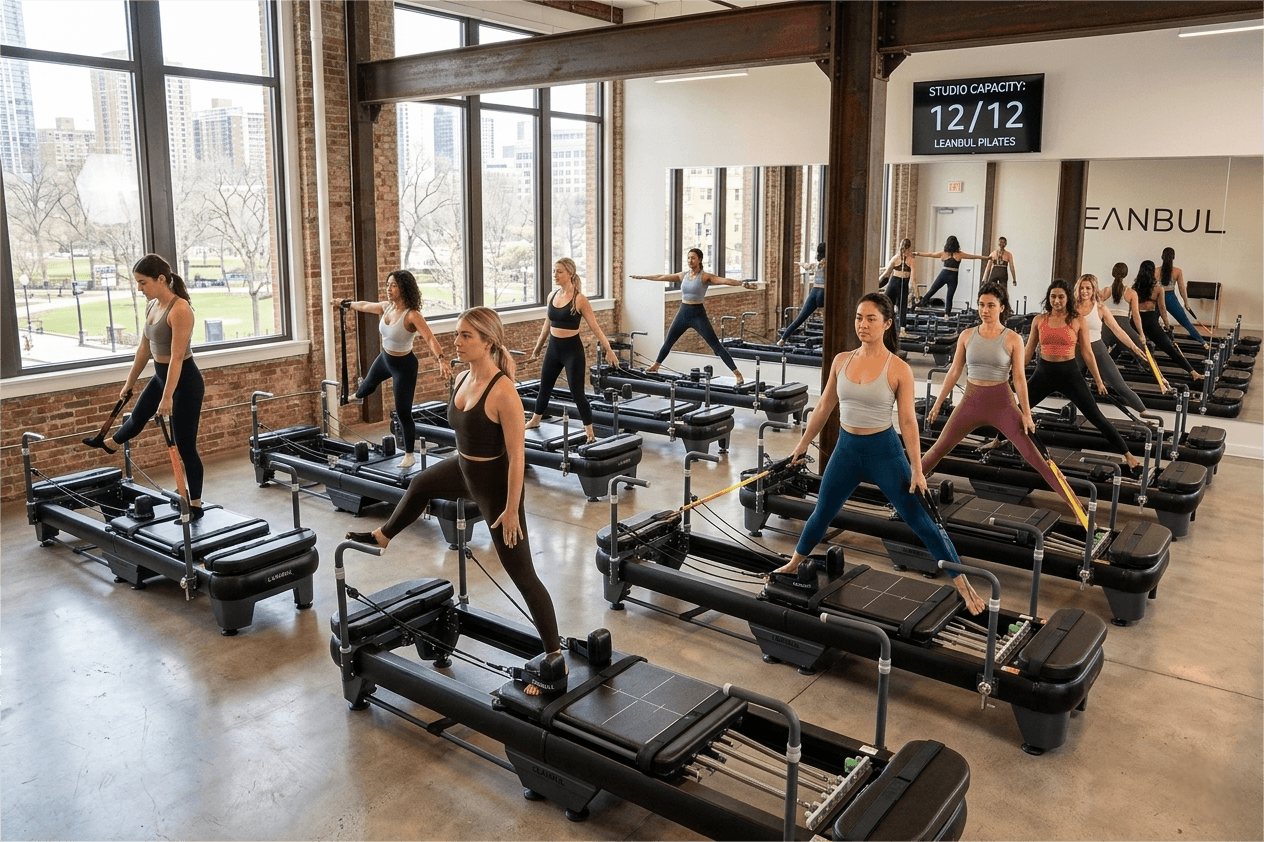
Plan the room around the machines. Each reformer needs roughly a 3 m × 1.5 m working area once you allow for the moving carriage, the client and the instructor, plus circulation. A six-reformer boutique with a small reception and back of house wants about 90 to 130 m².
Step 6: Insurance
Business liability insurance (Betriebshaftpflicht) is the policy that responds when your business injures someone or damages property that is not yours. A slipping client, a broken mirror, a reformer falling through a rented floor. For a studio it is close to essential, and Austrian insurers increasingly ask about the certification of the equipment itself, which is where CE marking and the test reports behind it start to matter commercially, not just legally.
Three more policies are worth pricing: contents and equipment cover for the machines themselves, insured at replacement value rather than what you paid second-hand; professional indemnity if you give programming or rehab-adjacent advice; and employer’s liability, triggered the moment you take on your first employee.
Step 7: Equipment, bought inside the EU
For a studio the specification is settled: you want EN ISO 20957 Class S machines, the commercial classification that insurers and referral partners expect. Class H is home use. A home-rated reformer in a shared studio is a compliance problem, and after an incident it is an insurance problem.
Because Austria is inside the EU, buying from a European manufacturer is clean on tax and logistics. When you buy from a Spanish or other EU supplier, the sale is an intra-Community acquisition: no customs duty, no import clearance, and the VAT is self-accounted under the reverse-charge mechanism, then reclaimed on the same return. You also get a fleet that arrives on EU pallets with EU delivery times, EU spare parts and a warranty you can enforce across borders.
What commercial reformers cost in Europe in 2026:
| Fleet size | Typical price per reformer | Notes |
|---|---|---|
| 1–2 machines | €3,500–6,500 | Retail or showroom, single-unit pricing |
| 3–5 machines | €2,400–3,800 | Small-boutique tier, some room to negotiate |
| 6–12 machines (direct) | €1,900–3,500 | Manufacturer-direct or EU dealer, freight and install quoted separately |
Model the total, not the sticker. Freight, installation, the spare-spring set you will need every couple of years and a realistic service commitment are all part of the cost of ownership. If you run more than one room, hold the supplier to a written spec sheet, because fleet consistency is what protects your brand across sites.
What it costs: a planning budget
These are planning ranges for a six-reformer boutique, not quotes. Vienna and inner-city locations will push the first line up more than anything else.
| Item | Typical range | Notes |
|---|---|---|
| Deposit and first rent | €8,000–20,000 | Around three months’ rent plus charges |
| Fit-out and flooring | €15,000–35,000 | Acoustic floor, mirrors, lighting, small reception |
| Six reformers (direct) | €12,000–21,000 | Class S commercial, excl. freight and install |
| Accessories, springs, smalls | €2,000–5,000 | Spare springs, boxes, straps, mats |
| Registration, notary, accountant | €300–3,000 | NeuFöG may reduce fees; GmbH adds notary |
| Insurance, first year | €1,000–3,000 | Liability, contents, and indemnity if you advise |
| Website, booking, branding | €2,000–8,000 | The booking system is the piece people scrimp on |
Two levers most owners miss. First, the rent-free fit-out period, which is often worth more than a discount on the rent. Second, the VAT decision in Step 3, which can swing your effective equipment cost by around a fifth depending on whether you can reclaim the input tax.
Frequently asked questions
Do I need a licence to open a pilates studio in Austria? No single licence to teach pilates. You register a Gewerbe, choose a legal form, register with the Finanzamt and the SVS, and, for many premises, apply for a Betriebsanlagengenehmigung. If your trade is regulated, or you offer a regulated service, you need the corresponding qualification.
Should I choose an Einzelunternehmen or a GmbH? Teach alone from a rented room and the Einzelunternehmen is cheaper and faster to set up. Sign a long lease or hire instructors and the GmbH’s limited liability is worth the extra administration.
What is the VAT threshold for a small studio in Austria? €55,000 of turnover, with a 10% tolerance, under the Kleinunternehmerregelung. Stay under it and you do not charge VAT, but you also cannot reclaim input VAT on your reformers.
Can I reclaim the VAT on my reformers? If you opt into normal VAT liability rather than the Kleinunternehmer scheme, yes. Equipment bought from another EU country is self-accounted under the reverse charge and reclaimed on your return. On six machines that input VAT is often several thousand euros, so model the decision carefully.
How much social insurance will I pay in the first year? As a Neuzugänger your health-insurance contribution is a fixed €37.48 a month for the first two calendar years, plus the flat €12.95 accident premium, plus 1.53% for the Selbständigenvorsorge. Pension contributions are settled against your final assessment. Note that a minimum contribution base applies even in a loss-making year.
Next step
If you are planning an Austrian studio and want to compare specs, sizes and fleet pricing before you sign a lease, look at the Leanbul reformer collection or the models built for studio rooms: the K30 commercial reformer for full-size studios, the K38 premium reformer for premium and rehab programmes, and the K10 compact reformer where floor space is tight. Leanbul is a Spain-based manufacturer, so your fleet ships from inside the EU with no customs and no import clearance. See pilates studio solutions for fleet layouts, or contact us for a quote.
