Smart Pilates Reformers in 2026: What Connected Machines Do, What They Cost, and Whether Your European Studio Should Buy One
A smart pilates reformer is a reformer with sensors, a screen, or both — usually tied to a subscription content library. The honest answer for most European studios in 2026: the technology is real, the marketing is louder than the payoff, and only a narrow set of operators should buy one today. This guide explains what “smart” actually means on the market right now, separates the genuinely useful features from the gimmicks, and gives you a decision framework built around European conditions: commercial duty classes, data protection law, and equipment that has to earn its keep for a decade or more.
We are a Spain-based manufacturer of commercial reformers, and we sell the deliberately un-smart kind. That gives us a particular view, and we will be open about it. Read the facts, then decide what fits your studio.
What “Smart” Means on the Reformer Market in 2026
The term covers three different things, and brands mix them freely:
| Tier | What it is | Examples on the market | What you actually get |
|---|---|---|---|
| Connected content | Standard mechanical reformer + screen or tablet mount streaming classes | Your Reformer (distributed in the UK by Matrix Fitness), NordicTrack Pilates’ ReformRx series | On-demand or live classes on the machine, no measurement |
| Sensor feedback | Sensors under the carriage measure your movement and score it | Flexia Pilates (home market), ReformRx “smart-spine” tracking | Real-time or post-workout feedback on tempo, control, consistency |
| Full platform | Hardware + subscription + app + coaching ecosystem | Flexia, Frame Fitness, Your Reformer digital studio | Monthly fee on top of the machine, deeper data, content updates |
Flexia, which markets itself as the first smart reformer, embeds sensors beneath the carriage to track three metrics it argues matter most in Pilates: control, speed and consistency. Sports Business Journal covered the launch in 2023, describing real-time feedback on movement quality rather than the usual calorie and heart-rate framing.
The commercial end of the market moved in a different direction. Your Reformer, an Australian brand, has signed Matrix Fitness as its UK distributor, giving gym operators three reformer platforms with digital content built in. NordicTrack’s ReformRx line targets studios, gyms and hotels with commercial-grade connected machines and claims more than 100 on-demand workouts.
The pattern is clear: connected content went commercial first, while sensor measurement is still mostly a home-market feature. That gap matters for European studio owners, because it tells you where the technology is proven and where it is still finding its feet.
Why the Sensors Are Interesting — and Where They Fall Short
Measuring movement is genuinely useful in Pilates. Slow, controlled reps with consistent range are the whole method; a sensor that tells a client their sixth rep was sloppier than their first is coaching data, not vanity metrics.
But put that in a commercial context and the limits show:
- The instructor is already the sensor. In a staffed studio, a trained teacher watching the carriage sees tempo and control live, and can correct in the moment. A screen cannot cue a client’s shoulders off their ears.
- The data serves self-practice. Sensor feedback earns its keep when nobody is watching — solo sessions, hotel gyms in off-hours, corporate rooms. That is where connected hardware has a real job.
- Feedback loops need content. A sensor without a guided program tells you little. The value sits in the subscription, which is a recurring cost the machine alone does not cover.
None of this makes smart reformers bad. It makes them a solution to a specific problem — unattended or self-directed training — not a general upgrade to studio teaching.
The European Reality Check: Compliance, Data and Lifespan
Seen from Europe, three things look different from the US marketing material.
Electronics change the compliance picture. A classic commercial reformer is covered by EN ISO 20957-1, tested as a mechanical training machine, and CE marked accordingly. Add a screen, sensors and connectivity and you bring in the Low Voltage Directive and EMC (electromagnetic compatibility) requirements, plus the General Product Safety Regulation’s expectations for connected products. Ask any smart-hardware supplier for the full CE documentation pack before you commit — our guide to pilates reformer CE certification explains what a complete file looks like.
Movement data is personal data in the EU. If a machine tracks an identifiable member’s movement — or worse, infers anything about their body or health — GDPR applies, and health-related data is a special category with extra obligations under Article 9. A studio collecting control-and-speed scores per user needs a lawful basis, a privacy notice, retention limits and a data-processing agreement with the platform provider. Most small operators have never looked at this. We are not lawyers and this is not legal advice, but any EU studio considering sensor machines should run the data flow past one before signing.
Electronics age faster than steel and springs. A well-built commercial reformer runs 15 to 20 years on spring replacements and routine maintenance — we wrote about lifespan and reformer warranty in Europe separately. A screen and its software will feel dated in three to five years, and a defunct subscription turns a smart machine into a heavy dumb one. Check what happens to the hardware when the content platform changes or the company folds — this is a young industry and some of its stars are startups.
Smart vs Classic Commercial: A Cost Comparison
Pricing frames the decision better than features do. Frame Fitness sells a home smart reformer at US$4,999 with a US$39.99 monthly subscription on top. For context, a commercial-grade reformer in Europe runs €2,800 to €6,500 in 2026, with most studios paying €3,200–5,000 (full breakdown in our European cost guide). The smart machine matches the price of a premium commercial one, then adds a subscription worth roughly one class every month, per machine, for as long as you keep the content.
| Factor | Smart/connected reformer | Classic commercial reformer (e.g. Leanbul K30, K38) |
|---|---|---|
| Purchase price | US$4,999–7,000+ typical (home-market pricing) | €2,800–6,500, volume discounts on fleets |
| Recurring cost | Subscription US$30–40/month per machine | None; springs are the only wear item |
| Lifespan | Electronics dated in 3–5 years | 15–20 years with maintenance |
| Data | Tracks movement per user; GDPR obligations in EU | No data collected |
| Compliance | Mechanical + LVD + EMC + GPSR connected-product duties | EN ISO 20957-1 Class S, CE |
| Failure modes | Screen, sensor, software, network | Springs, ropes, bearings — all replaceable parts |
| Best environment | Unattended/self-directed: hotel gyms, corporate rooms | Instructor-led studios, group classes |
A studio replacing one classic machine with one smart machine is not buying an upgrade; it is buying a different product for a different job.
Who Should Buy a Smart Reformer Now — and Who Should Not
Reasonable cases for buying connected hardware in 2026:
- Hotel and resort fitness rooms where guests train alone and content replaces staff (our hotel buying guide covers the wider picture).
- Corporate wellness rooms, for the same unattended-hours reason.
- Studios selling a premium self-practice add-on or hybrid membership.
- Chains standardising on one content system across sites for brand consistency.
Cases where classic machines are the better buy:
- Instructor-led boutiques where teaching quality is the product.
- Any studio where the numbers are tight — the subscription is a permanent operating cost.
- Operators who want equipment that holds resale value and accepts any teacher’s method, not one platform’s programming.
If you want the content without the hardware commitment, every studio can do what smart machines do with a projector, a tablet or the members’ own phones. The screen does not need to be bolted to the carriage.
Our Position, Stated Plainly
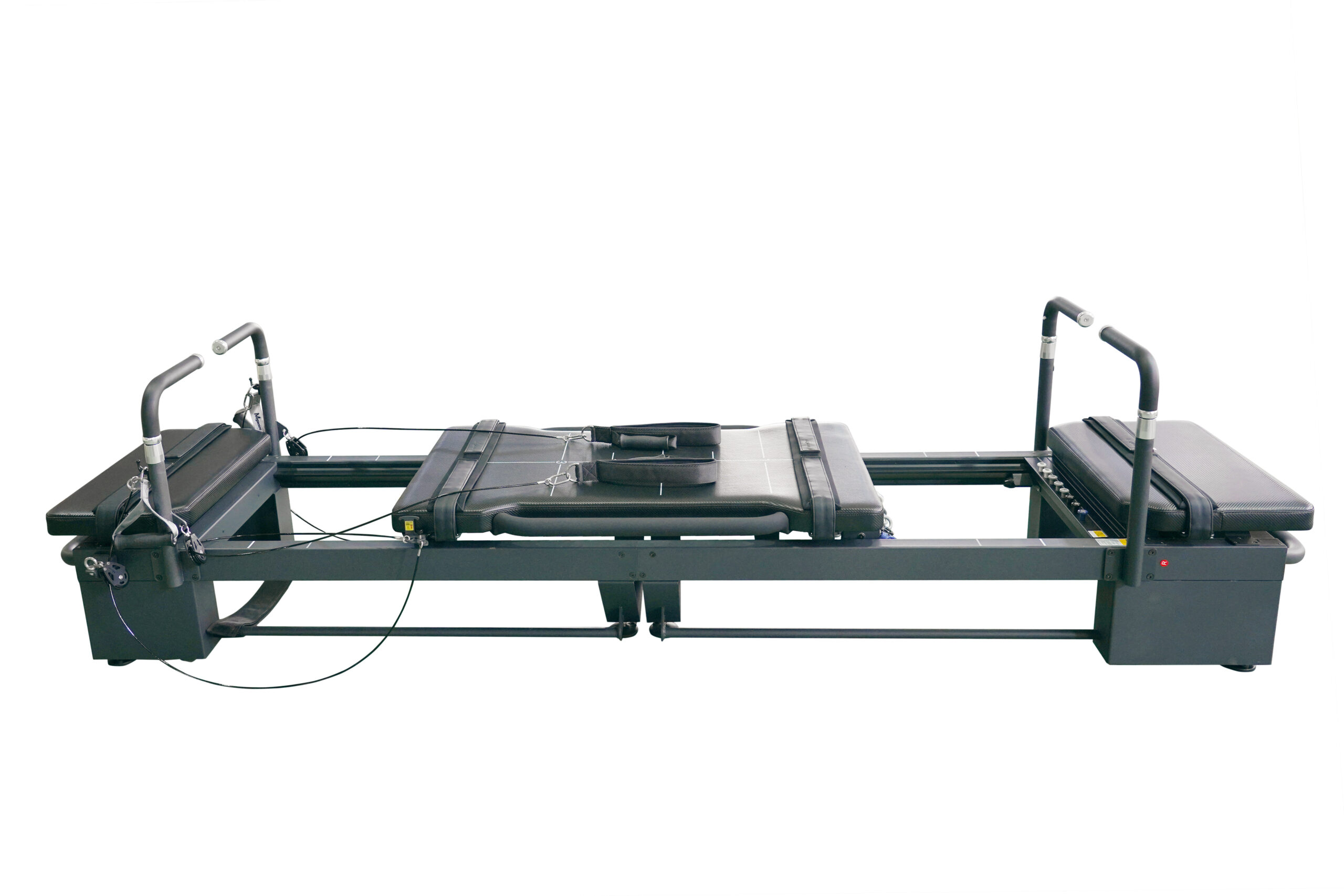
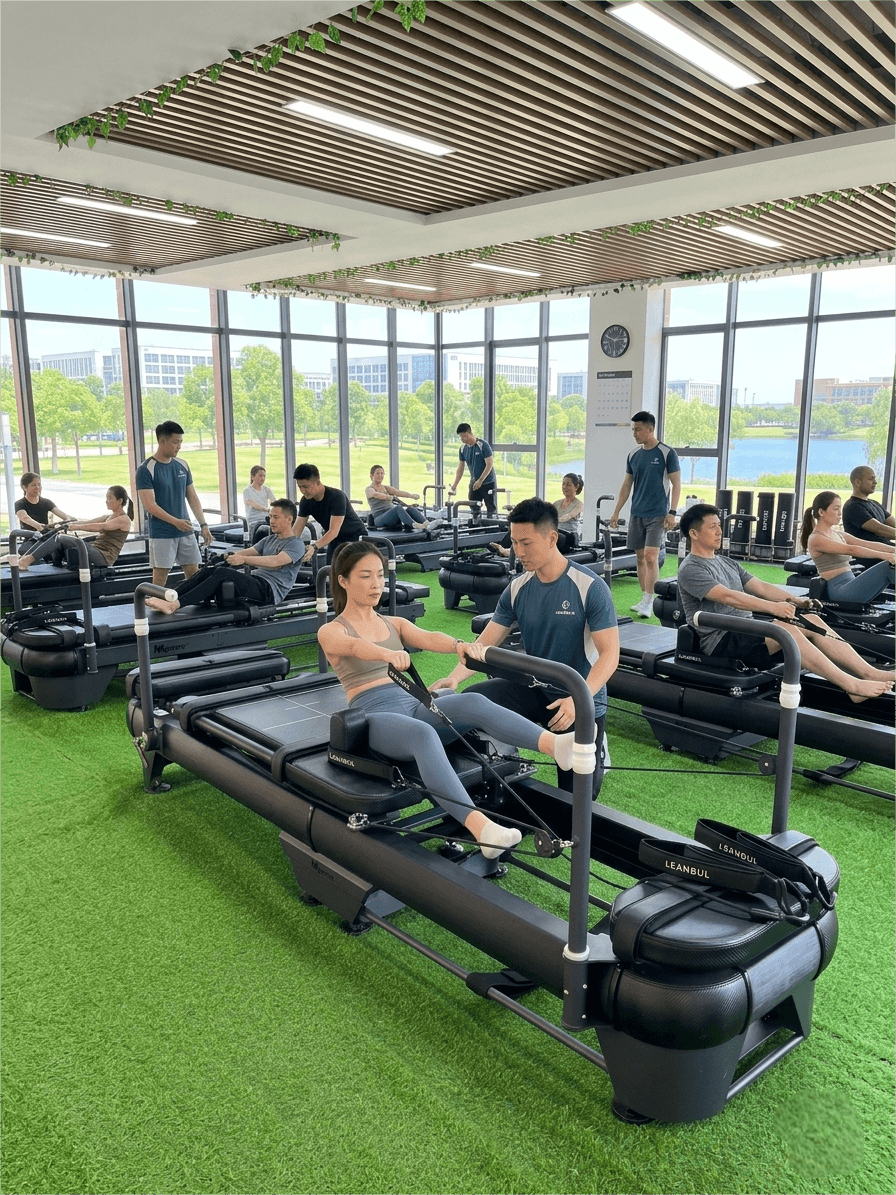
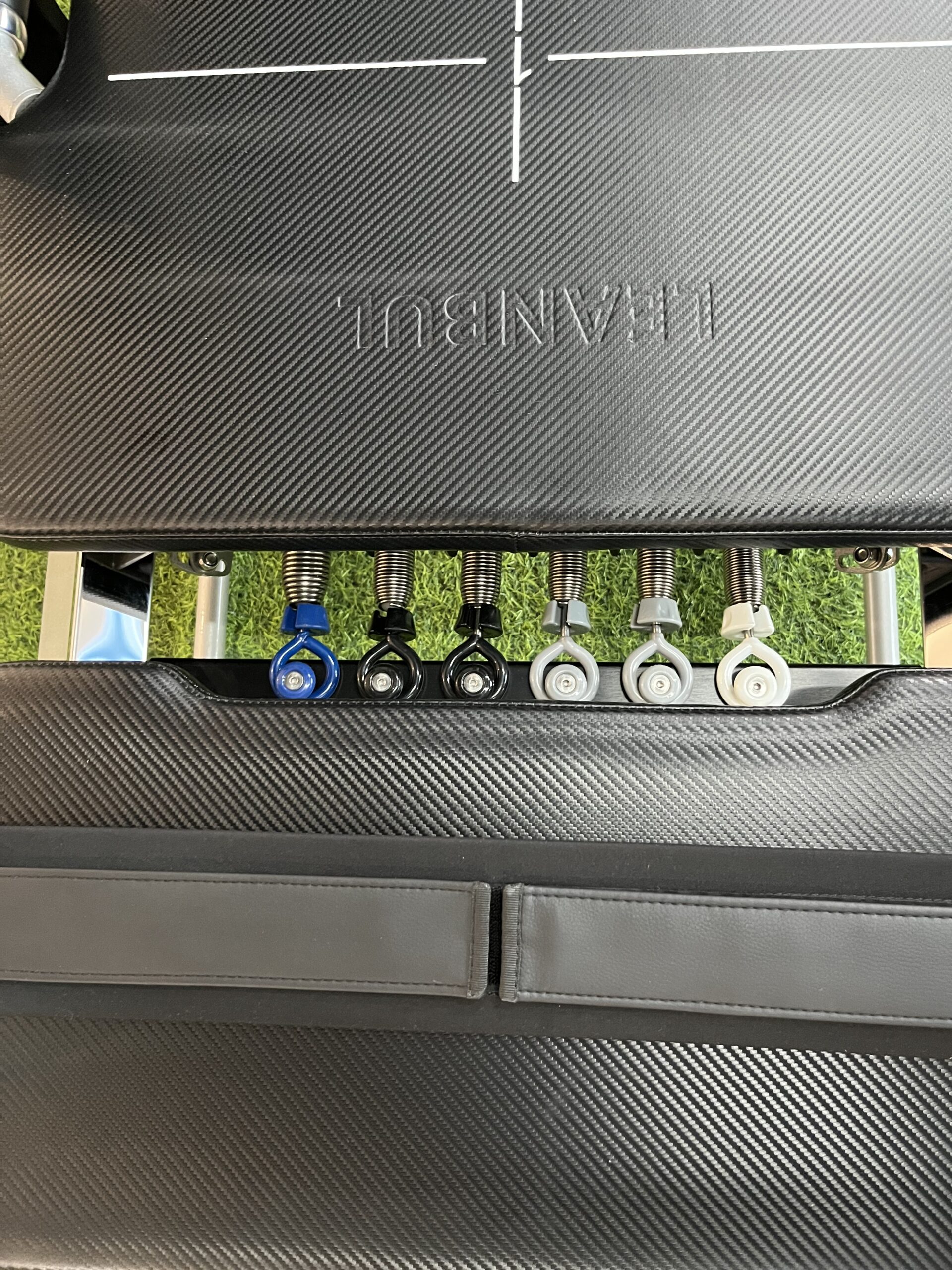
We build the classic kind on purpose. The K30 commercial reformer — aluminium frame, precision spring resistance, a carriage system built for continuous group use — has no screen, no subscription and nothing to leak. The K38 premium reformer is the same philosophy in a higher-spec machine for front-of-room placement. Technology belongs in your booking system, your teacher training and your marketing — not necessarily inside the machine your clients lie on.
That is a commercial opinion from a manufacturer with a stake in it. It is also, we think, the right call for most of the European studios we supply. When a connected machine genuinely serves your model — unattended hours, remote coaching, branded content — buy one for that job, not for the whole floor.
FAQ
Is a smart pilates reformer worth it for a studio?
Only if members train on it without an instructor. For staffed, instructor-led studios the subscription cost rarely pays back; the machine’s measurement features duplicate what a teacher already does live.
Does GDPR apply to smart reformers in the EU?
Yes, when movement data is linked to an identifiable person. If the data could reveal anything about health, it is a special category under Article 9, which means stricter conditions, a documented lawful basis and a processing agreement with the platform provider.
Are connected reformers CE certified the same way as classic ones?
No. A classic machine is tested to EN ISO 20957-1 as a mechanical training machine. Adding electronics brings in the Low Voltage Directive, EMC requirements and the connected-product duties under the General Product Safety Regulation. Ask for the complete documentation pack.
Can a classic reformer studio offer on-demand classes without smart hardware?
Easily. Projectors, wall-mounted tablets or members’ phones stream the same content libraries. The flexibility is better and the hardware cost is a fraction of one connected machine.
Do smart reformers hold their value like classic commercial machines?
No. The mechanical core ages well, but screens and software date quickly, and a dead subscription platform can leave the machine stranded. Classic commercial reformers keep resale value and accept any teaching method.
If you are equipping a studio and want machines that do one job well for twenty years, talk to us about the K30 and K38 — or request a quote and we will walk through fleet pricing, delivery across the EU and the compliance file with you.