The Pilates Market in the Netherlands in 2026: Growth, Studio Trends and Equipment Demand
The pilates market in the Netherlands is one of Europe’s most mature, and one of the most competitive for reformer Pilates. Around 18% of the population holds a gym membership, roughly double the European average, and weekly fitness participation has risen from 14% of people aged 12 to 79 in 2001 to 27% by 2022. That maturity changes what buying a reformer looks like. Demand is steady and proven, but Dutch studios and gyms expect a level of equipment quality, service and price transparency that newer markets are still working up to.
This guide is for studio owners, gym operators and equipment buyers working in the Netherlands. It sets out where reformer demand is concentrated, what Dutch buyers actually ask for, how BTW and intra-EU purchasing work, and what we see from the Spanish side when we quote a Benelux project.
The Pilates Market in the Netherlands in Numbers
| Metric | Figure | Source |
|---|---|---|
| European fitness members (2025) | 75.5 million | EuropeActive/Deloitte, EHFMR 2026 |
| European clubs (2025) | 67,515 | EuropeActive/Deloitte, EHFMR 2026 |
| European revenue (2025) | €39.1 billion, +9.1% | EuropeActive/Deloitte, EHFMR 2026 |
| European penetration, total population | 9.3% | EuropeActive/Deloitte, EHFMR 2026 |
| Dutch fitness penetration (2026 est.) | about 18% | Basic-Fit investor presentation, 2026 |
| Dutch gym members (2026 est.) | about 3.3 million | Basic-Fit investor presentation, 2026 |
| Dutch people aged 12–79 doing weekly fitness (2022) | 27%, about 3.9 million | Mulier Instituut |
| Dutch fitness centres (latest structural count) | around 2,300 | Statistics Netherlands (CBS) |
| Dutch gym and fitness club market value (2025) | about USD 1.9 billion | MarketLine |
Two things stand out. First, penetration. Dutch fitness penetration sits near 18%, close to double the European average of 9.3%, which means the easy growth from getting new people through the door has already happened. Second, usage intensity. Dutch research found that 63% of people who exercise weekly do it at a fitness club, putting the country second out of 19 markets studied. When you already have most of your addressable audience, you grow by selling better programmes, not just more memberships. Reformer Pilates sits squarely in that second category.
Why a Mature Market Still Has Room for Reformers
A mature market is not a saturated one. It is a market where the mix shifts. Three forces keep reformer demand moving in the Netherlands even as headline membership growth flattens.
Movement quality and longevity. The Dutch industry body NL Actief has pointed to a clear shift in what members want: not just activity, but mental wellbeing, injury prevention and long-term health. That language is reformer Pilates language. It favours a controlled, low-impact, instructor-led product over higher-impact formats.
An ageing, active population. The Netherlands has one of Europe’s older populations and a healthcare system that leans toward prevention and exercise referral. Prevention is cheaper than treatment, and reformer work is easy to justify clinically for backs, hips and posture. Physio-adjacent studios and medical fitness models are pulling equipment demand with them.
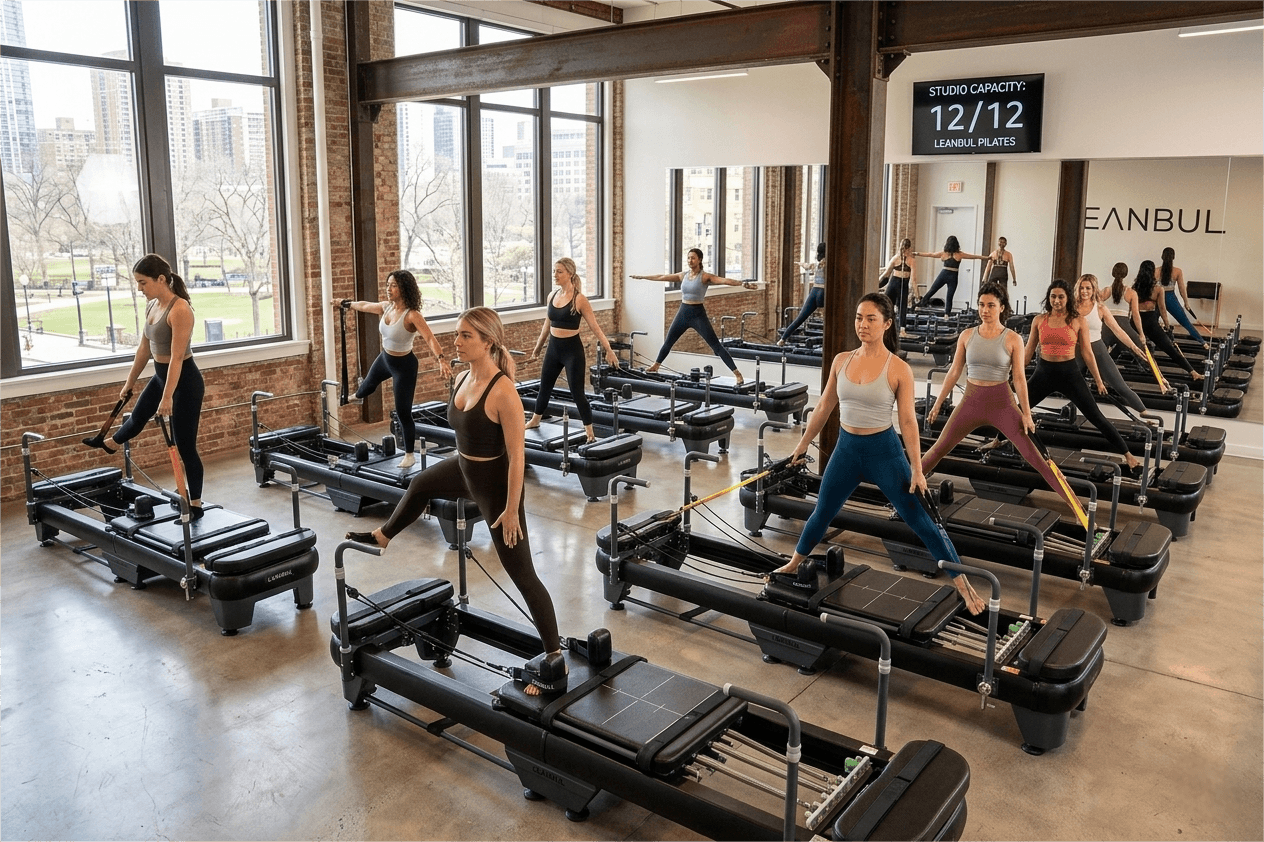
A squeezed mid-market. Budget chains own the low end, so a decade of growth has pushed independent operators upmarket. Translation: more boutique rooms with eight to twelve premium machines, less generic gym floor.
For context, the whole continent is expanding fast. The European Health & Fitness Market Report 2026, published by EuropeActive and Deloitte, put Europe at 75.5 million members, 67,515 clubs and €39.1 billion in revenue for 2025, a 9.1% revenue rise. The Netherlands is not the fastest-growing market in that picture. It is one of the most valuable per capita, which matters more when you are selling machines rather than memberships.
Where Reformer Demand Is Concentrated
Amsterdam leads, and the reason is not just population. The city has the highest concentration of boutique reformer studios in the country, a population that treats fitness as design-conscious lifestyle spending, and a large community of English-speaking expats who already trained on reformers in London, New York or Sydney. That last group matters commercially: they arrive already knowing what a good carriage feels like.
Rotterdam comes next, with a younger, more industrial-city clientele and strong demand for functional, strength-oriented reformer programming. Then Utrecht and The Hague, both of which give you the two things boutique studios chase, affluent city-centre catchments and a dense mix of offices and universities. Haarlem, Eindhoven and Groningen round out the picture, with Eindhoven’s tech and design cluster generating an unusually strong appetite for connected and data-driven equipment.
Two structural features are easy to miss from outside. The Netherlands is small enough that a single operator can run three or four locations within an hour’s drive, so fleet standardisation matters more here than in France or Spain. And Rotterdam and Schiphol together make the country a logistics gateway for the whole Benelux region, which is why so many European equipment sellers hold stock there rather than further south.
What Dutch Buyers Look For
Ask a Dutch studio owner what decides a reformer purchase and the list is deliberately unromantic.
- Certification you can verify. Dutch buyers ask for the paperwork, not the sticker. CE marking under EN ISO 20957 with Class S for commercial use, plus the test reports behind it, is a baseline question rather than an afterthought.
- Quiet operation. Many studios sit in mixed-use and residential buildings in dense city centres. A carriage and pulley system that runs quietly is a practical requirement, not a luxury.
- Compact, efficient footprints. Amsterdam and Utrecht rents punish wasted floor space. Machines that fit a tight eight-station room without feeling cramped sell better than oversized platforms.
- Service inside the EU. Dutch operators have little patience for a three-week wait on a spring set. Stocked EU spare parts and a realistic response time close deals that a lower headline price does not.
- Documentation in English or Dutch. Manuals that a new instructor can actually read on day one get used. Badly translated ones get ignored, and ignored manuals are how equipment gets damaged.
Reformer Specs Dutch Studios Ask For
| Requirement | Why it matters in the Netherlands |
|---|---|
| CE marking and EN ISO 20957 Class S | Commercial studios and physio-linked buyers require it, and insurers ask about it |
| Adjustable spring resistance | Mixed-ability group classes plus rehab work in the same room |
| Low-noise carriage and pulley system | Dense city-centre and mixed-use buildings |
| Compact footprint option | Amsterdam and Utrecht rents reward efficient layouts |
| Durable frame with a clean finish | Dutch studios treat the reformer as part of the room’s design |
| Spare parts stocked in the EU | Downtime is expensive and cross-border parts create delays |
| Clear English or Dutch documentation | Day-one usability for rotating instructor teams |
| Optional connected features | Eindhoven and expat-heavy studios increasingly ask about data and screens |
BTW, Intra-EU Purchasing and What It Costs
Buying equipment as a Dutch business is straightforward once the tax mechanics are clear, and it is one more reason a European supplier beats a distant one.
- The Dutch standard VAT rate, BTW, is 21%. Fitness equipment is not on any reduced-rate list.
- A VAT-registered Dutch business buying from another EU country normally handles the acquisition under the reverse charge: you self-invoice, record the transaction, and account for the BTW yourself, typically recovering it at the same time.
- There is no customs duty inside the EU, because there is no customs border. Importing from outside the bloc adds duty, clearance costs and import VAT before you recover anything.
- The Netherlands is a logistics hub, with Rotterdam and Schiphol driving some of Europe’s lowest inbound freight costs. That advantage shows up in delivery lead times and install scheduling.
Commercial reformers typically land between €2,800 and €6,500 per machine before BTW, depending on specification, finish and fleet size, in line with what European studios pay market-wide. Our Pilates reformer cost guide for Europe breaks the components down.

FAQ
Is the Netherlands a big Pilates market? It is one of Europe’s most mature fitness markets, with penetration near 18% against a European average of 9.3%, and about 3.3 million gym members. Reformer Pilates is a smaller slice than general fitness, but it is concentrated in affluent city centres and growing as budget gyms push independent studios upmarket.
How many gyms and studios are there in the Netherlands? Statistics Netherlands counted roughly 2,300 fitness centres in its most recent structural survey. The reformer-only segment is far smaller and clustered in Amsterdam, Rotterdam, Utrecht and The Hague.
What does a commercial reformer cost in the Netherlands? Expect €2,800 to €6,500 per machine before the 21% BTW, with volume pricing for multi-machine orders. Boutique rooms in Amsterdam and Utrecht often sit in the upper half of that range for extended carriages, heavier spring sets and premium finishes.
Do Dutch studios need CE-marked reformers? Yes for commercial use. Reformers sold for studio, gym or clinic use in the Netherlands should carry CE marking and be classified under EN ISO 20957, with Class S for commercial application. It matters for insurance validity and is routinely requested by clinical partners. See our CE certification guide for EU studios.
Is it cheaper to buy from an EU manufacturer than to import? In practice, yes, once the full landed cost is counted. Buying inside the EU removes customs duty and import clearance, keeps the price in euros, and leaves only the reverse-charged BTW that a registered business recovers.
Equipping for the Dutch Market
The Netherlands rewards operators who treat equipment as a long-term asset. Fleet standardisation is common, studios run multiple sites, and switching machine mid-fleet is unpopular. The operators who set their specification early, on certified machines with EU parts and service behind them, tend to keep that decision for years.
We build commercial reformers in Spain for European studios, gyms, clinics and hotels, and ship across the EU with euro pricing, CE documentation and an after-sales footprint inside the single market. If you are planning a studio in Amsterdam, Rotterdam or anywhere else in the Netherlands, the useful first step is a specification conversation rather than a catalogue order.
Tell us your locations, fleet size and target budget and we will put a Benelux proposal together. Contact us, look at our Pilates studio solutions, or browse the full collection. To compare neighbouring markets, read our reports on Germany, France, Italy and Spain.
See the machines Dutch operators buy most: the K30 commercial reformer for studio and gym floors, the K38 premium reformer for boutique rooms, and the K10 compact reformer for smaller city-centre spaces.