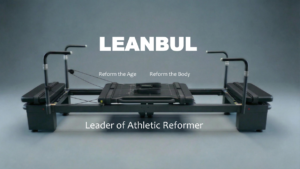
Pilates Reformers for Corporate Wellness in Europe: What Employers Should Know Before Buying
Corporate wellness pilates reformer programs are growing across Europe, and the machines are showing up in company fitness rooms, headquarters gyms and shared office wellness spaces. If you are an employer, HR lead or facilities manager reading this, the short version: a reformer in the office can work very well, but buying for a workplace is not buying for a studio. The questions that matter are liability, who teaches, how often the machine actually gets used, and what happens to employee data around it. This guide walks through all of them from a European perspective — EU safety law, CE marking, GDPR and B2B purchasing — because the rules here differ from the US wellness playbook.
We are a Spain-based manufacturer of commercial pilates reformers, and a growing share of the enquiries we take now come from companies rather than studios. Here is what we tell them.
Why European Employers Are Looking at Reformers
The workplace case for pilates rests on two uncomfortable statistics. The European Working Conditions Survey 2024, run by Eurofound, found that 40% of EU workers sit for extended periods at work. And in Eurofound’s long-running research on work-related stress, stress ranks as the second most common work-related health problem in the EU — behind only back pain, the classic office complaint that pilates was literally designed to address.
Add the business context: fitness software company Glofox now lists corporate wellness among its fastest-growing fitness business models for 2026, on the argument that stress, burnout and disengagement have become measurable business risks. The fitness industry itself keeps growing — Europe counts 67,515 health clubs with 75.5 million members and €39.1 billion in annual revenue, per the EuropeActive/Deloitte European Health & Fitness Market Report — and employers are part of that demand curve, not separate from it.
Reformers fit the office better than most equipment: small footprint per user, low impact, quietly corrective for desk posture, and teachable in small groups. That is the honest upside. The downsides are operational, and they are the rest of this article.
The Three Formats That Actually Work
Companies rarely buy one reformer and stop. The realistic options:
| Format | How it works | Space & equipment | Typical cost picture | Best for |
|---|---|---|---|---|
| In-house reformer room | 2–6 machines in a dedicated office room, taught by a hired instructor 2–5 days/week | 15–20 m² per machine incl. teaching space | €3,200–5,000 per machine + instructor fees | Companies with 150+ employees and a wellness culture |
| Subsidised studio membership | Employer pays for employees’ classes at local studios | None on-site | Negotiated corporate rates per class | SMEs and hybrid teams without office space |
| Visiting instructor model | Instructor brings portable equipment or runs sessions in a hired room | Minimal; often a meeting room | Per-session fee | Smaller teams testing demand first |
The in-house room is the option that involves buying reformers, and it is where most mistakes happen. The single biggest one: buying machines before knowing who teaches and how often the room will be booked. A reformer that sits unused is not wellness, it is a €4,000 coat rack. Start with a booked instructor and a waiting list, then buy the machines.
Liability, CE Marking and Insurance: the Part US Articles Skip
This is where European employers need to slow down. Under the EU framework on workplace safety, employers have a duty to ensure the health and safety of workers — and equipment you place in the workplace must be safe. In practice that means three things:
- Buy CE-marked machines rated EN ISO 20957-1 Class S (commercial/studio class). Class S is tested for repeated professional use by many different bodies. “Home” class machines (Class H) are not built for the wear a corporate room sees, and the distinction is not marketing — it is the test standard.
- Keep the documentation. The Declaration of Conformity, test reports and instructions must be on file. If an incident happens, the employer — not the equipment supplier — carries the duty of care toward the employee. Our pilates reformer CE certification guide details what a compliant file contains and why insurers ask for it.
- Check your insurance covers the activity. Corporate liability policies sometimes exclude fitness equipment or instructor-led exercise. Tell your broker what you are installing before you install it, and confirm the instructor carries their own professional liability cover.
None of this is bureaucracy for its own sake. A corporate wellness program that injures someone, or that uses equipment without a compliance file, is a liability event that no HR team wants to explain.
What to Spec for an Office, Not a Studio
Office environments punish equipment differently than studios do:
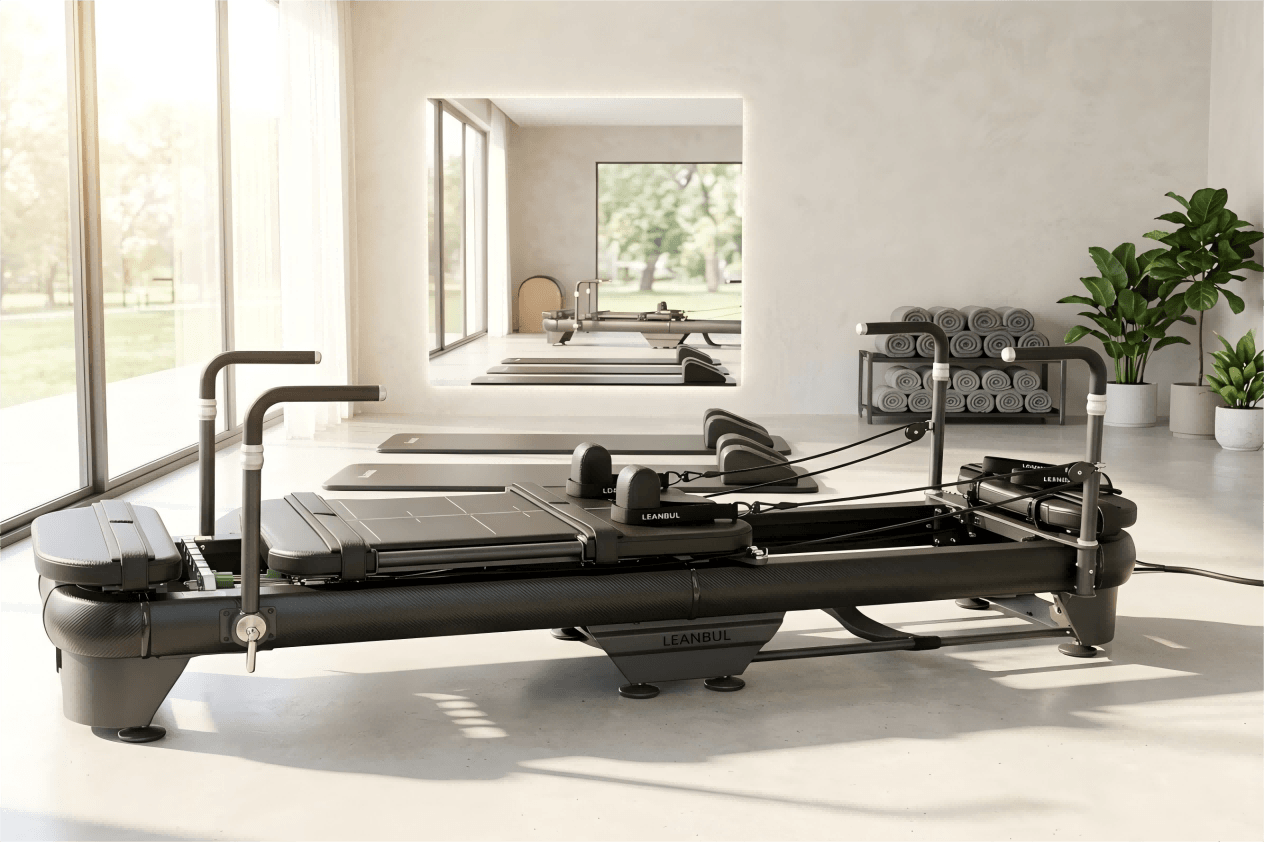
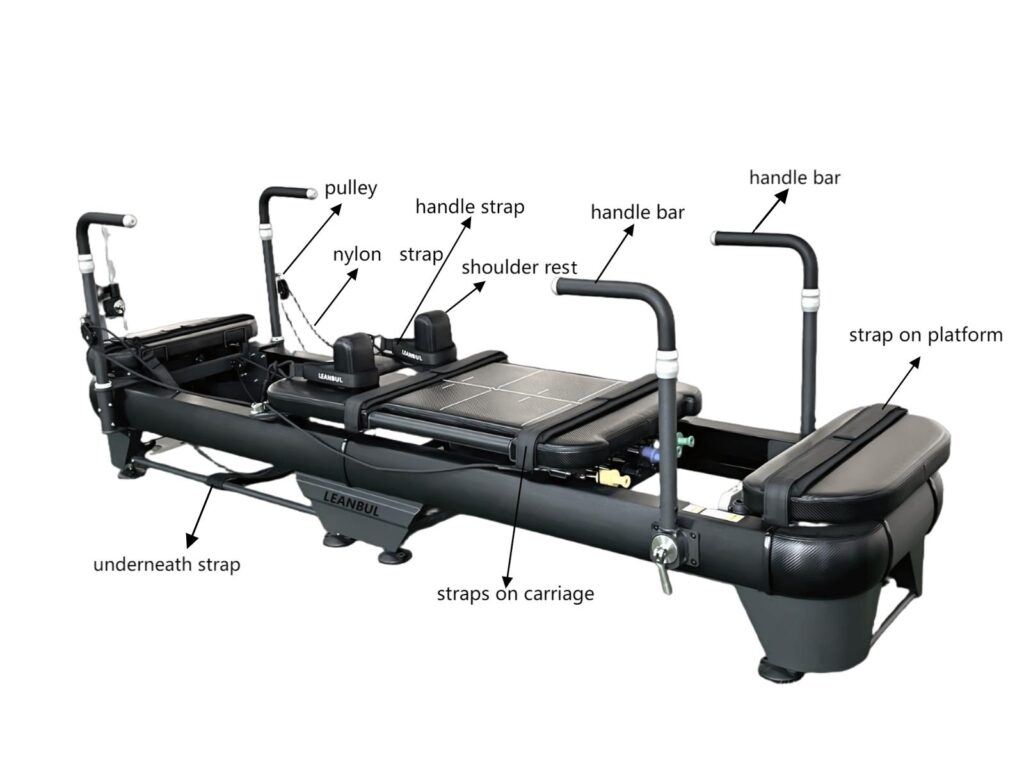
- Commercial build, always. Corporate rooms get novice users of every age and body type, often without an instructor present during self-practice. The machine takes more abuse per hour than a studio machine, not less. The aluminium-frame K30 commercial reformer is the model we most often quote for corporate rooms — smooth carriage, precise spring resistance, and built for continuous daily use.
- Compact machines for tight rooms. If the space is a converted meeting room, the K10 reformer is our compact commercial option — the same professional build in a smaller footprint. Measure the room before you order; delivery access in office buildings (lifts, corridors, door widths) is a real constraint our EU delivery guide covers.
- Noise and floor. Reformers on hard office floors need matting; sprung studio floors are rarely an option upstairs. Carriage noise is minimal on quality rails, but check the floor load and the neighbours below — offices above other offices have a noise complaint risk that studios on ground floors never think about.
- Maintenance needs an owner. Springs are wear items and need replacement on a schedule. Assign one person — facilities or the instructor — to own inspection and servicing. Our warranty guide for European buyers explains what a manufacturer should guarantee and what counts as consumables.
What It Costs, and How European Companies Buy
Machine pricing in Europe runs €2,800–€6,500 per commercial reformer in 2026, with most buyers paying €3,200–5,000 — the detail is in our European cost guide. Corporate buyers usually add instructor fees (€40–80 per session depending on city), matting, and a booking system.
Three B2B specifics worth knowing:
- Intra-EU purchases are VAT-simplified. Buying from a manufacturer in another EU country as a registered business means no import duty and a reverse-charge VAT mechanism — the supplier invoices net and you account for VAT locally. Buying from outside the EU means customs, duty and import VAT; we explain the landed cost difference in our importing guide.
- Leasing is an option. Several European operators lease rather than buy, spreading the cost over 3–5 years — we compared the structures in our leasing and financing guide for Europe. Useful if the budget is an opex decision rather than capex.
- Ask for the compliance file with the quote. A corporate purchaser should receive the Declaration of Conformity and test reports at the same time as the price. Any supplier who hesitates is telling you something.
Making the Program Stick: Usage, Data and Privacy
Equipment is the easy 20%. The other 80% is habit:
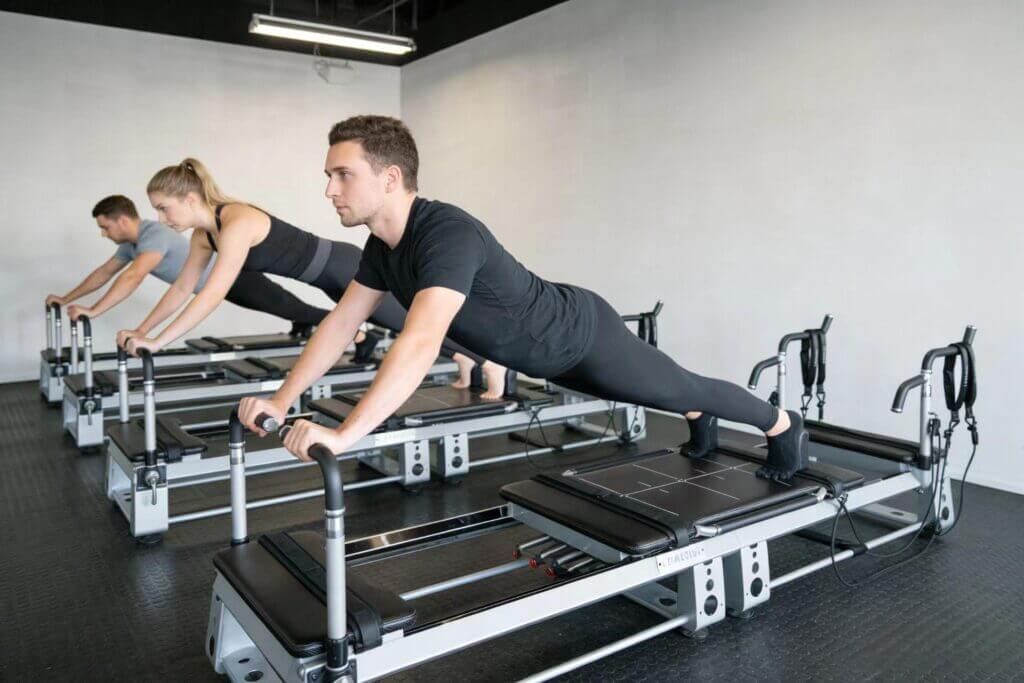
- Instructor-led sessions drive usage. Self-serve machines in offices get sporadic use; booked small-group sessions with a teacher create routine. Most successful corporate rooms run 2–4 instructor days a week plus open slots for confident employees.
- Keep employee data minimal. If you collect health questionnaires or intake forms for the program, that is health data under GDPR — you need a lawful basis, a privacy notice and restricted access. If the reformers themselves track movement data per user (some “smart” models do), the data-protection obligations expand further; we dig into that in our smart reformer explainer.
- Measure participation, not health. Attendance and satisfaction are safe, useful metrics. Collecting health outcomes turns a perk into a data-processing project.
- Start small and prove demand. Two machines, one instructor, one day a week. When the waitlist is real, scale the room. This mirrors how we advise studios, and it works for offices too.
FAQ
How much does a corporate pilates reformer program cost?
Commercial-class machines run €2,800–6,500 each in Europe, with most corporate buyers in the €3,200–5,000 band, plus instructor fees of roughly €40–80 per session and small fit-out costs. A two-machine pilot room typically lands between €8,000 and €15,000 all-in (machines, matting, setup) before instructor fees.
Who teaches the classes — and do we need a certified instructor?
Yes, use a certified pilates instructor, ideally one experienced with reformers. Employer liability for injury is the reason: a qualified teacher running controlled sessions is a different risk profile from untrained self-practice.
Do we need CE-marked equipment in an office?
Yes. Equipment placed in the workplace must be safe, and CE marking to EN ISO 20957-1 Class S is how you demonstrate it. Keep the Declaration of Conformity and test reports on file and confirm your insurer covers the activity.
Our office is small. Is a reformer realistic?
Yes — one compact commercial machine like the K10 fits in little more than a meeting-room corner, and works for one-to-one sessions with a visiting instructor. Measure doorways and lift access before ordering; we will confirm exact dimensions for your space.
Can we claim VAT back on the equipment?
If you are a VAT-registered business, yes — input VAT on equipment used for employee welfare is generally recoverable, and intra-EU purchases use the reverse-charge mechanism so no import VAT applies. Confirm the treatment with your accountant, as rules differ slightly by country.
If your company is weighing an on-site reformer room, we can help with the part we know cold: machines, compliance files, delivery across the EU and fleet pricing. Tell us about your space and headcount, or browse the commercial range and we will advise on what fits.