The Pilates Market in Finland in 2026: Employer Wellness Money, Self-Practice Studios and the Reformer Specs That Survive Both
Finland is a 5.6-million-person market where equipment pilates grew up faster than most of Europe. Two things explain it: employers can hand staff €540 a year of tax-free exercise money, and studios sell reformer time without an instructor at €15 a visit. Neither is common elsewhere in the EU, and both change what a studio should buy. The machine that wins in Helsinki is not the biggest one. It is the one that survives a room full of members setting their own springs, five days a week, with nobody watching.
What the Finnish market actually looks like
Start with the European frame. EuropeActive and Deloitte put the continent at 75.5 million fitness members, 67,515 clubs and €39.1 billion in revenue for 2025, with penetration at 9.3% of the total population. Finland sits inside a region where the club is the centre of exercise again, not the living room.
At the volume end, Finland is chain-heavy. ELIXIA, the SATS group brand in Finland, reported 71,000 members at the end of Q4 2025 and described itself as the market leader, contributing 9% of group revenue that quarter. That is 71,000 members in a country of 5.6 million, and it tells you the low-price, high-volume model is settled here. A reformer studio cannot compete with that on price per visit. It competes on what the machine does that a squat rack does not.
The boutique layer is where the equipment demand lives, and it is denser than the population suggests:
- Cœur Studios runs equipment pilates in Helsinki, Tampere and Pori, with group classes, unsupervised practice and an on-demand video library.
- Reform Pilates in Matinkylä, Espoo, sells itself as a New York-style boutique and uses a €59 three-class intro to fill the funnel.
- GAIA Studios in Tampere became the first Your Reformer studio in Finland, which means an Australian connected-reformer franchise format has already planted a flag.
- BAY Studios, PW Pilates Wellness Hub and Somatic Studio fill out the Helsinki listing on ClassPass, which is a rough but useful proxy for how many studios are chasing the same booking app users.
Two conclusions for anyone selling or buying equipment here. First, the format is imported and understood: Finnish clients already know what a reformer class looks like, so you are not educating the market, you are competing in it. Second, the market is compact enough that one studio’s reputation travels. A machine that creaks or a spring that snaps in Lauttasaari gets discussed in Kamppi the same week.
The €540 employer benefit, and why it decides your product mix
The Finnish tax administration allows employers to give staff a tax-free exercise and culture benefit. From 2026 the ceiling rose to €540 per employee per year, up from €400, and the scope widened to include physical nature activities. The rules that matter:
- It has to be offered to the whole staff, on equal terms, and it can only be used by the employee.
- It pays for services: classes, memberships, passes, course fees. It is not a cash allowance and it is not a way to buy equipment.
- The employer pays, the employee uses. The invoice goes to the company, not to the individual.
Read that as a studio owner and the product design writes itself. A 10-class card at Cœur’s €210 price fits comfortably inside one employee’s annual benefit, roughly 25 classes across a year if someone spends the whole allowance on one studio. You are not selling a consumer a treat. You are selling a finance department a clean, receipted, tax-free line item that helps with sickness absence and looks good in a wellbeing report.
This is the closest thing Finland has to Sweden’s employer-paid wellness system, and it behaves differently. In Sweden the benefit explicitly cannot cover membership fees. In Finland it can cover exercise services, which means a studio that invoices companies properly is selling into a B2B channel with recurring annual renewal and weekday daytime demand instead of a 6pm crush.
What the benefit does not do is pay for your machines. Capital stays with the studio.
The quiet Finnish model: reformer time sold without a teacher
Look at a real price ladder from Cœur Studios and the business model becomes obvious:
| Product | Price |
|---|---|
| Single unsupervised practice visit | €15 |
| Single instructor-led group class | €25 |
| 10-class card, group classes | €210 |
| Unlimited unsupervised practice, per month | €79 |
| 4 group classes per month | €89 |
| 6 group classes per month | €115 |
| Unlimited group classes, per month | €189 |
Unlimited self-practice at €79 costs less than half of unlimited classes at €189. That is not a discount gimmick. It is the studio monetising machine hours instead of instructor hours, and it only works if the machine can carry the setup on its own.
That has direct equipment consequences, and this is where a lot of imported studio machines fall short:
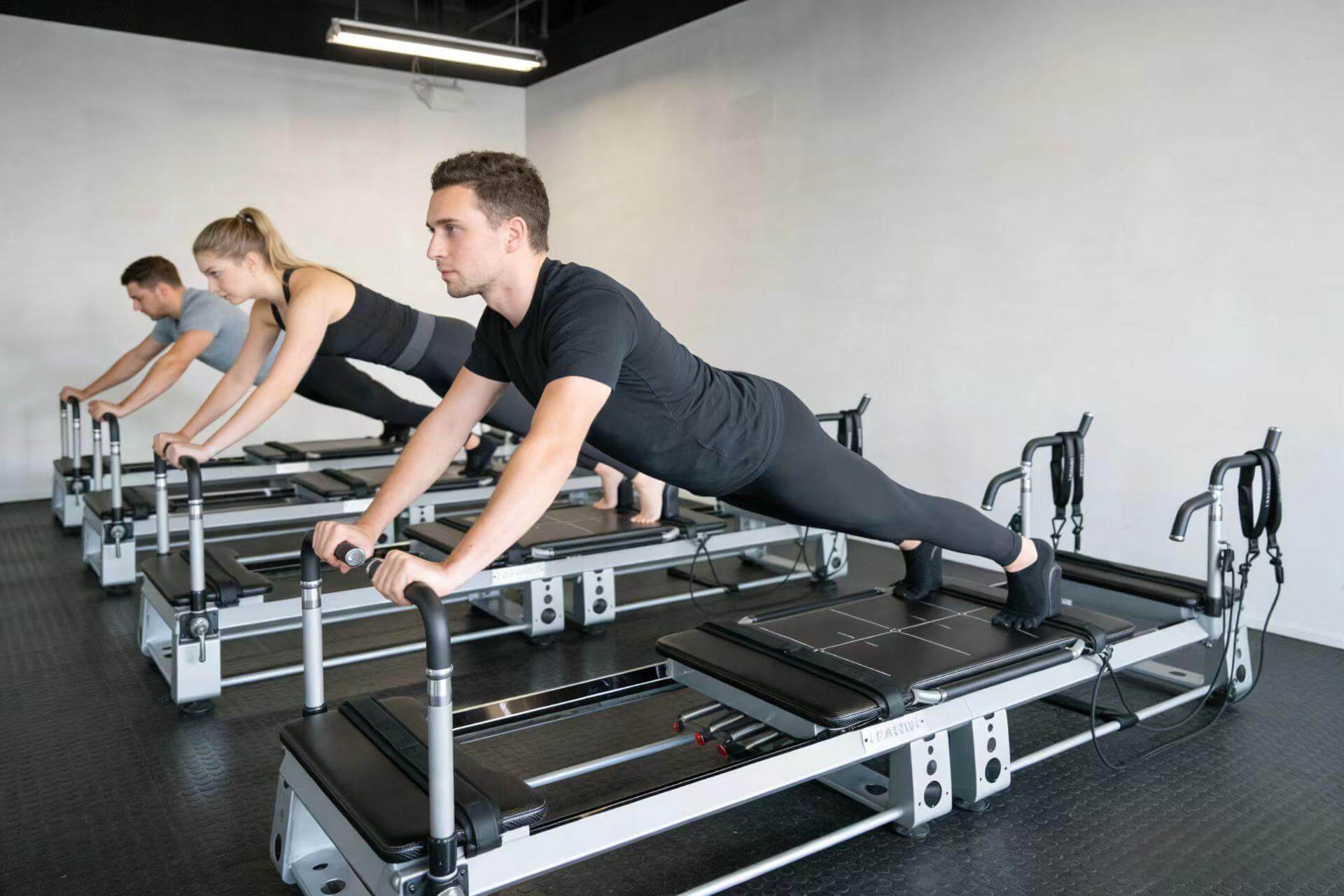
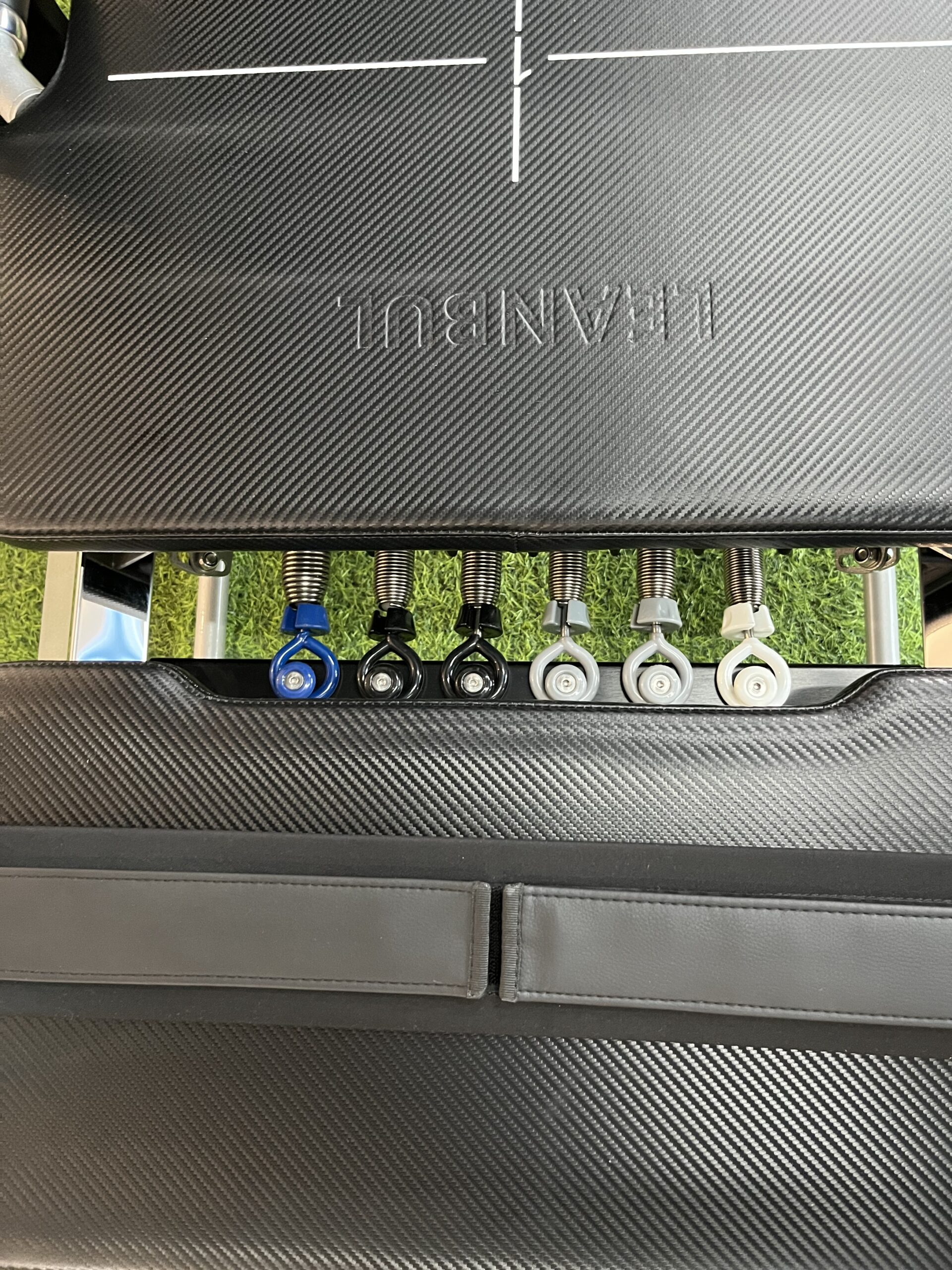
- Spring settings have to be readable from the machine. Numbered spring bars, a printed spring chart per level, and marked carriage stops. If a member has to guess, they will guess wrong and blame the machine.
- Duty cycle goes up, supervision goes down. A self-practice regular trains three to five times a week, so a single reformer can see 40 or more sessions weekly, and no instructor is checking for a stretched spring or a loose rope.
- Upholstery takes the beating. No teacher means no one telling a member to take off a watch, a ring or a belt before lying down.
- Liability needs a paper trail. Who inspects the machine between sessions, and where is it written down? A weekly checklist that takes four minutes is cheaper than one incident report.
- Insurance has to know. Unsupervised member use is a different risk profile from a taught class. Tell the insurer before the first member walks in, not after a claim.
| Spec priority | Instructor-led studio | Self-practice studio |
|---|---|---|
| Spring labelling and printed charts | Useful | Essential |
| Upholstery wear resistance | High | Very high |
| Frame material | Wood for boutique feel | Aluminium, easy to wipe down |
| Setup time between users | 2-3 minutes is fine | Under 60 seconds |
| Machine weight and floor loading | Manageable | Must be checked, 110 kg in use |
| Spare springs on site | Nice to have | Mandatory |
| Maintenance log | Recommended | Required by the insurance conversation |
The Finnish VAT split nobody mentions in equipment brochures
Finland has two VAT rates that land on two different parts of a pilates business, and the gap is now wider than it was two years ago. The tax administration’s guidance on sports services is the document to send your accountant.
| Transaction | VAT rate 2026 | Note |
|---|---|---|
| Reformer class, or use of the training facility | 13.5% | Reduced rate since 1 January 2026, down from 14%. The tax administration’s guidance on sports services covers use of sports facilities and the provision of exercise classes |
| Reformer machine purchase | 25.5% | Standard rate |
| Machine bought from another EU country | 0% on the invoice | Reverse charge, you self-assess 25.5% and deduct it if registered |
| Studio turnover under €20,000 | No VAT registration required | You also cannot deduct the VAT on your machines |
That last line is the expensive one. A new studio buying six machines at €3,000 pays €18,000 plus €4,590 of VAT. If the studio is not VAT-registered, that €4,590 is gone, which is 1.5 machines’ worth of money spent on nothing. Voluntary VAT registration is possible even below the €20,000 threshold, and for a studio buying a fleet before opening, it is usually the single biggest line in the business plan that an accountant will argue about. Get that conversation done before you sign the equipment order, not after.
The class rate is the good news. A studio charging €25 a class collects 13.5%, not 25.5%, and that applies to the employer-paid packages too. When you quote a corporate client, be clear whether the €540 benefit is being spent on gross or net prices. It changes how many classes the employee actually gets.
Buy or rent: the €200 a month question
Finland now has B2B reformer rental as a real channel. One European rental operator publishes €200 per month per machine in Finland, including delivery, installation and service, with contracts from one month to 36 months and a buyout option after 12 months that credits 50% of rent paid against the purchase price. Their own published example: a boutique studio in Punavuori took six reformers on a 12-month contract rather than tie up around €30,000.
Run the arithmetic honestly.
Rent for three years: €200 × 36 = €7,200 per machine, and at the end you own nothing unless you exercise the buyout.
Buy factory-direct in Europe: €2,400 to €3,800 per machine for a 3 to 5 unit order, more like €1,900 to €3,500 for 6 to 12. Spread over a ten-year service life, that is €240 to €380 a year before maintenance.
Rental wins in three situations, and they are all short-term: piloting a concept before committing capital, covering a pop-up or a summer season, and bridging the gap while a lease is still unsigned. After month 12, every rented month is money that builds no asset, and the €200 figure starts looking like a finance charge with extra steps.
The halfway house worth asking about is leasing through a Finnish finance company, where the machine is on your balance sheet from day one and the interest is deductible. Our own guide to reformer leasing and financing in Europe covers the structure, and the cost guide for European studios has the price bands by order size.
Freight, climate and the details that decide year three
Finland is in the EU and uses the euro, so a machine shipped from Spain crosses no customs border. The invoice leaves without VAT, you report an intra-EU acquisition, and that is the end of the paperwork. The physical side is less simple.
Distance from our workshop near Valencia to Helsinki is roughly 3,500 to 4,000 km by road, and almost every route includes a ferry leg, either Travemünde to Helsinki or Stockholm to Turku. Budget five to eight extra days compared with a delivery to Germany, and check the ferry schedule before promising an opening date to your first clients.
Winter is the part foreign suppliers underestimate. Indoor humidity in a heated Finnish building in January can sit at 20-30%, which is dry enough to move a wooden frame and dry out leather-look upholstery. Aluminium does not care. If your studio is in an older building with radiators under the windows, put a hygrometer in the room before you choose a frame material, and read our comparison of wood and aluminium reformers with that number in hand.
Three more things to settle in writing before the order:
- Floor loading. A reformer weighs around 110 kg in use with a member on the carriage, concentrated on four feet. Upper-floor studios in older Helsinki buildings need the load spread and the landlord’s sign-off.
- Language. EU product safety rules require safety information in a language the user understands. In Finland that means Finnish, and Swedish where relevant. Ask the manufacturer to confirm what is in the box before you order, not after delivery.
- Spare springs. Springs are consumables. A studio 3,500 km from the factory needs one spare set on the shelf so a snapped spring costs 20 minutes, not six weeks.
What to put in an RFQ to a European manufacturer
If you are specifying a fleet for a Finnish studio, these are the lines that separate a serious quote from a brochure:
- EN ISO 20957-1 compliance, and which class. Commercial studio use is class S, not H.
- CE declaration of conformity, with the standards listed on it, not just a CE logo on the frame.
- Frame material and finish, plus what the supplier says happens at 25% relative humidity.
- Spring bar positions and labelling, and whether a printed spring chart ships with each machine.
- Upholstery spec: material, abrasion rating, and whether the cover is zipped and replaceable or stapled on.
- Spare parts list with prices and lead times from the European warehouse.
- Warranty split: frame, springs, upholstery and electronics are four different warranties with four different durations.
- Delivery terms: who unloads, who assembles, who takes the packaging away.
Our own spec sheet guide has a copy-and-paste version of this list for an RFQ.
FAQ
Is Finland a good market for a new reformer studio in 2026?
Yes, with a caveat. Demand is real, the employer benefit creates a B2B channel, and the self-practice model gives you a second revenue line on the same machines. The caveat is that the market is small and already served by imported franchise formats and rental operators, so a studio that opens with a generic offer and six identical machines has no story to tell. Pick a position: clinical, classical, strength-focused, or the self-practice club model.
Can a Finnish employer pay for pilates classes with the employee benefit?
Yes, up to €540 per employee per year in 2026, provided the benefit is offered to the entire staff on equal terms and is used by the employee. It covers exercise services such as classes and memberships. It does not cover buying equipment, and it cannot be paid out as cash.
Do I pay VAT when I buy a reformer from Spain?
The invoice comes without Finnish VAT under the reverse charge rule for intra-EU acquisitions. You self-assess 25.5% and deduct the same amount if you are VAT-registered. If your turnover stays under the €20,000 threshold and you have not registered voluntarily, that VAT becomes a real cost, so decide on registration before ordering a fleet.
How many reformers fit in a small Helsinki studio?
A working rule is 3 × 1 m of clear space per machine, plus circulation. A 70-80 m² room typically holds 5 to 6 reformers with a small waiting area. For tighter rooms, a compact commercial model such as the K10 keeps the class size without shrinking the carriage.
How long does delivery to Finland take?
Two to three weeks is realistic from a Spanish workshop once the order is confirmed, and the ferry leg adds five to eight days compared with central Europe. Order springs and spare parts with the machines, not after the first breakdown.
Fitting out a studio in Finland?
We build commercial reformers in Spain and ship them across the EU, including Finland, with the CE declaration, EN ISO 20957 documentation and spare parts list in the box. If you are planning a studio in Helsinki, Tampere, Turku or Oulu, send us the room dimensions and the class format and we will come back with a layout and a quote in euros. Start with the K30 commercial reformer for volume studios, the K38 premium reformer for boutique rooms, or the full pilates studio solutions range, and contact us when you want the numbers.
