The Pilates Market in Sweden in 2026: Employer-Paid Wellness, Value Chains and the Reformer Gap
Sweden is the most mature fitness market in Northern Europe and one of the least obvious places to sell a reformer. Membership volume sits with low-cost chains and a member-owned non-profit, average dues are low, and in any Swedish city a new studio is competing with four value chains within walking distance. Yet reformer pilates is the format that keeps selling out, at 280–350 SEK a class, in studios with six to ten machines.
Two things make Sweden different from the German, French or Spanish markets we usually write about. The first is friskvårdsbidrag, the employer-paid wellness allowance that puts up to 5,000 SEK a year of tax-free spending power in every employee’s hands. The second is premises. A Deloitte study presented in London on 21 October 2026 found that access to suitable, economically viable space is now the single biggest brake on gym expansion across Europe, ahead of cost and regulation. Both facts shape what a Swedish studio buys, and how many machines it can justify.
The shape of the Swedish market: volume belongs to value chains
There is no national club census for Sweden, so the cleanest way to read the market is through the operators’ own accounts. The 2024 figures, as compiled in the Swedish trade press, show six operators carrying most of the volume, four of them value-priced:
| Operator | 2024 revenue | Clubs | Model |
|---|---|---|---|
| Nordic Wellness | ~1.9bn SEK | 343 (412 by Jan 2026) | Value gym, group training, PT, padel |
| SATS Sverige | ~1.68bn SEK | 95 | Mid-market, Nordic group |
| Friskis&Svettis | ~1.5bn SEK | 155 | Member-owned non-profit |
| Fitness24Seven | 873m SEK | 179 (300th club opened in Lund, 2026) | Low-cost, 24/7 |
| STC | 778m SEK | 200+ | Low-cost, group training |
| Actic | 573m SEK | 96 gyms + 45 pools | Mid-market, Nordic |
The direction of travel in 2026 is consolidation and premiumisation at the same time. SATS reported Q2 2026 revenue of 1,442m NOK with operating profit up 23% currency-adjusted, and has 18 new clubs in planning. Actic closed Q2 2026 at 172.7m SEK net revenue with just over 146,000 members, and is selling off swimming assets to focus on gym. Scale, for context: the European market reached 75.5 million members across 67,515 clubs and €39.1bn in revenue in 2025, at roughly 9.3% penetration (EuropeActive/Deloitte, European Health & Fitness Market Report 2026).
What that means for equipment buyers: the value chains set the price anchor for “training” in Sweden at a few hundred kronor a month. Anything above that has to be a different product, not a better-equipped version of the same one. That is exactly the space reformer studios occupy.

Why the reformer segment behaves like a different market
Reformer pilates in Sweden is not a 2024 import. Strandhälsan in Falkenberg was the first facility in the country to run reformer as group training and has been doing it for more than 17 years, now with over 50 instructor-led classes a week and demand still climbing. What changed recently is that the format moved from one pioneer to a category with its own supply chain: Veya Reformer launched Veya Academy in October 2026 with Reformerakademin to train instructors, explicitly because demand is outrunning the number of people who can teach well.
Two things follow from that.
The instructor, not the machine, is the bottleneck. A studio with ten reformers and three qualified instructors is a studio with ten underused reformers. Any supplier conversation that starts with equipment and ignores who will teach on it is a conversation about a warehouse, not a business.
Big-box chains are now adjacent to the category. Nordic Wellness lists reformer pilates among its offerings at selected clubs, alongside padel and golf simulators. That does not mean the boutique format is finished. It means the customer arriving at an independent studio has already been told, by a chain, what a reformer looks like. Your differentiation has to be coaching quality, class size and the room, not novelty.
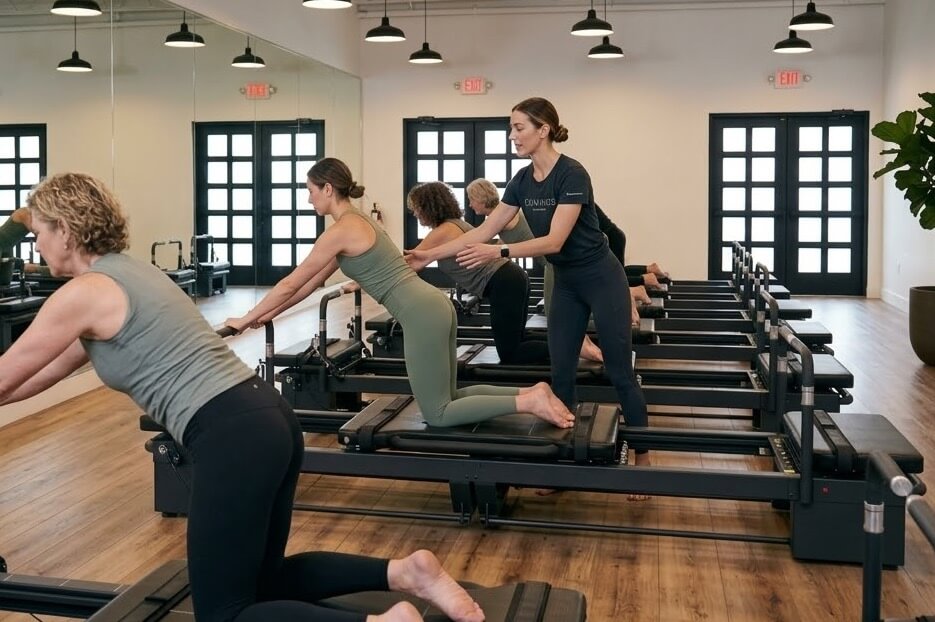
Smaller class sizes are the other visible shift. Six to eight machines per class, 45–55 minutes, higher price per slot, better correction density. That has a direct equipment consequence: at six machines, the per-unit specification matters more than the fleet discount. A wobbly carriage in a twelve-machine room is an annoyance. In a six-machine room where every client is on a first-name basis with the instructor, it is your reputation.
Friskvårdsbidrag: the channel most studios underuse
This is the part of the Swedish market that has no real equivalent in Spain, Italy or Germany, and it deserves more attention than it gets.
Under Skatteverket’s rules, an employer can pay each employee a tax-free wellness allowance of up to 5,000 SEK per calendar year, provided the benefit is offered to all staff on the same terms. Spend more than that and the entire amount becomes taxable for the employee, with employer contributions on top. The allowance must be used for activity with an element of motion, or for simpler wellness that is relaxing rather than athletic.
| Rule | What it means in practice |
|---|---|
| Cap | 5,000 SEK per employee per year; exceeding it taxes the whole benefit, not the excess |
| Fairness | Every employee must be offered the same amount and the same terms |
| Non-motion activities | Massage and similar capped at 1,000 SEK per occasion |
| Equipment | Cannot be used to hire or buy equipment |
| Membership fees | Explicitly excluded, which is where studios get caught |
| Activity list | No fixed statutory list; qualification comes from legal practice and guidance, not a checklist |
| Receipts | Employee pays, submits receipt, employer reimburses; the payment must fall in the income year |
The trap is the fourth and fifth rows. A studio that sells “monthly membership” and issues a receipt saying so is selling something an employee may not be able to claim. A studio that sells a class pack, a course of ten sessions, or a single class, and issues a receipt naming the activity, the date and the amount, is selling something that fits the scheme far more comfortably. Same product, different paperwork, different addressable market.
Three practical moves for a Swedish reformer studio:
- Design the receipt, not just the price list. Activity name, dates, amount, studio’s organisation number. If your booking system only emits “membership”, fix that before you market to employers.
- Sell to the employer, not only the employee. A 20-person company with 5,000 SEK per head has 100,000 SEK of wellness budget a year. A studio that can invoice a company directly, or appear in the corporate wellness portal the company already uses, is competing for budget that has already been allocated.
- Check your own structure with an accountant. Skatteverket no longer publishes a list of approved activities, and the boundary between “activity” and “membership fee” is a matter of how the arrangement is written, not what you call it on Instagram. This is a five-minute conversation with a redovisningskonsult that changes what you can sell.
One more nuance worth knowing: the allowance is capped at 5,000 SEK, but where the employer pays a facility directly for gym access as a benefit in kind, the valuation question is different from a cash allowance. Studios running corporate accounts should get that distinction right before quoting.
What a reformer costs, and what a class sells for
Swedish class pricing sits in a narrow, defensible band. Published 2026 rates from Stockholm and Malmö studios: a two-month commitment at 699 SEK per month with 175 SEK per class credit, ten-class cards at 2,700 SEK, twenty-class cards at 5,200 SEK, unlimited-style memberships around 1,950 SEK per month, semi-private from 3,200 SEK per month, drop-in near 280 SEK.
| Line | Typical Swedish figure (2026) | Note |
|---|---|---|
| Drop-in class | 280–350 SEK | Malmö and Stockholm comparable |
| 10-class card | 2,700–3,000 SEK | ~270–300 SEK per class |
| Monthly membership | 699–1,950 SEK | Commitment length drives the price |
| Semi-private | 3,200+ SEK/month | Higher coaching ratio |
| Commercial reformer, fleet of 6–12 | €1,900–3,500 per unit ex works | Manufacturer-direct, before freight and VAT |
| Commercial reformer, fleet of 3–5 | €2,400–3,800 per unit ex works | Smaller volume, higher unit cost |
| Retail single unit, EU | €3,500–6,500 | Imported brands, dealer margin included |
Run the arithmetic on a six-machine studio at the mid-point of the fleet band: roughly €16,000 of equipment, a room of 90–130 m² including circulation and storage, and classes at 300 SEK with six clients, which is 1,800 SEK per slot before the instructor. Twenty-five classes a week fills the room at about 45,000 SEK a week gross. That is a business. Twelve machines in the same city at 200 SEK a class is a different business, and usually a worse one.
Two currency notes, because they cost real money right now. Swedish VAT (moms) is 25%, one of the highest standard rates in the EU, and it applies to the equipment purchase. Buy from a supplier inside the EU and the transaction is an intra-Community acquisition: no customs, no clearance agent, VAT handled by reverse charge and reclaimed on your return. Buy from outside the EU and you add duty, clearance and a VAT payment at the border before you can reclaim anything.
The second note is the krona. Ask for a quote denominated in SEK, or write a currency clause into the order, or accept that a 5% move between order and delivery on a €16,000 fleet is €800 you did not budget. Suppliers who quote in euro and invoice in euro are not being difficult; they are telling you where the exposure sits.
What to specify when you buy for a Swedish room
Four things come up repeatedly with operators here.
Class S, documented. Commercial use in a membership-based facility means EN ISO 20957 Class S equipment, with the declaration of conformity and test report available on request. Home-rated machines in a shared studio are a warranty and insurance problem waiting for a claim. Under the EU General Product Safety Regulation you also need a traceable EU economic operator behind the product, which is easy with a European manufacturer and awkward without one.
Footprint over headline size. With premises as the binding constraint, the machine that fits the room wins. A 2.4m commercial unit in a 95 m² room usually beats a 2.5m full-length unit in a room that does not exist. Measure door widths, lift dimensions and turning space before you fall in love with a spec sheet.
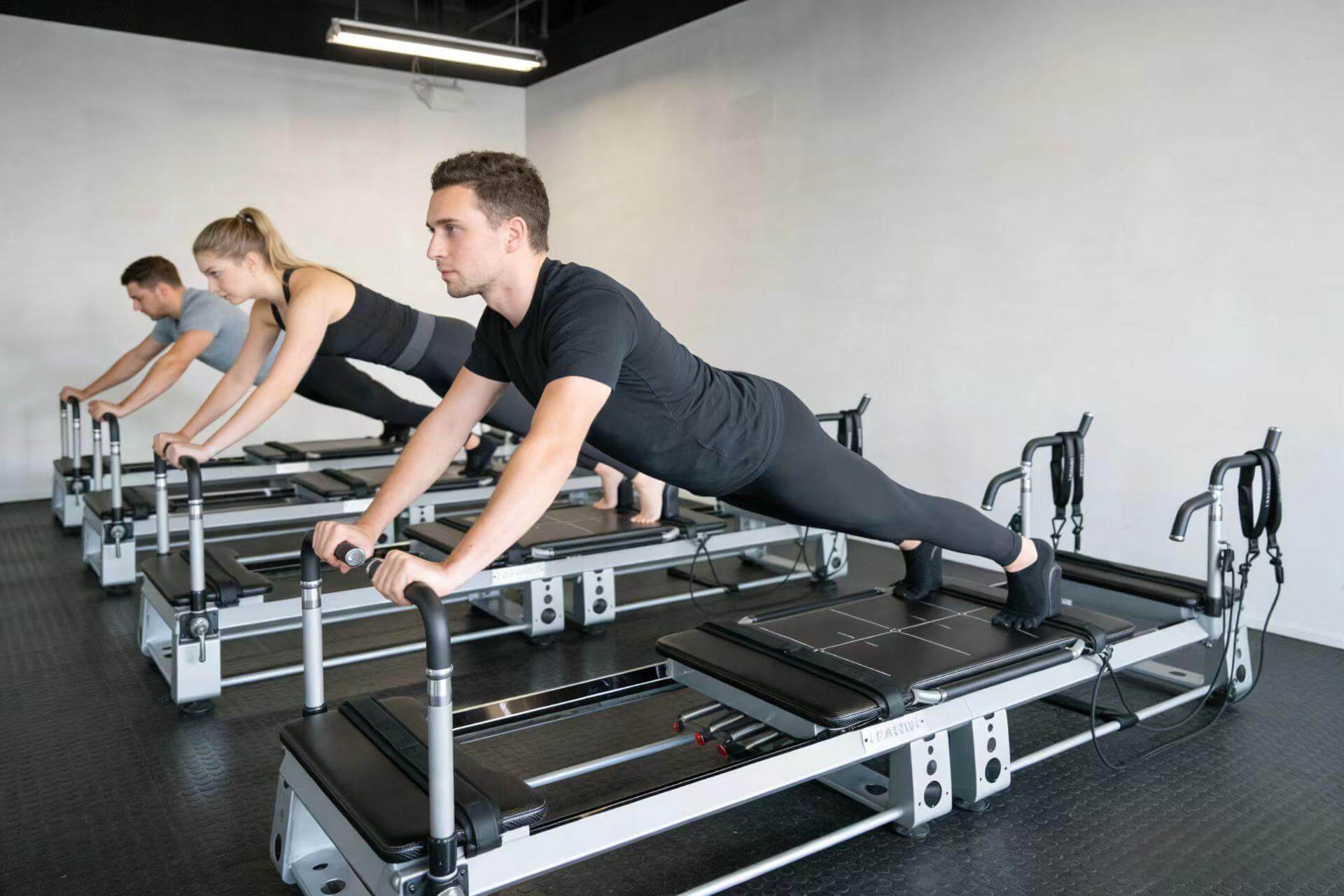
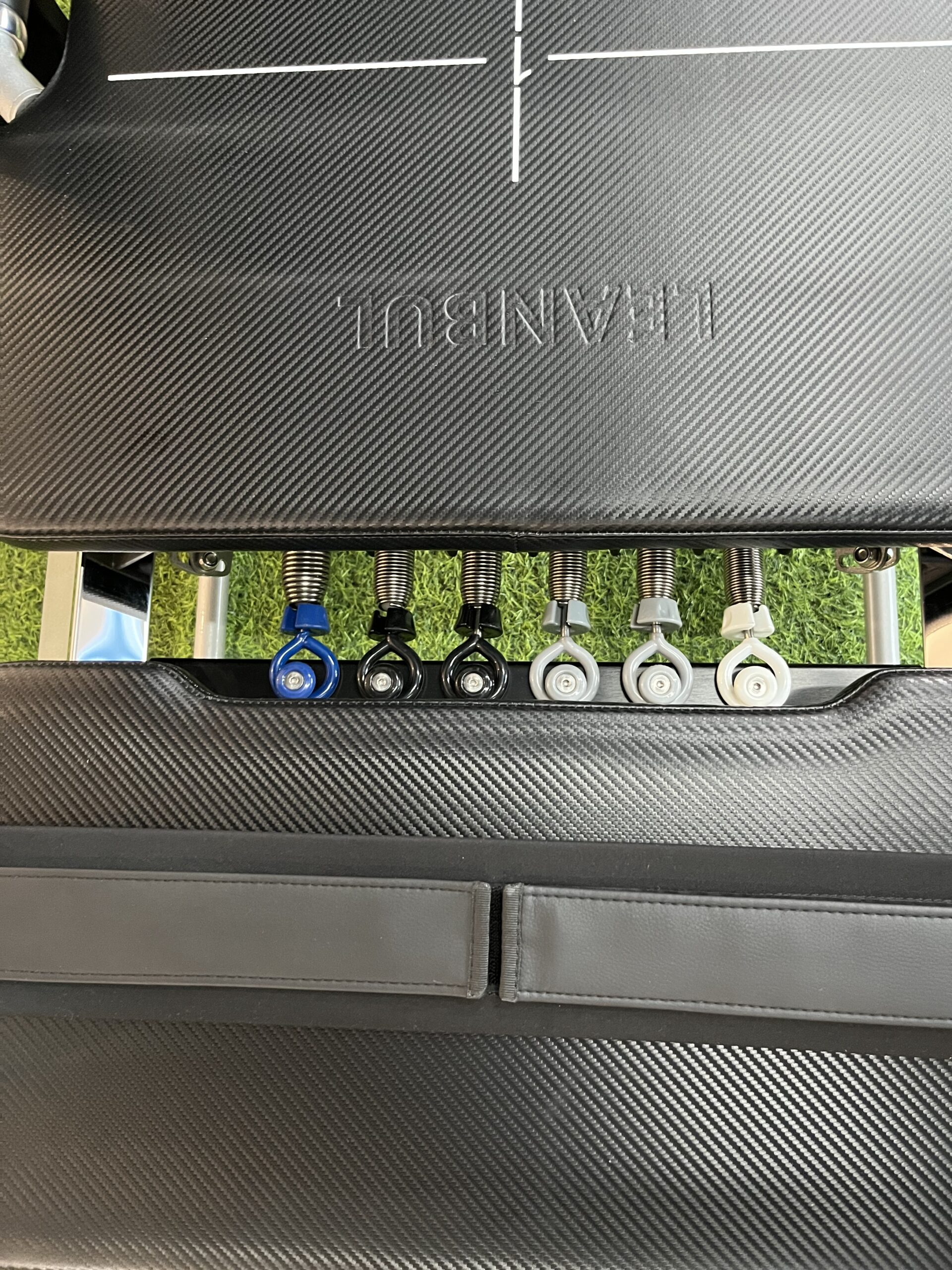
Spare parts inside the EU. Springs are a consumable, not a lifetime part. Two years is the normal replacement cycle for a heavily used commercial reformer, and a matched spring set costs €120–250. What matters is whether the set arrives in four days from a European warehouse or in nine weeks from a container. Swedish studios run full timetables; a machine out of service for two months is a client who learns to book elsewhere.
Service access, in writing. Ask what happens when a carriage bearing fails in February. A Spanish manufacturer selling into Sweden should be able to name the person who answers, the response time, and whether parts ship from within the EU. If the answer is “email us and we will see”, price the risk in.
Where the opportunity actually is
- Secondary cities before Stockholm. Uppsala, Örebro, Linköping, Västerås, Umeå. Value chains have trained the population; boutique reformer supply has not followed. Rent is a fraction of Södermalm and the instructor pool is smaller but cheaper to build.
- The employer channel. Companies with 50–500 staff and an unused wellness budget are the most under-served buyer in the country. They do not want a gym membership, they want a thing their people will actually do at 7am.
- Rehab and physio crossover. Swedish physiotherapy practice is well integrated with exercise referral. A reformer room shared between a physio clinic and a small group programme spreads the equipment cost across two revenue lines.
- Studio-in-gym. Chains are already adjacent to reformer. A six-machine pod inside or next to an existing value gym, run by an independent operator, gets footfall without paying for a full fit-out.
None of this requires a large fleet. The Swedish market rewards a tight, well-specified six to ten machine room in the right postcode far more than a twenty-machine showroom in the wrong one.
FAQ
Is reformer pilates growing in Sweden? Yes, and the growth now shows up in infrastructure rather than just bookings. Strandhälsan has run reformer group classes for over 17 years and currently runs more than 50 instructor-led sessions a week. In October 2026, Veya Reformer launched Veya Academy with Reformerakademin to train more instructors, the clearest sign that demand is outrunning teaching capacity.
Can employees pay for reformer classes with friskvårdsbidrag? Generally yes, if the payment is for an activity with an element of motion and the receipt describes that activity. Skatteverket caps the allowance at 5,000 SEK per year, requires the same terms for all staff, and excludes equipment purchase or hire and membership fees. Because the agency no longer publishes a list of approved activities, the safe approach is to issue activity-based receipts and confirm the wording with an accountant.
How much does a commercial reformer cost in Sweden? Manufacturer-direct pricing for a European commercial reformer runs about €1,900–3,500 per unit on a fleet of 6–12, and €2,400–3,800 on 3–5 units, before freight. Add 25% Swedish VAT, which is recoverable if you are VAT registered, and no customs duty because the goods move inside the EU. Retail pricing for imported single units is typically €3,500–6,500.
Do I need CE marking for a reformer used in a Swedish studio? You need equipment that is CE marked, tested to EN ISO 20957 as Class S for commercial use, and accompanied by a declaration of conformity you can produce if an insurer or inspector asks. Sweden applies EU product safety rules, and the operator carries obligations under the General Product Safety Regulation to keep traceability.
How many reformers should a Swedish studio start with? Six is the usual starting point, with room to add two more without moving. Six machines fill a 45–55 minute class at a price that supports a Stockholm or Gothenburg rent, and they fit a 90–130 m² unit. Going to twelve on day one doubles the equipment spend and halves your margin per slot until utilisation catches up.
Building the room
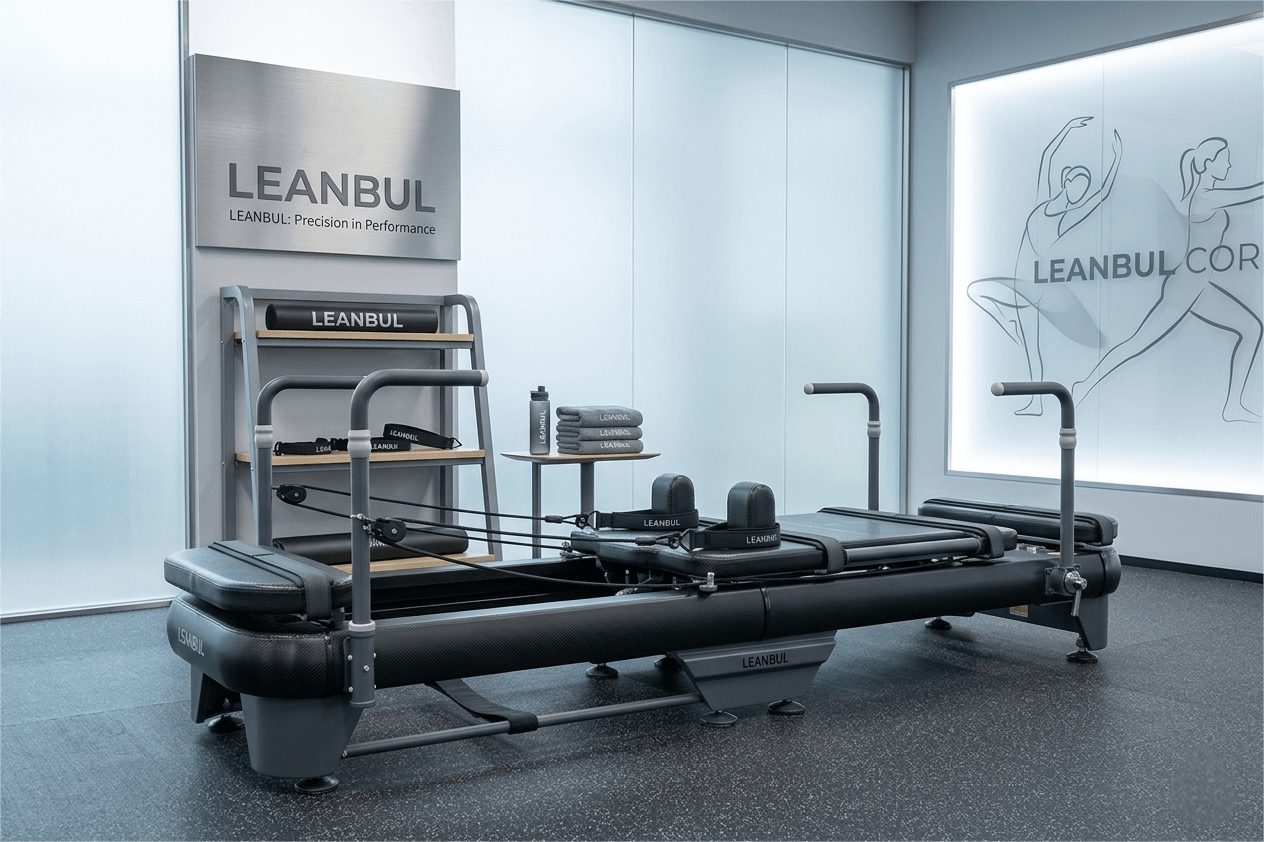
If you are specifying a reformer fleet for a Swedish studio, the K30 commercial reformer is the unit we build for six-to-eight machine rooms: 2.4m frame, Class S rated, matched spring sets stocked in the EU. For premium rooms and semi-private formats, the K38 premium reformer carries the same running gear with a heavier frame and a longer carriage. Compact sites and studio-in-gym pods start with the K10.
We build in Spain and ship across the EU, which means no customs, no import agent, and spare springs that arrive in days rather than months. Send us your room dimensions and class format through the contact page and we will come back with a layout, a fleet size and a SEK-denominated quote. For studio layouts across several rooms, the studio solutions page covers fleet planning, and the full collection lists every model side by side.
Sources: EuropeActive/Deloitte, European Health & Fitness Market Report 2026; Deloitte European gym growth study presented at HCM Invest, London, 21 October 2026; Skatteverket guidance on personalvårdsförmån, motion och friskvård; Swedish operator 2024 accounts as compiled in Swedish trade press; published 2026 class pricing from Stockholm and Malmö studios.
