Repair, Refurbish or Replace: The Year-Five Decision for a Pilates Reformer
Most commercial reformers do not wear out. Their springs do, their upholstery does, and their carriage wheels do. The frame underneath usually has another decade in it. That is why the question at year five is rarely “is this machine finished” and almost always “which parts of it are finished, and what is the cheapest way to get four more years of sellable classes out of what is left”.
Get that wrong in either direction and you lose money. Refurbish a machine with scored rails and you have spent €900 to keep a machine that clicks. Replace a machine that only needed a spring set and new vinyl and you have spent €2,600 to solve a €400 problem.
Here is how to tell the two apart, and the arithmetic that settles it.
Separate the frame from the consumables
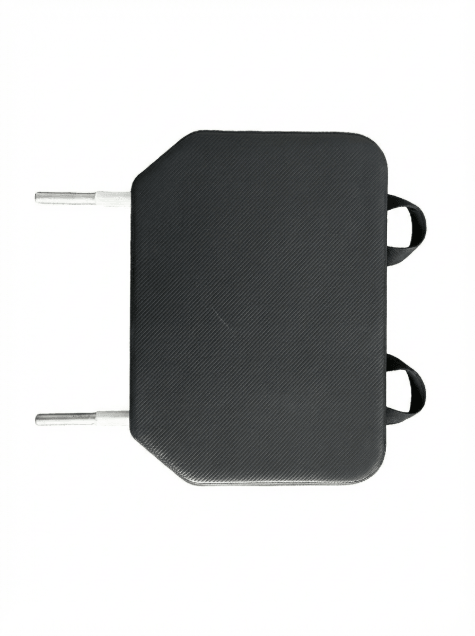
A reformer is a frame with a service life measured in decades, wrapped in parts measured in years. Treating it as one object is what makes fleet decisions feel harder than they are.
| Component | Realistic service life | Indicative cost to renew (per machine) |
|---|---|---|
| Frame, rails, spring bar, footbar | 15–20 years commercial use | not economic to replace |
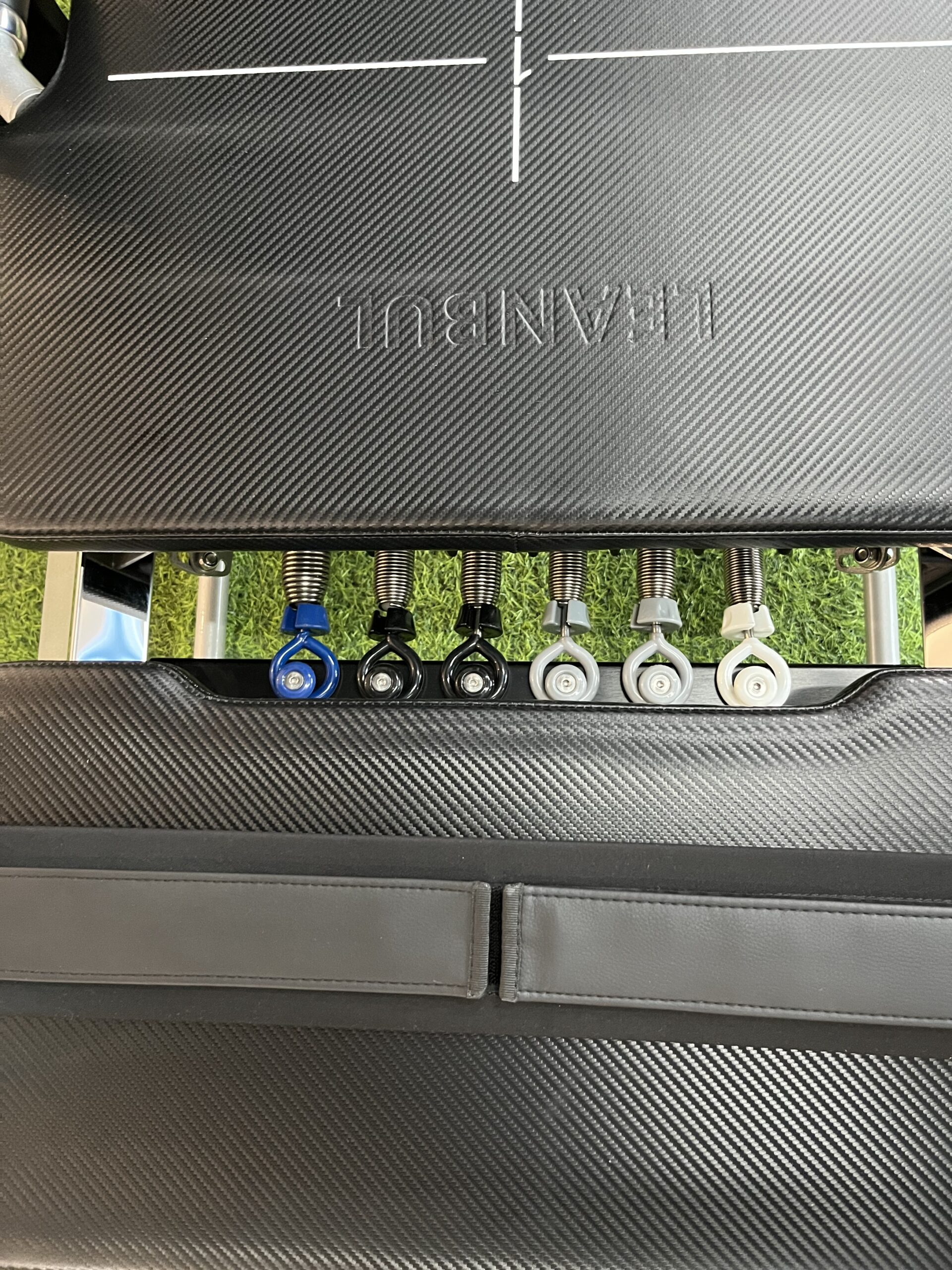
| Springs (matched set) | 2 years or ~3,000 hours | €120–250 |
| Ropes, straps, handles | 1–2 years | €40–120 |
| Upholstery and foam | 5–10 years in daily studio use | €200–450 incl. labour |
| Carriage wheels and bearings | 3–6 years | €300–700 parts and labour |
| Pulleys, eyelets, riser hardware | 5–8 years | €50–150 |
| Footbar pad, shoulder blocks, box | 5–8 years | €80–200 |
Sources for the life figures: Gratz Pilates puts marine-grade vinyl at 5 to 15 years, with high-volume studios landing at the lower end; Merrithew recommends replacing springs every two years in commercial settings; Align-Pilates warranties springs for 3,000 hours or two years and notes that roughly 5% of tension is lost per 1,500 hours of use. Retailer and manufacturer guidance converges on 15 to 20 years for a commercial frame.
The pattern in that table is the whole argument. Over fifteen years you will buy seven spring sets, two or three sets of ropes, one or two upholstery jobs and two sets of wheels. That is €2,500 to €4,000 of consumables across a machine’s life, spent in small amounts. The frame, which is where the money actually went, is still fine.
Which means the decision at year five is about condition, not age.
The five signals that mean replace, not refurbish
Most machines at year five should be refurbished. A minority should be scrapped or sold. These are the signals that put a machine in the second group.
1. Rails with grooves you can feel. Light scoring polishes out. A groove worn where the carriage wheels run is a different problem: the carriage drops into it, the ride becomes notchy, and clients notice within one class. New rails on most models cost as much as a large share of a new machine, so this is usually the end.
2. Frame geometry out of square, or a cracked weld. Put the machine on a flat floor, extend the carriage to both ends and check whether it tracks straight. If it walks sideways, or you can see cracking around a weld, the frame is done. No amount of new upholstery fixes a bent frame.
3. Parts that no longer exist. This is where cheap imports fail first. Springs and vinyl are universal. A proprietary spring bar, a cast footbar cam, a specific wheel profile is not. If the model was discontinued four years ago and nobody stocks the wear parts, the machine has no second life.
4. No CE declaration of conformity, or no evidence of Class S testing. A studio machine sold into the EU market needs CE marking and a declaration of conformity to EN ISO 20957-1, with Class S for commercial use. If you cannot produce the documentation for a machine you bought in 2021, refurbishing it puts a machine with no paper trail back on your floor, and that becomes a problem the day an insurer or a hotel client asks.
5. Foam substrate collapsed, not just the cover worn. A cracked vinyl cover is cosmetic until it tears. Compressed foam that no longer supports the spine is a different issue, and once the foam has gone the re-cover job is a rebuild.
Everything else is consumable maintenance: springs, ropes, wheels, pads, a tired cover. That belongs in the operating budget, not the capital budget.
What a proper refurbishment includes
A refurbishment that is worth the money is not a clean and a new spring set. It is a return to rental condition, documented.
- Matched spring set, all springs from the same batch, with the resistance values recorded
- New ropes, straps and handles
- New or serviced carriage wheels and bearings, plus rail clean and polish
- New carriage pad, shoulder blocks and footbar pad
- Hardware check: spring bar, gear system, riser locks, eyelets, pulleys
- Load test on the carriage at working weight, plus a carriage travel test end to end
- Written record of what was replaced and when, for the service file
That last item has a cash value. Maintenance records are the difference between a claim that gets paid and a claim that gets argued about, and we have written about the insurance side of that in our studio insurance guide.
Budget €700 to €1,300 per machine for the full job on a six-to-eight machine fleet, and expect two to four weeks of downtime per machine depending on whether upholstery has to be ordered. Gratz quotes around three weeks for fabric delivery alone, which is why the schedule matters more than the price.
The arithmetic nobody runs
Here is a real comparison on European fleet pricing, using a six-machine studio and a machine that cost €2,600 when new.
| Option | Cash out now | Years gained | Annual cost | Notes |
|---|---|---|---|---|
| Repair as needed | €150–300/yr | indefinite, until it fails | €150–300 | cheapest until reliability drops, then expensive in cancelled classes |
| Full refurbishment | €900–1,300 | 4–5 | €180–325 | keeps residual value, needs downtime |
| Replace with new | €2,400–2,600 | 8 planned | €185–210 after €800–900 residual | new warranty, new documentation, no downtime if staged |
Read the middle column carefully. Refurbishing an eight-year-old machine does not beat replacing it on annual cost, once you credit the resale value of a well-maintained used machine. Used commercial reformers in good condition sell for roughly 50% to 70% of retail, and manufacturers run trade-in and refurbished programmes that discount 20% to 40% off new.
What refurbishment does win on is cash timing. €1,000 today is a very different decision from €2,500 today, especially in a year when you are also replacing the HVAC or renegotiating a lease.
So the honest rule is:
- Refurbish when the frame and rails are sound, the parts exist, and cash is the constraint. You are buying time at a fair price.
- Replace when the rails are grooved, the parts are gone, the paperwork is missing, or the machine no longer fits the class format you sell.
- Repair as needed only when the machine is a spare or lightly used. On a machine running 25 hours a week, reactive repair is the most expensive option on the list, because the cost shows up as lost seats rather than invoices.
Downtime is usually bigger than the parts
A six-machine studio running 30 classes a week earns roughly €26 per seat. Take one machine out for three weeks and you have removed one seat from 90 classes. If those seats would have sold, that is €2,340 of revenue — more than the refurbishment itself.
Most studios do not lose all of it, because clients rebook into other slots. But studios running at 80% occupancy lose most of it, and the ones at 95% lose all of it and damage goodwill on top.
Three ways to handle that:
- Schedule the work in the quiet month. Croatia in February, Germany in August, Spain in the second half of August. Every market has a dead fortnight.
- Keep one spare machine. Six machines plus one spare lets you rotate without cancelling anything. It also gives you a loan machine for a hotel client.
- Stage replacement across the fleet. One machine out at a time, one quarter at a time.
Staged replacement beats the cliff
The failure mode we see most often is a studio that bought six machines in the same month, ran them identically, and now faces six simultaneous rebuilds and a €15,000 bill in the same quarter.
Replace one machine a year instead. On a six-machine fleet that is roughly 16% of fleet value annually, the average age of the fleet stays under four years, every new machine arrives with a current warranty and current documentation, and each purchase is small enough to absorb.
If the fleet has already aged together, break the pattern deliberately: replace the two worst machines now, refurbish the two best, and put the remaining two on a twelve-month clock. That spreads the cost and gives you a comparison between a new machine and a rebuilt one in the same room, which is the most convincing evidence you will ever have for the next decision.
What to ask before you buy the replacement
The point of replacing is not to reset the clock on the same design decisions. It is to buy a machine that will still be serviceable in 2036.
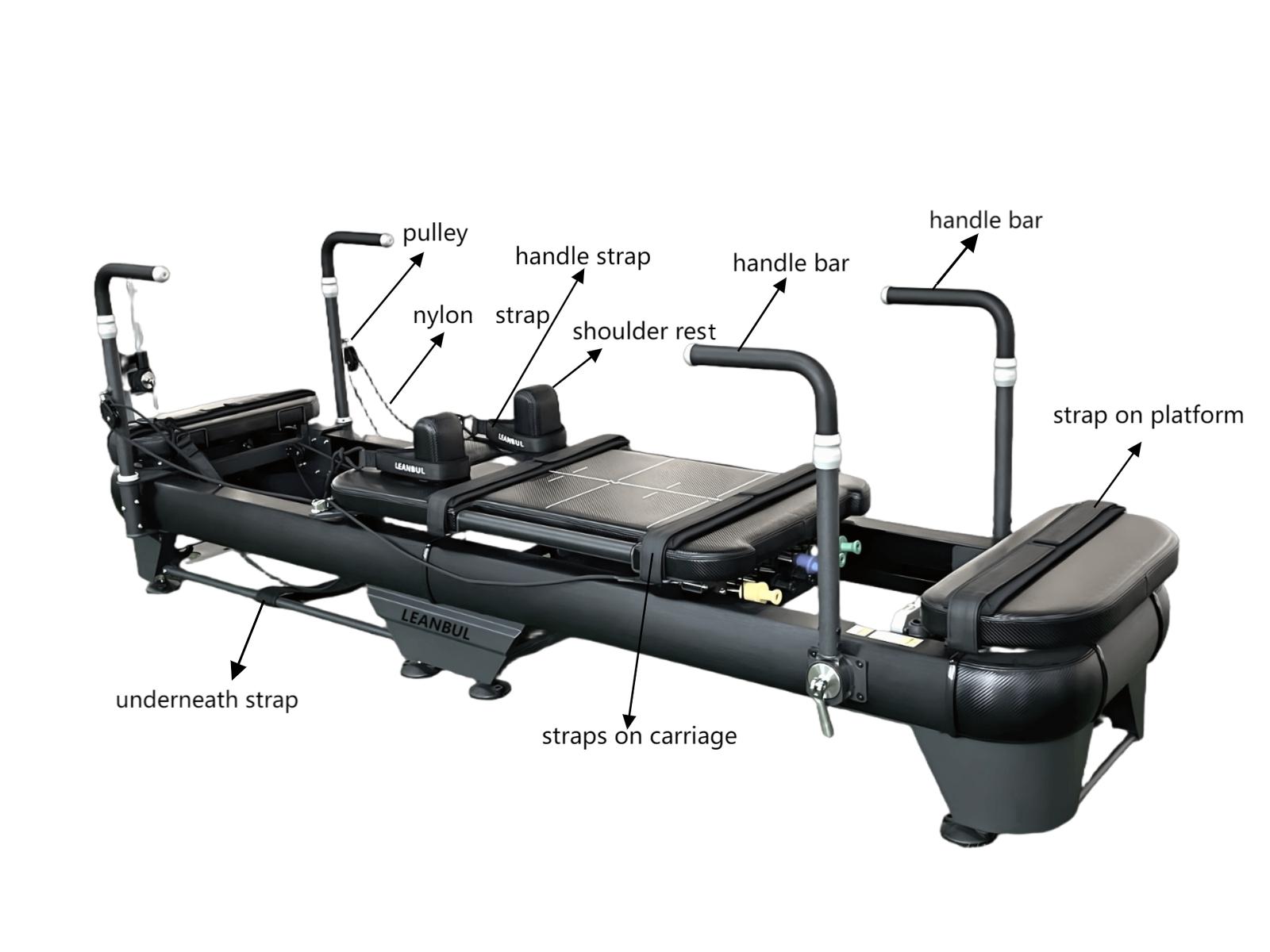
- Frame warranty in years, in writing. Ten years on the frame is now a common commercial offer. Anything under five tells you what the maker thinks of their own welds.
- Spare parts commitment. Ask how long the model will be supported and get it in the quote. Ten years of parts availability should be the minimum on a commercial machine.
- Spring specification in newtons at a stated extension. Colours are not a specification. A matched set with recorded values lets you compare quotes and reorder correctly in four years.
- Rail hardness and surface treatment. Anodised aluminium or hardened steel, with a stated process. This is the part that decides whether the machine can be refurbished at all.
- Whether upholstery is field-replaceable. If the cover is stapled and glued in a way that only the factory can redo, you have bought a disposable machine.
- CE declaration of conformity and the Class S test report. Ask for the document, not the sticker.
We covered the full RFQ structure in our spec sheet guide, including the wording that makes suppliers answer properly.
FAQ
How long does a commercial pilates reformer last? Fifteen to twenty years for the frame under daily studio use, provided it is maintained. Springs, ropes and upholstery wear out several times over that period. A machine that is cleaned and serviced will outlast one that is not by a wide margin, and the difference shows up first in the carriage, not the frame.
Is reupholstering a reformer worth the money? If the frame, rails and carriage are sound, yes. A re-cover with new foam costs €200 to €450 including labour, against €2,400 or more for a replacement machine. If the foam substrate has collapsed or the vinyl has been torn for a year, inspect the carriage before committing.
Can I refurbish a cheap imported reformer? Sometimes, but check parts availability first. Springs and vinyl are generic. Model-specific spring bars, footbar hardware and wheel profiles are not, and discontinued budget models often have no parts channel after three or four years. That is the hidden cost of the lowest quote.
How much should a studio budget for fleet renewal? Plan on 3% to 5% of fleet value per year for consumables and service, and a separate replacement reserve of roughly one machine per year on a six-machine fleet. Our seven-year total cost of ownership model breaks the numbers down line by line.
One last thing about resale
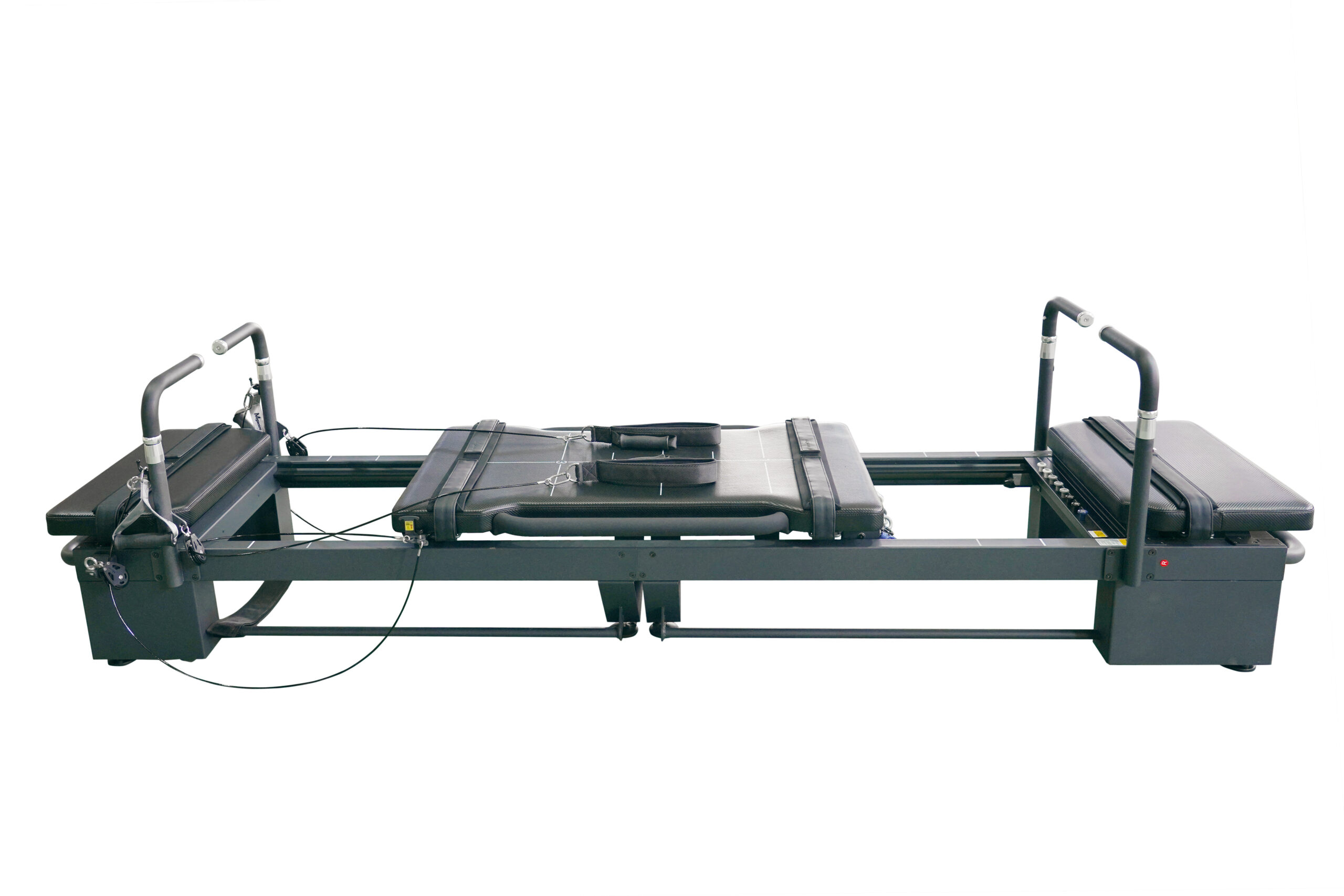
A machine you are about to replace is not worthless. Well-maintained commercial reformers sell for 50% to 70% of retail on the secondary market, and the difference between a machine with a service file and one without is real money at sale. We went through the resale mechanics in our resale value guide, including how VAT margin schemes work on second-hand goods.
If you are deciding between rebuilding and replacing a fleet this winter, send us the machine ages, the models and what is failing. We build in Spain, we can quote a replacement fleet in euros with delivery across the EU, and we will tell you when the honest answer is to keep what you have. Start with the K30 for boutique rooms or the K38 for high-traffic floors, and talk to us before you spend the money.
