The Pilates Market in Croatia in 2026: Seasonality, the Zagreb–Coast Split and Equipment Demand
The pilates market in Croatia is small, concentrated and split in two. A directory count from September 2026 puts 96 pilates studios in the country, and 48 of them are in Zagreb. A group reformer class in the capital runs €22 to €30, which is roughly Italian or Spanish pricing rather than the €15 you find in Sofia or Bucharest.
Then you look at the other half of the country. Croatia has just under four million residents and recorded 21.8 million tourist arrivals and 110 million overnight stays in 2025. Travel receipts were 17.5% of GDP in 2024, the highest share in the EU according to Eurostat. That single ratio explains why a Croatian studio rarely has one business model. It has a summer business on the coast and a winter business in the city, and the equipment has to survive both.
Here is the picture from a manufacturer’s desk in Spain, with the numbers that actually decide purchases.
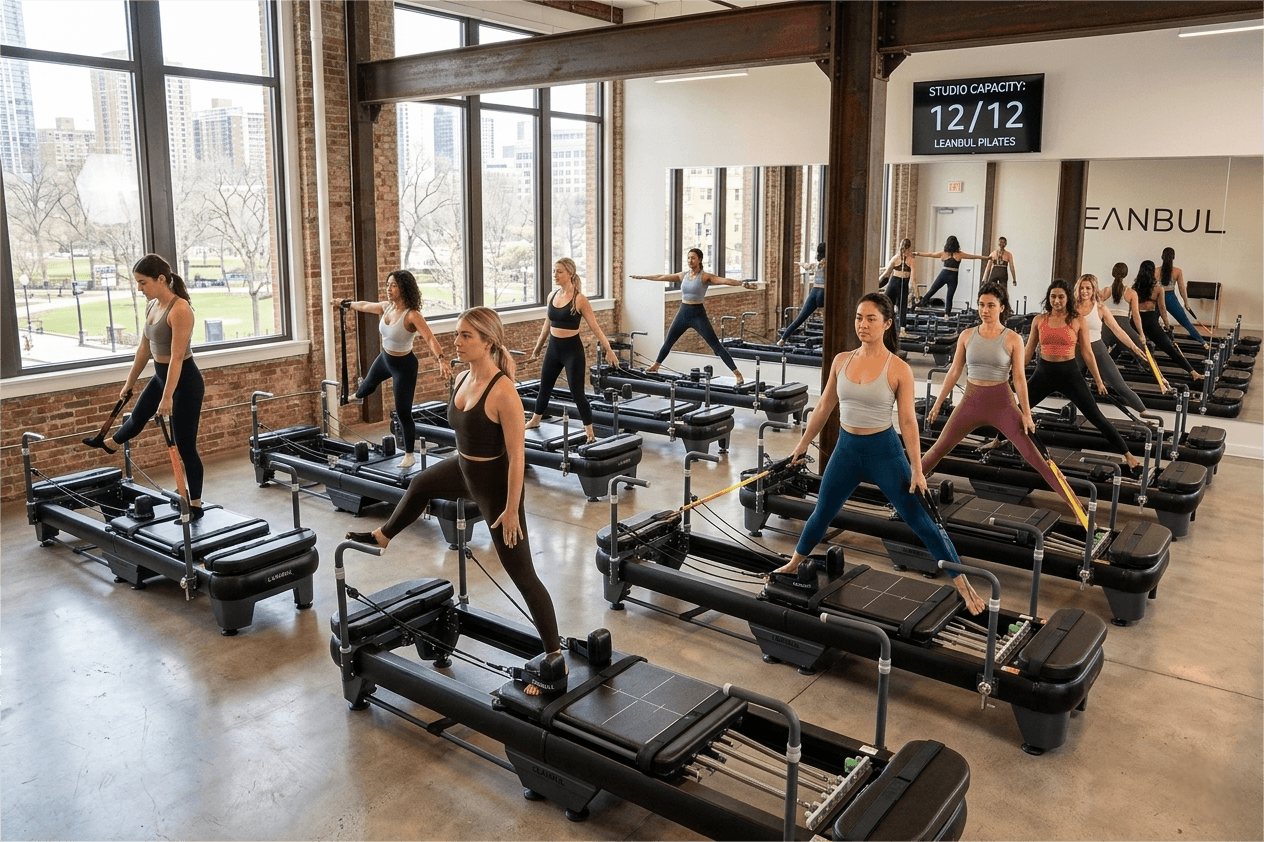
Where the studios actually are
| City | Studios | What the room looks like |
|---|---|---|
| Zagreb | 48 | 4–8 reformers, mixed mat and reformer schedule, year-round memberships |
| Split | 11 | 4–6 reformers, strong June–September, hotel and short-stay clients |
| Zadar | 8 | small rooms, seasonal spikes, often combined with yoga or physio |
| Osijek | 7 | inland, price-sensitive, mat-led with a reformer corner |
| Rijeka | 7 | similar to Zagreb in format but smaller membership base |
| Pula | 4 | heavy July–August, near-empty in February |
| Dubrovnik | 3 | premium per-session pricing, short season, hotel partnerships |
| Šibenik | 2 | emerging, single-room operators |
| Varaždin | 2 | inland boutique, mat plus reformer |
| Other | 4 | islands and smaller inland towns |
Source: Holistic Croatia studio directory, 24 September 2026.
Two things jump out. First, the ratio of studios to population is respectable for a country this size, because the coast imports clients rather than relying on residents. Second, outside Zagreb the average room is smaller than in Germany, Austria or the Netherlands. Three to six machines is normal. Ten is rare, and usually belongs to a gym that added reformer as a secondary product.
That matters for sourcing. A Croatian buyer comparing quotes is often buying four machines, not twelve, which changes delivery economics, spare-parts planning and how much attention a supplier gives the order.
Two markets wearing one flag
Zagreb behaves like a Central European city. Members sign annual or six-month contracts, classes run on a fixed weekly timetable, and the studio carries the full cost of instructors through January and February. Utilisation is the whole game.
The coast behaves like a resort. Split, Zadar, Hvar, Dubrovnik and Istria fill up from June to September, drop to a trickle in November, and then reopen in April. Studios there often run on drop-in pricing, partner with hotels and villa managers, and hire seasonal instructors who may have never taught on that specific machine before.
| Month | Zagreb | Coast |
|---|---|---|
| January–February | steady, low | near zero, maintenance window |
| March–April | recovery, new-year intake | reopening, instructor retraining |
| May | full timetable | ramp-up, first tourist bookings |
| June–September | flat (members travel) | peak, 6–8 classes a day in small rooms |
| October | recovery | wind-down, last guests |
| November–December | strong, gift cards | closed or mat-only |
Read that table as an equipment brief. A Zagreb machine accumulates hours steadily, roughly 20 to 30 hours a week in a busy studio. A coastal machine can do the same annual hours in four months, then sit untouched for five. Same wear, completely different failure pattern.
What the sessions sell for
Zagreb group reformer pricing, from studios that publish it:
- London Pilates Club Zagreb — €22 per group session
- Pilates Zagreb, Studio Jelena — €25
- ReformFit — €28
- Body & Mind Studio — €30, clinical and rehab positioning
Packs of eight or ten bring the per-visit price down; private sessions sit well above that range. Outside Zagreb the range is similar or slightly lower, with Dubrovnik the exception in high season.
At €25 a head with five clients on the machines, a class grosses €125. Pay an instructor €25 to €35 for the slot and you keep €90 to €100 before rent. That is a healthier margin than you get in Bulgaria or Romania, which is why Croatian studios can afford commercial-grade equipment instead of the cheapest Class H machine with a commercial sticker.
It also means the competition is not price. It is timetable quality and instructor supply. Croatia has no large domestic reformer training pipeline, so studios import certification or send staff abroad, and the good instructors are booked. When your schedule is constrained by people rather than machines, you buy fewer, better machines.
The euro, the VAT rate and the invoice you will receive
Croatia adopted the euro on 1 January 2023, so there is no currency exposure and no conversion in the quote. For a Spanish manufacturer shipping into Zagreb or Split, that removes the argument that used to dominate Croatian purchasing conversations.
VAT is 25%, the standard rate, with a 13% reduced band and a 5% band that do not apply to fitness equipment. A VAT-registered Croatian studio buying from another EU country accounts for the VAT itself under the reverse-charge mechanism and deducts it in the same period. No customs declaration, no import duty, no clearance agent. The machine moves inside the single market like it would from Madrid to Barcelona.
One local detail that trips up paperwork: since 1 January 2026, Croatia requires structured e-invoicing and real-time reporting for domestic B2B transactions under the Fiscalization 2.0 framework. Cross-border invoices are still allowed on paper or PDF. So a Croatian studio may ask you for an e-invoice out of habit, while the transaction with you legally does not need one. Worth clarifying in the first email rather than in the accounts department three weeks later.
What the two halves of the market need from a machine
| Requirement | Zagreb studio | Coastal studio |
|---|---|---|
| Fleet size | 5–8 machines | 3–6 machines |
| Annual hours per machine | 900–1,300, spread evenly | 700–1,100, compressed into 16 weeks |
| Frame priority | durability and quiet carriage | corrosion resistance, salt-air tolerance |
| Upholstery priority | cleanable, sweat-resistant | UV and sunscreen resistance |
| Service window | any month, one machine at a time | April, or after the season |
| Delivery deadline | flexible | before the last week of May |
| Instructor turnover | low | high, machine must be self-explanatory |
The coastal brief is the one buyers underestimate. A room 300 metres from the Adriatic sits in salt-laden air for months, and aluminium frames with anodised rails handle that far better than powder-coated steel, which will show rust blooms at every chip and weld. If the studio closes the shutters in October and reopens in April, springs left under tension for five months lose more of their calibration than springs used hard all summer.
Wood is not wrong on the coast, but it needs a stable interior. A stone villa that goes from 32°C in August to 12°C and 80% humidity in February will move timber, and every joint that moves is a joint that eventually loosens. Aluminium with sealed bearings is the lower-risk choice for a room that is closed half the year. We wrote a longer comparison of wood and aluminium reformers if you want the material argument in detail.
Where the demand is coming from in 2027
Three pockets are worth watching.
Year-round memberships in Zagreb. The capital has the density to support recurring revenue, and the studios that survive the next two years will be the ones that converted drop-in clients into monthly plans. That conversion funds fleet upgrades, not new openings.
Hotel and resort wellness on the coast. Croatia’s tourism numbers keep setting records, and hotels that once counted a treadmill and two bikes as a gym are now being asked for reformer. Our hotel and resort guide covers the procurement side of that, and the holiday rental angle applies to the villa market on Hvar and Brač.
Inland cities that are not Zagreb. Osijek, Varaždin and Slavonski Brod have small but real studio scenes and almost no premium equipment supply. A four-machine room there is a €10,000 to €14,000 order, which most distributors ignore and a direct manufacturer does not have to.
What Croatia does not have, yet, is a franchise engine. There is no Club Pilates master franchise running here, no multi-site reformer brand standardising 30 rooms. When that arrives, it will rewrite the price expectations in Zagreb within a year. Until then, independent studios set the standard, and they buy on relationship and service rather than on logo.
FAQ
How much does a reformer class cost in Croatia? Group reformer sessions in Zagreb run €22 to €30 per visit, with packs reducing the effective price to roughly €18 to €24. Private sessions cost considerably more. Coastal studios in Dubrovnik and Hvar charge above the Zagreb range in July and August.
Is the Croatian pilates market big enough to justify a direct supplier relationship? For a single studio, probably not on its own. For a studio group, a hotel chain or a distributor covering Croatia and Slovenia together, yes. The country is small but the average order is commercial-grade, and buyers pay in euros.
Do Croatian studios need CE-marked equipment? Yes in practice. Equipment placed on the EU market must carry CE marking and a declaration of conformity to EN ISO 20957-1, with Class S for commercial use. Croatian insurers and hotel procurement departments both ask for the documentation, and a machine without it is hard to insure and impossible to specify into a hotel project.
How long does delivery take from Spain to Croatia? Typically one to two weeks in transit once the order leaves the workshop, plus six to twelve weeks of manufacturing lead time for a fleet order. Coastal buyers should place orders by February or March to have machines installed and tested before the season starts.

Buying from a European manufacturer
We build reformers in Spain and ship across the EU, which for a Croatian studio means euro pricing, no import formalities and a service conversation in the same time zone. The K30 covers the four-to-six machine boutique room, the K38 is the heavier build for high-traffic studios and hotel installations, and the full range sits on our collection page.
If you are planning a room in Zagreb, Split or anywhere on the coast, tell us the floor plan, the class format and your opening date. We will size the fleet and give you a delivered price in euros. Contact us here.
