Pilates Reformer Total Cost of Ownership: What a European Studio Really Spends Over Seven Years
A commercial reformer in Europe costs roughly €450 to €750 a year to own once you spread the purchase over its working life, add the parts it eats, and subtract what it is still worth when you sell it. That is the pilates reformer total cost of ownership, and it is the only number worth comparing when you are buying six machines instead of one.
The sticker price is the part everyone negotiates. It is also the part that tells you the least.
Here is the awkward thing about this calculation: after running the numbers for three very different machines, the cheap one and the mid-priced one land within about €70 a year of each other. The gap is not where most buying guides say it is. I’ll show you the model and where the real difference sits.
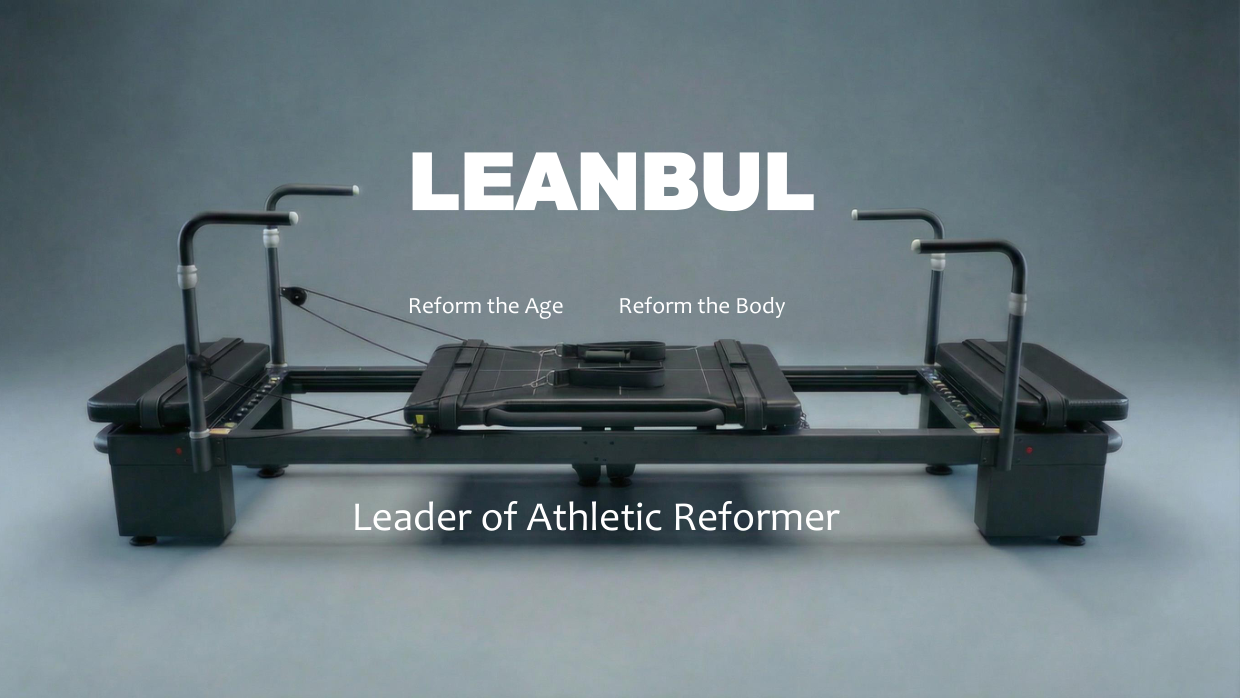
The five costs that actually make up ownership
Most quotes stop at the machine. A studio’s real cost has five layers, and only the first one appears on the invoice.
- Purchase price. €1,200 to €6,500 per unit depending on tier, ex-VAT for business buyers.
- Freight and putting it on the floor. €100 to €400 for palletised EU delivery, plus assembly, levelling and anchoring. Budget roughly half a day per four to six machines.
- Wear parts on a calendar. Springs, ropes, straps, upholstery, wheels and rollers. This is the line studios underestimate, because it arrives in small invoices that never get added up.
- Service and downtime. Preventive visits, and the class revenue you lose when a machine is out of action.
- Residual value. What the machine is worth when you sell it or trade it in, which is a genuine discount on everything above.
VAT sits outside this model. A VAT-registered studio buying from another EU country recovers it through the reverse charge mechanism, so plan in net euros. If your classes are VAT-exempt in your member state, talk to your accountant before assuming full recovery, because that is a cash-flow question, not an accounting footnote.
A seven-year model, with numbers you can check
I’ve modelled one machine slot over seven years: you always have a working reformer on that spot, and you replace it if it dies. Figures are net of VAT, 2026 prices, and assume a busy studio running 20 to 30 sessions a week on that machine.
| Cost line | Budget import (€1,200) | Quality EU commercial (€2,400) | Premium brand (€5,500) |
|---|---|---|---|
| Purchase (incl. one replacement) | €2,400 | €2,400 | €5,500 |
| Freight and installation | €200 | €250 | €400 |
| Springs over 7 years | €300 | €540 | €700 |
| Ropes, straps, wheels, rollers | €150 | €200 | €250 |
| Upholstery re-cover | €200 | €300 | €400 |
| Service visits and labour | €500 | €700 | €950 |
| Downtime (lost class revenue) | €900 | €350 | €250 |
| Less resale at year 7 | −€400 | −€1,150 | −€2,750 |
| Net cost over 7 years | €4,250 | €3,590 | €5,700 |
| Per year | €607 | €513 | €814 |
Read the middle two columns together, because that is the interesting part. The budget machine buys you a second machine in year five and still ends up costing about €95 a year more than the mid-tier European one, and most of that difference is downtime rather than parts. The premium machine costs around €300 a year more, and in exchange you get dealer support, an education ecosystem and a resale market that actually answers the phone.
None of this says cheap equipment is a trap. It says cheap equipment is a slightly more expensive way to own a reformer, with a much wider range of outcomes. If your budget machine arrives from a supplier with no EU parts stock, one broken carriage can sit idle for six weeks while a spring set crosses a border.
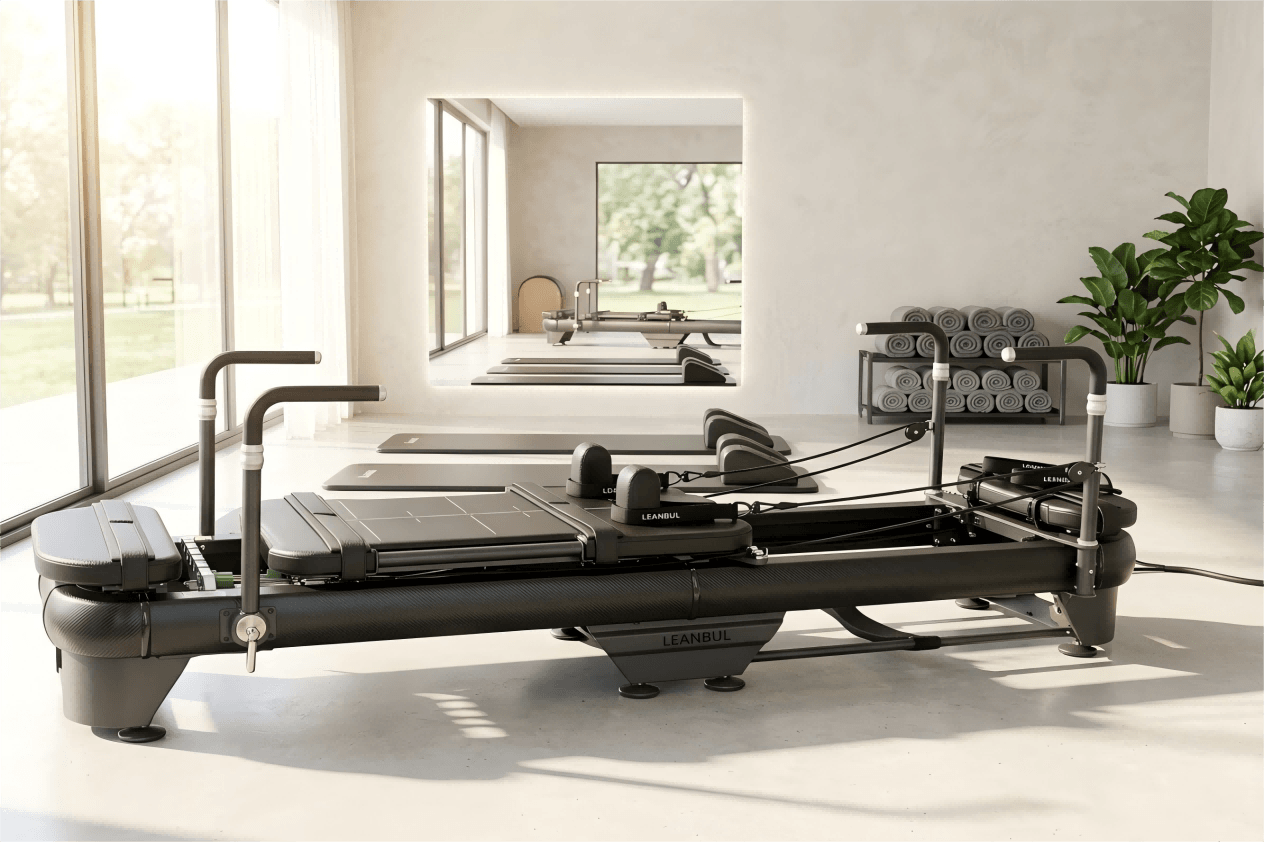
Springs set the whole calendar
Springs are the only component with a published replacement rule, and the rule is short.
Merrithew tells buyers to replace reformers springs every two years to protect performance and warranty coverage. Align-Pilates is more precise in its warranty terms: springs carry a two-year or 3,000-hour warranty, and the company states that springs should be replaced after a maximum of 3,000 hours of use or two years, whichever comes first. The same document notes that a 5% loss of spring power per 1,500 hours is considered acceptable under international standards, which is a polite way of saying your springs are quietly weakening long before they look wrong.
Translate that into a studio calendar:
| Usage | Sessions per week | Spring life | Sets over 7 years |
|---|---|---|---|
| Private practice, low volume | 2–5 | 3–4 years | 2 |
| Light studio | 10–15 | ~2 years | 3–4 |
| Busy studio | 20–30 | 12–18 months | 4–5 |
| High-traffic / franchise | 35+ | 9–12 months | 6–7 |
At €120 to €250 per set, a busy studio spends €25 to €90 a month on springs alone. That is the honest number, and it is the one that makes a €1,900 machine and a €2,400 machine look almost identical over seven years. Our maintenance guide for European studios goes deeper on service intervals if you are building the annual plan.
What wears out, in the order it wears out
Frame last. Always frame last. A commercial frame is a fifteen-year component being asked to carry five-year wear parts, and that asymmetry is the whole economic case for buying a good frame once.
- Springs. Two-year cycle, sooner under volume. Cheap to replace, expensive to ignore.
- Ropes and straps. Rope stretches and frays; straps lose stiffness. Two to four years in a studio.
- Upholstery. Vinyl compresses at the shoulder blocks and footbar first. Three to six years before a re-cover, faster with poor cleaning habits.
- Wheels and rollers. The usual cause of a carriage that judders. Cheap parts, high nuisance value.
- Carriage bearings and rails. Alignment and lubrication territory. Ten years plus on a well-built machine.
- Frame and gear bar. Fifteen years or more, and the reason resale value exists at all.
The number that matters more than cost per unit: cost per class
A reformer does not earn money sitting on a showroom floor. It earns when a client is on it.
Take a six-reformer studio charging €25 a class, running 25 classes a week at 80% occupancy. That is 750 client visits a week, or about €18,750 in weekly class revenue against six machines. Whatever the machine cost, it is a rounding error next to what an empty slot costs.
Which changes how you should read the table above. If two machines cost €2,400 and €2,600 and one of them has EU parts stock and a named service contact, the €200 difference disappears in a single lost week. Buy the machine you can fix, not the machine you can brag about.
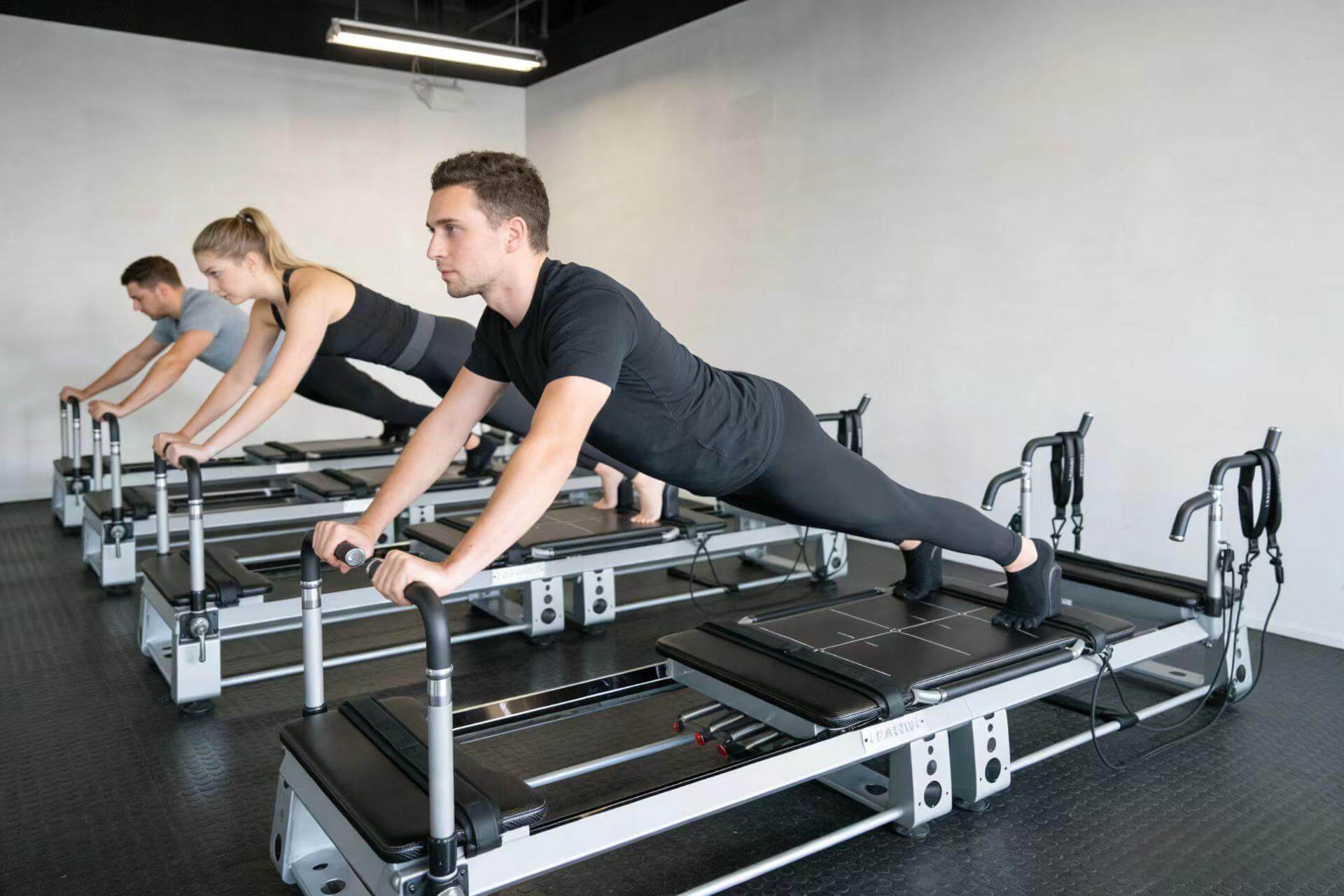
Where European buyers have a structural advantage
Three things shift the arithmetic in Europe, and they are worth pricing in properly.
No customs layer. Buying inside the EU means no import duty, no clearance agent, no EORI dance and no weeks lost at a border. A reformer made in Spain and delivered to a studio in Germany or Italy moves as road freight. Our delivery guide for Europe covers what that actually looks like.
Reverse-charge VAT. Business-to-business purchases across EU borders are generally VAT-neutral for a registered buyer, which keeps €5,000 to €15,000 of working capital out of the transaction.
Currency. Six of the markets we sell into are outside the euro. If you buy in dollars and earn in zloty, koruna or forint, your ownership cost includes an FX line that no supplier quote will show you.
Resale. European buyers pay for machines with a documented service history and available parts. Our resale value analysis puts quality EU commercials at 40–55% of new after four to six years, against 20–30% for generic imports with no parts chain. That is the quiet subsidy that makes a better machine cheaper.
A worksheet you can copy
If you are pricing a fleet this month, work through these in order and stop guessing:
- Count your realistic weekly sessions per machine, not your hoped-for ones.
- Multiply spring sets by your usage band, not by the supplier’s optimism.
- Add €150 to €400 per machine for freight and install, plus half a day per four machines for labour.
- Assume one upholstery re-cover inside seven years.
- Put a number on downtime: one lost class week per machine per two years is a reasonable planning figure.
- Subtract resale at 35–50% of purchase for a quality machine, 20–30% for a generic one.
- Divide by seven. That is your annual ownership cost per machine.
Run it once with your own numbers and the tiers stop being a brand argument and become a cash-flow decision.
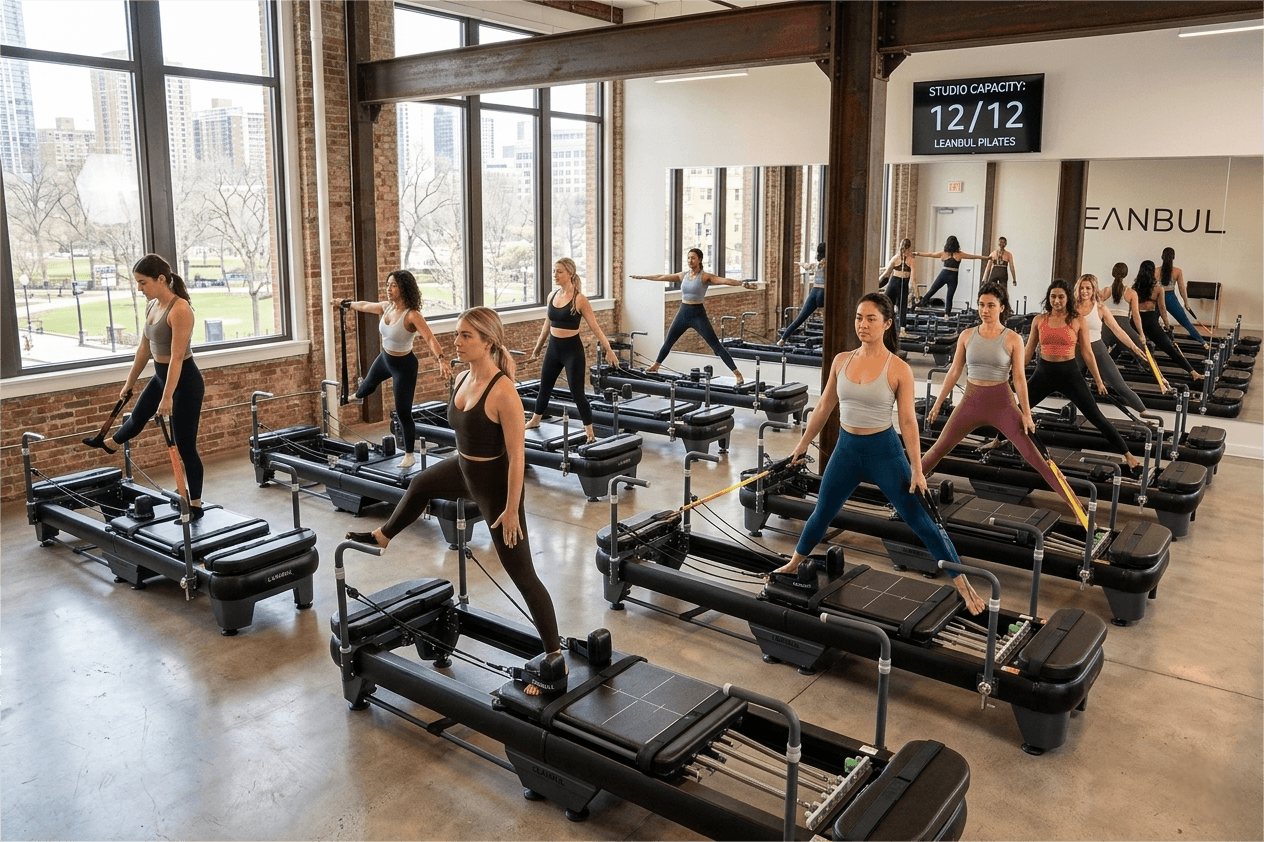
What this means when you choose a manufacturer
The machine that wins on total cost of ownership is rarely the cheapest and rarely the most expensive. It is the one where the frame outlives three sets of springs, the parts ship from inside the EU, and the manufacturer is still answering emails in year six.
That is the model we build on at Leanbul. We’re a Spain-based manufacturer, and our K30 commercial reformer and K38 premium reformer are sold direct to studios, gyms and rehabilitation centres across Europe, with springs and wear parts held in EU stock. If you are costing out a full room, our pilates studio solutions page covers fleet sizing and layout, and you can contact us with your session volume and we’ll build the seven-year number with you rather than for you.
FAQ
How much does a pilates reformer cost to own per year in Europe? For a busy studio machine bought at €2,400, expect €500 to €550 a year net of resale, covering parts, service, freight and downtime. Premium machines run €800 or more per year, budget imports €600 plus a wider variance.
How often should reformer springs be replaced? Every two years, or every 3,000 hours, whichever comes first. Both Merrithew and Align-Pilates publish the two-year rule, and Align’s warranty terms add the 3,000-hour ceiling. Studios running 25 or more sessions a week should expect to replace springs annually.
Is a cheap reformer really more expensive over seven years? Not dramatically. In our model the budget import came out about €95 a year higher than a quality EU machine, almost entirely through downtime and an early replacement. The real risk is variance: a machine without EU parts support can lose six weeks to a single broken part.
Can a European studio reclaim VAT on reformers? Usually yes, if you are VAT-registered and buy from another EU country under the reverse charge. Studios whose classes are VAT-exempt in their member state should confirm recovery with their accountant first, because partial exemption rules vary by country.
What resale value should I assume when planning? Between 35% and 50% of the purchase price after five to seven years for a quality commercial machine with service records, and 20% to 30% for a generic import. Machines with smart electronics depreciate faster than mechanical ones, because the technology ages in three to five years while the frame does not.
