The Pilates Market in Austria in 2026: Growth, Studio Trends and Equipment Demand
The pilates market in Austria in 2026 is small by European standards and unusually healthy per person. Roughly 1.3 million Austrians train in fitness and health facilities, the country added members again through 2024, and its studio scene leans boutique rather than budget. If you are weighing a reformer studio in Vienna or one of the provincial capitals, the opportunity is real but narrow: you are taking share in a mature market, not opening the first studio in town.
Here is what the numbers actually say, where reformer demand is concentrated, and what a studio fleet should cost this year.

The pilates market in Austria in the European picture
Europe’s health and fitness market reached €39.1 billion in revenue for 2025, across 67,515 clubs and 75.5 million members, up 9.1% on the year. Those figures come from the European Health & Fitness Market Report 2026, published by EuropeActive with Deloitte. Austria is a small slice of that total, but a well-off one, and it sits inside the German-speaking bloc that has the most developed studio culture on the continent.
The national data comes from the Wirtschaftskammer Österreich (WKO), working with the Deutsche Hochschule für Prävention und Gesundheitsmanagement. Their Eckdaten der Fitnesswirtschaft Österreich study for 2024, published in May 2025, put the market at about 1.3 million members across 1,349 facilities, with net annual revenue of €654.8 million. Members were up 6.4% and facilities up 2.0% on 2023. Revenue, measured net, rose 6.5% against the prior year.
| Indicator (as of 31 Dec 2024) | Value | Change vs 2023 |
|---|---|---|
| Members | ~1.3 million | +6.4% |
| Facilities | 1,349 | +2.0% |
| Net annual revenue | €654.8 million | +6.5% |
| Average member age | 38.8 years | — |
One caveat worth stating plainly: the WKO study counts fitness and health facilities broadly. It does not isolate pilates or reformer studios. There is no clean official line item for “reformer studios in Austria,” and anyone quoting one is estimating. The useful signal is the direction and the shape of the market, not a precise reformer headcount.
A mature market that keeps adding members
Growth of 6.4% in a country that already has one of Europe’s higher participation rates is the interesting part. It means the Austrian market is not just recovering from the pandemic years; it is still finding new members. Two things explain it.
The first is age. The average member is 38.8, and older adults are the fastest-growing group. That cohort wants low-impact, posture-focused training, which is exactly what a reformer sells.
The second is a shift upmarket. Budget chains own the low end, so independents have moved toward smaller rooms with eight to twelve premium machines and higher prices per session. Austria had 1,349 facilities in 2024 but only around 1.3 million members, roughly 960 members per site, which is thin. Operators are competing on quality and retention rather than on filling a big floor.
Where the pilates market in Austria concentrates reformer demand
Vienna is the hub, and it sets the tone. The city supports several reformer-only studios, including women-only boutiques, tower-equipped rooms, and studios that pair reformer work with teacher training.
Outside Vienna, the country is thin but genuine. Graz, Linz, Salzburg and Innsbruck each support at least a handful of reformer studios, usually one or two operators with a local following. In these cities a single well-run studio can own its niche, because the competition for a reformer class is much lower than in the capital.
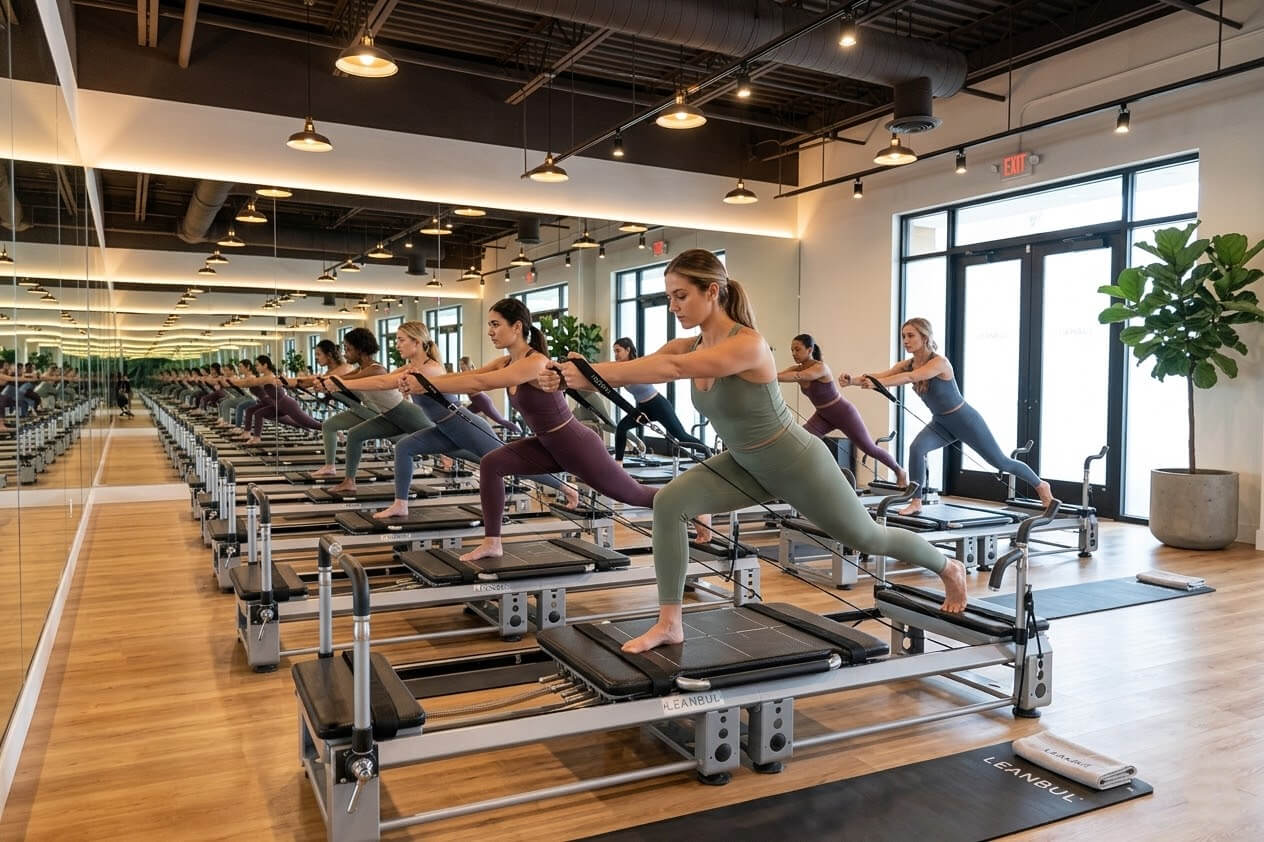
The demand pattern looks like the rest of the German-speaking market: women in their thirties and forties make up most of the client base, with a growing share of men and a distinct rehab-adjacent segment referred by physios and orthopaedists. Studios that lean into backs, posture and pre- and post-natal work report the steadiest retention.
What Austrian studios charge
Reformer pricing in Vienna sits in a tight band. Pulled from public 2026 class menus, the pattern is a drop-in around €28 to €38, and a ten-class pack that lands between €18 and €32 per class depending on the studio and whether it bundles mat or tower work.
| Studio product (Vienna, 2026) | Typical price | Per-class |
|---|---|---|
| Single drop-in reformer class | €29–€38 | €29–€38 |
| Intro / trial class | €21–€29 | — |
| 5-class pack | €135–€175 | €27–€35 |
| 10-class pack | €180–€280 | €18–€28 |
| Reformer membership (5 classes/month) | €115 | €23 |
| Unlimited seasonal card (8 weeks) | ~€249 | — |
Compare that with London or New York, where the same class runs $30 to $50, and the Austrian price ceiling is visible. It also tells you the model has to work on retention and volume, not on premium pricing. A studio here earns its margin by keeping members for years, not by charging €45 a class.
Three trends shaping the next two years
Reformer demand in Austria is being pulled in a few clear directions.
- Instructor supply is the real bottleneck. Qualified reformer instructors are scarce, and studios that train their own staff through an academy hold a structural advantage. Vienna already has studios running teacher-training programmes, which is both a revenue line and a hiring pipeline.
- Rehab and prevention crossover. Austrian members increasingly justify the cost through health, not vanity. Reformer programming aimed at backs, balance and mobility travels well here, and it is easier to defend to a partner or an insurer than a generic workout.
- Small-group formats beat big rooms. Four to eight people per class, on eight to twelve machines, is the format that fits Austrian economics. The floor cost per member is lower, the price holds better, and retention is higher than in a packed class.
What a studio fleet should cost in 2026
Austria is inside the EU, so buying from a European manufacturer is clean on tax and logistics: no customs duty, no import clearance, and VAT self-accounted under the reverse-charge mechanism. What commercial reformers cost in Europe this year:
| Fleet size | Typical price per reformer | Notes |
|---|---|---|
| 1–2 machines | €3,500–6,500 | Retail or showroom, single-unit pricing |
| 3–5 machines | €2,400–3,800 | Small-boutique tier, some room to negotiate |
| 6–12 machines (direct) | €1,900–3,500 | Manufacturer-direct or EU dealer, freight and install quoted separately |
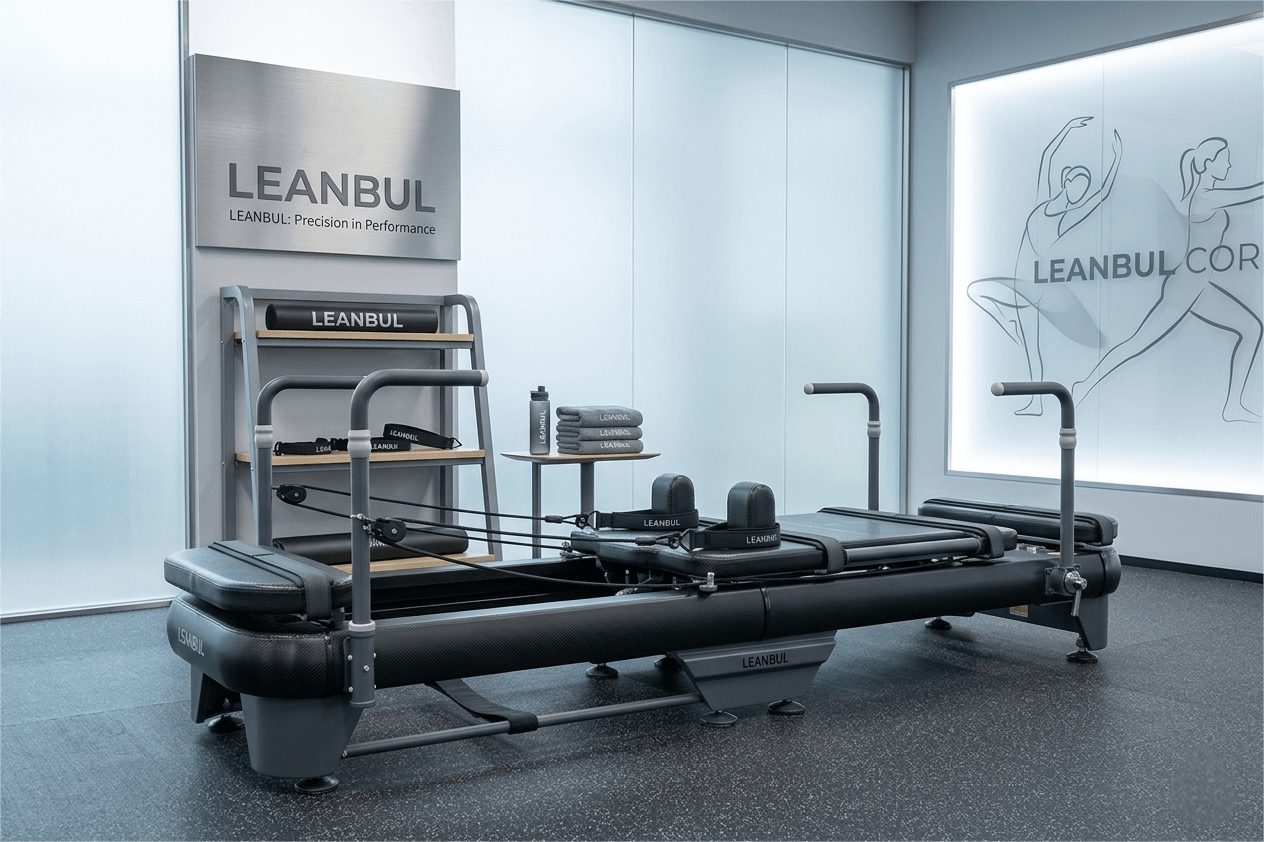
For a studio, the specification is settled: you want EN ISO 20957 Class S machines, the commercial classification. Class H is home use. A home-rated reformer in a shared studio is a compliance problem, and after an incident it becomes an insurance problem. If you run more than one room, hold the supplier to a written spec sheet, because a consistent fleet is what keeps the brand intact across sites.
What this means if you are buying in 2026
Austria rewards a specific kind of operator: small, well-equipped, health-focused, and patient about retention. It punishes anyone who treats it as a volume market with cheap machines. Three practical takeaways:
- Budget for a real commercial fleet, not home machines. The cost difference per unit is smaller than the cost of an insurance claim or a broken down carriage in a full class.
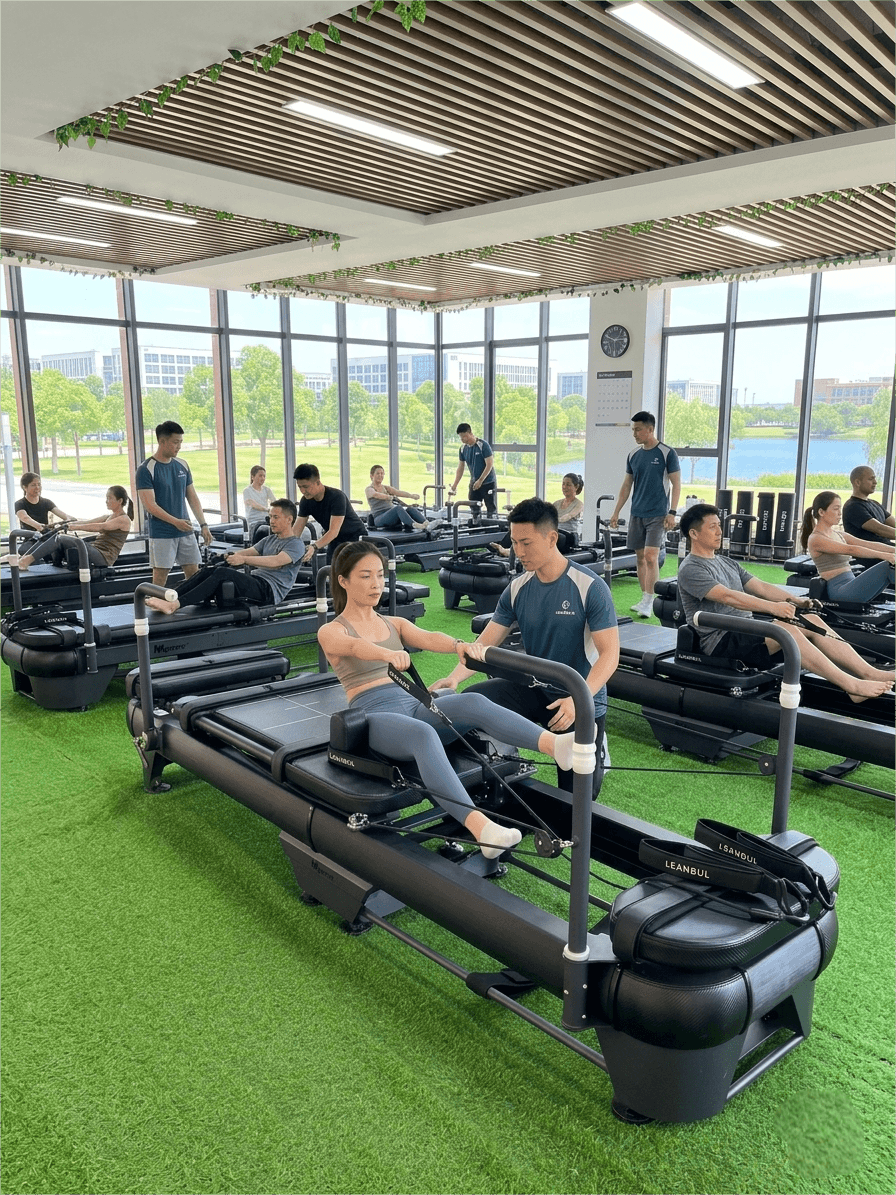
- Plan the room before you buy. Each reformer needs roughly a 3 m × 1.5 m working area once you allow for the carriage, the client and the instructor, plus circulation. A six-machine boutique with a small reception wants about 90 to 130 m².
- Buy inside the EU. Reverse-charged VAT you reclaim, EU delivery times and enforceable cross-border warranty beat a cheaper sticker that arrives with customs paperwork and no local support.
If you want to see how the market compares country by country, our takes on Germany and France use the same lens.
Frequently asked questions
Is the pilates market growing in Austria? Yes, though not fast. The WKO fitness study shows members up 6.4% and revenue up 6.5% for 2024, and facilities grew 2.0%. Reformer demand sits in the boutique and health end of that market, which is the segment still adding members.
How many reformer studios are there in Austria? There is no official count. Austria has 1,349 fitness and health facilities in total. Reformer-only studios are a small subset, concentrated in Vienna with a few operators each in Graz, Linz, Salzburg and Innsbruck.
What does a reformer class cost in Vienna? Roughly €28 to €38 for a drop-in, and €18 to €28 per class on a ten-class pack. Trial classes run €21 to €29. It is below London and New York pricing, so studios compete on retention rather than price.
What reformer should an Austrian studio buy? A commercial machine rated EN ISO 20957 Class S. Class H is home-rated and does not belong in a shared studio. Buying from an EU manufacturer avoids customs and keeps the VAT reclaimable and the warranty enforceable.
How much does it cost to equip an Austrian studio? Six commercial reformers bought manufacturer-direct run about €12,000 to €21,000 before freight and installation, at €1,900 to €3,500 per machine. Retail single-unit pricing is higher, up to €6,500.
Next step
If you are planning an Austrian studio and want to compare specs, sizes and fleet pricing before you commit, look at the Leanbul reformer collection or the models built for studio rooms: the K30 commercial reformer for full-size studios, the K38 premium reformer for premium and rehab programmes, and the K10 compact reformer where floor space is tight. Leanbul is a Spain-based manufacturer, so your fleet ships from inside the EU with no customs and no import clearance. See pilates studio solutions for fleet layouts, or contact us for a quote.
