How to Open a Pilates Studio in Luxembourg in 2026: Legal Steps, Costs and Equipment
To open a pilates studio in Luxembourg you apply for a business permit from the Ministry of the Economy, choose a legal form, register with the RCS and the CCSS, set up for 17% VAT, secure a commercial unit, and buy commercial-rated reformers. There is no separate state licence to teach pilates. Luxembourg regulates the business, the premises and the tax, not the job title.
Budget roughly €70,000 to €180,000 for a boutique studio, with the rent line pushed up by one of the tightest commercial property markets in Europe. Luxembourg City is not cheap, and the numbers reward a studio built for a specific clientele: the international professionals and cross-border commuters who already pay premium prices for wellness.
Here is the order you actually do it in.
Why open a pilates studio in Luxembourg in 2026
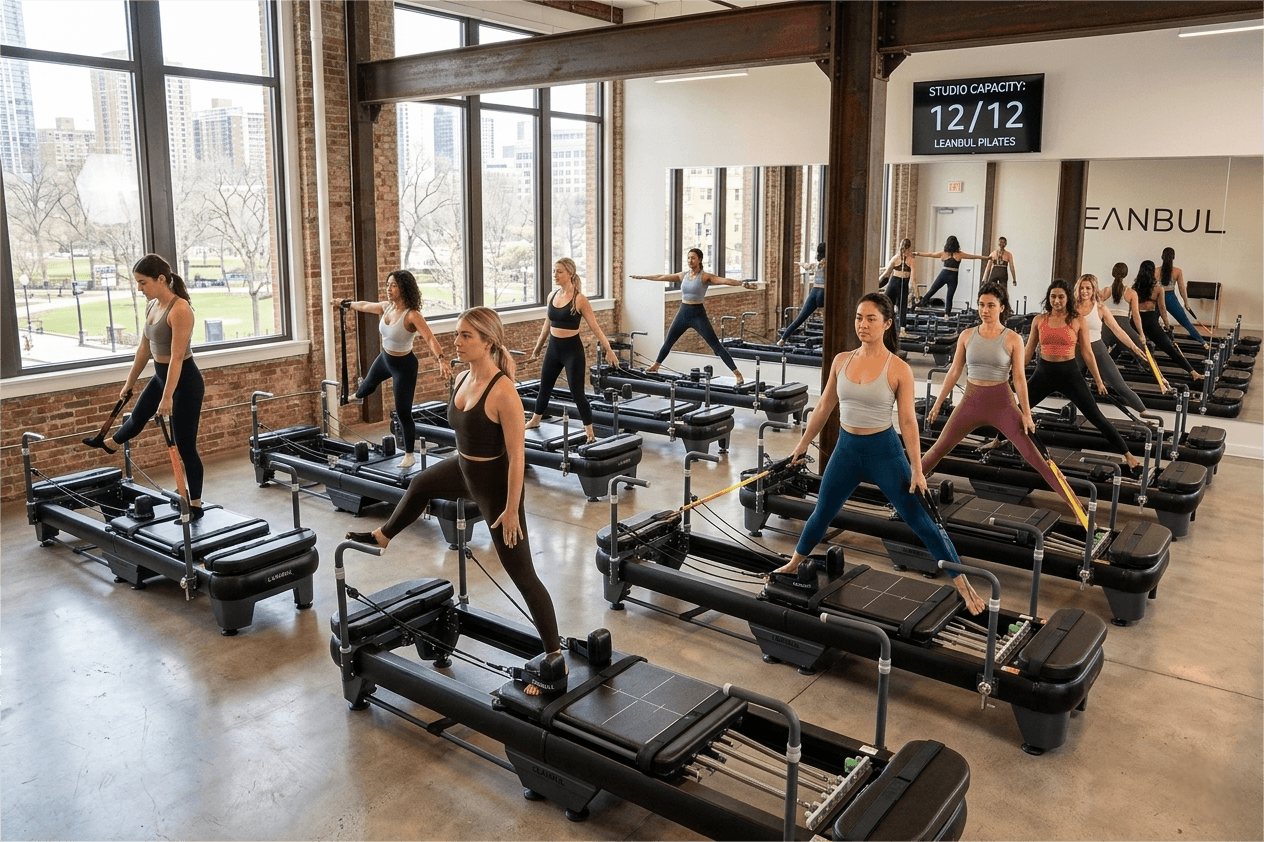
Luxembourg is a small market with a lot of money moving through it. The fitness side is developed and high-income, and the reformer segment is younger and thinner than in Germany or France, which cuts both ways: less competition, and fewer customers to reach.
Three things matter here.
- Cross-border demand. Around half of Luxembourg’s workers commute in from France, Germany and Belgium each day. That produces a multilingual, time-poor, high-earning client base that will pay for a 50-minute class close to the office or the station.
- An under-served reformer scene. The city supports a handful of studios, plus a directory culture that pushes discovery through booking platforms. Compare that with Vienna or Munich, where reformer studios cluster in every district. There is room, but it is not empty.
- Franchise entry underway. Club Pilates holds a master franchise covering Belgium, Luxembourg and Monaco, with a commitment to around 36 studios over a decade. That signals both validated demand and future competition in a very small country.
The flip side is size. You cannot build a Luxembourg studio on the assumption of a deep mass market. You build it around 400 to 800 committed members, and you hold onto them.
Step 1: Choose your legal form
Three forms cover almost every new studio. The choice is mostly about liability, not tax tricks.
The sole proprietorship (indépendant, or entreprise individuelle) is the default. There is no separate legal personality, so you alone are responsible for the business and its debts, and your private assets are exposed to a claim or an unpaid supplier. There is no minimum capital and no notary, which makes it the fastest and cheapest way to start. It is the right structure if you teach alone from a leased room.
The SARL (société à responsabilité limitée) is the standard limited company. Liability is confined to company assets, which matters once you sign a multi-year lease or put instructors on payroll. Minimum share capital is €12,000, and you found it through a notarial deed before registering.
The SARL-S (simplified limited liability company) is a lighter version created for individuals. Only a natural person holding a business permit can form one, and the minimum capital runs from €1 to €12,000, fully paid at creation. It gives you limited liability without the full SARL cost. The catch is that it is designed as a one-person entry vehicle, not a vehicle for outside investors.
| Sole proprietorship | SARL | SARL-S | |
|---|---|---|---|
| Legal personality | No | Yes | Yes |
| Minimum capital | None | €12,000 | €1–€12,000 |
| Liability | Unlimited, personal | Limited to company assets | Limited to company assets |
| Founding | Register + permit | Notarial deed + RCS | Permit + RCS |
| Best for | Solo instructor testing the market | Studio with a lease or staff | One-person studio wanting limited liability |
My read: start as a sole proprietor if you teach alone, and move to an SARL or SARL-S the moment you sign a commercial lease or hire staff. A studio carrying a long lease and two employees on a sole-trader structure is a liability with no upside.
Step 2: Get the business permit
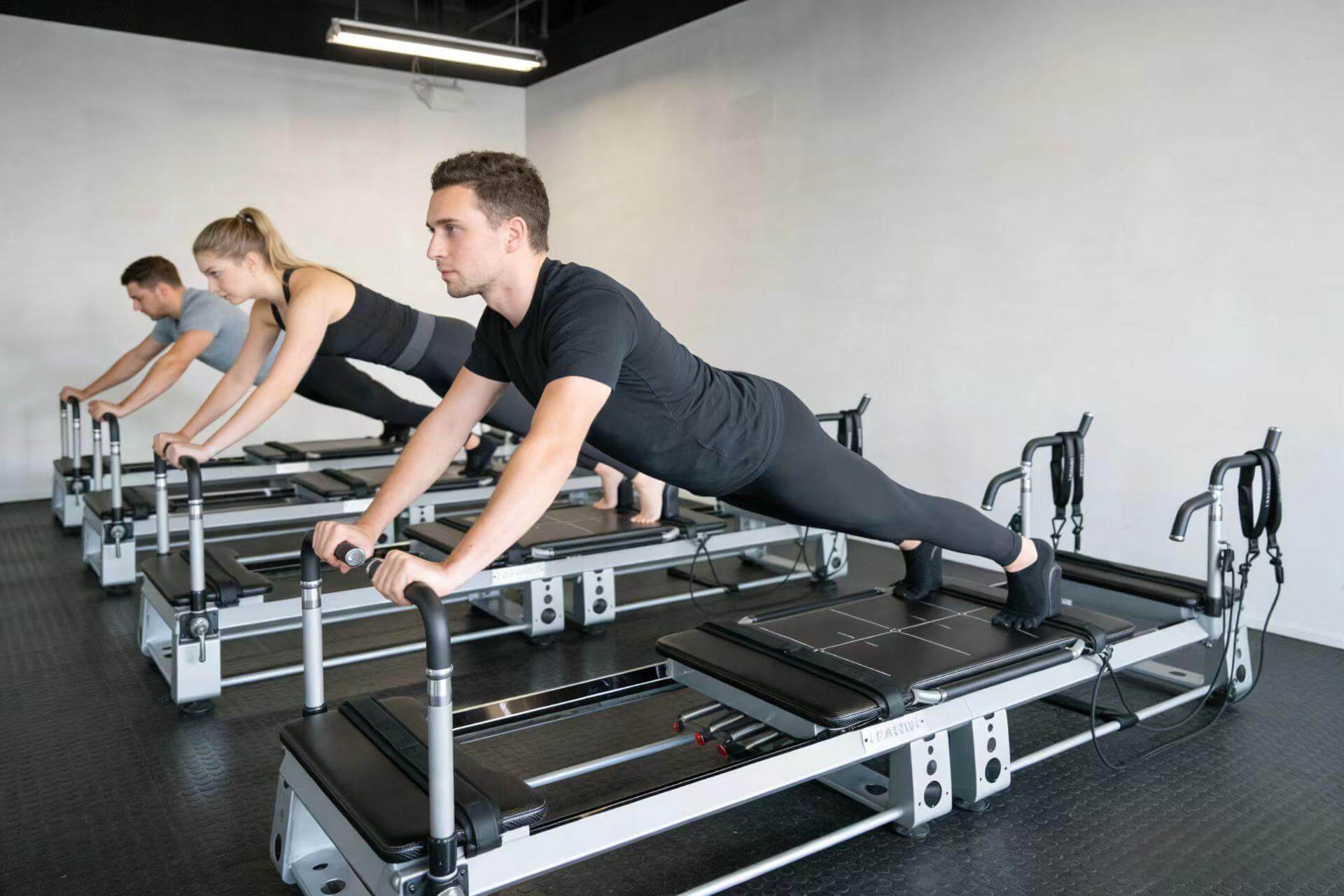
This is the step that catches foreign founders out. Luxembourg requires a business permit (autorisation d’établissement) for commercial, craft and industrial activities, and a studio is a commercial activity. You request it from the General Directorate for Small and Medium-Sized Enterprises at the Ministry of the Economy.
You need to show professional integrity, and for some activities, proof of professional qualification. Nothing in the pilates world requires a specific diploma, but a mislabelled activity can push you into a regulated category, so describe what you will actually do. Once granted, the permit number must appear on your business stationery and your website.
Timing is manageable. Most permits are issued within one to two weeks if the file is complete, and the Ministry must decide within three months; past that, it is granted by default. You file through your business eSpace on MyGuichet.lu with a LuxTrust login, and you register the business at the Luxembourg Business Register (RCS). If you are outside the EU and need to move to Luxembourg to run it, the permit also feeds into a self-employed residence permit, which adds a business and financing plan to the pile.
One more thing to line up: join the Chamber of Commerce or the Chamber of Trades, depending on your activity, as part of the standard setup.
Step 3: Get the VAT decision right
Luxembourg’s standard VAT rate is 17%, the lowest in the EU. Reduced rates of 14%, 8% and 3% exist, but they do not touch pilates, so treat 17% as your default.
VAT registration is compulsory once your annual turnover passes €50,000, under the SME exemption scheme. If you sell services cross-border within the EU, a separate €10,000 EU-wide threshold applies. Stay below the threshold and you do not charge VAT, but you also cannot reclaim it.
That last point is the decision that matters, and it flips on fleet size. Six commercial reformers at €3,000 is €18,000, and at 17% the input VAT alone is around €3,060. A studio that fits out a room and buys a fleet will often come out ahead by voluntarily registering for VAT and reclaiming that tax, even though it then charges 17% on classes and memberships. Ask an accountant to model both paths before you decide, because the crossover is lower than most people assume. VAT returns go to the AED, the registration, estates and VAT authority.
Step 4: Register for social insurance
As a self-employed person in Luxembourg you affiliate with the CCSS, the Centre commun de la sécurité sociale. Contributions for health, pension, work accident and dependency insurance are compulsory, and you pay them yourself.
Pension contributions rose from 1 January 2026 under the reform law of 18 December 2025. The rate went from 8% to 8.5% for each party, and for an independent that means your share of the pension contribution sits at 8.5%, with the State matching it. Accounting for health, accident and dependency on top, the total burden on self-employed income holds around a quarter or more, so build it in from month one.
| Parameter (2026) | Value |
|---|---|
| Monthly minimum wage (contribution base floor) | €2,703.74 (Jan) / €2,771.33 (from 1 Jun) |
| Maximum contribution threshold | €13,518.68 (Jan) / €13,856.63 (from 1 Jun) |
| Pension contribution, self-employed share | 8.5% (State matches) |
| Dependency insurance allowance | €692.83 per month |
| Income tax | Progressive, 0% to 42% |
Two practical warnings. First, there is a minimum contribution base: on your first affiliation the CCSS calculates contributions provisionally using the minimum wage, so you pay something even in a lean start-up year. Second, contributions are then recalculated against your real income. Budget for the correction, not just the first invoice.
Step 5: Premises, lease and permits
Luxembourg City’s office and commercial market is one of the tightest in Europe, with rental vacancy around 3.9% in early 2026. That shapes your real estate decision more than anything else in this guide.
Prime rent near Boulevard Royal runs around €54 per m² per month. The central districts have converged: the Station area and Kirchberg sit near €43, Cloche d’Or around €41, and peripheral districts fall to roughly €24. Retail and small commercial units show up at similar levels, with an 88 m² unit in the Gare area listing near €2,850 a month, and a 176 m² unit near €4,900.
| Location type (Luxembourg City, 2025–26) | Indicative rent |
|---|---|
| Prime, Boulevard Royal quarter | ~€54/m²/month |
| Station district / Kirchberg | ~€43/m²/month |
| Cloche d’Or | ~€41/m²/month |
| Howald / airport | ~€33–€35/m²/month |
| Periphery / Belval | ~€24/m²/month |
Before you sign, three checks. Confirm the planning and any change-of-use requirements for a studio with the commune. Check circulation, parking and delivery access, because reformers arrive on pallets and do not fit through a narrow stairwell. And negotiate a rent-free fit-out period rather than a discount on the headline rate; in a tight market, the fit-out window is usually worth more.
Plan the room around the machines. Each reformer needs roughly a 3 m × 1.5 m working area once you allow for the carriage, the client and the instructor, plus circulation. A six-machine boutique with a small reception and back of house wants about 90 to 130 m².
Step 6: Insurance
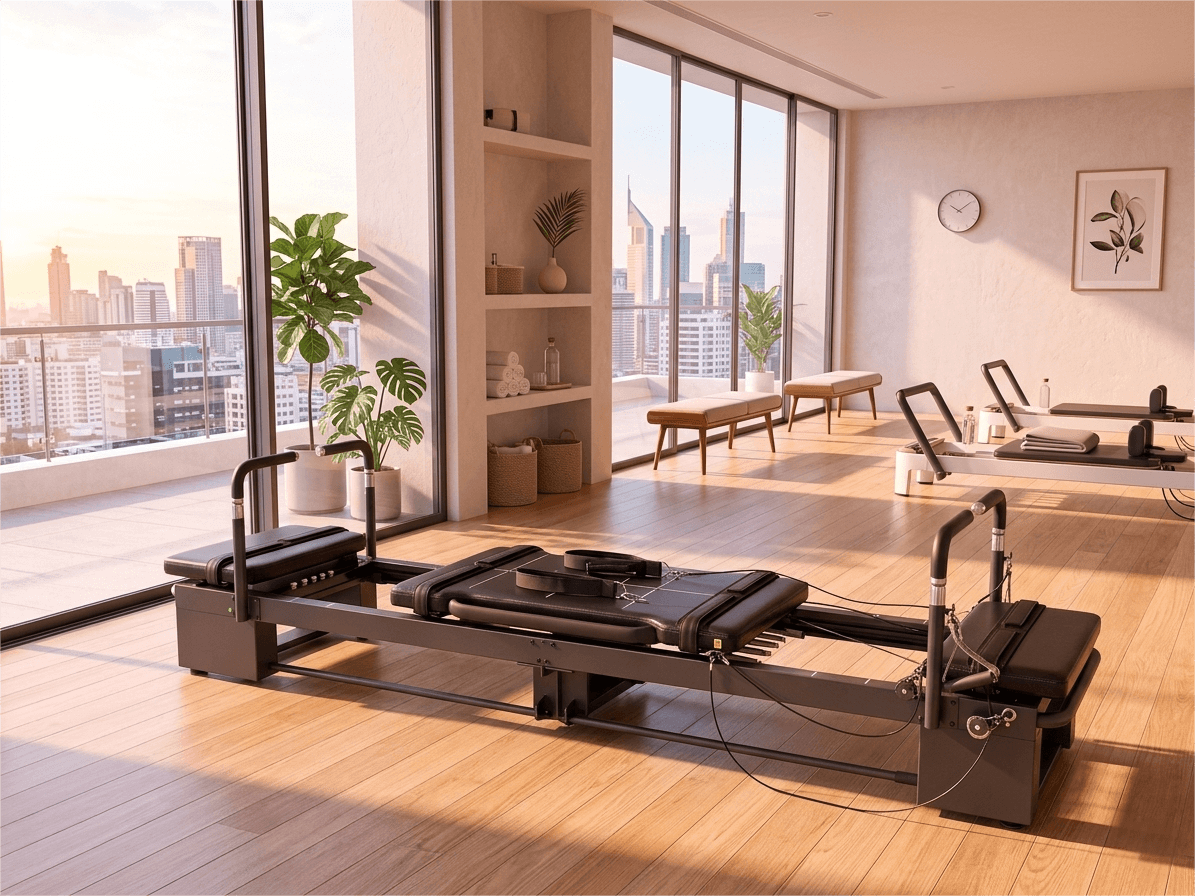
Business liability insurance is the policy that responds when your business injures someone or damages property that is not yours. A slipping client, a broken mirror, a reformer dropping on a rented floor. For a studio it is close to essential, and insurers here increasingly ask about the certification of the equipment itself, which is where CE marking and the test reports behind it start to matter commercially, not just legally.
Three more policies are worth pricing: contents and equipment cover, insured at replacement value rather than what you paid; professional indemnity if you give programming or rehab-adjacent advice; and employer’s liability, which triggers the moment you take on your first employee.
Step 7: Equipment, bought inside the EU
For a studio the specification is settled. You want EN ISO 20957 Class S machines, the commercial classification that insurers and referral partners expect. Class H is for home use. A home-rated reformer in a shared studio is a compliance problem, and after an incident an insurance problem.
Because Luxembourg is inside the EU, buying from a European manufacturer is clean on tax and logistics. A purchase from a Spanish or other EU supplier is an intra-Community acquisition: no customs duty, no import clearance, and the VAT self-accounted under the reverse-charge mechanism, then reclaimed on the same return. You also get a fleet that arrives on EU pallets with EU delivery times, EU spare parts and a warranty you can enforce across borders.
What commercial reformers cost in Europe in 2026:
| Fleet size | Typical price per reformer | Notes |
|---|---|---|
| 1–2 machines | €3,500–6,500 | Retail or showroom, single-unit pricing |
| 3–5 machines | €2,400–3,800 | Small-boutique tier, some room to negotiate |
| 6–12 machines (direct) | €1,900–3,500 | Manufacturer-direct or EU dealer, freight and install quoted separately |
What it costs: a planning budget
These are planning ranges for a six-reformer boutique, not quotes. Luxembourg City rents will push the first line up more than anything else.
| Item | Typical range | Notes |
|---|---|---|
| Deposit and first rent | €15,000–35,000 | Around three months’ rent plus charges at city rates |
| Fit-out and flooring | €20,000–45,000 | Acoustic floor, mirrors, lighting, small reception |
| Six reformers (direct) | €12,000–21,000 | Class S commercial, excl. freight and install |
| Accessories, springs, smalls | €2,000–5,000 | Spare springs, boxes, straps, mats |
| Permit, registration, accountant | €1,000–4,000 | Permit, RCS, and ongoing accounting |
| Insurance, first year | €1,000–3,000 | Liability, contents, and indemnity if you advise |
| Website, booking, branding | €2,000–8,000 | Multilingual booking is worth the spend here |
Two levers most owners miss. The rent-free fit-out period, which in a market this tight is often worth more than a rent discount. And the VAT decision in Step 3, which can swing your effective equipment cost by around a sixth depending on whether you can reclaim the input tax.
Frequently asked questions
Do I need a licence to open a pilates studio in Luxembourg? You need a business permit from the Ministry of the Economy, because a studio is a commercial activity. There is no separate licence to teach pilates. You also register the business with the RCS and affiliate with the CCSS.
Should I choose a sole proprietorship or an SARL? Teach alone and the sole proprietorship is cheaper and faster to set up. Sign a long lease or hire instructors and the limited liability of an SARL or SARL-S is worth the extra administration and capital.
What is the VAT threshold for a small studio in Luxembourg? €50,000 of annual turnover. Stay under it and you do not charge VAT, but you also cannot reclaim input VAT. The rate itself is 17%, the lowest standard rate in the EU.
Can I reclaim the VAT on my reformers? Yes, if you register for VAT rather than use the SME exemption. Equipment bought from another EU country is self-accounted under the reverse charge and reclaimed on your return. On six machines that input VAT is often several thousand euros.
How much is social insurance for a self-employed studio owner? You affiliate with the CCSS and pay health, pension, accident and dependency contributions yourself. The self-employed pension share is 8.5% as of January 2026, with the State matching it. A minimum contribution base applies from your first affiliation, so you pay something even in a lean first year.
Next step
If you are planning a Luxembourg studio and want to compare specs, sizes and fleet pricing before you sign a lease, look at the Leanbul reformer collection or the models built for studio rooms: the K30 commercial reformer for full-size studios, the K38 premium reformer for premium and rehab programmes, and the K10 compact reformer where floor space is tight. Leanbul is a Spain-based manufacturer, so your fleet ships from inside the EU with no customs and no import clearance. See pilates studio solutions for fleet layouts, or contact us for a quote.
