The Pilates Market in Romania in 2026: Growth, Studio Trends and Equipment Demand
Romania is the largest market in South-East Europe and one of the least saturated for reformer Pilates, which is exactly why it deserves a closer look in 2026. The pilates market in Romania is still boutique-led and concentrated in Bucharest, class prices carry the mark of the 2025 VAT hike, and the leu has spent the year sliding against the euro. Sell equipment here and all three facts land on the same invoice.
Here is what the market actually looks like this year, what a reformer class costs in the capital, why a single €20 million investment says a lot about where the country is heading, and what any of it means for buying machines.

A big country with a low penetration rate
Romania has roughly 19 million people, the second-largest population in Central and Eastern Europe after Poland. Its share of the population holding a gym membership, though, runs well below the Western European average. That gap is the whole story: this is a market where the ceiling is high and the current floor is low.
At the European level the direction is up. EuropeActive and Deloitte’s European Health & Fitness Market Report 2026, covering 2025, puts the continent at 75.5 million club members, 67,515 clubs and €39.1 billion in revenue, with membership up 5.8% and revenue up 9.1% year on year. Romania does not appear among the countries that report leads with, and national fitness statistics here are thinner than in the west, so treat any single Romania-wide penetration figure with caution. Direction, not precision.
What has changed in 2026 is the money coming in. In March, private-equity firm Enterprise Investors agreed to invest up to €20.4 million in 18GYM, one of the country’s leading fitness chains, for a significant minority stake. Its own note on the deal is blunt about why: “Romania’s fitness market still has relatively low gym participation and remains highly fragmented, creating strong opportunities for growth and consolidation.” When institutional capital starts consolidating a fragmented market, equipment demand usually follows a step behind.
What a reformer class costs in Bucharest
Bucharest sets the price anchor for the whole country, and the capital’s boutique studios charge close to Western European rates at the drop-in level, then compete hard on packages.
| Studio (Bucharest) | Published reformer price (2026) | Notes |
|---|---|---|
| Reshape Studio | 1 class 120 RON; 4-pass 380 RON; 8-pass 640 RON; 10-pass 750 RON; 12-pass 840 RON; unlimited 1 month 999 RON | Physiotherapist-led, modern studio in Sector 6 |
| One Pilates | Semi-private reformer programme bundled with therapy sessions, 2,500 RON | Central, small-group format |
| VIA Pilates | Runs Balanced Body equipment | Positions itself on equipment quality |
| Body Tailors Pilates | Group reformer formats | Set the Guinness World Record for the largest reformer class in Bucharest |
Read against an exchange rate of about 5.3 lei to the euro, that single 120 RON class works out near €22, which is not cheap for the region. Push into the 12-class pack and the per-class cost drops to roughly 70 RON, or about €13. The gap between the two is the point: Romanian studios win on packaging and membership, not on the headline price of a walk-in class.
A boutique scene, built in the capital
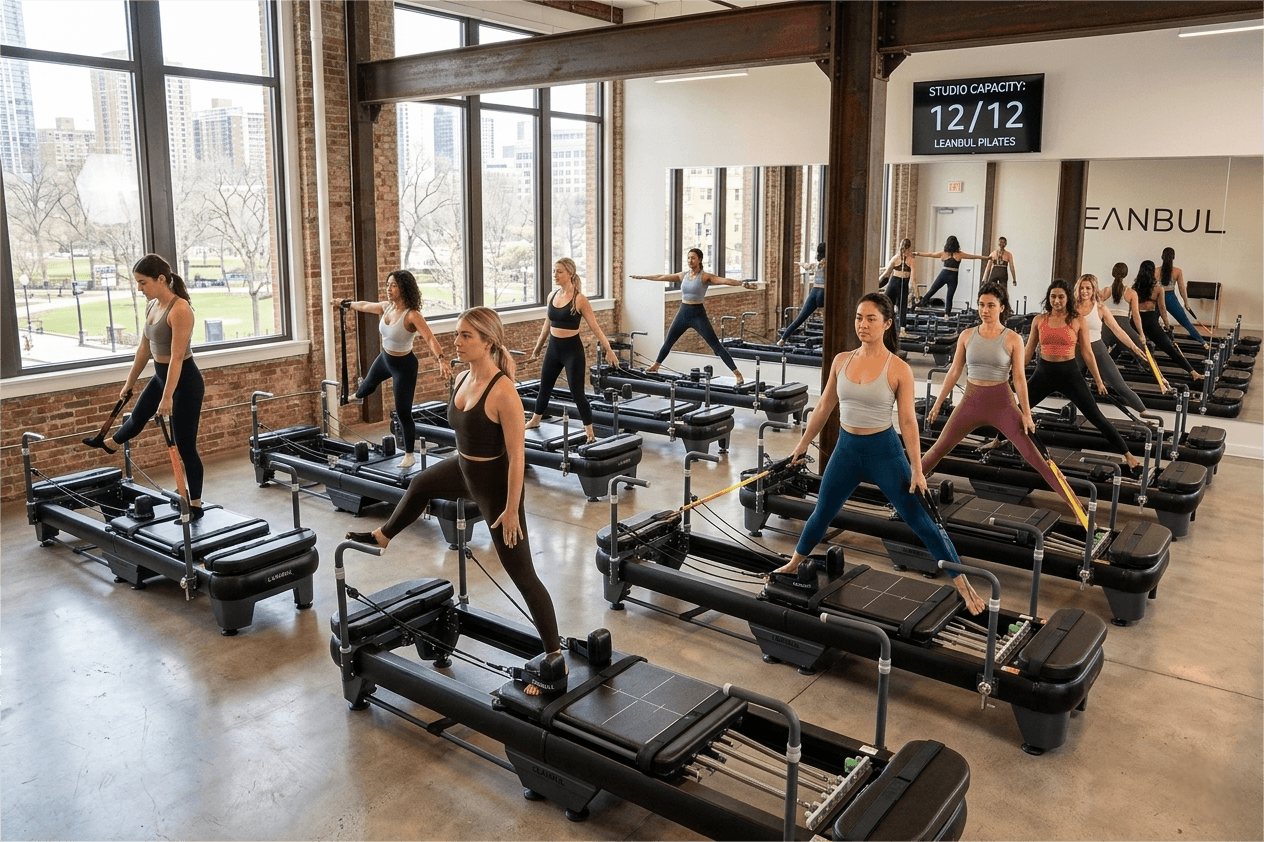
Romania’s reformer category grew out of specialist studios rather than the big full-service chains, and it grew in Bucharest first. Body Tailors Pilates made national news in September 2026 when it set the Guinness World Record for the largest reformer Pilates lesson, with 117 people in one class. That is marketing, but it is also a signal that the format has enough of an audience to fill a room that size and enough of a scene to sustain the stunt.
Two things stand out about the competitive shape. The first is that the category belongs to independents. Full-service chains here have been slower than their German or French peers to bolt reformer zones onto a conventional gym floor, so a well-run boutique competes mostly against other boutiques. The second is that brand loyalty has not hardened yet. A single imported name does not own Bucharest the way it owns some Central European capitals, which leaves room for a manufacturer with a credible commercial machine and European service behind it.
The studio economics that decide the purchase
| Lever | Typical picture in Romania (2026) | Why it matters |
|---|---|---|
| Rent | Bucharest prime CBD office €18–22/m²/month; regional Class A €13–17/m²/month | The fixed cost that punishes a half-full room |
| Class price | about €13–22 per group reformer class, depending on pack size | Sets revenue per slot |
| Machine footprint | about 3 m × 1.5 m per reformer plus circulation | Caps how many machines a given rent bill can carry |
| Equipment | factory-direct commercial reformer in the €1,900–3,500 band | Determines payback and replacement cycle |
The rent figures come from Bucharest office-market reporting from Colliers and Knight Frank for 2026, which put prime CBD rent at €18–22 per square metre per month and Class A space in the regional cities around €13–17. A reformer studio does not need prime office space, and a ground-floor unit in a residential district is both cheaper and better suited to it. But a central or well-connected address carries real weight with the clientele these studios have trained, so it stays a genuine trade-off rather than a settled question.
VAT is 21% now, and it changes the maths
Romania raised VAT from 19% to 21% on 1 August 2025 under Law 141/2025, and 2026 is the first full year the new rate applies. The reduced rate is a single 11%, which covers food, medicines, books, hotel accommodation and restaurant services rather than anything a studio buys. For a fitness business, 21% is the number that matters.
The VAT registration threshold is RON 395,000 of annual turnover, roughly €75,000 at current rates. Below it a studio can stay out of the VAT system, though the trade-off is that it cannot reclaim input VAT either. That is where a fleet purchase gets interesting. Six commercial reformers at €1,900–3,500 each is roughly RON 60,000–110,000 of equipment, and the 21% input VAT on that is a real sum. A studio that anticipates the spend, and registers for VAT voluntarily rather than waiting to cross the threshold, can recover it.
Buy from another EU country and the seller charges no Romanian VAT. The buyer accounts for it under the reverse charge and deducts it in the same period, with no customs clearance and no import duty inside the single market. The one thing the single market cannot neutralise is the leu. The euro crossed 5.35 lei briefly in October 2026 after starting the year near 5.10, so a euro-denominated invoice is a currency decision as much as a purchasing one.
Beyond Bucharest
Bucharest dominates the way it dominates most Romanian industries, but the second tier is real and getting more so. Cluj-Napoca, Timișoara, Iași and Brașov all have genuine fitness markets and thin reformer supply, and in each one a single well-run studio can own the local category outright. The catch is the client pool. Outside the capital, the number of people willing to pay €13–22 a class is smaller, and a weak leu bites harder against a euro-priced machine. Romania rewards a studio that either commits to Bucharest or picks one regional city deliberately, instead of spreading thin across several.
What this means for reformer demand
Three things follow for a studio or gym buying in Romania.
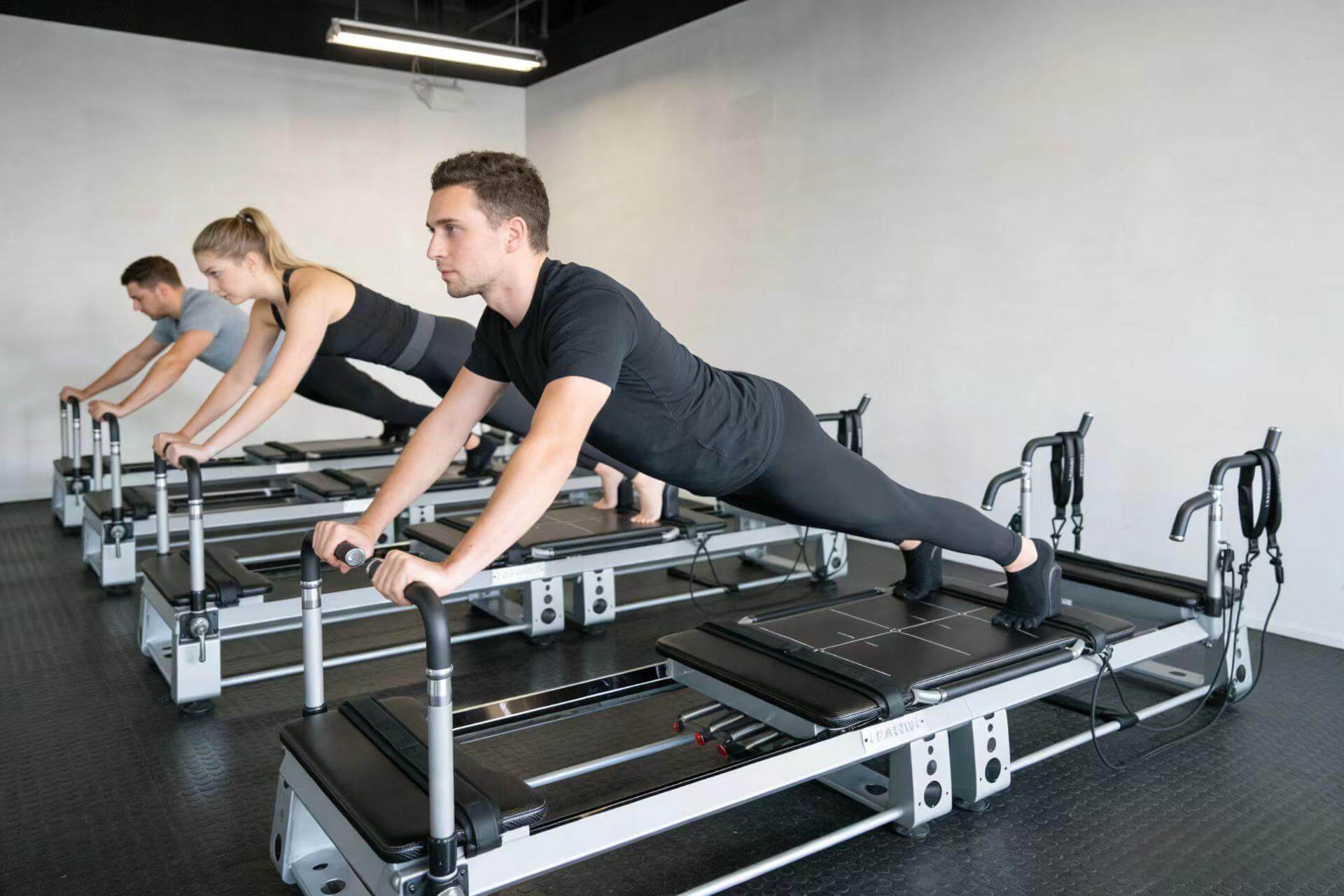
The category is still forming. Western Europe is largely a replacement market in 2026. Bucharest still has genuinely new reformer demand, led by studio newcomers and a boutique scene that has not yet been consolidated.
Class S commercial specification is the baseline. A studio running supervised classes is a commercial operation, which means machines built and documented to EN ISO 20957 Class S with a declaration of conformity on file. The newer fitness-club framework in EN 17229:2026 also covers equipment selection and supervision; we covered it in our guide to EN 17229.
- Buy machines rated for the class loads you actually run, not home-rated units pushed into commercial use.
- Budget about 3 m × 1.5 m per machine plus circulation; a six-reformer boutique with reception and storage usually lands at 90–130 m².
- Buy inside the EU to avoid customs, duty and clearance friction — and price in the currency risk of the leu.
Our collection sets out the range, and the K30 commercial reformer is the machine most small-footprint studios start with.
FAQ
Is the Pilates market in Romania growing? Yes, from a low base. Gym penetration is well below the Western European average, the market is fragmented, and institutional money started moving into it in 2026 — Enterprise Investors took a stake in 18GYM in March. New reformer demand is concentrated in Bucharest and a handful of larger regional cities.
How much does a reformer class cost in Bucharest? Drop-in classes sit around 120 RON, roughly €22, and multi-class packs bring the per-class cost down to about 70–95 RON (€13–18). An unlimited monthly pass runs near 999 RON. Studios here compete on packaging rather than on the walk-in price.
Do Romanian studios need CE-marked reformers? Yes. A reformer placed on the EU market carries CE marking and a declaration of conformity, and a commercial studio should specify EN ISO 20957 Class S machines. With VAT at 21%, voluntary VAT registration is also worth evaluating before you buy a fleet.
What VAT applies when a Romanian studio buys a reformer from another EU country? The seller charges no Romanian VAT. The buyer accounts for it under the reverse-charge mechanism and reports it on the Romanian return, with no customs clearance and no import duty. The remaining exposure is the leu, since Romania is not in the euro area.
Is Romania in the eurozone? No. Romania uses the leu (RON), which traded around 5.3 to the euro through 2026 and weakened over the year. Equipment priced in euros therefore carries currency risk between order and payment.
Building the case
Romania is a two-speed market: a boutique, capital-led reformer scene that is still expanding, and a leu that makes imported equipment a moving target. A studio that prices in lei, buys in euros and plans cash flow around both can turn the currency gap into an advantage rather than a cost. Leanbul is a Spain-based manufacturer of commercial reformers. We ship across the EU without customs friction, document every machine to the standards European studios are held to, and quote in euros. See the full collection, explore Pilates studio solutions, or get in touch and we’ll price a Romanian studio fit-out for you.
