How to Open a Pilates Studio in Romania in 2026: Legal Steps, VAT, Costs and Equipment
Opening a reformer studio in Romania in 2026 comes down to a handful of decisions made in the right order: pick a legal form, register with the Trade Register under the right activity code, decide whether to register for VAT before you buy machines, and only then sign a lease. Get the order wrong and the expensive mistakes land at the end. Get it right and Romania is one of the more forgiving places in the EU to start: a company can be set up for a symbolic amount of capital, and the tax regime for a small operator is light.
Here is the practical sequence, with the numbers that apply this year.

Choosing a legal form: SRL or PFA
Two structures cover almost every new studio.
SRL (societate cu răspundere limitată) is a limited liability company and the default for anyone leasing premises and hiring. Since 2026 a newly incorporated SRL needs a minimum share capital of RON 500, about €100. If annual turnover later passes RON 400,000, the company must raise its capital to at least RON 5,000. The company needs at least one administrator, and profit is taxed either under the micro-enterprise regime or at the standard rate.
PFA (persoană fizică autorizată) is an authorised natural person, a sole trader. There is no minimum capital and no separate legal entity, which means unlimited personal liability. A PFA can hold a maximum of five CAEN codes, and some activities require proof of qualification. For a solo instructor teaching one-to-one or small groups without a lease in the company’s name, it is the cheapest way in. For a studio with staff, a lease and a fleet of machines, it is usually the wrong tool.
A third option, the individual enterprise (întreprindere individuală), sits close to the PFA and is rarely the best fit. If more than one person is involved, or if you want limited liability, the answer is the SRL.
Registering with the Trade Register and picking a CAEN code
Registration happens at the Trade Register (ONRC). The process does not require travel to Romania, and it is routinely handled remotely through a lawyer or an accountant.
The activity code matters more than most people expect. Pilates falls under CAEN 9313, “Operation of fitness facilities”, with CAEN 8551 (sports and recreation education) relevant if you also run teacher training. Codes are not cosmetic: they drive how the tax office reads your business, and certain codes are excluded from the favourable micro-enterprise regime. Romania is also moving its whole code system to CAEN Rev.3, with reclassification due by 25 September 2026, so if you register late in the year confirm which revision applies to you.
Alongside the Trade Register entry you register with ANAF for tax, and the company gets a unique registration code (CUI/CIF). If you are taking on employees, they are registered in the employee records system before their first day; payroll reporting runs through the D112 declaration.
VAT: 21%, and why the timing of registration matters
Romania’s standard VAT rate is 21%, raised from 19% on 1 August 2025 under Law 141/2025. The reduced rate is a single 11%, covering food, medicines, books, accommodation and restaurant services. It does not cover fitness.
Mandatory VAT registration kicks in once annual turnover passes RON 395,000, roughly €75,000. Below that you can stay outside the VAT system. But staying outside also means you cannot reclaim the VAT you pay on your own purchases, and that is exactly the trap a new studio can fall into.
Six commercial reformers at €1,900–3,500 each is roughly RON 60,000–110,000 of equipment, carrying 21% VAT. Register voluntarily from the start, before you buy, and you recover that input VAT instead of writing it off. Register too late and VAT paid on purchases before registration is generally not recoverable. This is the single most valuable piece of timing advice for a studio buying a fleet.
Two compliance points go with it. Business-to-business invoicing in Romania runs through the RO e-Factura system, and for small and medium companies the mandatory deadline slipped to 1 July 2026. Buy from another EU country and the seller charges no Romanian VAT; you account for it under the reverse charge and deduct it in the same period.
Tax on the business: 1% or 16%
A Romanian SRL with turnover under €100,000 and at least one employee can use the micro-enterprise regime: a flat 1% tax on turnover, not on profit. From 1 January 2026 the old two-tier system was scrapped and replaced by that single rate, but the eligibility ceiling was cut from €250,000 to €100,000. Cross €100,000 in a year and you move to the standard 16% corporate income tax from the quarter you exceed it, with no way back.
The employee condition is not decorative. The shareholder-director counts, provided there is a real employment contract at least at the minimum wage: RON 4,050 a month from January 2026, rising to RON 4,325 from July.
For a PFA, the maths is different again. Income tax is a flat 10%. Social insurance (CAS) at 25% becomes mandatory once annual net income reaches 12 minimum wages, and health insurance (CASS) at 10% applies from a much lower floor. A PFA with modest revenue can pay less overall than a micro-SRL; a PFA earning well pays more, and carries personal liability on top. Run both scenarios with an accountant before choosing.
Finding and fitting a space
Romanian commercial leases are negotiated freely under the Civil Code; there is no statutory minimum term like Belgium’s nine years or Italy’s six plus six. That cuts both ways: you can negotiate a short term or a break clause, but you have no long-term protection either. Watch rent indexation, notice periods and any fit-out obligation hidden in the contract.
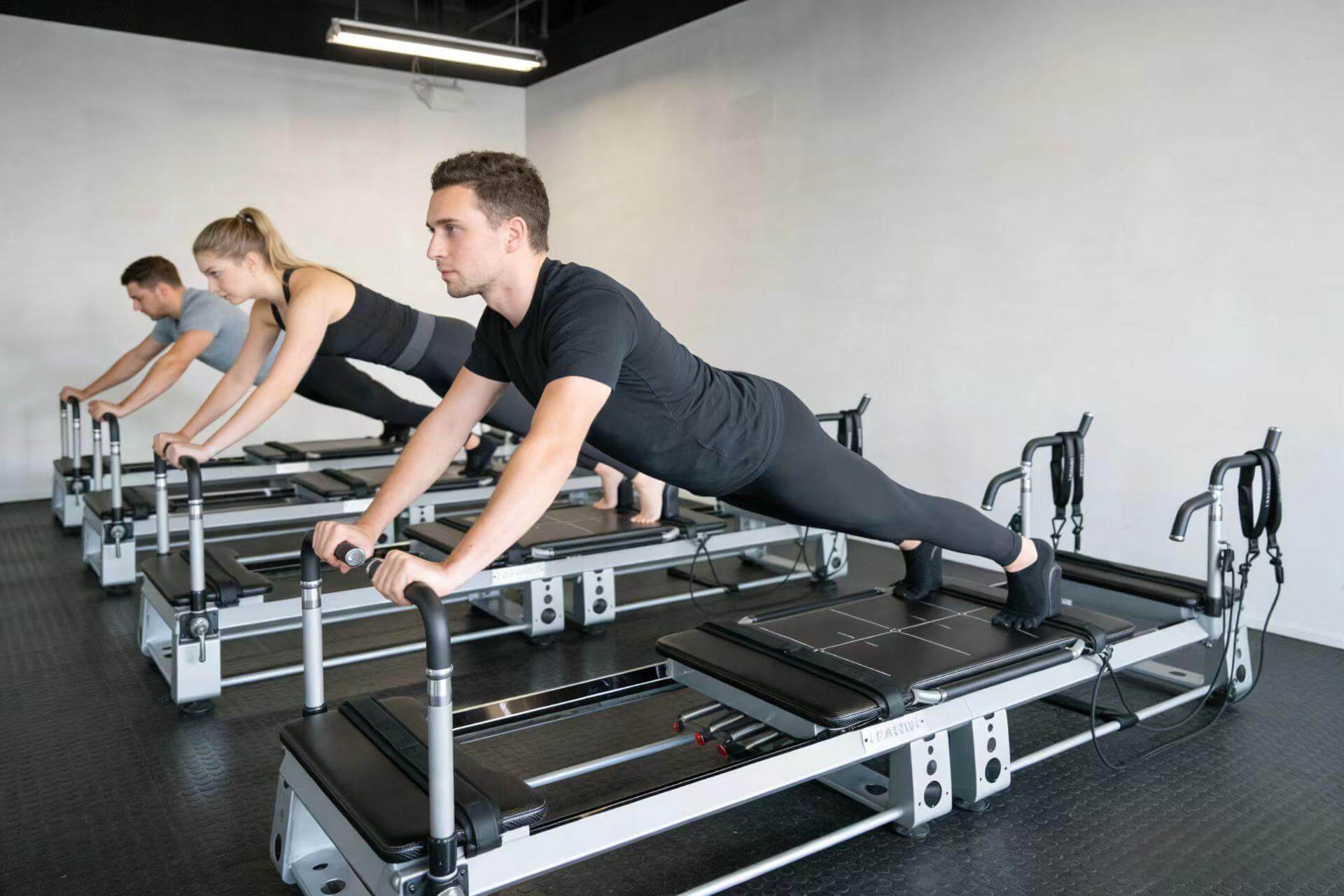
A reformer studio needs about 3 m × 1.5 m per machine plus circulation, so a six-reformer boutique with reception and storage typically lands at 90–130 m². Bucharest prime CBD office space runs €18–22/m²/month and regional Class A space €13–17; a ground-floor unit in a residential district is cheaper and better suited anyway.
Fit-out is where local rules bite. Interior works usually need a building permit, and a public-facing space typically needs fire-safety clearance and a sanitary endorsement. Confirm the exact list with the local Primărie and the public health directorate before signing. If you plan hot Pilates, ventilation and noise become the two design constraints that matter most, especially in a mixed-use building.
| Startup cost (six-reformer boutique, indicative) | Rough figure |
|---|---|
| SRL formation (capital RON 500 plus legal/registry fees) | €150–600 |
| Accounting and payroll | €80–200/month |
| Deposit and first months’ rent | about 3 months |
| Fit-out and equipment beyond reformers | €15,000–35,000 |
| Six factory-direct commercial reformers | €11,400–21,000 |
| Insurance, permits, initial marketing | €3,000–8,000 |
Insurance, qualifications and compliance
A studio open to the public needs business liability insurance covering visitors and third-party property damage, plus contents cover for the machines at replacement value, not purchase price. If you employ anyone, employer liability is compulsory. Pilates is not a regulated profession in the way medicine is, but studios increasingly ask instructors for recognised certification, and physiotherapy-led studios hire kinetotherapists.
On equipment, the baseline is the same as anywhere in the EU. A reformer placed on the market carries CE marking and a declaration of conformity, and a commercial studio should specify machines built and documented to EN ISO 20957 Class S. The newer fitness-club framework in EN 17229:2026 also touches equipment selection and supervision. Anything running supervised group classes is a commercial operation, so home-rated machines pushed into that role are a false economy.
Equipment and the euro-leu question
Romania is not in the eurozone. The leu traded around 5.3 to the euro through 2026 and weakened over the year, which makes a euro-denominated invoice a live risk between order and payment. Locally, a retail reformer such as those sold by Romanian fitness retailers runs near 14,250 RON, about €2,700, while a factory-direct commercial machine from a European manufacturer lands in the €1,900–3,500 band. The gap is real, and so is the difference in specification and documentation behind it.
Our K30 commercial reformer is the usual starting point for a compact studio, the K38 premium reformer suits a higher-volume floor, and the collection page covers the range.
FAQ
Do I need an SRL to open a Pilates studio in Romania? No. A PFA (sole trader) can teach without a company, but it carries unlimited personal liability and cannot easily lease premises or employ staff. For a studio with a lease, employees and a fleet of machines, an SRL is the normal choice, and from 2026 it needs only RON 500 in share capital.
What is the VAT threshold in Romania? Mandatory VAT registration applies once annual turnover passes RON 395,000, roughly €75,000. A new studio should consider registering voluntarily from the start, because the 21% VAT on a fleet of reformers is recoverable only if you are registered before you buy.
What is the micro-enterprise tax rate? From 1 January 2026 an SRL with turnover under €100,000 and at least one employee pays a flat 1% tax on turnover. Above €100,000 it switches to the standard 16% corporate income tax from the quarter it exceeds the ceiling.
How much does it cost to open a studio in Romania? For a six-reformer boutique, plan on roughly €15,000–35,000 for fit-out, €11,400–21,000 for the machines, about three months’ rent as deposit, and modest setup and legal costs. Total startup usually lands well under what the same studio would cost in Western Europe.
What activity code do I use? CAEN 9313, “Operation of fitness facilities,” is the primary code for a Pilates studio, with CAEN 8551 relevant for teacher training. Confirm the correct code under CAEN Rev.3 before registering, since reclassification is due by 25 September 2026.
Building the case
Romania rewards a studio that plans the paperwork before it signs anything. Choose the structure, register under the right code, and decide on VAT before the first machine is invoiced. Leanbul is a Spain-based manufacturer of commercial reformers. We ship across the EU without customs friction, document every machine to the standards European studios are held to, and quote in euros. Explore Pilates studio solutions, browse the collection, or get in touch and we’ll price a Romanian studio fit-out for you.
