Pilates Teacher Training Academies in Spain: Market, Equipment and Setup Guide (2026)
Spain has quietly become one of Europe’s busiest places to train Pilates teachers. International programs run host sites in Marbella and Barcelona, retreat-style courses fill months in advance, and the underlying demand keeps growing: Spanish fitness clubs counted roughly 7.1 million members in 2026, up over 8% year on year (EuropeActive / Deloitte), and Pilates has been one of the fastest-growing formats inside that membership. More studios means more instructors, and more instructors means more academies equipping training rooms.
This guide is for academy directors, studio owners adding a training arm, and anyone planning a Pilates teacher training program in Spain. It covers why Spain works as a training market, the three business models that actually operate here, and what equipping a training academy costs and requires — from a Spain-based manufacturer’s perspective, because that’s who we are.
Why Spain Became a Teacher Training Destination
Three things line up in Spain that few other European markets combine.
Cost. Running a multi-week training program in London, Paris or Amsterdam means London, Paris or Amsterdam prices — for the academy’s rent and for the trainee’s accommodation. Spanish cities offer comparable facilities at a fraction of the cost, which is why international trainees fly in rather than train locally.
Climate and lifestyle. Training academies in Spain sell more than a certificate. Marbella, Valencia and the Canaries host programs that are effectively retreats — mornings on the reformer, afternoons on the beach. That model supports premium pricing and attracts trainees who would not sit through the same course in a grey northern city.
A genuine local market. The demand is not just imported. Spain’s studio boom — covered in our Spain Pilates market report — means qualified instructors are in short supply relative to new studios opening. Spanish-language training serves both the domestic market and all of Latin America, which no other European country can claim.
The Three Models That Work in Spain
1. The Independent Academy
A dedicated training school with its own premises and full equipment fleet, running accredited programs (BASI, Balanced Body, Peak Pilates, STOTT or national programs) several cohorts per year. Highest investment, highest margin per graduate, and the equipment doubles as a working studio between modules.
2. Studio Plus Training
A working studio that adds a teacher training program — the most common entry point in Spain. The studio’s existing reformers become the training fleet, and modules run in off-peak hours. Capital cost is low because the equipment already earns revenue from classes; the trade-off is scheduling pressure and the need for a separate theory space.
3. Retreat and Host-Site Arrangements
Partnering with an international education brand to host their programs — the model BASI uses through host locations in southern Spain. The academy provides the facility and equipment; the brand provides the curriculum, faculty and certification. For the equipment owner this is attractive: the machines are used intensively for defined periods, and the brand’s marketing fills the cohorts.
| Model | Equipment needed | Typical investment (equipment) | Time to revenue |
|---|---|---|---|
| Independent academy | 8–12 reformers + tower, chairs, barrels | €35,000–70,000 | 6–12 months |
| Studio + training | Existing fleet + 2–4 extra reformers | €7,000–25,000 | Immediate (classes) |
| Retreat / host site | 6–10 reformers, full comprehensive set | €30,000–60,000 | First hosted module |
Figures are typical planning ranges for commercial-grade equipment in Europe, not quotes — exact numbers depend on configuration, accessories and shipping.

What a Training Fleet Needs That a Studio Fleet Doesn’t
If you run a studio today and plan to add training, read our European equipment guide for teacher training academies for the full spec. The short version, from the equipment side:
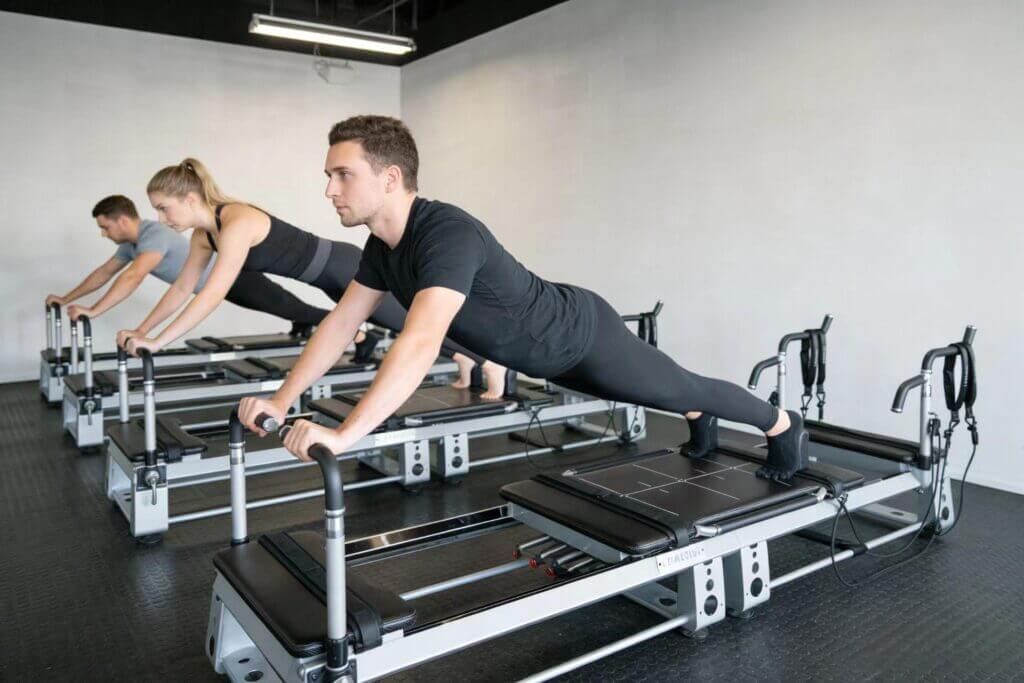
- Student use is harder than client use. Trainees adjust springs, swap straps and attempt full-range transitions dozens of times per session. Your fleet duty cycle jumps toward commercial-gym levels the day the first cohort starts.
- Fleet consistency matters more. Trainees build muscle memory on your machines and will teach on similar ones later. Mixed fleets with different carriage travel or spring counts make teaching harder and graduates less prepared.
- Comprehensive programs need more than reformers. Accredited curricula add tower (or reformer-with-tower), stability chair and barrel work. Plan the full apparatus set from the start — retrofitting later means retraining your timetable around a partial fleet.
- Spares are not optional. One spare machine per ten is the working rule for academies; a machine down during a module is a certification delay for every trainee in the cohort.
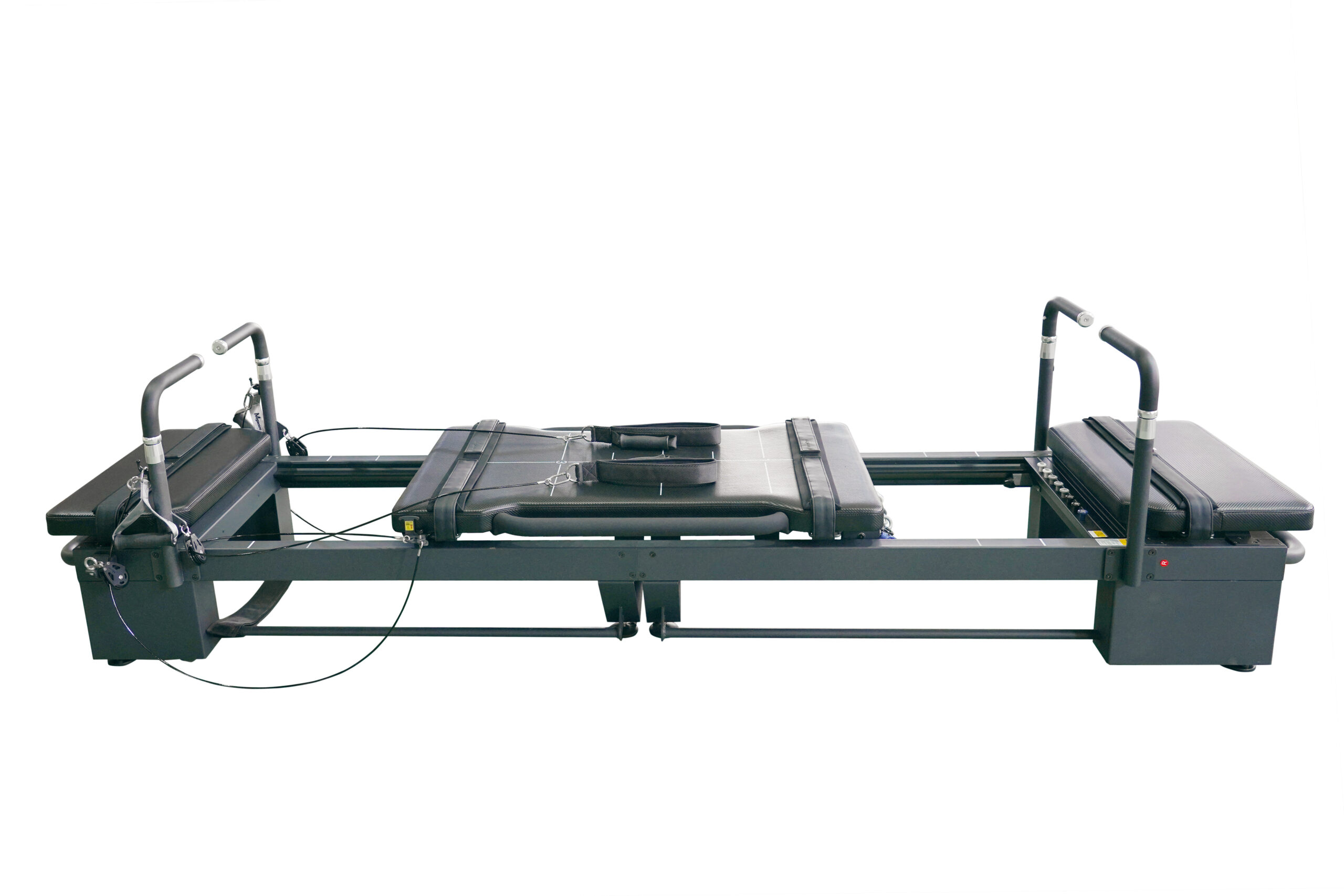
For a compact academy room, our K30 commercial reformer is the model most training programs start with — full commercial travel and spring range in a footprint that fits tight European spaces. For programs that also run advanced and equipment-intensive modules, the K38 premium reformer adds the extended carriage and heavier spring options that larger trainees and high-load work require.
Buying Equipment in Spain: Local Manufacturer vs Imported Brands
This is the decision that shapes your budget and your after-sales life, and it’s worth being blunt about it.
Importing from US brands. Balanced Body, Merrithew and the other established names make excellent machines, and some academies specify them because their own training was done on them. The costs beyond the price list: transatlantic freight, EU import duty, VAT at Spanish rates, longer lead times, and warranty support routed through a distributor rather than the factory. Budget 20–40% above the quoted machine price by the time equipment is installed.
Buying from a Spain-based manufacturer. You pay in euros, deal with a Spanish VAT invoice, and get CE / EN ISO 20957 documentation from the factory that built the machine. Delivery is European road freight rather than ocean shipping, and service questions go to people in your time zone. For an academy that expects to run equipment 40+ hours a week and needs it fixed fast, that difference is operational, not cosmetic.
We say this as the Spain-based manufacturer — see our full range and compare the spec sheets yourself. For a training academy, the deciding questions are always the same: who answers the phone when a machine is down mid-module, and how long until a spare part is in your building.
Permits, Insurance and Compliance for Training Academies
A training academy is a business premises first, and Spain applies the same rules as for any activity centre:
- Licencia de apertura / activity licence for the premises, granted by the local ayuntamiento. Requirements vary by municipality — check before signing a lease, not after.
- Commercial liability insurance covering the premises, the equipment and the training activity. Equipment without CE marking and EN ISO 20957 compliance is a genuine claims risk: insurers have refused cover after incidents on uncertified machines. Our studio insurance guide explains how equipment certification affects premiums and claims in Europe.
- If you host international programs, check whether the curriculum brand requires its host sites to meet specific equipment or insurance standards — most do, and they audit before the first cohort.
The legal steps for opening any training-adjacent business in Spain — company setup, autónomo options, gestor requirements — are the same as for a studio, and we’ve mapped them in our guide to opening a Pilates studio in Spain.
FAQ
How many reformers does a Pilates teacher training academy need? Size the fleet to your largest cohort, not your average class. A program taking 10 trainees needs 10 machines plus a spare — 11–12 reformers in practice. Comprehensive programs also need tower, chair and barrel apparatus for the equipment modules.
Do training academies need different reformers than studios? The same commercial-grade specification, but more of it, used harder. Academy machines should be full commercial class (EN ISO 20957 Class S), because trainee use — constant spring changes, full-range attempts, paired corrections — is closer to gym abuse than boutique classes.
Which teacher training certifications operate in Spain? BASI runs host sites in southern Spain (Marbella area) and Barcelona, and most major international programs — Balanced Body, Peak Pilates, STOTT, Polestar — certify graduates from Spanish academies or accept Spanish training toward their comprehensive certificates. National and PMA-aligned options also exist. Check the specific program’s requirements before committing to an equipment spec.
Is it cheaper to equip an academy with imported or locally made reformers? Locally made, almost always, once you count freight, duty, VAT handling and warranty logistics. Imported US brands typically cost 20–40% more installed. If your own training was on a specific brand and you want that exact feel, factor in the premium deliberately — but for most academies the local commercial-grade machine with full compliance documentation is the rational choice.
Can a studio add teacher training without buying a whole new fleet? Yes — this is the most common path in Spain. Start with your existing reformers, add the tower/chair/barrel apparatus the curriculum requires, and run modules in off-peak hours. Upgrade machines to full commercial grade as the training arm grows.
Build Your Academy’s Equipment Plan
Spain’s instructor shortage is not going to solve itself, and academies that equip well now will be the ones supplying the studios opening over the next three years. The equipment decisions — fleet size, apparatus set, local vs imported supply — are the ones that determine whether your program runs smoothly or stalls mid-module.
Tell us your cohort size, your curriculum’s apparatus list, and your room dimensions, and we’ll send an equipment plan with a Spanish VAT invoice and delivery schedule. Request a proposal or browse the collection to start the comparison.