The Pilates Market in Italy in 2026: Growth, Studio Trends and Equipment Demand
Italy is one of the fastest-growing fitness markets in Europe and one of its least saturated. Membership passed six million in 2025, up from roughly 5.7 million the year before, and penetration is still under 10% of the population, well below Germany, the UK or the Nordics.
That combination is what makes Italy interesting for anyone buying or selling Pilates reformers. A market with this much headroom, plus a deep wellness and rehabilitation culture, is where reformer demand tends to accelerate late and last a long time.
This guide is for studio owners, gym operators, franchise developers and equipment buyers working in Italy. It covers the numbers behind the growth, where reformer demand is concentrated, what Italian buyers actually look for, how IVA and intra-EU purchasing work, and what we see from the Spanish side when we quote an Italian project.
The Italian Fitness Market by the Numbers
| Metric | Figure | Source |
|---|---|---|
| Health and fitness club members (2025 est.) | Over 6 million | Italian industry estimates, 2025 |
| Members (2024) | ~5.7 million | Italian industry estimates |
| Clubs, gyms and pools (2025 est.) | ~11,300 | Italian industry estimates |
| Penetration, total population (2025 est.) | ~8.9% | Italian industry estimates |
| Penetration, over 15s (2025 est.) | ~10.6% | Italian industry estimates |
| Revenue growth, 2025 | +7% to +12% | Italian industry estimates |
| Health and fitness club market value (2025) | USD 3.0 billion | IMARC Group |
| Italians who practise sport (2024) | 37.5% | Istat |
| Sports facilities nationwide (2024) | 78,000+ | Sport e Salute |
Two figures deserve attention. The first is penetration. Italy sits around 8.9% of the total population against Germany’s 14.8%, and the Italian industry itself notes how hard it has been to break past 10%. The ceiling has not been reached. The second is club-level confidence: roughly 80% of Italian operators went into 2026 with a positive outlook, the strongest reading since 2019.
For context, the European Health & Fitness Market Report 2026 from EuropeActive and Deloitte puts the whole continent at 75.5 million members, 67,515 clubs and €39.1 billion in revenue for 2025. Italy is a meaningful part of that base and, more importantly, one of the parts still climbing steeply.
Why Italy’s Low Penetration Is the Opportunity
Italy has the population, the spending power and the climate for a wellness habit. What it has lacked is participation. Istat reports that 37.5% of Italians practised sport in 2024, with 28.7% doing so continuously, yet around a third of the population still does nothing at all. The growth in the last decade has come largely from people moving from sedentary to occasional. That is the pipeline reformer studios live on.
Market analysts group Italy with Spain as the Southern European markets expanding fastest from a lower spending base, driven by recovering household incomes and a shift toward prevention. When a market has both low penetration and rising awareness, equipment demand usually follows the studio openings, not the other way round.
Where Reformer Demand Is Concentrated
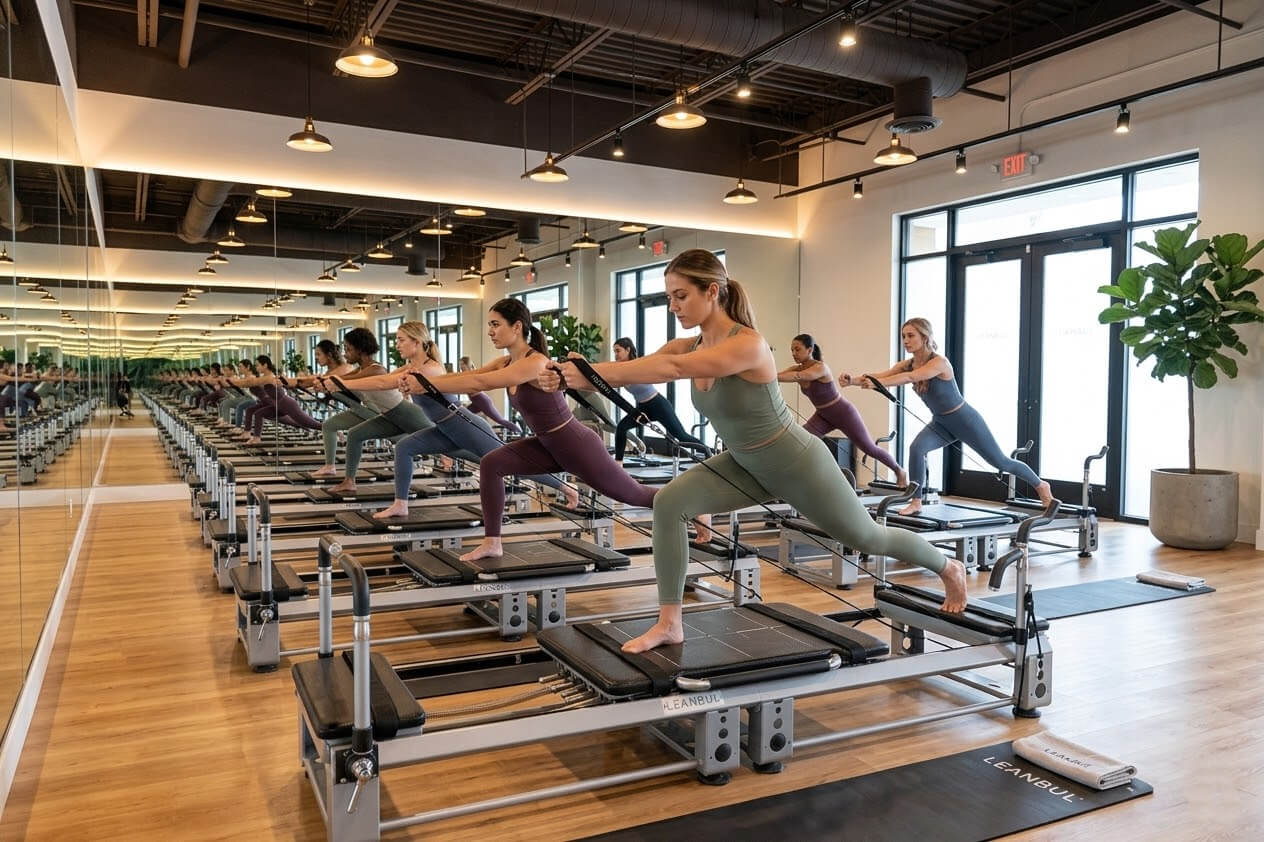
Milan leads, and it leads by more than population alone would suggest. The city’s mix of finance, fashion, design and a young professional class has produced the densest cluster of boutique reformer studios in the country, and those studios care about how a machine looks as much as how it performs.
Rome comes second, with a different profile: a larger base of long-established studios, high-net-worth residents in the central districts, and a tourism calendar that pushes class demand through most of the year. After the two big cities, the next tier is Turin, Bologna, Florence, Naples, Genoa and the Adriatic wellness belt around Rimini, where the country’s largest fitness trade fair, RiminiWellness, sets the tone for the year.
One structural difference from France and Germany: Italy’s reformer franchise scene is younger. The big domestic chain, FitActive, has grown past 165 clubs across Italy, Europe and Brazil with more than 490,000 clients, but it is a general fitness operator, not a reformer brand. International reformer franchises have signed agreements for Germany and Portugal; Italy is still largely open. That gap is a reason to move early rather than late.
What Italian Buyers Look Different About
Ask an Italian operator what decides a reformer purchase and the priorities look a little different from a German or British studio’s list.
- Rehabilitation and posture. Italy frames Pilates strongly around back health, posture and physiotherapy, and many studios sit close to, or inside, a clinical practice. The equipment has to be defensible in that context, which pushes certification and documentation up the list.
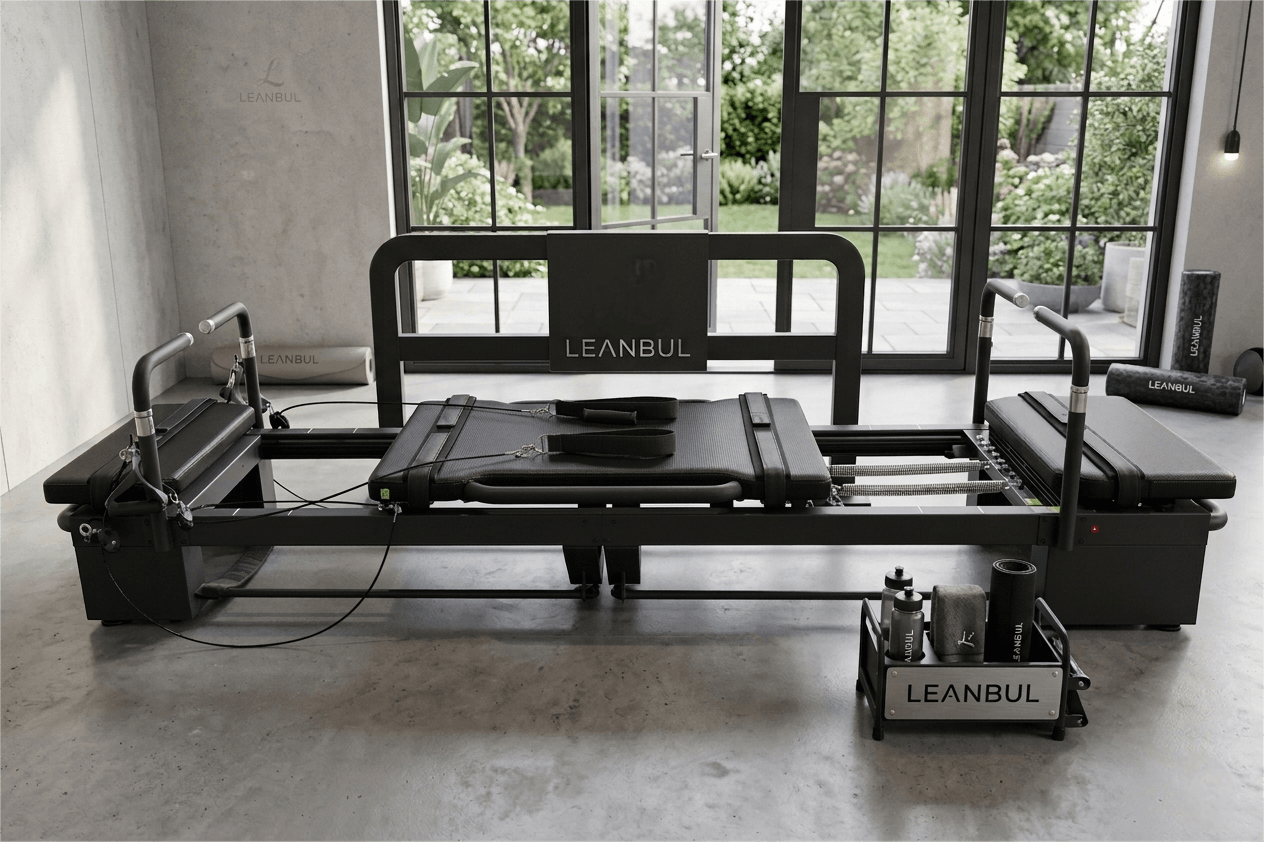
- Finish and aesthetics. Milan and Rome studios treat the reformer as part of the room’s design. Colour, upholstery and frame finish win or lose deals that a purely functional buyer would decide on price.
- A classical equipment tradition. Italy has its own established Pilates equipment makers, so buyers often understand the difference between classical and contemporary designs better than buyers in newer markets. They ask sharper questions about carriage feel and spring behaviour.
- Small, high-density rooms. City-centre rents in Milan and Rome reward machines that make efficient use of modest floor space without feeling cramped in a class.
- Italian-language service. Manuals, documentation and after-sales communication in Italian are expected, not a bonus.
Reformer Specs Italian Buyers Ask For
| Requirement | Why it matters in Italy |
|---|---|
| CE marking and EN ISO 20957 Class S | Commercial studios and clinical-adjacent buyers need it; it also matters for insurance validity |
| Resistenza della molla regolabile | Mixed-ability classes, plus rehab and postural work in the same room |
| Stable, low-vibration carriage | Italian studios often run rehab and athletic clients side by side |
| Quality frame finish | Aesthetic expectations, particularly Milan and Rome |
| Compact footprint option | City-centre rents and smaller rooms |
| Spare parts stocked in the EU | Downtime is expensive; cross-border parts create delays |
| Italian-language documentation | Operational and compliance requirement for many operators |
IVA, Intra-EU Purchasing and the 2026 Intrastat Change
Buying equipment as an Italian business is simple once the tax mechanics are clear, and it is one more reason a European supplier beats a distant one.
- Italy’s standard VAT rate, IVA, is 22%. Reduced rates of 10%, 5% and 4% apply only to items on the specific lists, not to fitness equipment.
- For a VAT-registered Italian business buying from another EU country, the acquisition is normally handled under the reverse charge: the Italian buyer self-invoices, records the transaction in both the purchase and sales registers, and accounts for the VAT itself, typically recovering it at the same time.
- There is no customs duty within the EU, because there is no customs border. That is the structural difference from importing from outside the bloc, where duty, clearance costs and import VAT all land on the invoice before you recover anything.
- One 2026 change worth knowing: Italy’s Intrastat obligation for intra-EU acquisitions moved. From the returns due by 25 February 2026, the monthly INTRA 2-bis filing is triggered where intra-EU acquisitions of goods reach €2,000,000 in any of the previous four quarters. The old operational threshold was €350,000, so older compliance notes are now wrong. Most studios sit far below this line, but growing multi-site operators and distributors should flag it with their accountant.
Commercial reformers typically land between €2,800 and €6,500 per machine before IVA, depending on specification, finish and fleet size, in line with what European studios pay market-wide. Our Pilates reformer cost guide for Europe breaks the components down.

FAQ
Is Italy a big Pilates market? It is one of Europe’s larger fitness markets and one of the least saturated. Membership passed six million in 2025 and the health and fitness club market is valued at around USD 3 billion, but penetration is still under 10% of the population. Reformer Pilates is a fast-growing segment inside a market that has plenty of room left.
How many gyms and studios are there in Italy? Around 11,300 fitness clubs, gyms and pools were active in 2025 on Italian industry estimates, which include seasonal and outdoor facilities. The reformer-only segment is far smaller and concentrated in Milan, Rome and a handful of secondary cities.
What does a commercial reformer cost in Italy? Expect €2,800 to €6,500 per machine before the 22% IVA, with volume pricing for multi-machine orders. Boutique rooms in Milan and Rome often sit in the upper half of that range for extended carriages, heavier spring sets and premium finishes.
Do Italian studios need CE-marked reformers? Yes for commercial use. Reformers sold for studio or clinic use in Italy should carry CE marking and be classified under EN ISO 20957, with Class S for commercial application. It matters for insurance validity and is routinely requested by clinical partners and corporate clients. See our CE certification guide for EU studios.
Is it cheaper to buy from an EU manufacturer than to import? In practice, yes, once the full landed cost is counted. Buying inside the EU removes customs duty and import clearance, keeps the price in euros, and leaves only the reverse-charged IVA that a registered business recovers. What remains is specification and fleet size.
Equipping for the Italian Market
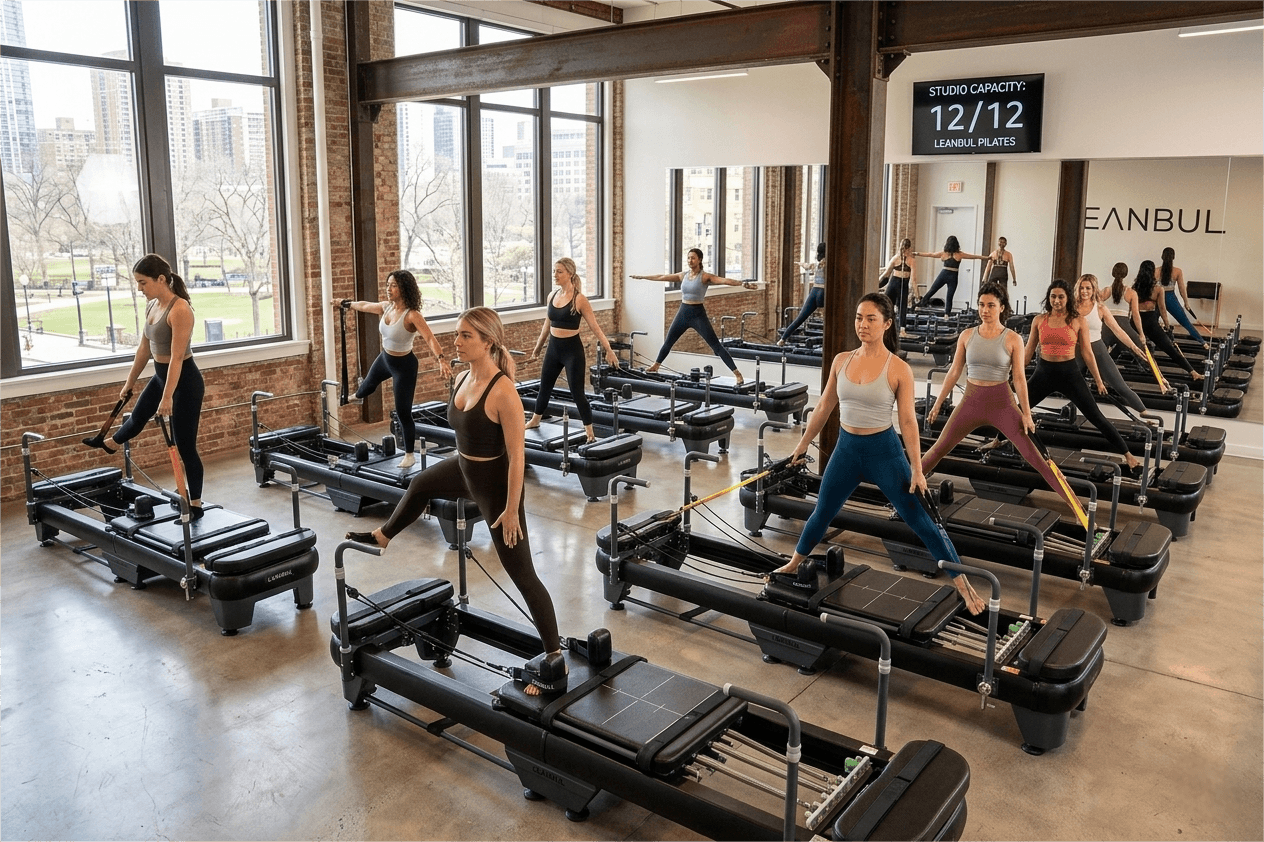
Italy rewards operators who move while penetration is still low and the franchise map is still being drawn. Once a chain or a multi-city operator commits to a fleet spec, switching later costs money and time, and the studios that set the standard early tend to keep the advantage.
We build commercial reformers in Spain for European studios, gyms, clinics and hotels, and ship across the EU with euro pricing, CE documentation and an after-sales footprint inside the single market. If you are planning a studio in Milan, Rome or anywhere else in Italy, the useful first step is a specification conversation rather than a catalogue order.
Tell us your locations, fleet size and target budget and we will put an Italian-market proposal together. Contact us, look at our Pilates studio solutions, or browse the full collection. To compare neighbouring markets, read our reports on Germany, France and Spain.
See the machines Italian operators buy most: the K30 commercial reformer for studio and gym floors, the K38 premium reformer for boutique rooms, and the K10 compact reformer for smaller city-centre spaces.