The Pilates Market in Germany in 2026: Growth, Studio Trends and Equipment Demand
Germany is the biggest fitness market in Europe, and Pilates has been one of the formats growing fastest inside it. The country finished 2025 with 12.36 million gym and studio members, and reformer classes are moving from a niche in Berlin and Munich into mainstream franchise territory — the first Studio Pilates International franchise on the German mainland opened in Wiesbaden in May 2026. For anyone selling, opening or equipping in Germany, understanding how this market is structured matters more than ever.
This guide is for studio owners, gym operators and international brands planning equipment in Germany. It covers the numbers behind the growth, what’s driving reformer demand, where the activity is concentrated, what German studios actually buy, and what it costs — from the perspective of a Spain-based reformer manufacturer serving the European market.
Germany Is Europe’s Largest Fitness Market — by a Wide Margin
Ask which European country matters most for studio equipment, and the answer is Germany, not the UK or Spain. The 2026 European Health & Fitness Market Report from EuropeActive and Deloitte puts German membership at 12.36 million, ahead of the UK’s 12.2 million, with Spain well behind at 7.1 million.
What makes Germany distinct is the mix. It has the largest population in the EU, strong household spending on health, a deeply embedded medical and rehabilitation tradition, and a fitness club sector that has consolidated faster than anywhere else on the continent. That combination supports both high-volume gym chains and premium boutique studios at the same time.
| Market | Members 2025 | YoY change | Context |
|---|---|---|---|
| Europe (total) | 75.5 million | +5.8% | 67,515 clubs, €39.1bn revenue |
| Germany | 12.4 million | +5.6% | 9,647 facilities, €6.25bn net revenue |
| United Kingdom | 12.2 million | +6.6% | Strong boutique reformer scene |
| Spain | 7.1 million | +8.3% | Fastest growth, smaller base |
Source: European Health & Fitness Market Report 2026, EuropeActive / Deloitte, covering the 2025 calendar year.
Penetration tells the deeper story. Germany reached 14.8% of the total population and 21.9% of people aged 15 to 65, passing its pre-pandemic 2019 levels for the first time on both measures. The market didn’t just recover; it grew into new space. German facilities added a net 520 clubs in 2025, ending at 9,647.
The Numbers Behind Reformer Demand
Two things drive reformer purchases: more studios, and more of them offering reformer classes.
Germany added clubs in 2025 at a faster rate (up 5.7%) than membership grew (up 5.6%), and net revenue rose even faster at 7.4%. That’s a market where operators are investing, not just filling spaces. Higher revenue per club usually shows up later as equipment upgrades, expansion and new studio openings.
At the global level, third-party market research puts the reformer segment on a steep curve — one 2026 industry report projects the global reformer market growing from roughly $8.3bn in 2026 to $16.8bn by 2035, an 8.2% CAGR. Treat vendor forecasts with caution, but the direction matches what European manufacturers see on the order side: reformer demand is outrunning the wider fitness market.
The format shift is what matters most for equipment. A traditional fitness club with cardio machines and free weights needs no reformers. A club that adds a reformer studio needs six to twelve machines, and those machines sit in the premium tier of the purchasing decision. Germany’s 9,647 facilities don’t all want a reformer zone, but the ones that do are exactly the buyers manufacturers compete for.
What’s Driving Reformer Growth in Germany
Low-impact strength is winning. Reformer Pilates fits the shift toward training that builds strength without the joint load of heavy lifting. It suits older members, post-rehab clients and people returning to exercise — a large and growing slice of the German membership.
Franchises are arriving. Studio Pilates International, which runs 135+ studios globally, opened its first German franchise in Wiesbaden in May 2026, leading with “science-backed reformer Pilates workouts.” More mainland European franchise entrants mean standardized fleets, central purchasing and repeat equipment orders rather than one-off sales.
Consolidation is churning equipment. Germany’s club sector has seen heavy M&A: financial investor Waterland took over LifeFit Group (around 140 clubs), and Basic-Fit’s acquisition of clever fit moved 493 clubs across ten countries, Germany included. Mergers rebuild and rebrand equipment; a new operator often re-specs whole floorplans.
Medical and rehab models are strong in Germany. The country’s rehab-clinic and prevention culture — including the established medical-fitness chains — treats controlled, spring-based resistance as clinical exercise, not simply fitness. That’s a natural home for reformer and equipment work directed at physiotherapy.
Digital and connected formats are landing. Connected reformers with screens and on-demand libraries are now distributed in Europe, and German operators have shown appetite for the model. Our analysis of smart reformers covers what connected machines do, what they cost and where they fall short against mechanical equipment with a 15–20 year lifespan.
Where the Activity Is Concentrated
German demand isn’t spread evenly. The reformer market clusters around the wealthy, younger, internationally minded cities.
- Berlin — Germany’s creative and startup capital, with the densest concentration of boutique and independent studios, and the market most open to new formats.
- Munich — high household income, a wellness-conscious professional class and premium pricing that supports high-end reformer studios.
- Hamburg — affluent, design-led, strong boutique scene along the same lines as Berlin with more corporate money behind it.
- Rhine-Main (Frankfurt, Wiesbaden, Mainz) — where the Studio Pilates franchise landed. Corporate wealth, international residents, and a catchment that reaches across the region.
- Cologne / Düsseldorf (NRW) — the country’s largest cluster of large fitness clubs, and the base for Germany’s biggest chain operators.
The EuropeActive/Deloitte report is presented at the European Health & Fitness Forum in Cologne, which tells you where the industry’s gravity sits. If you’re planning a German rollout, the Rhine-Ruhr and Rhine-Main corridors are where club-scale buyers concentrate, while Berlin and Munich are where boutique reformer demand is deepest.
What German Studios Buy, and What They Pay
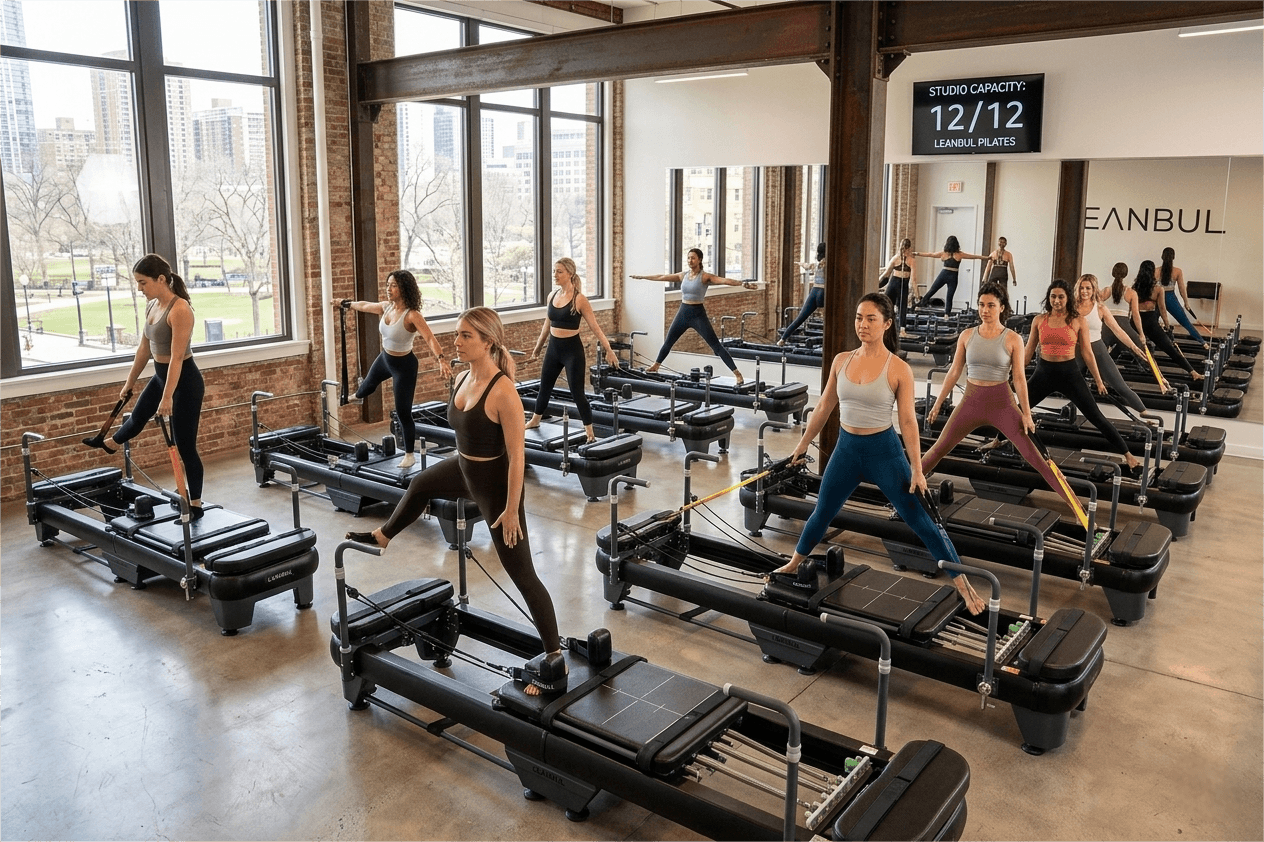
German buyers are spec-conscious. They ask for datasheets, load ratings, weight capacity and certification before they discuss price, and they expect the compliance paperwork from a European manufacturer or a European importer — CE marking and EN ISO 20957 Class S classification for equipment sold for commercial studio use.
On price, the European commercial reformer bracket runs roughly €2,800 to €6,500 per machine depending on class, frame and configuration, with fleet buyers paying less per unit at volume. Our European pricing guide breaks the tiers down; the German sticker price sits inside the same band as the rest of Western Europe, with 19% VAT applied at purchase.
| Buyer type | Typical fleet | What they prioritize | Price band per machine |
|---|---|---|---|
| Boutique reformer studio | 6–12 machines | Frame finish, quiet glide, class consistency | €2,800–5,000 |
| Premium / flagship studio | 8–14 machines | Extended carriage, heavy springs, brand feel | €4,000–6,500 |
| Large fitness club, new reformer zone | 10–20 machines | Durability, service network, fleet standardization | €2,500–4,500 |
| Physio / rehab clinic | 2–6 machines | Adjustability, low entry, clinical accessories | €2,800–5,000 |
| Hotel / corporate wellness | 1–4 machines | Compact footprint, low maintenance, aesthetics | €2,800–5,000 |
Ranges are typical planning figures for commercial-grade equipment in Europe, before VAT and shipping, not quotes.
A pattern worth noting: German fleet buyers care less about the lowest unit price than about continuity. A studio that standardizes on one model across locations wants the same carriage feel, the same spring set and the same part number in every room, and it wants a supplier who can replenish it. That’s a strong argument for a manufacturer with a single European supply base rather than an imported brand with a distributor in one country.
The Import Question for German Buyers
Germany’s strong domestic engineering culture makes some buyers assume they should look at US brands first. Balanced Body and Merrithew make excellent machines, and some studios specify them because that’s what their own training was on. The costs stack up though: overseas freight, EU import duty and 19% German VAT, longer lead times, and warranty support routed through a distributor rather than the factory.
A Spain-based manufacturer lands differently. You pay in euros, receive a German-valid VAT invoice, get CE / EN ISO 20957 documentation from the factory that built the machine, and receive the fleet on European road freight with service questions answered inside the EU. For an operator running machines 30+ hours a week, the deciding question isn’t the badge — it’s who picks up when a machine goes down mid-schedule. Our comparison of Balanced Body and Merrithew covers where each excels and where a European alternative fits.
FAQ
Is Germany the biggest Pilates market in Europe? It’s the biggest fitness market in Europe, with 12.36 million members and 9,647 facilities in 2025, and Pilates is one of the faster-growing formats inside it. The UK rivals it on reformer-class penetration, and Spain is growing faster from a smaller base, but on overall scale and spending power Germany leads.
How many reformer studios are there in Germany? There’s no clean official count of reformer-only studios; the reliable number is the facility total — 9,647 clubs and studios across the country, up a net 520 in 2025. Reformer studios are a growing subset, concentrated in Berlin, Munich, Hamburg and the Rhine-Main region.
What does a commercial Pilates reformer cost in Germany? Budget €2,800 to €6,500 per machine for commercial-grade equipment, plus 19% VAT, with volume discounts for fleets. Boutique studios typically land in the lower half of the range; premium and flagship rooms go higher for extended carriages and heavier spring sets.
Do German studios need CE-marked equipment? Equipment sold for commercial studio use in Germany should carry CE marking and be classified under EN ISO 20957 (Class S for commercial use). Beyond being good practice, it affects insurance cover and is increasingly checked by buyers, franchise brands and auditors. See our CE certification guide for EU studios.
Should I buy from a German dealer or directly from a manufacturer? Direct from a manufacturer gets you factory pricing, direct compliance documentation and one point of contact for parts and warranty. A German dealer can add local stock and service, which matters for large or multi-site fleets. The strongest setup is usually a manufacturer supply agreement with European service coverage.
Equipping for the German Market
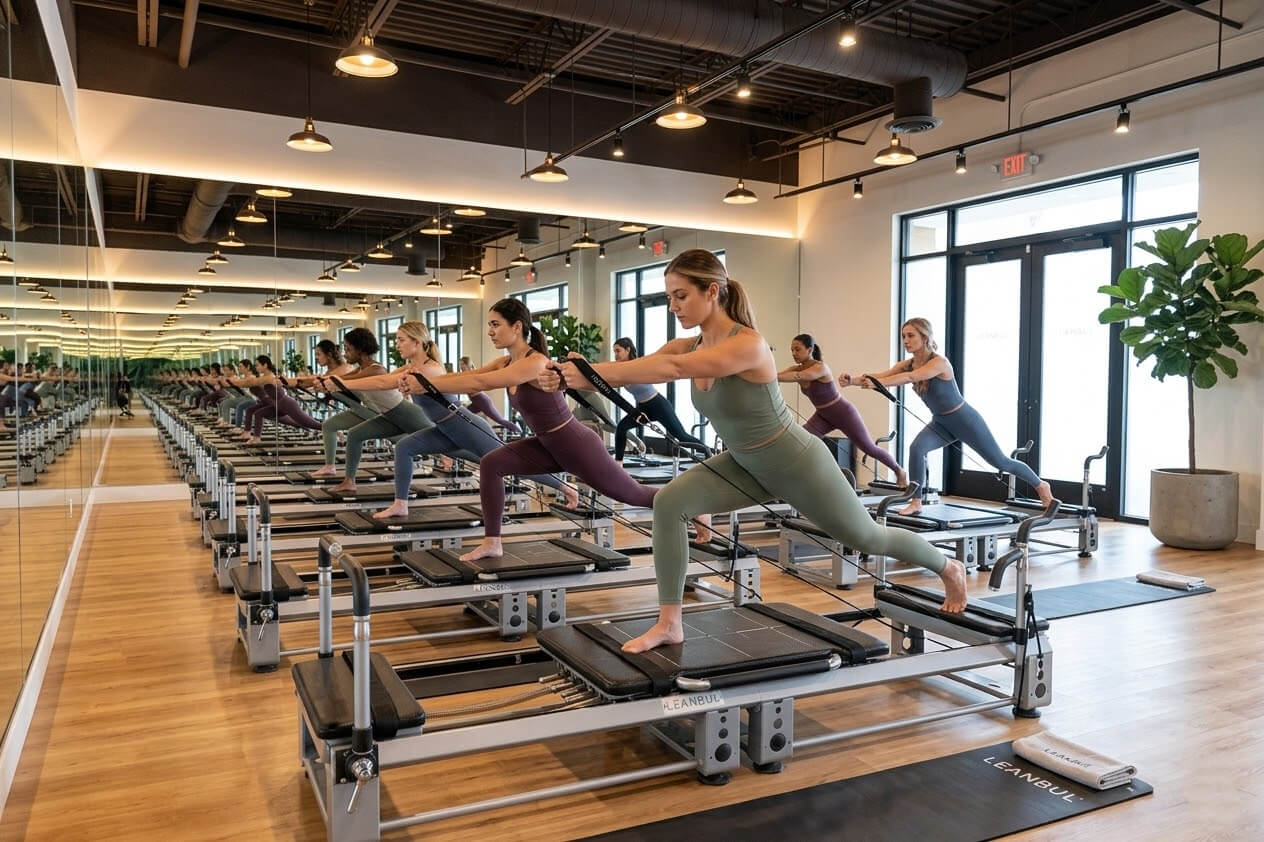
Germany rewards operators who move early. Membership is at record levels, clubs are investing rather than cutting, franchises are entering, and the equipment cycle is opening as consolidation reshuffles floorplans. The buyers who win are the ones who spec commercial-grade machines, get the compliance file straight, and line up a supplier who can keep the fleet running for the next decade.
We build commercial reformers for European studios, gyms, clinics and hotels, and ship across the EU from Spain — the same market you’re operating in, with the paperwork, the euro pricing and the service footprint that go with it. For a like-for-like look at a neighbouring market, see our Pilates market report for Spain.
Tell us your locations, fleet size and target price, and we’ll send a German-market equipment proposal. Contact us, see our studio solutions, or browse the full collection.