How to Test a Pilates Reformer Before You Buy: A 20-Minute Protocol for Studio Buyers
Twenty minutes with a tape measure and a loaded carriage will tell you more about how to test a pilates reformer than a two-hour demo class. Demo classes are run on machines that were unpacked that week, adjusted by the person selling them, in a room with good music. None of that tells you what the carriage will sound like in month eighteen, when the springs have three thousand hours on them and your 7am class is complaining about the noise through the floor.
So test the machine, not the class. Below is the order we suggest to studios buying a commercial reformer in Europe: what to check, what number to ask for, and what should make you walk away. It takes about twenty minutes per machine and it works on any brand, including ours.
Do the frame and rails first, with the machine switched off
Start before anyone lies down on it. Rails and carriage tolerance decide whether the machine still feels tight in year five, and they are the most expensive thing to fix later.
Rock the carriage sideways. Put one hand on each side of the carriage and rock it left and right along the rail. You are looking for rock with a click at the end of the movement. A well-set carriage moves with maybe a millimetre of play — you can feel it move, you cannot feel it knock. A knock means the wheel-to-rail fit is loose, usually because the wheels are cheap bearings in a plastic body or the rail section is undersized.
Ask the supplier for the lateral tolerance in millimetres. A manufacturer who builds rails and carriages to a spec will have that number. A reseller will not, and will change the subject to upholstery colours.
Push the carriage slowly along the full length of the rail. Slow is the point. Fast hides defects. You are listening for a rumble or a change in pitch at one spot — a dent, a weld that pulled the rail out of line, or a joint that was never dressed. Then check the rails are level with each other and with the floor, using a spirit level across both rails and along each one.
Look at the rail surface itself. Anodised aluminium and powder-coated steel both work. What matters is that the running surface is consistent and that there are no exposed sharp edges at the ends. On aluminium, look for a uniform finish rather than a thin coat over machining marks.
Load the frame before you trust it. Two adults, one standing on the frame at each end, is a crude test but a revealing one: you should see no visible flex and hear no creak. For a proper number, ask for video of the machine under a 100 kg load, filmed from the side so you can watch the rail move relative to the frame.
The spring set is where most machines quietly fail
Springs are consumables, not structure. They will be replaced two or three times over the life of the machine, and the quality of the spring set is the single clearest signal of whether the manufacturer was thinking about year ten or about the invoice.
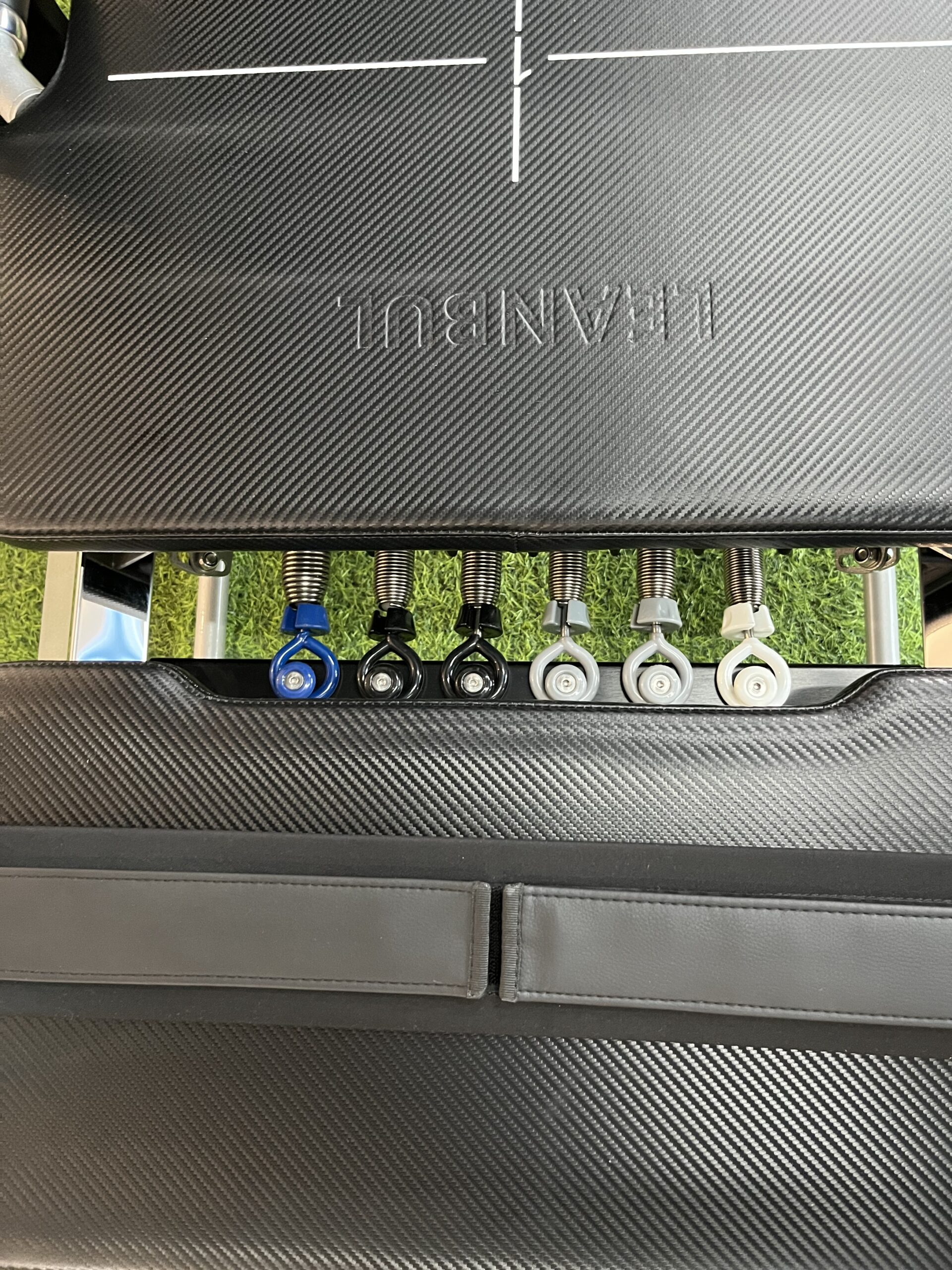
Unhook every spring and lay them side by side. A matched set has springs of the same free length and the same wire diameter. One spring visibly shorter than the rest has been over-stretched in a showroom, or came from a different batch. Either way, the resistance across the spring bar is now uneven, and uneven resistance is the complaint that clients cannot articulate but always feel.
Colours mean nothing across brands. A red spring from one maker is not a red spring from another. Resistance is a function of wire diameter, coil count, material and the extension it is used at. Ask for the force in newtons (or kilograms) at a stated extension — for example, the force at 100 mm of stretch — and ask what the full set totals when all springs are engaged. That is the only comparison that survives a spreadsheet.
Check the anchor points as hard as the springs. Look at the hooks and the spring bar. Hooks should be closed enough that a spring eye cannot slip off under load, with no sharp edges where the eye sits. Push down hard on the middle of the spring bar with two fingers: if it flexes noticeably, the bar is undersized and the geometry of your resistance changes as springs load unevenly.
Ask when they expect you to replace them. For commercial use, Merrithew’s own guidance is to replace springs every two years. Align-Pilates warrants commercial springs for two years or 3,000 hours, whichever comes first, and treats a loss of about 5% tension per 1,500 hours as normal. Those two references give you a defensible replacement cycle to budget for. A spring set for a commercial machine typically costs €120–250, so multiply by your fleet and by two over five years.
Upholstery, ropes, pulleys: the parts your clients touch
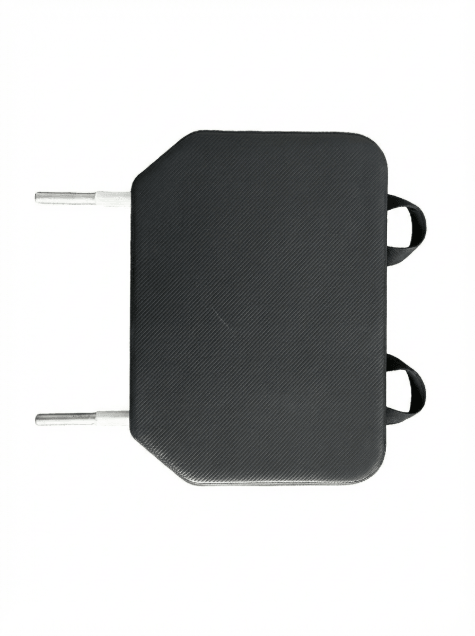
Press the upholstery with your thumb, hard, in the middle of the carriage and at the shoulder blocks. Good foam pushes back and does not bottom out onto the board underneath. Cheap foam has already bottomed out on the showroom floor. Then look at the seams at the corners, where the vinyl takes the most load — double stitching and a taped edge survive; a single row of stitches on a sharp corner does not.
Check the warranty wording on upholstery specifically. A 90-day upholstery warranty is normal across the industry, including on machines that carry ten years on the frame. That is not a red flag, it is the industry telling you upholstery is a wear item. Budget for re-covering at year five; a full re-upholster with labour runs €200–450 per machine.
Run the ropes through their full range. Pull each rope to the end of its adjustment, let it back, and watch the rope where it passes the pulley. Fraying at that point means the pulley is too small or the rope guide is misaligned. Roller-bearing pulleys run quieter than plain bushings, and on a machine with eight or ten rope runs you will hear the difference in a full class.
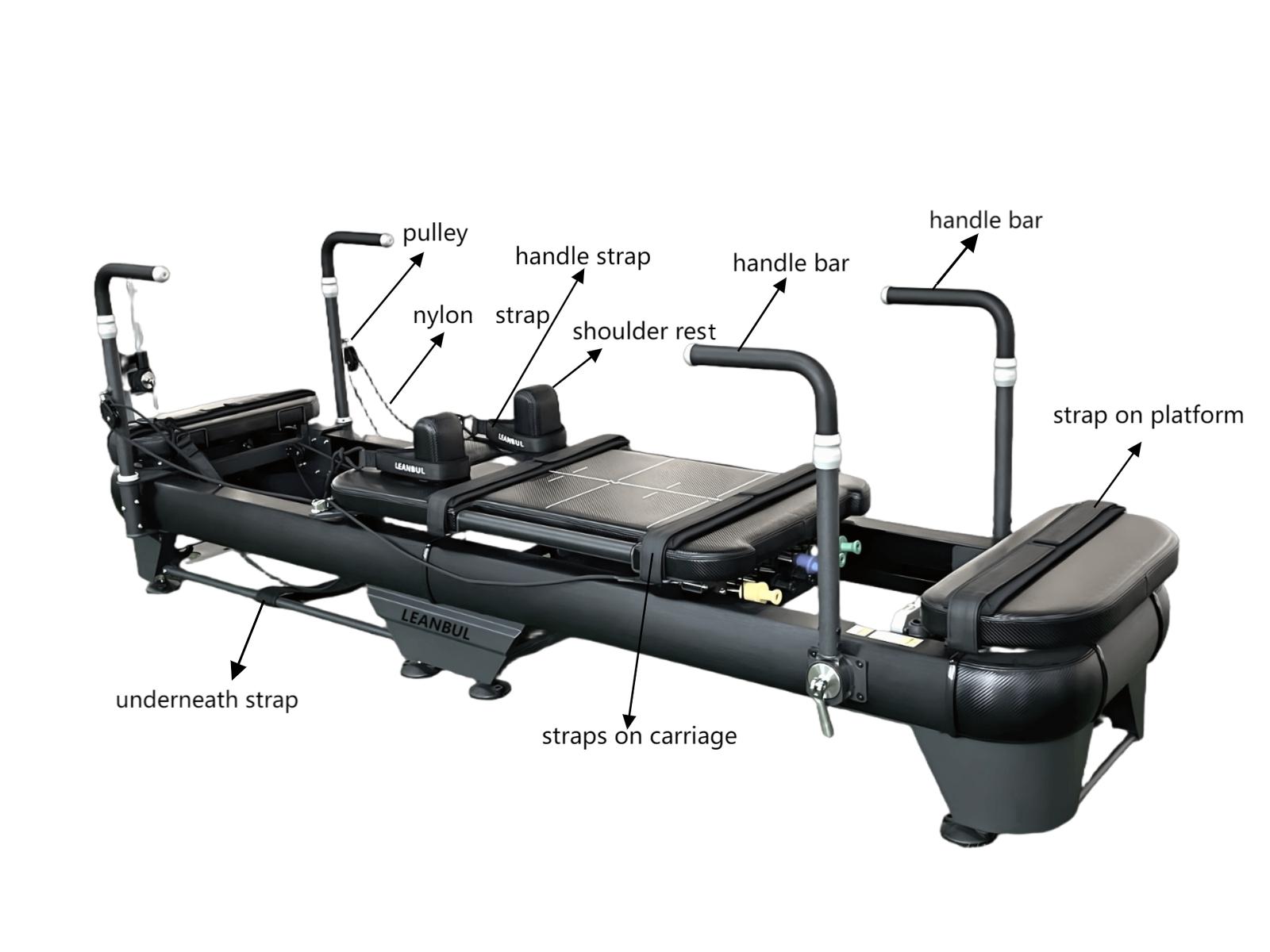
Work the footbar with one hand, in every position. It should lock with a positive click, hold without play when you push down on it, and release without pinching. Test it with your hand where a client’s fingers would be. If you cannot operate it one-handed while holding a client’s leg, your instructors will hate the machine by week three.
Five minutes on the paperwork, and one question about spares
A commercial machine sold into the EU carries a declaration of conformity to EN ISO 20957-1:2024 and should be tested to Class S, the commercial class. Ask for the test report, not the logo. The report tells you the endurance test the machine passed, and the difference between classes is not cosmetic.
| Class S (commercial) | Class H (home) | |
|---|---|---|
| Endurance test cycles | 100,000 | 12,000 |
| Typical setting | Studios, clinics, hotels, gyms | Domestic use |
| Max user mass | Declared on the machine | Declared on the machine |
| What it means for you | Built for years of group classes | Same shell, lighter structure |
The 100,000 versus 12,000 cycle split is the number to hold on to. It is why a machine that feels identical in a showroom can be a completely different object at year three.
Three documents to collect before you pay: the declaration of conformity, the EN ISO 20957-1:2024 test report with the Class S endurance figure, and — under the EU General Product Safety Regulation (2023/988) — the name and address of the EU economic operator responsible for the product. If the seller cannot produce the third one, the machine is being sold into the EU without a responsible party, and that becomes your problem the day something goes wrong.
Then ask one more question, in writing: what is the guaranteed spare parts availability period, and what happens to the price of a spring set in year four? A supplier who answers that is a supplier who expects to still be there. Related: our spec sheet guide covers how to put all of this into an RFQ so quotes come back comparable.
Running the same test in three different situations
At a trade fair. You have ten minutes and no tape measure unless you bring one. Bring a tape, take photos of the spring bar with a coin on it for scale, and ask for the three numbers: lateral tolerance in mm, newtons at a stated extension, endurance cycles in the test report. Do not judge anything by the demo class.
With a demo unit in your own studio. Insist the machine stays for at least a week and that your instructors teach real classes on it, not just try it. Test it after a full class, when it is warm and the springs are loaded — that is when noises appear. Then run a class with the room below occupied, if you have one. Machine noise is a separate question from building acoustics, which we cover in the soundproofing guide.
Remote, from video. Ask for a scripted clip rather than a brand film: an instructor who weighs over 90 kg, a slow push-out filmed side-on so the frame flex is visible, the sound left on and unedited, a tape measure held against the spring at full extension, and the carriage rocked sideways with a hand on it. Four minutes of unedited footage is worth more than a produced video, and any manufacturer who will not shoot it has something to hide.
The seven questions that separate a manufacturer from a reseller
- What is the lateral tolerance between carriage wheels and rail, in millimetres?
- What force does a single spring deliver at 100 mm extension, and what does the full set total?
- How many endurance cycles did the Class S test report record?
- How many carriage wheels does the machine run, and are the bearings replaceable individually?
- What is the guaranteed spare parts period, and is it in the contract?
- Who is the EU economic operator named on the product documentation?
- Can you send a video of the machine under a 100 kg load, filmed side-on, unedited?
Six straight answers means you are talking to someone who builds machines. Two answers and five deflections means you are talking to someone who buys containers.
Does any of this change with price?
Partly. Above roughly €3,500 per machine in Europe you should expect matched spring sets, replaceable bearings, and a documented test report as standard. Between €1,900 and €3,500 — where most studio fleets sit, and where our K30 and K38 sit — the differences are in exactly the places this protocol tests: rail tolerance, spring matching, and whether the wheel bearings can be changed without replacing the whole carriage.
Below about €1,900 for a machine marketed as commercial, something has been taken out. Usually it is the spring set quality or the wheel bearings, and you will find out in year two. Our total cost of ownership model puts numbers on that difference: across seven years, a cheap machine and a mid-range one land surprisingly close together, and the mid-range one is still worth something at the end.
FAQ
How long should a pre-purchase test take? About twenty minutes per machine for the physical checks, plus the time to read the test report. If you are comparing three models on the same day, do the frame and spring checks on all three first, then go back and spend time on the two that passed.
Can I test a reformer properly without an instructor present? Yes for everything except the footbar and rope work under real class conditions. Bring one instructor for those two, because they will notice things a buyer does not — where the rope cleat sits when a client is mid-exercise, whether the footbar needs two hands.
Is a Class H machine acceptable for a small studio? No. If the public uses it, it is commercial use, and the endurance test difference is 100,000 cycles against 12,000. The practical risk beyond wear is that home-rated equipment in a commercial setting is the kind of detail an insurer asks about after a claim.
What if the supplier refuses to give the test report? Then you have your answer about the machine. The declaration of conformity and the test report are normal commercial documents, not trade secrets. A manufacturer can withhold the lab’s name if they want to, but not the class or the endurance figure.
Do springs really need replacing every two years? For a busy commercial studio, yes — that is the interval Merrithew publishes, and Align-Pilates caps commercial spring warranty at 3,000 hours or two years. A studio running 30 classes a week will reach those hours faster than a studio running eight. Track hours, not calendar.
Does a heavier machine mean a better machine? No. Weight tells you about the frame’s mass, not its stiffness or the tolerance of its moving parts. Some of the worst-gliding machines we have seen were also the heaviest.
Test the machine, then talk about price
If you are buying a fleet in Europe this year, run this protocol on whatever you are considering — including on ours. We would rather you found the difference with a tape measure in a showroom than with a cancelled class in year two. Have a look at the K30 and K38 commercial reformers or send us your shortlist and the numbers you have been quoted, and we will tell you which ones hold up. Talk to us here.
