Pilates Reformer Resistance Explained: Springs vs Cords vs Magnetic
If you’re choosing between reformers with spring resistance, cord resistance and magnetic resistance, the short answer is: for a commercial studio, buy springs. Cords and magnetic systems exist for real reasons — price and noise — but the spring system is the professional standard for a reason, and it’s not nostalgia. This guide explains how each pilates reformer resistance system works, what it costs to maintain, who each one actually suits, and the one test you should do before buying any machine.
We manufacture commercial reformers in Spain, and the resistance system is the part we get asked about most. It’s also the part where the marketing gets most creative, so let’s strip it back to mechanics.
How reformer resistance actually works
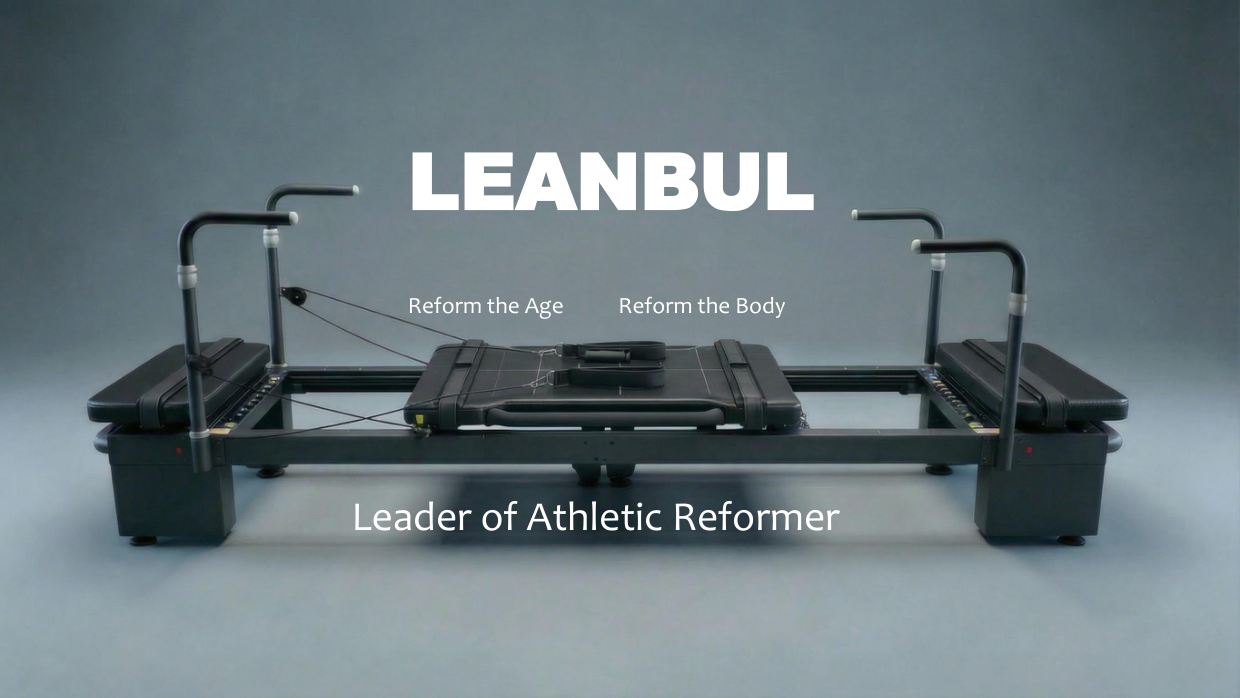
A reformer doesn’t use weights. The carriage moves on wheels along rails, and resistance comes from the tension of the system pulling it back to the footbar. Three technologies do this job:
- Springs — coiled steel springs stretched between the frame and the carriage.
- Cords and bands — elastic cords or rubber bands doing the same job.
- Magnetic — magnets creating resistance without physical contact.
The difference between them isn’t just the hardware. It’s the resistance curve — how the force changes through the movement — and that changes how the exercise feels, how your muscles load, and how much maintenance the machine needs over ten years of daily classes.
Springs: the studio standard
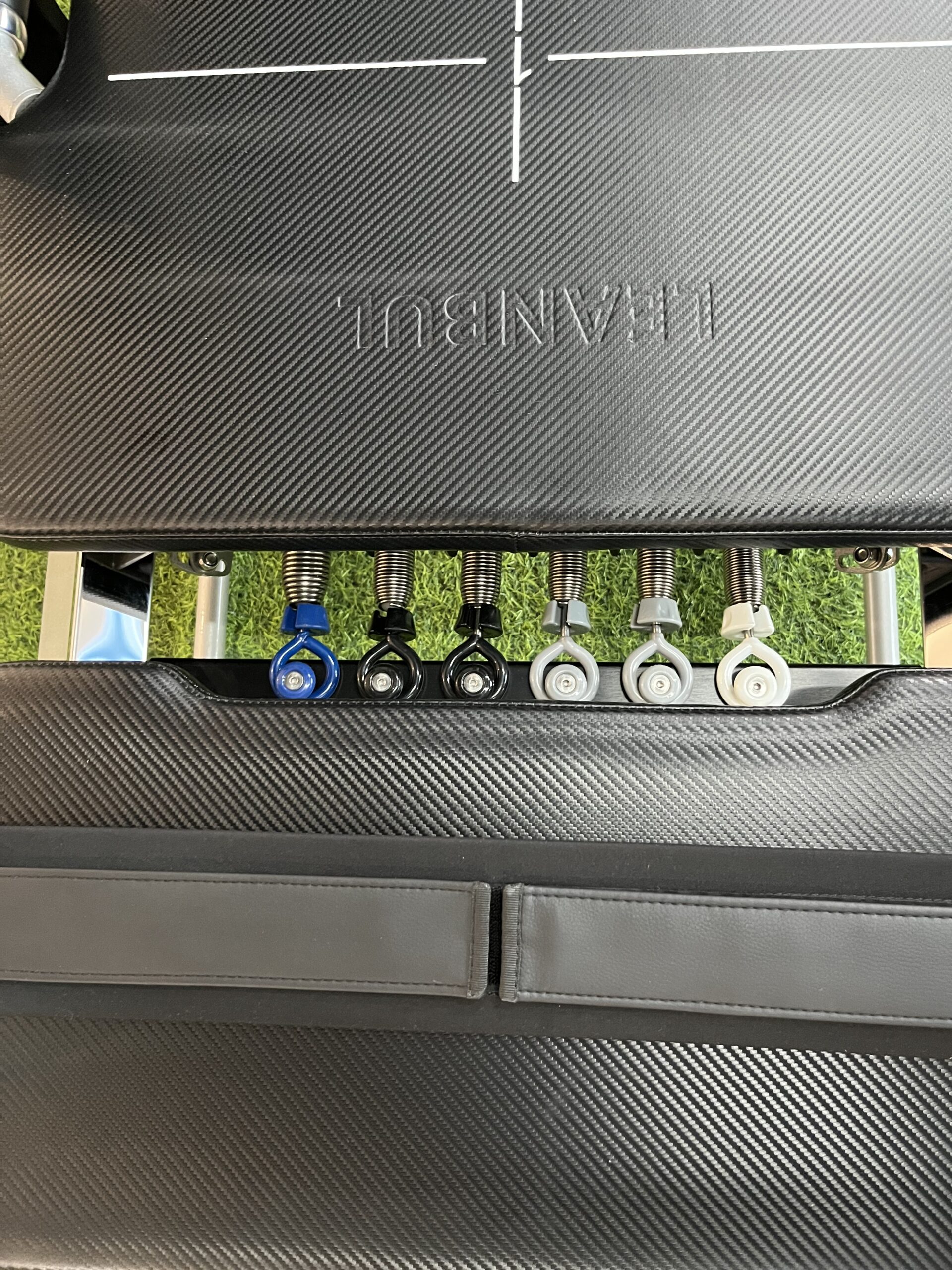
Springs are coiled steel, usually colour-coded to mark tension levels (the exact colour map differs between brands, but light, medium and heavy are the standard range). When you pull the carriage away from the footbar, the spring stretches, and the resistance grows as it stretches. That’s called progressive or variable resistance: hardest at the end of the movement, where your muscles are most extended.
That characteristic is a genuine training advantage, not marketing. A 2026 network meta-analysis published in Frontiers in Physiology compared variable resistance training (VRT) against fixed-load methods and found VRT had the highest probability of being most effective for improving maximal lower-body strength — it ranked first (SUCRA 83.1%) for back-squat 1RM gains across 27 randomised trials (Bao et al., 2026). Springs are variable resistance by design: the load matches your strength curve through the whole movement.
What that means in a studio:
- Infinite adjustability. One, two or three springs on, or a mix of light and heavy, gives you fine-grained resistance levels for a class of twelve different bodies.
- Honest feedback. A spring that’s worn feels different on day 600 than day 1. You can feel it, hear it, and replace it before it fails.
- The classic teaching feel. The spring’s snap and return is what classical pilates was built around. Exercises like Long Stretch and the Hundred behave differently on springs.
- Maintenance is known and cheap. Springs are consumables. A full set costs roughly €120–250 depending on the machine, and replacing them is a two-hour job any studio can do.
The downside: springs are metal, and metal eventually fatigues. A commercial machine cycling 20+ times a day needs its springs checked and replaced on a schedule. That’s not a flaw — it’s the predictable cost of the best resistance system.
Cords and bands: quiet and cheap, with limits
Cord resistance uses elastic cords or rubber bands stretched over the frame. It’s the system you’ll find on budget and home reformers, and it exists to solve two problems: cost and noise. Cords are much cheaper to manufacture than precision springs, and a cord-based machine can be genuinely silent.
The trade-offs appear within months, not years:
- Resistance drifts. Elastics fatigue and lose tension unevenly. Two cords on a machine bought in the same week can feel different by the end of the year.
- No precise grading. Cord resistance comes in fewer, broader levels, so it’s harder to fine-tune between bodies in a group class.
- Less progressive curve. Bands tend to spike resistance early in the stretch rather than building smoothly, which changes the exercise mechanics.
- Fraying and failure. Rubber perishes — heat, humidity and UV accelerate it — and a frayed cord is a safety question, not just a feel question.
Cords are a legitimate choice for a home user who wants reformer-style movement at a low price and low noise. For a studio running six classes a day, they’re the wrong tool. You’d be replacing elastic on a schedule and arguing about consistency with clients who’ve trained on springs elsewhere.
Magnetic resistance: the silent newcomer
Magnetic reformers replace physical contact with magnetic force. The resistance is created by magnets opposing each other as the carriage moves, which means no springs to fatigue, no cords to fray, and near-total silence. For a home user in an apartment, or a boutique studio where classes run back-to-back in one room, that’s genuinely appealing.
What you give up:
- The resistance curve is different. Magnetic systems can be engineered with a constant or custom curve, but they don’t naturally deliver the progressive build of a spring — and that progressive build is the training benefit we cited above.
- The feedback loop changes. Pilates teachers read the machine through their hands and the client’s movement. The spring’s audible and tactile feedback is part of how you cue. A silent machine removes one of those signals.
- Repair ecosystem is thin. Springs are a commodity; any hardware supplier stocks them. Magnetic modules are proprietary — when one fails, you’re at the manufacturer’s mercy, often years later.
- Resale is weaker. The used-equipment market prices spring reformers predictably. Magnetic machines are harder to sell because buyers can’t assess the system.
Where magnetic makes sense: compact home reformers, apartment living, silent hotel fitness rooms. Where it doesn’t yet: a working commercial studio that wants classical pilates programming, predictable maintenance and strong resale value.
Pilates reformer resistance systems compared
| Springs | Cords / bands | Magnetic | |
|---|---|---|---|
| Resistance curve | Progressive (builds through the movement) | Peaks early, drifts with age | Engineered, often constant |
| Feel | Classic, tactile, audible feedback | Soft, quiet | Silent, smooth |
| Verstellbarkeit | Fine (multiple springs, combinations) | Coarse (few levels) | Dial or settings (model-dependent) |
| Haltbarkeit | Very good; springs are replaceable consumables | Poor; elastics fatigue and fray | Good; but proprietary parts |
| Maintenance cost | €120–250 per spring set, predictable | Low initial, but frequent replacement | Low, until a module fails |
| Noise | Moderate (springs creak slightly) | Very low | Near-silent |
| Best for | Commercial studios, classical pilates, rehab | Budget home use | Compact home use, noise-sensitive spaces |
Which pilates reformer resistance system should you buy?
Match the system to the setting, not the trend:
- Opening a studio or gym → springs, without much debate. You need consistent, gradable resistance across bodies, a system your instructors know how to teach on, and parts you can source anywhere in Europe. This is also what the used market will pay for later.
- Equipping a rehab or physio clinic → springs. Progressive resistance is exactly what a rehab protocol wants, and EN ISO 20957 Class S testing covers spring systems for the heavy cycling a clinic puts them through. (If you’re buying for a clinic, our guide to pilates reformer CE certification is worth reading first.)
- A home reformer in an apartment → a good case for cords or magnetic, honestly. Low noise and low price matter more than classical fidelity at home. Just don’t expect it to feel like a studio machine.
- A hotel or resort fitness room → magnetic, if the room is shared and quiet matters; springs, if the programming is pilates-led. Depends on who’s using it.
One test beats every spec sheet: do the exercise on the machine before you buy. Sit on the carriage, do five Long Stretches and five Hundreds, then repeat on a different system. Your body will tell you which resistance curve is right for what you teach. If you can’t try the machine in person, ask the manufacturer for video of the carriage under load and for their spring replacement policy in writing.
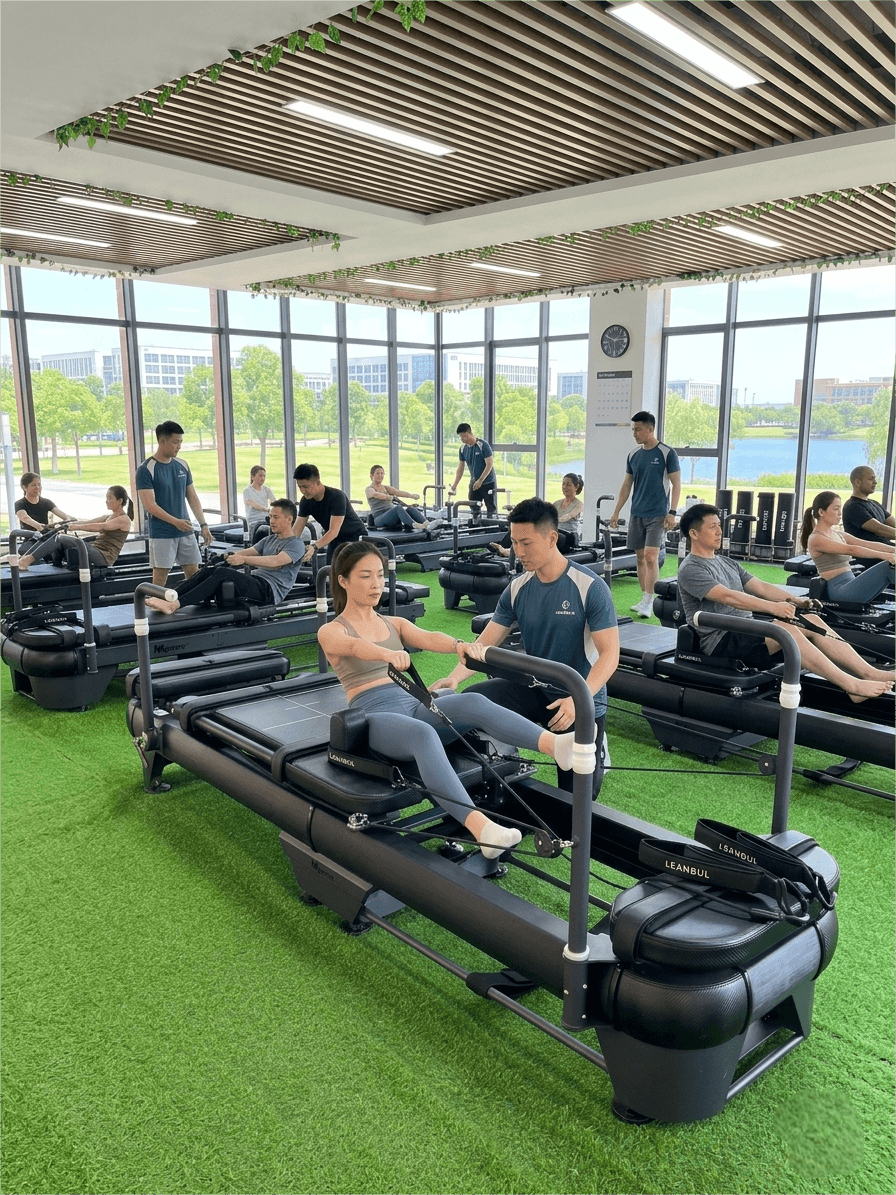
What we build and why
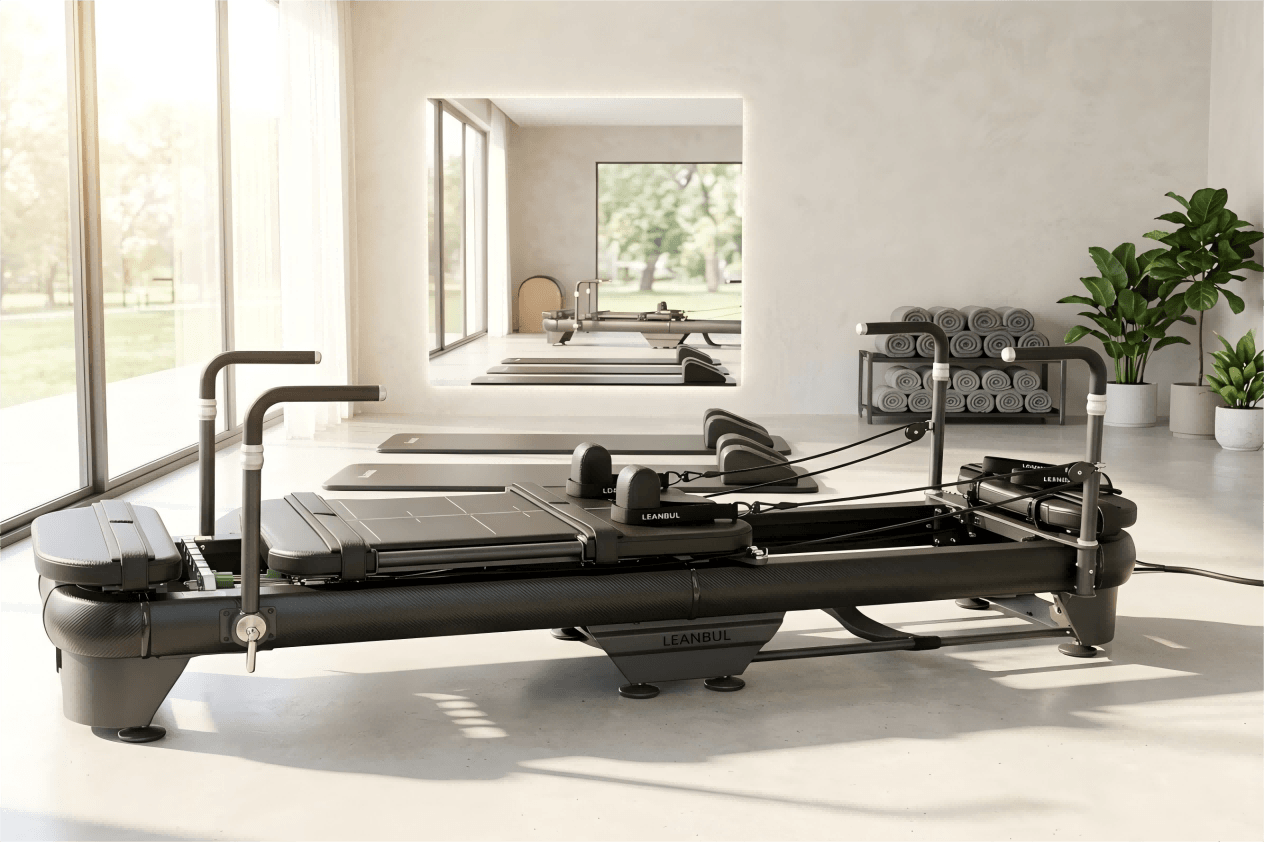
Our K30 and K38 commercial reformers use spring resistance, and that’s a deliberate choice: it’s the system our studio and rehab clients teach with, the one their instructors trained on, and the one with a parts supply chain that will still exist in ten years. Springs are tested to EN ISO 20957 fatigue requirements for commercial use, they’re colour-coded for tension, and a full replacement set ships to any EU country within days. We’re a Spain-based manufacturer, so the springs, the frames and the spares all come from inside the EU.
If you’re weighing a reformer purchase and want to feel the difference for yourself, get in touch — we’ll arrange a demo, quote you delivered anywhere in the EU, and talk through spring configuration for your class sizes. The full range is on the collection page, and the studio solutions section covers how complete studio setups are specced.
FAQ: reformer resistance systems
Do reformer springs wear out? Yes, and that’s by design. A commercial spring cycled heavily will lose tension over years of use. The standard practice is to inspect springs monthly and replace them on a schedule — a full set is roughly €120–250, and the cost is the same across brands. A worn spring feels weaker and sloppier before it ever breaks.
Is magnetic resistance better for joints? Magnetic and cord systems are both smoother and quieter than springs, which some users with joint sensitivity prefer. But “smooth” isn’t the same as “safer” — the progressive load of a spring is well tolerated and is actually the basis of much rehab programming. Choose based on the exercise curve you want, not the marketing word.
What do reformer spring colours mean? Colour codes mark tension levels — typically light, medium and heavy. The exact colour map is brand-specific, so a “blue” spring means different things on different machines. Buy all your spares from the same manufacturer and keep the tension chart handy.
Can I upgrade a cord reformer to springs? Almost never. The frame, carriage bearings and mounting points are engineered for the resistance type. Converting a cord machine to springs usually costs more than the machine is worth and voids any certification. If you outgrow a cord reformer, replace the machine.
Why do studios still choose springs? Consistency, gradability and parts. Springs give fine-grained resistance levels you can dial per client, they behave predictably for years with scheduled replacement, and spares are available anywhere. Those three things matter more in a working studio than silence does.