The Pilates Market in Greece in 2026: Growth, Studio Trends and Equipment Demand
Greece is a euro market with a boutique-led reformer scene concentrated in Athens, a tourist season that stretches reformer demand out to the islands, and national fitness statistics that are thinner than almost anywhere in Western Europe. The pilates market in Greece is real and expanding, but you read it through studio price lists, tourism data and commercial rent rather than a single national membership figure. Thin data is not the same as a thin market. It just means the demand is easier to locate on a price menu than in a press release.

A euro market with a thin paper trail
Greece has around 10.4 million people, and roughly a third of them live in the Athens metropolitan area. The country is in the eurozone, so a Greek studio buys, prices and repays its equipment in the same currency it earns in — unlike Poland, Czechia or Hungary, and a quiet advantage when you are financing a fleet over several years.
At the European level the direction is firmly up. EuropeActive and Deloitte’s European Health & Fitness Market Report 2026, which covers 2025, puts the continent at 75.5 million club members, 67,515 clubs and €39.1 billion in revenue, with membership up 5.8% and revenue up 9.1% year on year. Greece is not one of the countries the report breaks out in detail, and no reliable national member count circulates in the way it does for Germany or Spain. So treat any single “Greek gym market” figure with caution.
What the country does show is a familiar shape: full-service premium clubs, a large independent and low-cost gym layer, and a reformer category that has grown out of specialist studios rather than out of the big chains. Holmes Place operates full-service clubs in Athens that include Pilates, and Alterlife has run fitness clubs across Greece and Cyprus since 1999. But the reformer is not, on the whole, a machine you find bolted onto the average Greek gym floor. It belongs to the boutique studios that built the category themselves, and in Athens that means a handful of well-run independents rather than a franchise rollout.
What a reformer class costs in Athens
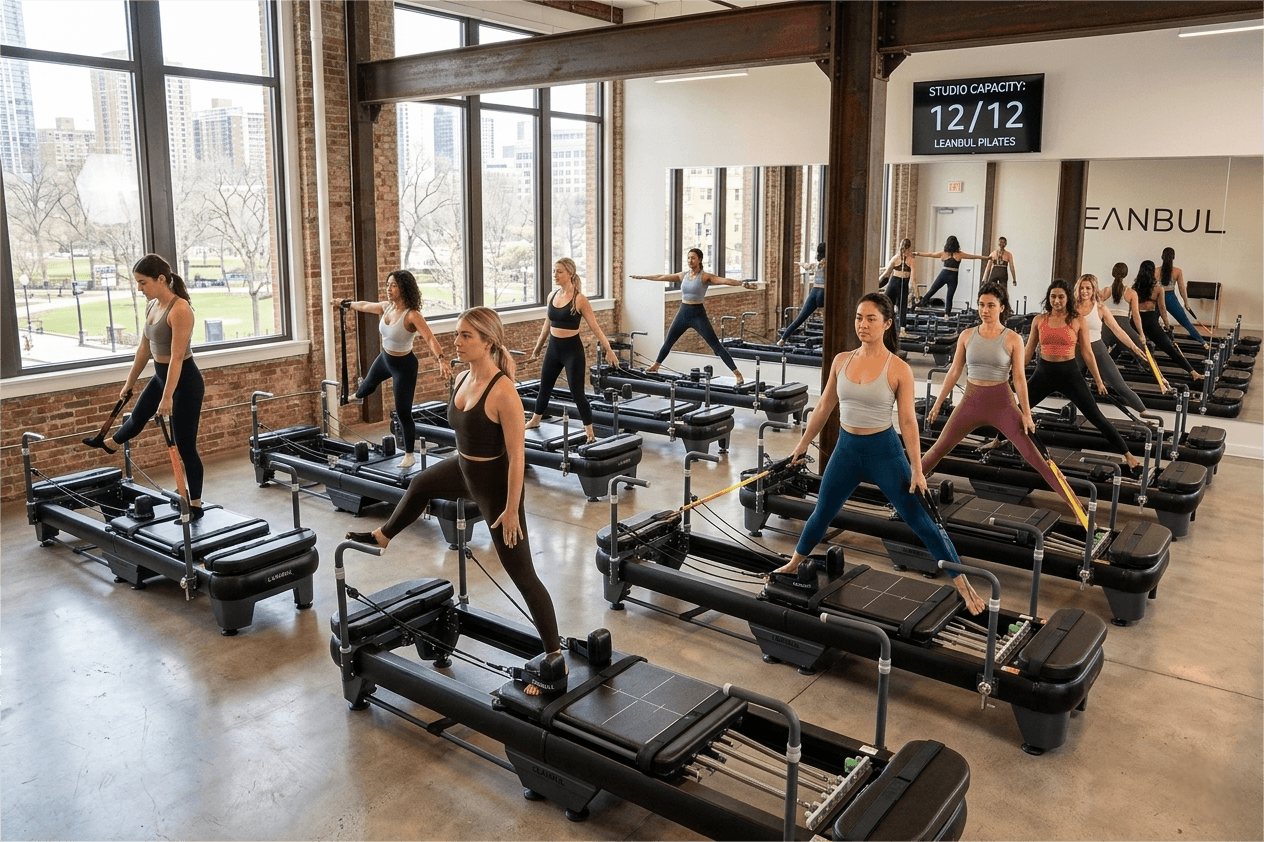
Athens sets the price anchor for the country. Published menus from central and coastal studios put group reformer classes in a fairly tight band.
| Studio (Athens area) | Published reformer price (2026) | Notes |
|---|---|---|
| KARVE | 10 sessions €230 (≈€23 per class) | “Transformer Pilates”, New York/London-inspired, central Athens |
| Inhale | Single class €25 | Group reformer format |
| Riaction Gym | Group of 3: €15/lesson; group of 2: €20/lesson | Small-group pricing per person |
| Reform Yourself | 5-class mixed pack €70 (2 reformer + 3 mat) | Up to 5 per class |
Read together, that is roughly €15–25 for a group reformer class, with packs pulling the per-class cost toward the low end. It is close to Western European pricing — noticeably higher than the €13–18 per class you see in Bucharest or Budapest, and below the €28–38 a Vienna studio charges. Greek studios are not competing on cheapness. They are charging what a premium, small-group format supports, in a market where clients compare them to a night out rather than to a budget gym.
Athens sets the price; the islands set the calendar
The thing that makes Greece different from every other European market is tourism, and it is not a footnote. Greece closed 2025 with 37.98 million inbound visitors, up 5.6%, and €23.6 billion in travel receipts, up 9.4%, both record figures according to the Bank of Greece. The first half of 2026 kept climbing, with 13.49 million inbound travellers and €8.8 billion in receipts, up 15.4% and 14.8% respectively.
For reformer studios that matters in two places. The first is the mainland season itself: Athens fills with visitors from May to October, and boutique studios in Kolonaki, Glyfada and the southern suburbs pick up short-stay clients who want a class while they are in town. The second is the islands. Mykonos, Santorini, Crete, Rhodes and Corfu now carry a summer wellness scene that runs on hotel gyms, resort spas and small standalone studios, and they do it on a compressed calendar — a few intense months, then a quiet winter.
Two practical consequences follow. Studios that serve the islands need machines that survive heat, humidity and salt air, which is an argument for a properly finished aluminium or well-sealed frame over an untreated wooden one. And they need a supplier who can actually get a reformer onto an island: a pallet that is easy to move off a ferry and into a first-floor space is worth more than a slicker spec sheet. Buy in the EU and there is no customs layer on top of that, but the last mile to a Cyclades address is still its own logistics problem.
The studio economics that decide the purchase
| Lever | Typical picture in Greece (2026) | Why it matters |
|---|---|---|
| Rent | Athens studio space roughly €8–24/m²/month depending on district | The fixed cost that punishes a half-full room |
| Class price | €15–25 per group reformer class | Sets revenue per slot |
| Machine footprint | about 3 m × 1.5 m per reformer plus circulation | Caps how many machines a given rent bill can carry |
| Equipment | factory-direct commercial reformer in the €1,900–3,500 band | Determines payback and replacement cycle |
The rent numbers come from live commercial listings across Athens. Prime districts sit at the top of the range — asking rents in Glyfada and Marousi run around €20–24 per square metre per month, Kifisia around €20, and central Kolonaki in the mid-teens — while working-class central and western districts such as Tavros and parts of Piraeus fall toward €8–15. A reformer studio does not need a retail pitch or a glass tower. It needs a ground-floor or first-floor unit with the headroom, the electrical supply and the floor structure to carry a room of machines, and those are cheaper in the districts where the boutique crowd is anyway willing to travel. Rents in Athens also move with the season and with the building’s energy rating.
VAT is 24%, and the €10,000 line shapes fleet buying
Greek VAT on fitness services and equipment is the standard 24%, with reduced rates of 13% and 6% that do not reach a studio’s core costs. Unlike many EU countries, Greece does not offer a generous registration threshold — most VAT-liable activity has to register. The line that actually matters for a small studio is the small-business exemption in Article 44 of the VAT Code: below €10,000 of annual turnover you can stay out of the VAT system, charge no VAT, file no VAT returns — and reclaim no input VAT either.
That trade-off is the whole decision. A studio fitting out six commercial reformers at €1,900–3,500 each is committing roughly €11,000–21,000 to equipment, and 24% input VAT on that is a real sum. Staying in the small-business exemption means waving that money goodbye. Registering for VAT, or crossing the line, means the input VAT on the fleet is recoverable. For a studio that knows it will spend on machines, the maths usually points one way.
Buy from another EU country and the seller charges no Greek VAT; you account for it under the reverse charge and deduct it in the same return, with no customs clearance and no import duty inside the single market. That is the same mechanism that makes Greece a straightforward place to buy equipment from a Spain-based manufacturer — no border, no broker, no duty.
What this means for reformer demand
Three things follow for anyone buying in Greece.
The category is boutique-led and still forming. Western Europe is increasingly a replacement market. In Athens and the islands there is still genuinely new reformer demand, built by specialist studios rather than chain roll-outs.
Class S commercial specification is the baseline. A studio running supervised classes is a commercial operation, and that means machines built and documented to EN ISO 20957 Class S with a declaration of conformity on file. The newer fitness-club framework in EN 17229:2026 also covers equipment selection and supervision; we covered it in our guide to EN 17229.
- Buy machines rated for the class loads you actually run, not home-rated units pushed into commercial use.
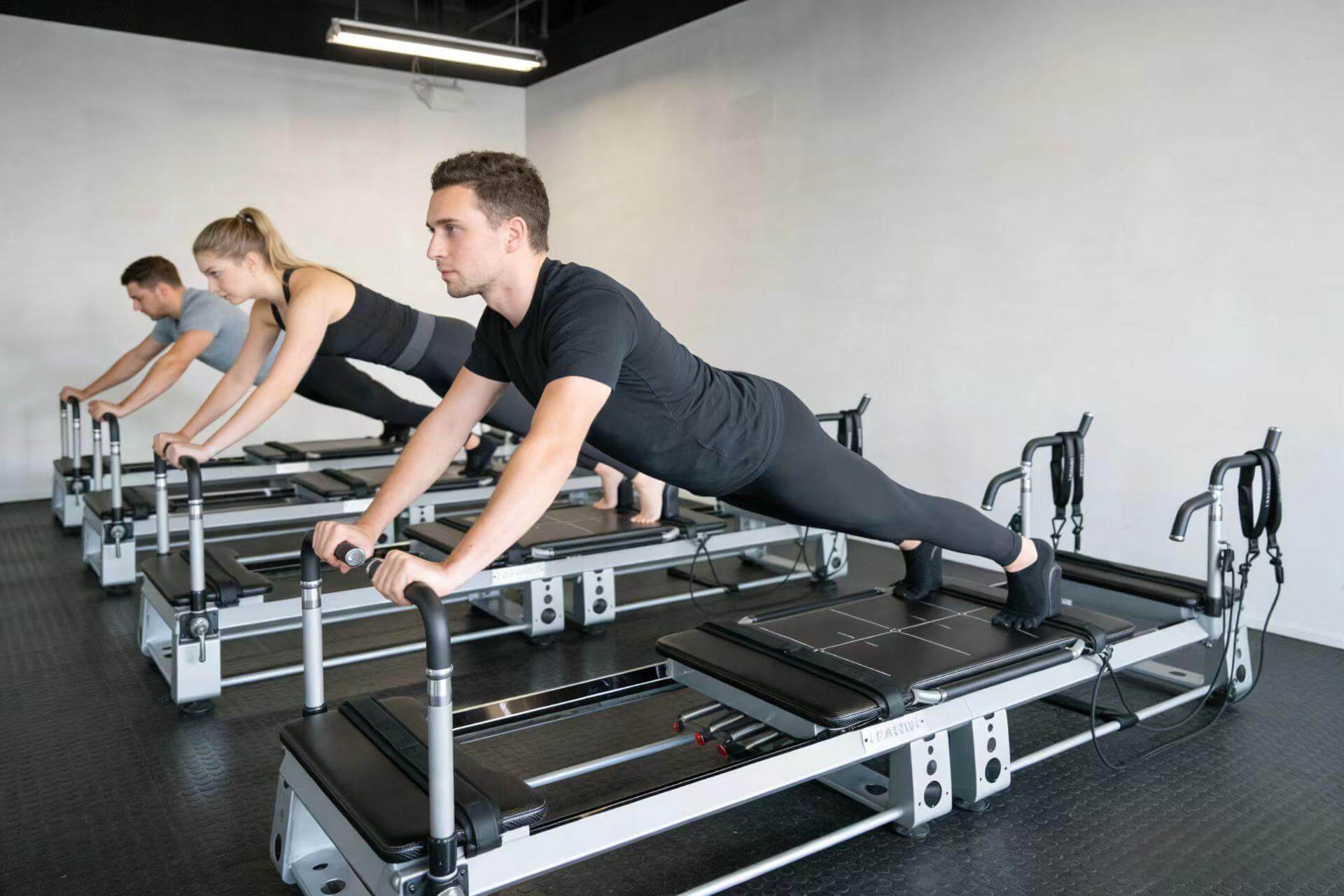
- Budget about 3 m × 1.5 m per machine plus circulation; a six-reformer boutique with reception and storage usually lands at 90–130 m².
- Buy inside the EU to avoid customs, duty and clearance friction, and plan the last mile to an island address before you order.
Our collection sets out the range, and the K30 commercial reformer is the machine most small-footprint studios start with.
FAQ
Is the Pilates market in Greece growing? Yes, from a boutique base rather than a chain-driven one. Record tourism — 37.98 million inbound visitors in 2025 and a strong first half of 2026 — supports a reformer scene built around Athens and the islands, and the country’s euro membership removes the currency risk that complicates buying in Poland or Romania.
How much does a reformer class cost in Athens? Group reformer classes run roughly €15–25, with 10-session packs landing near €23 a class. Small-group formats charge per person and can sit lower on price while keeping class sizes small. That is close to Western European pricing, not a discount market.
Do Greek studios need CE-marked reformers? Yes. A reformer placed on the EU market carries CE marking and a declaration of conformity, and a commercial studio should specify EN ISO 20957 Class S machines. With VAT at 24%, it is also worth registering for VAT, or crossing the small-business line deliberately, so the input VAT on a fleet is recoverable.
What VAT applies when a Greek studio buys a reformer from another EU country? The seller charges no Greek VAT. The buyer accounts for it under the reverse-charge mechanism and reports it on the Greek return, with no customs clearance and no import duty inside the single market. Greek VAT is 24%.
Is Greece in the eurozone? Yes. Greece uses the euro, so equipment priced in euros carries no exchange-rate exposure between order and payment — a genuine advantage over the non-euro markets in Central and Eastern Europe.
Building the case
Greece is a small, euro-denominated, tourism-driven reformer market that prices like Western Europe and buys like one too. A studio that understands the Athens rent map, the seasonal island calendar and the VAT arithmetic can build a clean business case on it. Leanbul is a Spain-based manufacturer of commercial reformers. We ship across the EU without customs friction, document every machine to the standards European studios are held to, and quote in euros. See the full collection, explore Pilates studio solutions, or get in touch and we’ll price a Greek studio fit-out for you.
