The Pilates Market in Spain in 2026: Growth, Studio Trends and Equipment Demand
Is the pilates market in Spain growing? Yes, and faster than most of Europe. Spain reached 7.1 million health club members in 2025, up 8.3% year on year — the strongest growth among Europe’s large markets, ahead of Germany (12.4 million, +5.6%) and the UK (12.2 million, +6.6%) according to the European Health & Fitness Market Report 2026 from EuropeActive and Deloitte. Inside that number, reformer pilates is the segment pulling ahead: boutique reformer studios are multiplying in Madrid, Barcelona and Valencia, Spanish franchise operators are opening multi-city networks, and international brands are circling the market.
We build commercial reformers in Spain, so we watch this market daily. This guide sorts the real growth from the hype, looks at where studios are opening and what they charge, and explains what the boom means if you are equipping a studio here — whether you are a Spanish founder, a foreign operator entering the market, or an investor backing the next multi-location brand.

The Pilates Market in Spain at a Glance
The EuropeActive/Deloitte report, which covers the 2025 calendar year, counted 67,515 fitness clubs across Europe with 75.5 million members and €39.1 billion in revenue. Spain’s 7.1 million members put it among the top five national markets, and its 8.3% growth rate was the best of the big countries. The same report notes the industry is consolidating — 27 M&A transactions involving clubs were recorded in 2025, up from a five-year average of 20.
| Market (2025) | Members | Growth vs 2024 |
|---|---|---|
| Germany | 12.4 million | +5.6% |
| UK | 12.2 million | +6.6% |
| Spain | 7.1 million | +8.3% |
| Europe total | 75.5 million | Record high (2025) |
Two context points matter before you read too much into the headline. First, these are health club memberships — the wider gym market, not pilates specifically. Second, Spain’s growth comes partly from a lower starting base than northern Europe: membership penetration is still below the UK’s, which is exactly why operators see headroom. EuropeActive’s stated ambition is 100 million European members by 2030; the Spanish market is one of the places that growth has to come from.
Where the Growth Is Coming From
Spain’s pilates boom is not one trend — it is four running in parallel.
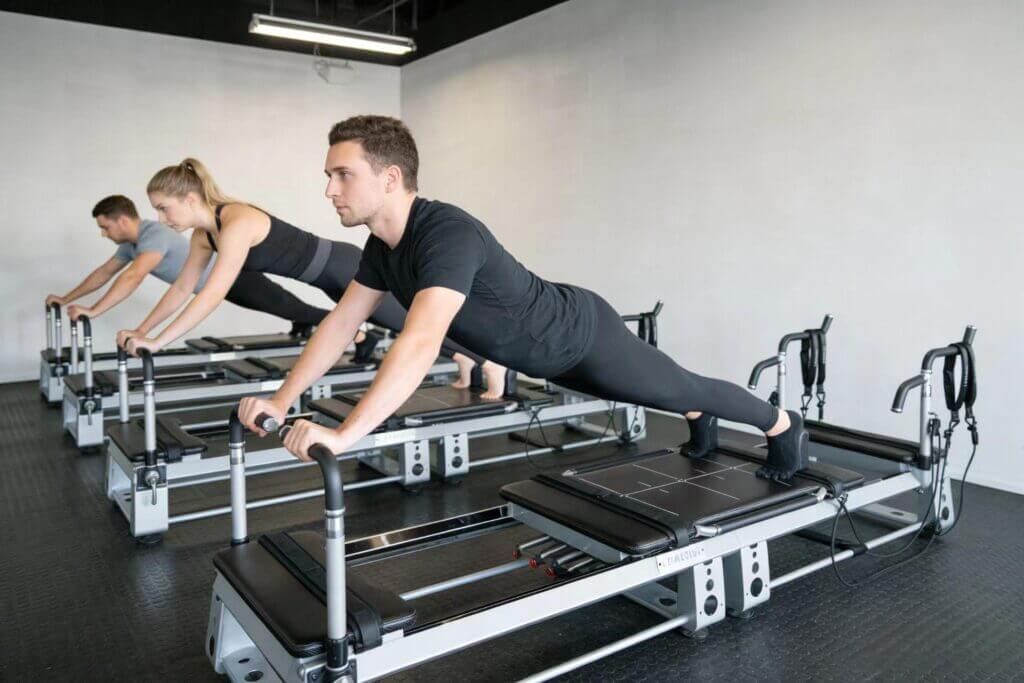
Boutique reformer studios. The clearest signal is the number of reformer-focused boutiques opening in Madrid’s central districts. Studios in Salamanca, Chamberí, Justicia and Retiro run classes of about eight people on professional aluminum reformers. Madrid studio Pinar Pilates, in its 2026 guide for newcomers, puts introductory classes at €15 (at 50% off) and notes the same level of service runs $30–50 per class in London or New York — Madrid pricing, in other words, is a genuine competitive advantage. Class sizes of eight matter for two reasons: they keep the experience premium, and they cap revenue per studio, which pushes owners toward more machines, longer opening hours, and eventually second locations.
Franchise and multi-unit operators. Spanish-owned PILAT3S, part of Tribute Brands, reported around 50 studios across nine regions in 2025 with plans to roughly double in 2026 and reach 150 worldwide by the end of 2027. It offers standalone studios and a “boutique-in-gym” model, with a total investment of roughly €225,000–275,000 per PILAT3S studio. Internationally, Club Pilates — over 1,200 locations across four continents — is actively selling master franchise rights in new countries, and FS8 sold master franchise rights for the UK, Europe and South Korea in March 2024. Spain is on the shortlist for most of these expansion plans because the reformer category here is younger than in the US or UK.
Wellness crossover. Pilates is riding the broader wellness-economy wave in Spain — hotel and resort spas adding reformers for guests, physiotherapy clinics adding equipment pilates for rehab clients. These buyers are not opening boutique studios; they are adding a machine or two to an existing facility, but they buy the same commercial-grade equipment and they buy it repeatedly as they expand. We covered both segments in our guides to pilates reformers for hotels and resort wellness and physiotherapy and rehab clinics.
Personal trainers and micro-studios. Spain has a large freelance training culture, and reformers are becoming the standard differentiator for trainers who want to charge premium rates. One commercial reformer in a rented room is a viable business; we wrote the full breakdown for personal trainers last week.
City by City: Where Studios Are Opening
Market research on Spanish pilates specifically is thin, but the pattern across operator activity, class listings and real estate is consistent. Research house 6Wresearch, in its Spain Pilates and Yoga Studios outlook for 2025–2031, names Madrid, Barcelona and Valencia as the key hotspots.
| City | What the scene looks like | Watch-outs |
|---|---|---|
| Madrid | Largest and most premium market; reformer boutiques concentrated in Salamanca, Chamberí, Justicia, Retiro; franchise brands opening flagship sites | Highest rents; central districts approaching boutique saturation |
| Barcelona | Dense boutique scene with strong international clientele; fitness-tourist demand; franchise and independent mix | Commercial rents high; summer tourism swings |
| Valencia | Smaller but fast-growing; lower rents and less competition than Madrid or Barcelona | Market still early; educate customers on reformer pilates |
| Costa del Sol / Balearics | Seasonal demand from expats and tourists; wellness hotels drive equipment purchases | Low season hits hard; hotel contracts more stable than walk-in retail |
A note on the coastal markets: studios in tourist zones face a rhythm problem that Madrid studios do not. The same clients are not there in February. Operators who succeed on the coast tend to diversify — hotel partnerships, corporate contracts, physio referrals — rather than rely on drop-in classes. If you are opening a coastal studio, budget for a weak first winter.
The Economics of a Spanish Pilates Studio
Spanish class prices sit below London, Paris or New York, but so do rents and salaries. The result: a workable business, but one where utilization and membership retention matter more than price. A typical small boutique in a secondary city runs six to ten reformers and builds revenue on class packs and monthly memberships; the operators we work with plan on filling roughly two-thirds of scheduled slots before a small studio breaks even in its first year. Treat those as planning ranges, not promises — your local costs will differ.
The equipment line is the largest capital cost after fit-out, which is why the cost of commercial reformers in Europe gets so much attention from Spanish buyers. A few structural points specific to Spain:
- Franchise packages price equipment inside the total. PILAT3S’s €225,000–275,000 per-studio investment covers franchise fees, fit-out and equipment, which gives you a benchmark for what a turnkey studio costs in the Spanish market today.
- Leasing is becoming available. Equipment leasing and financing options exist for Spanish operators through local finance houses; we explained how leasing works for European studios in an earlier guide.
- Spanish VAT applies to class sales and memberships, so model your pricing with VAT in mind rather than treating published rates as your gross revenue.
What Equipment Buyers in Spain Should Know
The boom has a compliance and procurement side that most market commentary ignores. Four points matter when you buy reformers in Spain in 2026:
1. Commercial-grade, CE-marked equipment is not optional. Any machine used for paid classes must be CE marked and rated EN ISO 20957-1 Class S, with a declaration of conformity and test reports behind it. Spanish market surveillance authorities enforce CE rules, and insurers ask for the paperwork when you take out liability cover — a machine without documentation is a liability twice over. Our CE certification guide lists the documents you should demand from any supplier.
2. The used market in Spain is thinner than in the UK or US. Spain’s reformer boom is younger, so there is less second-hand stock of quality commercial machines. You can import used equipment from other EU countries, but freight and the lack of warranty usually make new commercial machines the better call unless the price gap is large. Our used vs new breakdown walks through when used makes sense.
3. Buying from inside Spain removes most procurement friction. A manufacturer with production and EU stock in Spain delivers faster, handles intra-EU delivery and Spanish VAT paperwork, and enforces warranty without cross-border complications. That is the practical argument for a Spain-based supplier — not patriotism, just logistics. Our EU delivery guide explains what to expect on lead times and freight.
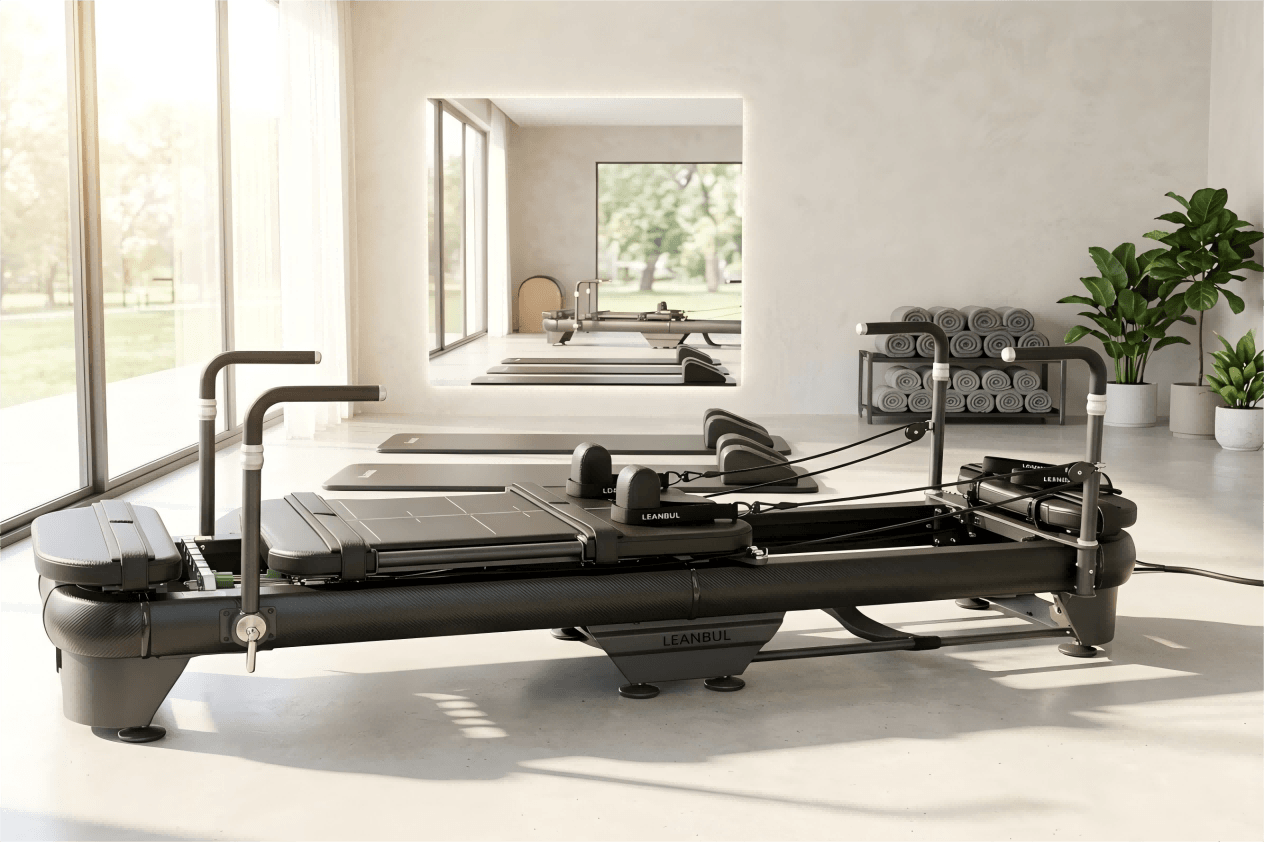
4. Climate shapes the machine choice. Mediterranean humidity and coastal salt air are hard on wooden frames in unconditioned spaces. If your studio has no air conditioning or sits near the coast, an aluminum-frame commercial machine removes a whole category of maintenance problems. We compared wood vs aluminum reformers in detail, including the climate factors most guides skip.
An Honest Look at the Risks
The Spanish market is growing, but it is not a guaranteed win. Three risks are worth naming.
First, price sensitivity. Spanish consumers pay less per class than northern European clients, and low-cost fitness chains keep downward pressure on expectations. A boutique studio has to justify its price through experience and results, not through scarcity of reformer pilates — that scarcity is disappearing fast in Madrid and Barcelona.
Second, instructor supply. The reformer boom has outpaced the number of well-trained instructors. Teacher training academies are expanding, but if you are opening multiple studios, instructor recruitment and training is your real bottleneck, not equipment. We covered equipment for teacher training academies because that bottleneck is where the industry’s next growth phase gets built.
Third, seasonal and geographic concentration. Much of the visible growth is in two or three cities plus the tourist coasts. If your plan depends on the Madrid central district or the Costa del Sol summer, your revenue curve will be lumpy. The operators who smooth it out are the ones who mix class revenue with private training, physio referrals and corporate or hotel contracts.
FAQ
Is pilates growing in Spain?
Yes. Spain reached 7.1 million health club members in 2025, up 8.3% — the fastest growth among Europe’s large markets, per the EuropeActive/Deloitte European Health & Fitness Market Report 2026. Reformer pilates specifically is expanding through boutique studios, franchise operators and wellness facilities in Madrid, Barcelona and Valencia.
How much does it cost to open a reformer studio in Spain?
It depends on the model. Franchise packages such as PILAT3S price a turnkey studio at roughly €225,000–275,000 including fees and equipment. An independent studio with four to six commercial reformers typically costs less, but fit-out, licences and working capital vary widely by city. Start with the equipment line: new commercial reformers in Europe run from roughly €2,800 to €6,500 per machine, with most studios paying €3,200–€5,000 — see our full European cost breakdown.
Which cities are best for a pilates studio in Spain?
Madrid has the largest and most premium market, Barcelona the densest boutique scene, and Valencia the best cost-to-competition balance for a first location. Coastal areas work if you can diversify into hotel and physio demand to survive the low season.
Is the used reformer market good in Spain?
Not yet. Spain’s reformer boom is younger than the UK or US markets, so quality second-hand commercial machines are scarce. Most operators buy new commercial equipment, which also keeps the CE documentation chain clean.
Why buy a reformer from a Spanish manufacturer?
Faster delivery, intra-EU logistics and Spanish VAT handled by the supplier, warranty enforced from inside the country, and no import friction. Leanbul manufactures commercial reformers in Spain, CE certified to EN ISO 20957-1 Class S, with EU-stocked spare parts — proximity is the whole point.
Equipping a Studio in Spain? Talk to the Manufacturer Down the Road
Leanbul is a Spain-based manufacturer of commercial pilates reformers, CE certified and rated EN ISO 20957-1 Class S, with EU-stocked spare parts and warranty support handled from Europe. Whether you are opening your first studio in Valencia or rolling out a franchise across regions, we deliver, install-plan and support from inside Spain. Compare the K30 commercial reformer, the K38 premium model and the K11 in the full collection, or look at our studio solutions for multi-machine setups. Contact our team for pricing with Spanish delivery and VAT included.