Pilates Studio Insurance in Europe: How Your Reformers Affect Your Premiums and Your Claims
Pilates studio insurance in Europe is not one product, and it is not something you buy once and forget. It is a bundle of policies — liability, property, employers’ cover, sometimes more — priced on how risky your operation looks. And the single biggest asset on your risk profile is usually your reformers: the most expensive thing you own, and the most likely thing to be blamed when a client gets hurt. Insurers know this. The question is whether you have set up your equipment, your paperwork and your maintenance so that your policy actually pays out when it matters.
We are a Spain-based manufacturer of commercial reformers, so we have a direct interest in this topic: the machines we sell have to survive insurers’ questions, not just our own testing. This guide explains how equipment affects studio insurance in Europe, what documentation underwriters expect, and what changes when the EU’s new product liability rules apply from December 2026. It is practical guidance, not legal advice — insurance law and liability regimes differ by country, so check the details with a broker who works in your market.
What Pilates Studio Insurance in Europe Actually Covers
There is no single “studio insurance” you can buy across the EU. You buy policies from national insurers, and the names differ by market. In Spain you will hear responsabilidad civil (civil liability); in France responsabilité civile professionnelle; in Germany Betriebshaftpflicht; in the UK and Ireland public and employers’ liability. The structure underneath is similar, though:
| Cover | What it does | Why reformers matter |
|---|---|---|
| Public/general liability | Pays third-party injury or property damage claims from clients on your premises | A client injured on a reformer is the classic third-party claim |
| Professional liability | Covers claims that your instruction was negligent | Allegations of bad cueing or unsafe class design |
| Employers’ liability / state accident cover | Covers staff injured at work; compulsory in most EU countries when you employ people | Teachers moving reformers, cleaning springs, manual handling |
| Property / contents | Replaces equipment and fittings lost to fire, theft, water damage | Reformers at €2,800–6,500 each are usually your biggest contents line |
| Business interruption | Covers lost income when you cannot operate | Less common in small studio policies, worth asking about |
Two points stand out. First, in most EU countries public liability is not legally compulsory the way car insurance is — but landlords, franchisors and certification bodies will demand it in practice, and running a studio with clients lying on spring-loaded machines without it is a gamble nobody should take. Second, employers’ liability is the one that sneaks up on small studios: in several EU countries it is mandatory from your first employee, and “employee” can include part-time teachers you thought were contractors. Ask a local broker, not a forum.
Where Equipment Fits Into Studio Claims
Injury claims in Pilates fall into a few patterns, and equipment is at the centre of more of them than most owners assume. The IDEA Health & Fitness Association’s guidance on Pilates equipment liability reports that injury from equipment use is the second leading reason for claims against fitness trainers, and that case law in this area is growing. Falls are the other big category — clients stepping off carriages, tripping over boxes, losing balance on jump boards.
Here is how equipment typically shows up in a claim:
- Equipment failure alleged. A spring snaps, a strap tears, a carriage catches mid-exercise, and the client says the machine caused the injury. The insurer will ask what the machine was, who made it, what standard it was tested to, and when it was last inspected.
- Equipment misuse alleged. A client did an exercise they were not ready for, on a setting the teacher did not check. The claim targets your instruction and your supervision.
- Home-grade equipment in a commercial room. This is the one that gets studios into trouble. If a machine was built and tested to home-use standards (Class H under EN ISO 20957) and a paying client is injured on it, the insurer has a strong argument that you knowingly exposed people to equipment not rated for the use you put it to.
That last point is worth sitting with, because it is the quiet failure mode of the industry right now. The market is full of machines that look commercial and are not. A reformer tested to Class H is designed for one person’s regular use in a home. Put it in a studio with eight classes a day, different body weights, people who have never touched a reformer before — you are asking a home-duty machine to do commercial duty, and your insurance paperwork will say so if anyone reads it.
CE Marking, Class S, and the Question Underwriters Ask
The relevant safety standard for training equipment in Europe is EN ISO 20957-1, which classes machines by duty: Class S for studio and commercial use, Class H for home use. A commercial reformer should be CE marked and tested to Class S, and the manufacturer should be able to hand over the documentation that supports the marking — the Declaration of Conformity, the test report from an accredited laboratory, and the technical file.
Why does this matter for insurance? Because a CE mark is not a sticker; it is a claim by the manufacturer that the product meets European safety requirements, backed by paperwork. When an insurer or a court asks “was this equipment safe and compliant?”, the CE file is the evidence. Dutch equipment retailer De Pilates Store reports that instructors and studio owners on professional forums regularly warn each other: make sure commercial reformers are ISO 20957/CE certified, because insurers have refused coverage after accidents involving equipment without it. That warning circulates for a reason.
The General Product Safety Regulation (EU) 2023/988, applicable across the EU since 13 December 2024, tightened the same screw from the safety side. It requires every economic operator in the supply chain — manufacturers, importers, distributors — to place only safe products on the market and to keep the records that prove it. A studio buying from a supplier who cannot produce the compliance file is carrying risk that should sit with the manufacturer. Our guide to pilates reformer CE certification walks through what a complete file looks like and what to ask for before you sign.
The Paperwork Insurers Want to See
Brokers who specialise in fitness businesses say the same thing: the studios that get the best terms are the ones that can document their operation. When you apply for or renew pilates studio insurance, have this ready:
- Purchase invoices for every reformer, with make, model and serial number
- The manufacturer’s Declaration of Conformity and test report showing Class S and EN ISO 20957-1
- A maintenance log — what was checked, when, and by whom
- Records of staff training in equipment use and emergency procedures
- Client waivers and health screening forms, signed and dated
- An accident book logging every incident, however minor
You will not be asked for all of this on day one. You will be asked for it at the worst possible moment — after an incident — and if it does not exist, the claim gets harder and the settlement gets worse. Underwriters price on what they can verify. A studio with a documented maintenance regime is objectively less risky than one with none, and insurers are in the business of pricing risk.
Maintenance Records Are Your Cheapest Defence
Here is the part manufacturers rarely say out loud: reformers fail, and that is normal. Springs lose tension, ropes fray, bearings wear. Every one of those parts is replaceable, which is the whole design philosophy of a commercial machine — it is built to be maintained for fifteen or twenty years, not thrown away when something wears. We covered lifespan and guarantees in our pilates reformer warranty guide for Europe.
What separates a safe studio from a lucky one is inspection discipline. Industry guidance, including IDEA’s, puts quarterly inspection as the minimum and monthly as the sensible standard for commercial equipment. In practice, a quick weekly visual check and a monthly hands-on check covers most of what can go wrong:
- Springs: look for stretching, rust, hooks that no longer seat cleanly
- Ropes and straps: fraying, worn stitching, damaged handles
- Carriage and rails: smooth glide, no catching, no unusual noise
- Footbar, headrest, shoulder blocks: secure locking at every position
- Frame: loose fasteners, damage from moving the machine
Every check goes in the log with a date and a signature. That log is not admin theatre. In a liability claim, it is your evidence that you acted as a reasonable operator — that a defect was not something you knew about or should have caught. Insurers defend claims they believe they can win, and a clean maintenance log is the difference between a defended claim and a settled one.
December 2026: The New EU Product Liability Directive Changes the Game
If you run a studio in the EU, the liability landscape shifts at the end of 2026. The new Directive (EU) 2024/2853 on liability for defective products replaces the 1985 Product Liability Directive. It entered into force in December 2024, member states must transpose it into national law by 9 December 2026, and it applies to products placed on the market after that date. The full text is on EUR-Lex.
What changes for you? Three things matter for studio owners:
- Strict liability stays, and it is now easier to claim. Injured people do not have to prove the manufacturer was at fault, only that the product was defective and caused the harm. The new directive keeps that principle and adds presumptions that help claimants.
- More operators can be held liable. Liability extends further down the chain — importers, authorised representatives, fulfilment providers, and in some cases distributors. If you resell equipment or supply it to teachers working under your brand, you are closer to the firing line than you were.
- Courts can order disclosure of evidence. A claimant can request documents from the defendant. If a defect is alleged in your reformer, the manufacturer’s test reports and your maintenance records can be pulled into proceedings.
The practical response is boring and effective: buy from manufacturers who keep proper files, keep your own records for the long term — claims can be brought within three years of the claimant discovering the damage, with a ten-year backstop that extends to 25 years for latent injury — and treat equipment documentation as a business asset, not a drawer full of paper. The machines we sell, the K30 and the K38 premium reformer, ship with the full compliance file for exactly this reason: the documentation is part of the product.
FAQ
Is CE marking legally required for reformers in a studio?
Under the General Product Safety Regulation, yes in practice: only safe products may be placed on the market, and for training equipment the recognised benchmark is EN ISO 20957-1 with CE marking. For commercial duty, Class S is the appropriate rating. A supplier who cannot produce the Declaration of Conformity and test report is a red flag.
Will my insurer refuse to pay if a client is injured on equipment without CE marking?
It can, and it has happened. Insurers exclude or defend claims where the insured breached safety obligations or used equipment outside its intended duty class. Home-classified machines used commercially are the highest-risk case. If you are unsure what class your reformers are, find out before your next renewal, not after an incident.
Do I need to insure each reformer separately?
Usually not as separate policies, but your contents/property cover needs a declared value high enough to replace the fleet. Undervaluing equipment is common — a studio with ten reformers at €3,500 each needs €35,000 of contents cover plus fixtures, not €10,000. Check the sum insured against current replacement cost.
Does the new EU Product Liability Directive affect studio owners?
Yes, from December 2026 for products placed on the market after that date. It makes product liability claims easier and can pull documentation from studios into proceedings. It is not a reason to panic; it is a reason to keep purchase records, compliance files and maintenance logs properly organised from today.
A reformer rated for home use — can I legally use it in my studio?
Nothing stops you buying one, and small studios often start that way. But you are using a Class H machine for Class S duty, which means the equipment does not meet the standard appropriate to its use, your insurer can treat that as a material fact, and your liability exposure sits with you rather than the manufacturer. It is a risk to price consciously, not discover later.

What to Do This Week
Insurance is not a purchase you make once; it is a habit of documentation. Five practical steps, in order:
- Pull out the compliance file for every reformer you own. If any machine lacks a Declaration of Conformity and Class S test report, call the supplier now.
- Write down the serial numbers and replacement values of every machine, and check your contents sum insured against them.
- Start a maintenance log — a notebook or a spreadsheet is fine — and put a monthly inspection on the calendar with a named person responsible.
- Ask your broker the equipment question directly: does my policy cover commercial Pilates equipment, and what would they want to see after an incident?
- Before you buy anything next, ask for the CE file and the duty class in writing. Any supplier who hesitates has answered for you.
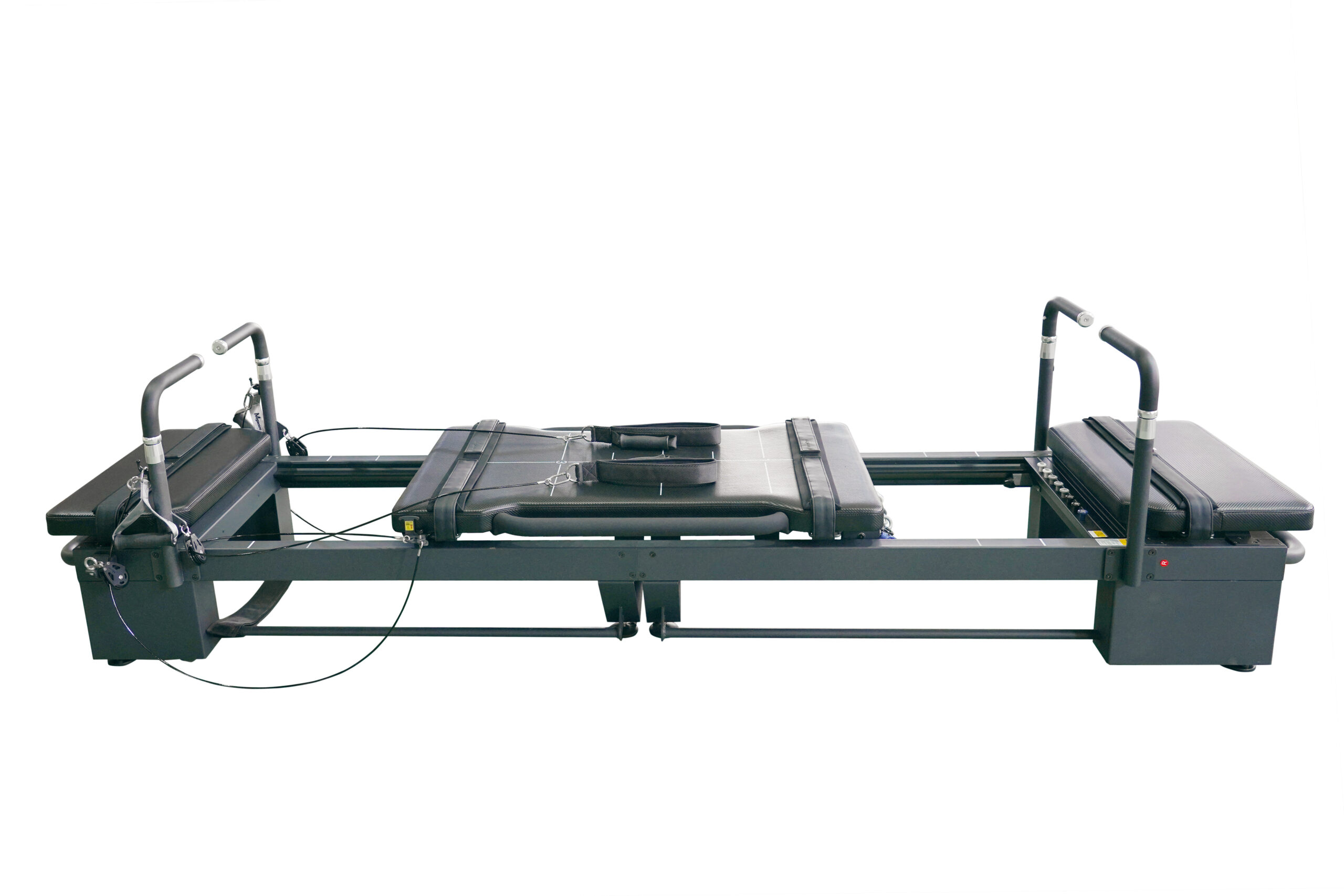
We are a Spain-based manufacturer, and we build reformers for exactly this environment: commercial duty, continuous group use, fifteen-plus year lifespans, and full documentation with every machine. If you are equipping or expanding a studio, see the collection or talk to us about fleet pricing and delivery across the EU — we will send the compliance file along with the quote, before you ask.