Pilates Reformer Upholstery: What to Specify, What Wears Out First, and What Re-Covering Costs
The carriage pad is the first part of a reformer to look tired, and the last part most buyers think to specify. Before you sign a purchase order, ask three questions: what is the foam density, what is the abrasion rating on the cover, and can the cover be replaced without replacing the carriage. If the supplier cannot answer all three in writing, the price you are comparing is not comparable.
This matters more in Europe than the sales brochures suggest. A studio running six classes a day puts roughly 40 to 60 bodies on the same 1.2 metres of padding every day, in a room that is often warmer and damper than the showroom where the machine was approved. Upholstery is a wear item with a predictable failure curve, and it is the part that decides whether a reformer looks like a €3,000 asset or a €900 liability at year six. Here is what to put in the specification, in the order it breaks.
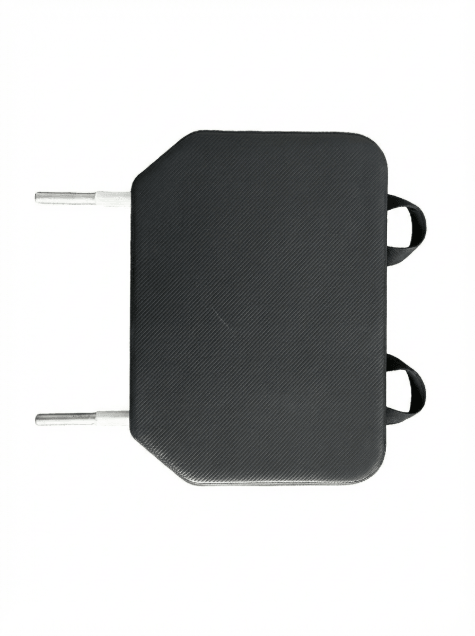
What reformer upholstery actually is
A commercial carriage pad is a three-layer composite, and every layer fails differently.
- Cover. Usually a contract-grade vinyl or polyurethane faux leather, 0.9 to 1.2 mm thick, backed with knit or woven fabric. PVC vinyl is cheaper and heavier; polyurethane looks and feels better and resists plasticiser migration, but costs more.
- Core. Polyurethane foam, either a single block or a sandwich of a firmer base under a softer top layer. Cheaper machines use reconstituted or low-density foam that compresses permanently under repeated loading.
- Substrate. Plywood or a composite board that the foam is bonded to, then stapled or zipped onto the carriage frame.
The construction detail that matters commercially is how the cover is fixed. Stapled covers are cheaper to build and effectively non-replaceable in the field: replacing one means an upholsterer, staples, adhesive and a day without the machine. Zipped or hook-and-loop covers cost a little more up front and can be swapped by a studio manager in twenty minutes, which changes the whole economics of year five.
The four numbers to put in your purchase order
1. Foam density, in kg/m³
Density drives durability; indentation force deflection drives how soft it feels. A soft pad and a cheap pad are not the same thing: high density with low IFD is soft and durable, low density with low IFD feels lovely in the showroom and bottoms out in year two. Foam is measured under ASTM D3574, so state the test method alongside the number.
Contract seating specifications give a useful benchmark, because they have been arguing about this for decades:
| Duty level | Typical use | Minimum foam density | Cover abrasion (Martindale, EN ISO 12947) |
|---|---|---|---|
| Light commercial | 2–4 classes/day, boutique studio | 29 kg/m³ | 20,000 cycles |
| Standard commercial | 5–8 classes/day, busy boutique | 32 kg/m³ | 40,000 cycles |
| Heavy commercial | 9+ classes/day, gym reformer zones, hot rooms | 40 kg/m³ | 50,000 cycles |
| Hotel and public | Unsupervised use, hotel and leisure facilities | 40 kg/m³ | 50,000 cycles |
Those abrasion figures follow the contract-textile convention: below 20,000 Martindale cycles a fabric may prove unsatisfactory in contract use, 40,000 is heavy duty, and 50,000+ is the severe-use band. If a reformer supplier quotes “commercial grade vinyl” with no cycle count, they have told you nothing.
2. Abrasion, with the method named
Ask for Martindale (EN ISO 12947) or Wyzenbeek (ASTM D4157) plus the cycle count. The two methods are not interchangeable, so a 50,000 Wyzenbeek claim and a 50,000 Martindale claim describe different products. European suppliers mostly test to Martindale; that is the number to normalise on when you compare a Spanish, Italian, German and UK quote side by side.
3. Fire performance, tested as a composite
For a studio, this is housekeeping. For a hotel, a school, a corporate wellness room or a municipal leisure centre, it is a procurement gate.
EN 1021 is the European test method for ignitability of upholstered furniture. Part 1 uses a smouldering cigarette as the ignition source; part 2 uses a small open flame equivalent to a match, and it is the stricter of the two, which is why public-building fire rules commonly reference it. Critically, the test applies to the cover and filling as a combination. A fabric that passes on one foam can fail on another, so a certificate for the vinyl alone proves very little about the pad you receive.
When a certificate arrives, check that it names the exact cover, names the filling and any interliner, states which ignition source was used, and comes from an accredited laboratory with a date. If any of those four are missing, you have a document, not evidence.
4. Replaceability
Three questions settle it: is the cover zipped or stapled, is the foam a standard thickness that a local upholsterer can source, and will the manufacturer sell you a replacement cover as a spare part in year four? A supplier who only sells complete carriages is telling you that their wear item is your capital cost.
What fails first, in the order it happens
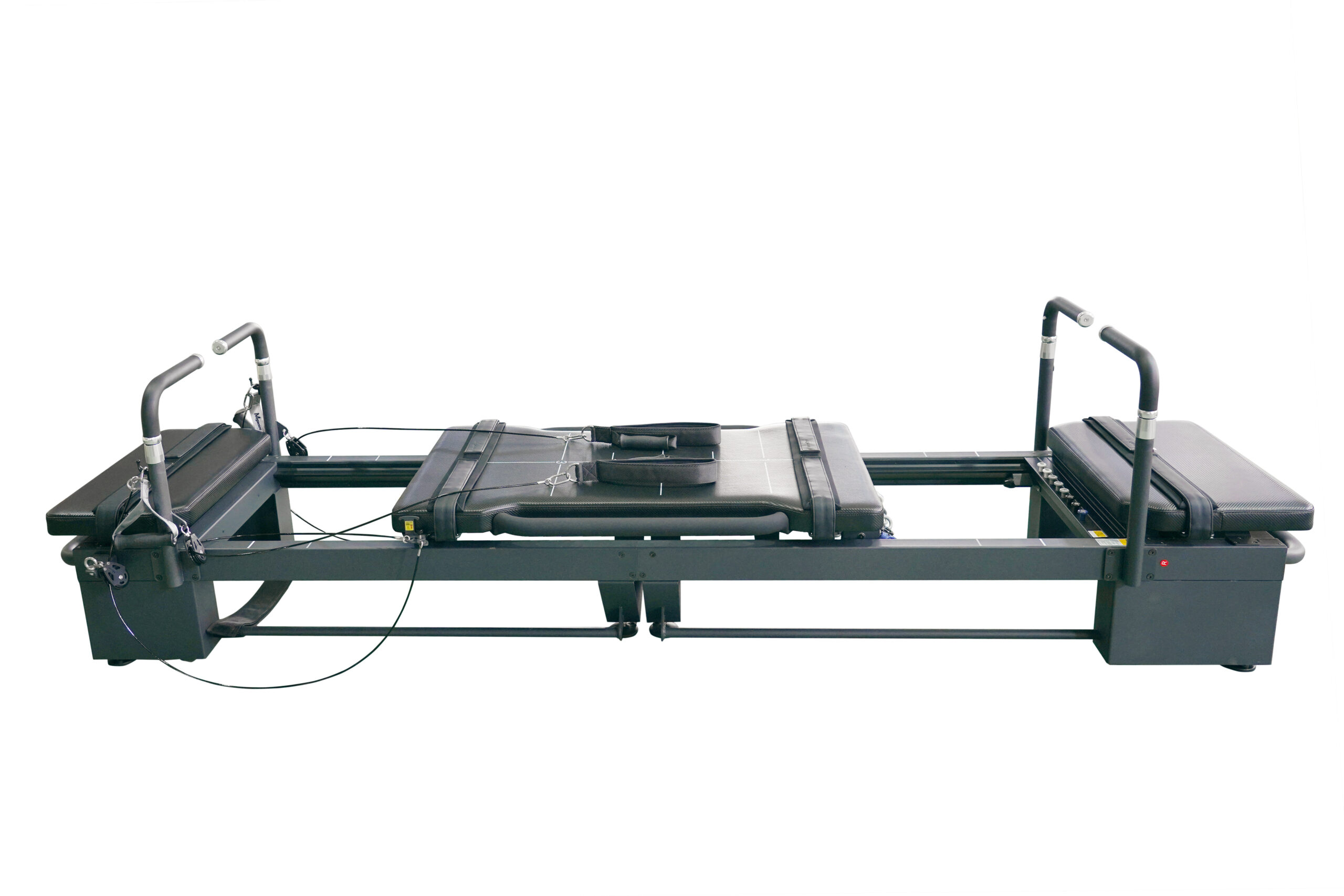
Across studio fleets, the sequence is remarkably consistent:
| Years of heavy studio use | What fails | Symptom |
|---|---|---|
| 1–2 | Stitching at hip and shoulder contact points | Loose thread, opened seam, foam visible at the edge |
| 2–4 | Cover surface at fold lines and the seat front | Dye transfer from leggings, gloss loss, hairline cracking |
| 3–5 | Foam compression set under the sit bones | “Bottoming out”: you feel the board through the pad |
| 4–6 | Adhesive between foam and substrate | Pad shifts or ripples when the carriage moves |
| 5–8 | Headrest and shoulder rest pads | Cracking, splitting, foam exposed |
| 5–15 | Whole cover | Full replacement territory |
Two accelerants change that timeline. The first is heat: a hot pilates room at 32–35 °C softens vinyl and speeds up plasticiser migration, and the same room dries the foam out faster between classes. The second is chemistry. Bleach, ammonia, acetone, undiluted alcohol and steam cleaners all attack the plasticiser in vinyl; a studio that “disinfects properly” with a harsh spray every hour will crack a cover years before a studio that wipes with mild soap and water.
One more practical point that costs studios money: never stack weights, boxes or dumbbells on a carriage pad between classes. Foam takes a permanent compression set under a point load, and a dented pad is not a warranty claim, it is a purchase.
Hot rooms and sweat: what actually degrades
Hot pilates deserves its own note because it compresses two failure mechanisms into one room.
Sweat is salt water plus body oils plus whatever was on the skin beforehand. Left on vinyl, it dries into a film that traps dust and gradually dulls the surface; left in seams, it wicks into foam and stays there. Foam that stays damp loses resilience and starts to smell, and no amount of surface cleaning fixes foam that has already absorbed a season of sweat.
The workable routine is boring and cheap: wipe after every class with a damp microfibre cloth and a mild soap solution, go over it once with clean water, dry it with a towel so nothing sits in the seams, and leave the room ventilated rather than closing it up wet. Deeper cleaning weekly, with a product approved for the specific vinyl, not a generic industrial disinfectant.
If you run a heated room, also look at the specification from the other direction. A 40 kg/m³ foam with a closed-cell top layer holds up far better in a humid room than an open-cell foam that acts like a sponge, and the same humidity that damages foam (above roughly 60% relative humidity) is the humidity that starts working on springs and rails. The upholstery question and the ventilation question are the same question asked twice.
What re-covering actually costs
Our own workshop figures for a commercial reformer in the €1,900–3,500 factory-direct band, which is where most European boutique fleets sit:
| Job | Typical cost per machine | Downtime |
|---|---|---|
| Replacement cover only (zipped, self-fit) | €90–180 | 20–30 minutes |
| Re-cover by a local upholsterer (stapled) | €200–450 including labour | 1–2 days |
| New foam plus cover | €250–500 | 1–2 days |
| New carriage assembly | €450–900 | Half a day |
| Complete new reformer | €1,900–3,500 | Delivery lead time |
Put those numbers next to the machine’s life and the decision becomes obvious. Six machines re-covered at an average of €280 is €1,680 spread over a fleet that cost €15,000–20,000 to buy. That is roughly €45 per machine per year over a six-year window, which is small against the annual maintenance budget of a working studio and much smaller than replacing carriages because the covers were not designed to come off.
The bad version of this decision is the one we see most often: a studio buys twelve machines with stapled covers, runs them for six years, discovers that re-covering means an upholsterer and two idle days per machine, and ends up discounting the whole fleet on the second-hand market because the pads look tired. Upholstery decisions are resale-value decisions.
The clause to put in the contract
Copy this into your RFQ and watch which suppliers go quiet:
Carriage pad: polyurethane foam minimum 32 kg/m³ (heavy-use rooms 40 kg/m³), tested to ASTM D3574, with stated compression set. Cover: contract-grade vinyl or polyurethane, minimum 40,000 Martindale cycles to EN ISO 12947, with fire test to EN 1021-1 and EN 1021-2 on the supplied cover-and-foam composite, certificate naming cover, filling and laboratory. Cover must be replaceable in the field without removing the carriage, and replacement covers must be available as spare parts for a minimum of eight years from delivery.
That last sentence is the one that separates manufacturers who build for studios from manufacturers who ship boxes. It is also the sentence that makes a warranty conversation possible in year four, when the pad is worn but the frame and springs are perfectly fine.
Where upholstery sits in the wider purchase
Upholstery is one line in a specification that also covers spring sets, rail geometry, frame material and compliance paperwork. Our reformer spec sheet guide covers the rest of the document, and if you are buying a mixed fleet for a new studio our K30 commercial reformer e K38 premium reformer pages list the carriage and soft-goods specifications as delivered.
For heated rooms, read the upholstery numbers alongside the ventilation and warranty questions in our hot pilates reformer guide. For fleets already past year five, the repair-or-replace arithmetic is in repair, refurbish or replace, and the parts worth keeping on the shelf are in reformer spare parts.
FAQ
How long does pilates reformer upholstery last?
In a studio running five or more classes a day, expect the cover to look worn by year three and to need replacing between years five and eight. Trade guidance for contract vinyl puts the material life at 5 to 15 years, with high-frequency commercial use at the lower end of that range. Foam typically compresses before the vinyl actually splits, which is why “the pad feels dead” is a more useful warning sign than “the cover looks scuffed”.
Can I reupholster a reformer myself?
If the cover is zipped, yes, and it takes about twenty minutes with no tools beyond a second pair of hands. If it is stapled, it is an upholsterer job: the foam is usually bonded to the substrate, so pulling staples without tearing the foam takes experience. Ask before you buy, not after.
Is polyurethane better than PVC vinyl?
Polyurethane looks and feels closer to leather, resists plasticiser migration better and does not go sticky in a hot room. PVC is cheaper per square metre and takes abrasion well, but it hardens and cracks faster under heat and harsh cleaning. In a heated studio, polyurethane is worth the premium; in a cool, low-traffic boutique, it is a nice-to-have.
Does worn upholstery affect my warranty?
Usually not, because soft goods are treated as wear items and the cover is excluded from long-term cover while the frame carries the multi-year warranty. Check the exclusion list before you sign: a 10-year frame warranty sitting next to a 90-day soft-goods warranty is normal in this industry, and it is not dishonest, but it should be on page one rather than page nine.
Which cleaning products should a studio avoid?
Bleach, ammonia, acetone and nail polish remover, undiluted alcohol, solvent-heavy sprays, scouring pads, melamine sponges, furniture polish, leather conditioner on vinyl, and steam cleaners. Mild soap and water, a damp microfibre cloth and a dry towel do the job on a commercial pad, and a product specifically approved for your vinyl for the weekly deep clean.
Buying a fleet and want the pad specification in writing?
We build commercial reformers in Spain for European studios, gyms, hotels and clinics, and we quote the carriage specification as a line item rather than a marketing phrase. Send us your room plan and class schedule and we will tell you which foam density and cover grade the room actually needs, including fleet pricing for studio fit-outs. Reach us through the contact page or browse the full collection.
