Pilates Reformer Spec Sheet: What to Put in an RFQ So European Suppliers Quote You Properly
A pilates reformer spec sheet is the one-page document you send with your request for quotation. It fixes the usage class, the dimensions, the spring system, the inclusions, the delivery terms and the documentation you expect. Without it, five suppliers send back five prices that cannot be compared, and the cheapest one usually wins for reasons that have nothing to do with value.
We quote studio projects from Spain every week. The enquiries that go smoothly all look the same: a spec sheet, a room plan, a date. The ones that drag for six weeks are two lines long and ask “price for 8 reformers”. Below is the structure that works, plus the clauses worth fighting for.
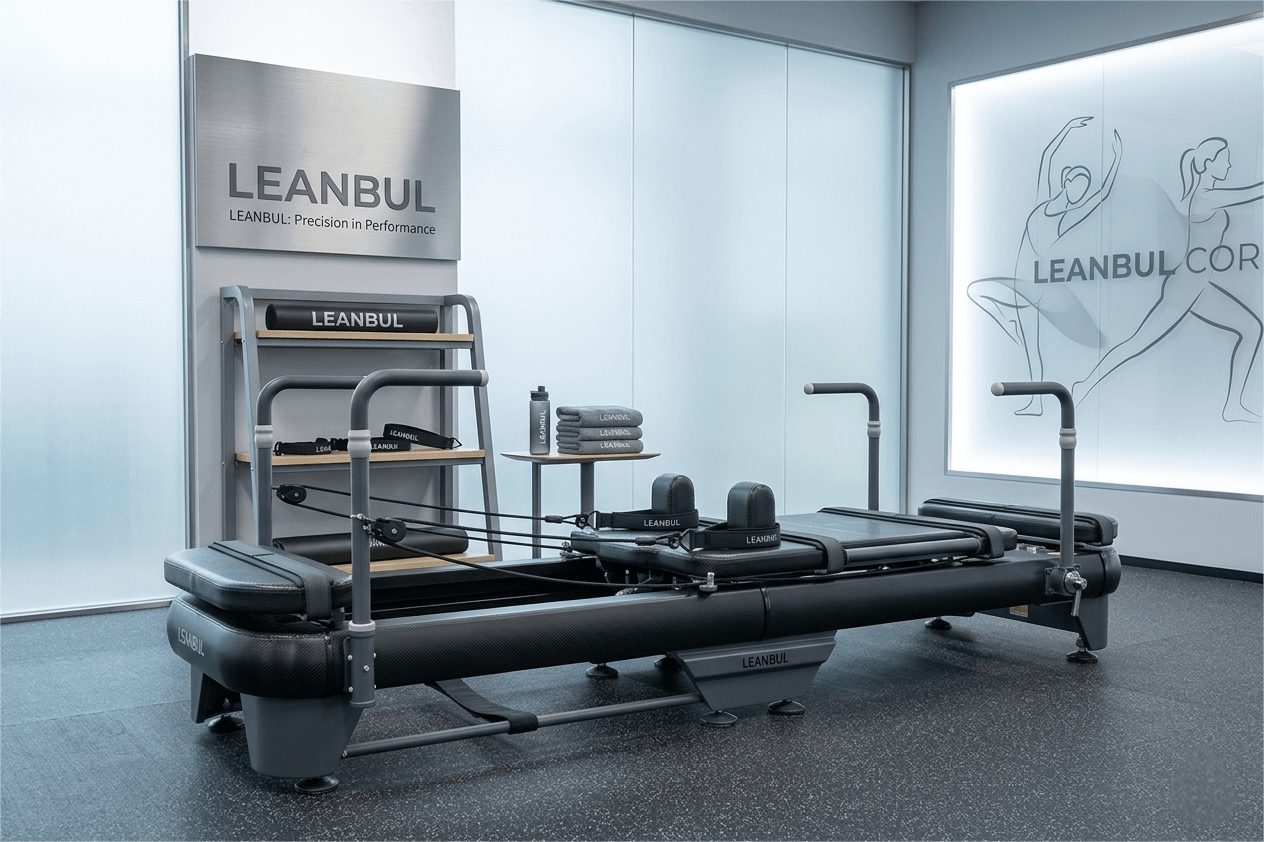
Why quotes arrive incomparable
Three things cause it, and none of them are dishonesty.
O usage class differs. One supplier quotes a Class H machine and calls it commercial because it has a steel frame. Another quotes Class S. The price gap between those two products is real, and so is the durability gap.
O inclusions differ. One price includes a box, jumpboard, platform extender, straps and a mat. Another is the bare machine. On an eight-unit order that difference is several thousand euros.
O delivery terms differ. “€2,400 per reformer” means nothing until you know whether it is ex-works Valencia or delivered and installed in a first-floor unit in Munich with no lift.
A spec sheet removes all three variables. It also does something less obvious: it tells the supplier you have bought reformers before, which changes how the quote is written.
The lines every reformer spec sheet needs
Work through this table once and you have a document you can reuse for every project.
| Line | What to write | Why it matters |
|---|---|---|
| Usage class and standard | EN ISO 20957-1:2024 Class S, declaration of conformity on request | Class S is the commercial class. The standard’s endurance test is 100,000 cycles for Class S against 12,000 for Class H |
| Max user mass | State the minimum you will accept, e.g. 150 kg | The figure must appear on the machine marking under the standard, and it is what an insurer reads |
| Frame | Material, finish, and whether joints are welded, bolted or dowelled | Determines noise, service life, and repairability |
| Rails | Profile, finish (anodised or painted), and lateral tolerance in mm | A painted rail chips; a loose tolerance makes the carriage rock |
| Carriage | Wheel count, wheel material, bearing designation and sealing | Eight wheels versus four, sealed versus open bearings: this is where cheap machines hide |
| Spring system | Number of springs, wire diameter, rate in N/mm or force at a stated extension, material, colour coding | Without rate data you cannot compare resistance between two brands, or replace a single spring later |
| Carriage travel and dimensions | Length, width, travel in cm | Decides whether a 190 cm client can lie flat without hitting the frame |
| Adjustability | Footbar positions, gearbar positions, headrest positions, shoulder rest width | Mixed-level classes live or die on fast adjustment |
| Frame height | 36 cm, 46 cm or 61 cm options | Taller frames help less mobile clients and clinical use |
| Upholstery | Foam type (closed-cell preferred), covering, seam construction | Sweat resistance and smell, especially in warm rooms |
| Tower compatibility | Yes/no, and whether the mat converter is included | Changes what classes you can run |
| Inclusions | Box, jumpboard, platform extender, straps, mat, sitting box: listed one by one | The single biggest cause of quote confusion |
| Delivery terms | Incoterms 2020: EXW, DAP or DDP, plus unloading responsibility and lift access | Under DAP the buyer unloads unless the contract says otherwise |
| Lead time | Weeks from order to delivery, and the deposit that starts the clock | Six to twelve weeks is normal for EU production; be suspicious of “in stock” on a custom order |
| Packaging | Crate dimensions and gross weight per unit | A 2.4–2.5 m crate does not fit a standard 1.1 × 1.4 m lift |
| Warranty | Frame years, moving parts years, springs and soft parts position, corrosion exclusion | Springs are wear items and are usually excluded; get the number anyway |
| Spare parts | Priced list: springs, wheels, straps, pads, with availability in the EU | A machine without a parts list is a machine you replace |
| Documentation | Declaration of conformity, test report, manual languages, assembly instructions | Required for a commercial installation, and for your insurer |
| EU responsible person | Name and address of the EU economic operator under GPSR (EU) 2023/988 | If the supplier is outside the EU, someone inside it must carry the obligation |
Two of these lines do more work than the rest. The endurance test cycle count separates a machine designed for a studio from one designed for a spare room, and it is a number a supplier either has or does not. The spring rate data is what lets you compare a €2,000 machine with a €3,500 machine honestly, rather than by feel in a showroom.
Real published figures give you a sense of the spread. A Balanced Body Studio Reformer measures 235 × 67 × 38 cm and weighs about 68 kg, with frame height options at 36, 46 and 61 cm. A FOLD Original is 248 × 80 × 29 cm with a 130 kg max user and a 3-year warranty, tested to ISO 20957-1:2024. Those are different machines for different rooms, and the dimensions alone tell you which one fits an 11 m² treatment room.
Put an acceptance protocol in the same document
The spec sheet sets what you buy. The acceptance protocol sets what happens when it arrives. Add four lines:
- Count and inspect at delivery, photograph any crate damage before signing
- Report shortages or transit damage in writing within a stated window, typically 48–72 hours
- Functional test each unit: carriage travel, spring engagement at every gear, footbar lock, strap and pulley condition
- Record serial numbers against positions in the room, so a warranty claim in year three references a specific machine
Ask the supplier to sign the same protocol. It costs nothing now and settles arguments later. Our supply contract guide covers the payment and warranty clauses that sit alongside it.
How to normalise the quotes you get back
When quotes arrive, do not compare headline prices. Build one table per supplier with the same rows. This is the format we recommend, with illustrative figures for an eight-machine order.
| Row | Supplier A | Supplier B | Supplier C |
|---|---|---|---|
| Machine price per unit, ex-VAT | €2,450 | €2,150 | €3,100 |
| Class and test evidence | Class S, DoC + report | “Commercial”, no report | Class S, DoC + report |
| Inclusions | Box, jumpboard, straps, mat | Straps only | Full accessory set |
| Freight to your city | €780 DAP | €430 EXW | Included DDP |
| Unloading and install | €650 | Not offered | Included |
| Spring set, first replacement | €190 | €240 | €165 |
| Spare parts list supplied | Yes, priced | No | Yes, priced |
| Warranty: frame / parts / springs | 10 / 3 / 12 months | 5 / 2 / none | 10 / 2 / 6 months |
| Lead time | 8 weeks | 12 weeks | 6 weeks |
The cheapest column rarely stays cheapest once accessories, freight, unloading and the first spring set are in the same row. The point of the table is that you can see why, and explain it to whoever signs the cheque.
Red flags in European reformer quotes
Six things that should slow you down:
- “CE marked” with no declaration of conformity. The DoC is the document; the sticker is decoration.
- A Class H machine offered for studio use. If the class is not stated in writing, assume H.
- Ex-works pricing presented as delivered. EXW means you arrange and pay freight, insurance and customs from the factory door.
- No spare parts list. Ask for spring, wheel and strap prices before ordering. If they cannot produce a list, they cannot support the machine.
- Warranty silent on springs and upholstery. Silence usually means excluded. Get it stated either way.
- No EU economic operator. For a non-EU supplier, GPSR requires a responsible person inside the EU. Missing that puts the obligation on you as the importer.
We compared the main commercial reformer brands sold in Europe in this 2026 brand comparison, and how warranty claims actually play out in the guide to reformer warranty in Europe.
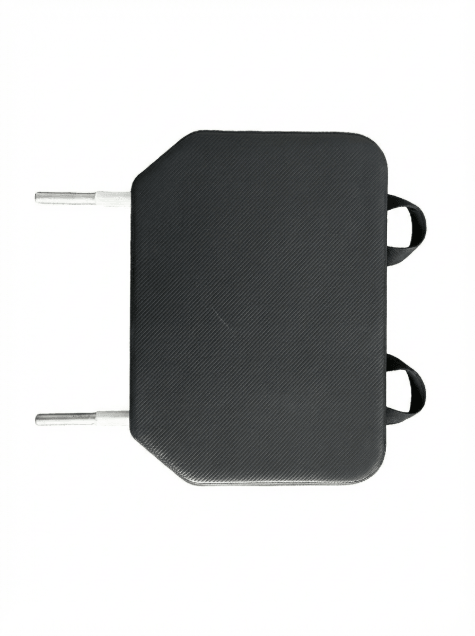
A spec sheet that gets a useful answer
Two practical notes from the quoting side.
First, say what you are doing with the machines. “Eight reformers for a boutique studio running 30 classes a week, mixed levels, clients 20–65” produces a different and better answer than “price for 8 reformers”. Usage hours are the number that decides spring spec and warranty position.
Second, give a date. A project with an opening date gets prioritised in production scheduling. A project “sometime next year” gets a list price.
FAQ
What is a pilates reformer spec sheet? A one-page document listing the technical requirements for the machines you want to buy: usage class and standard, dimensions, spring specification, inclusions, delivery terms, warranty and documentation. Suppliers quote against it, and you compare the answers line by line.
Should I specify Class S for a small studio? If the public uses the machines, yes. Class S is the commercial class and it carries a 100,000-cycle endurance test. Class H is intended for home use and its test is 12,000 cycles, which is a matter of weeks in a busy studio.
How do I compare springs between two brands? Ask for the rate in N/mm, or the force in newtons at a stated extension, plus the wire diameter and the number of springs. Without rate data, “light, medium and heavy” colours mean nothing across brands.
What delivery term should I ask for? DAP to your address is the simplest to compare, as long as unloading is stated explicitly. DDP shifts import formalities to the supplier, which suits buyers without a customs process. EXW only makes sense if you already ship from Spain regularly.
Do I need a test report, or is the declaration of conformity enough? The DoC is the legal document you keep. The test report is the evidence behind it. For a commercial installation, ask for both, and check that the report covers the model you are buying rather than a sibling product.
Ready to quote
Send us your room plan, class volume and target date, and we will answer against your spec sheet line by line, including the spring rate data and the spare parts price list. Our K30 covers most boutique studio floors, the K38 is the premium option for high-traffic rooms, and the K10 is the compact unit for small footprints. We manufacture in Spain, deliver across the EU, and quote in euros with VAT treated correctly on intra-EU B2B orders.
Start with the contact form, or see the full collection and the studio fit-out service if the project includes room planning. If you are still sizing the budget, the total cost of ownership model works through seven years of springs, service and residual value.
