Pilates Reformers for Wellness Retreats and Destination Spas in Europe: A 2026 Buying Guide
A wellness retreat is not a hotel with a gym in the basement. It sells a programme, and for a growing number of European retreats the anchor of that programme is reformer pilates. That changes what an operator needs from the equipment: not a machine sitting in a corner for guests to discover, but a small studio that has to run four to six sessions a day for groups of mixed ability, with visiting instructors and no in-house engineer.
If you run or are planning a retreat, this guide covers what to buy, how many machines the programme actually needs, and the European compliance and logistics points that catch operators out.
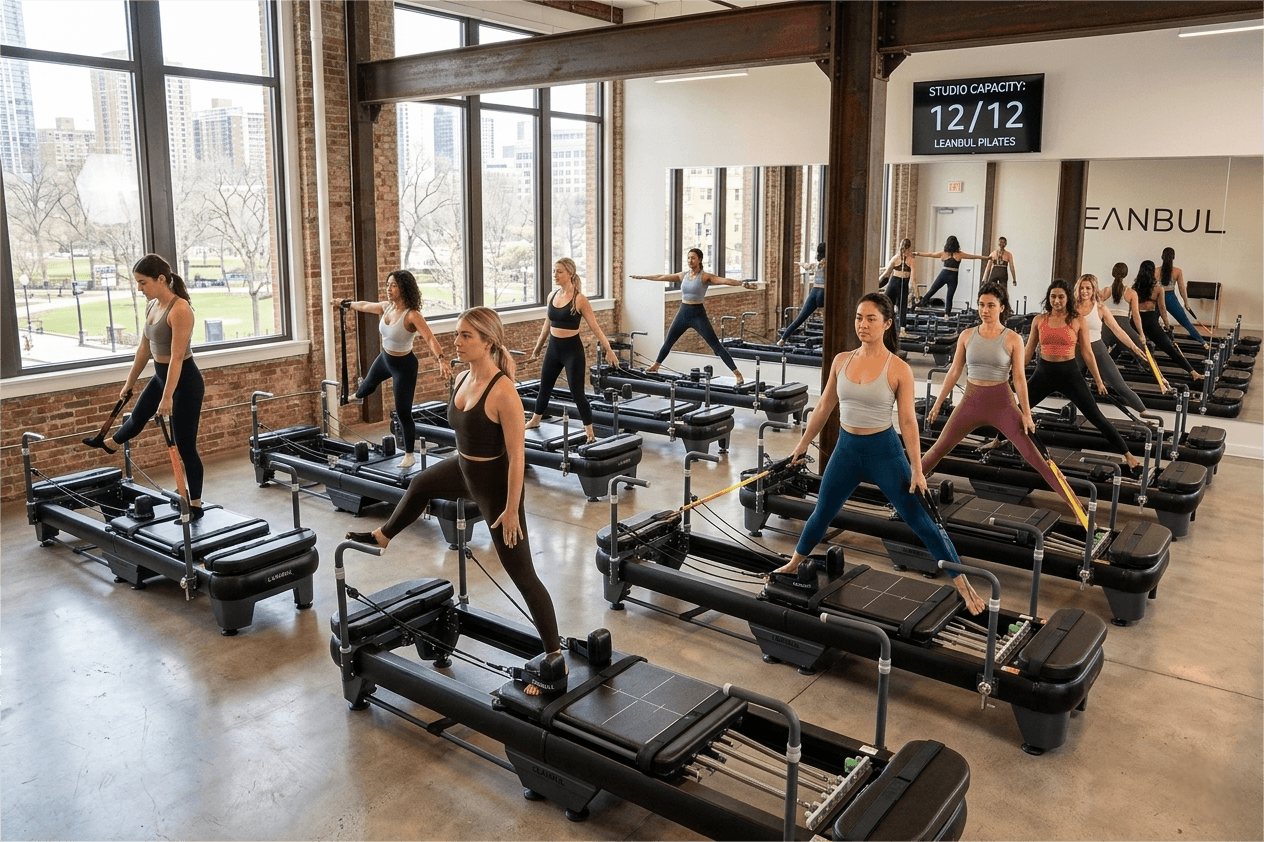
Why a retreat buys differently from a hotel
The hotel case for reformers is straightforward: add them to the wellness offer, give guests something to do between the pool and the spa, and lift the property’s standing. The machine is an amenity, and it usually sits in a shared fitness room.
A retreat inverts that. The reformer studio is the product. Guests book a five-day pilates week and pay for the programme, not for access to equipment. Three consequences follow.
- One central studio, not machines in every room. Retreats concentrate their reformers in a single space that runs to a timetable, rather than distributing them across a property.
- Continuous rotation. A weekly-changeover retreat can put a different group through the same machines every few days, all season. That is far more operating hours per unit than a hotel gym sees.
- Mixed ability, all the time. The same studio has to work for a guest who has never touched a reformer and for a regular who trains three times a week, often in the same class.
That last point is where cheap equipment fails. A machine that takes two minutes of fiddling to change spring tension between guests is a machine that eats a retreat’s timetable.
The European retreat market in 2026
Wellness travel is one of the fastest-growing segments of European tourism, and pilates sits at the centre of it.
| Indicator | Value | Source |
|---|---|---|
| Wellness tourists interested in yoga or pilates | about 67% | [CBI, EU market information](https://www.cbi.eu/market-information/tourism/wellness-tourism/market-potential) |
| Europe wellness tourism market | about US$278.3bn (2025), ~7.7% CAGR to 2035 | [Global Market Insights](https://www.gminsights.com/industry-analysis/wellness-tourism-market) |
| Europe thermal spa and wellness market | US$32.1bn (2025) rising to US$35.1bn (2026), ~9.1% CAGR | Global Market Insights |
| Global wellness tourism | US$990.4bn (2025) toward US$2.4tn by 2035 | [Grand View Research](https://www.grandviewresearch.com/industry-analysis/wellness-tourism-market) |
The CBI figure is the one worth dwelling on. The EU-funded centre that advises exporters on European market entry singles out yoga and pilates as the most popular wellness activities, with roughly two-thirds of wellness tourists interested. A retreat that cannot offer a credible reformer programme is competing for the same guests with one hand behind its back.
These are third-party market estimates, not official statistics, so treat the absolute numbers as directional. The direction itself is not in doubt: European wellness tourism has grown every year since 2021, and central and southern Europe draw a large share of it.
How big a retreat programme actually is
Retreat pricing makes the economics visible. On the main booking platforms, European pilates retreats run from roughly US$500 for a three to four day budget programme to US$2,500–3,400 for a boutique reformer week in Mallorca or Marbella, accommodation and most meals included. Hosting a group of twelve on a five-day programme is a five-figure booking. That is the number a reformer fleet has to earn its keep against.
Sizing the studio is a timetable exercise, not a floor-space one.
| Retreat format | Guests per group | Sessions per day | Reformers needed |
|---|---|---|---|
| Small group retreat | 8–10 | 2 | 6 |
| Standard retreat | 12–16 | 2–3 | 8–10 |
| Larger programme retreat | 20–24 | 3 | 12–14, split into two streams |
| Retreat plus 1:1 add-ons | any size | 2 group plus private slots | base fleet plus 1–2 dedicated |
A twelve-guest retreat running two reformer sessions a day needs eight to ten machines. It is buying a studio, not a set of free weights, and the fleet has to be sized for the busiest day of the programme rather than the average.
What a retreat reformer has to do
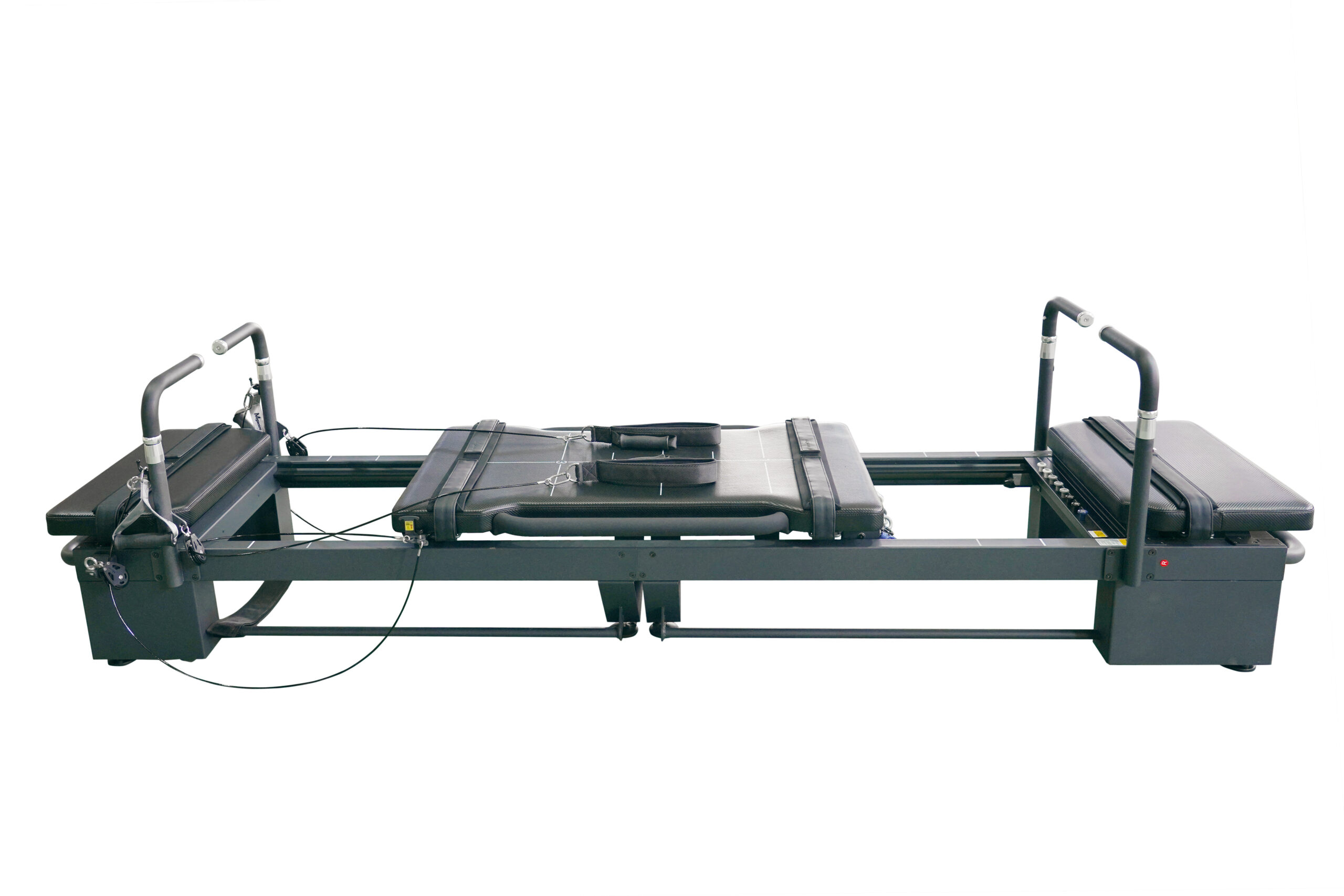
Six requirements separate a machine that works in a retreat studio from one that simply looks good in a brochure.
- Fast, repeatable adjustment. Spring changes, foot-bar positions and headrest settings that a guest or instructor can reset in seconds, between back-to-back sessions.
- A wide resistance range. The same machine has to serve a complete beginner on light springs and a trained client on heavy resistance.
- A footprint that fits a converted building. Retreat venues are often repurposed farmhouses, fincas or villas, not purpose-built gyms. A studio of 80–110 m² may have to hold eight machines plus circulation.
- Low maintenance and easy service. A retreat rarely has a technician on site. Anything that needs specialist tools is a problem.
- Quiet operation. Retreats sell calm. Scraping carriages and rattling springs are a marketing problem, not just an engineering one.
- Corrosion resistance. Coastal and thermal destinations are the heart of the European retreat market, and salt air and humidity are hard on steel frames and springs.
Compliance and logistics for retreat operators
Retreats sit in a mix of regulatory contexts that equipment buyers should not ignore.
- CE marking and EN ISO 20957 Class S. Commercial equipment must be supplied for commercial use, with a declaration of conformity. A home-rated machine used in a paid programme creates a liability problem in the event of an incident.
- GPSR obligations. Under EU Regulation 2023/988, the economic operators placing equipment on the market have duties around traceability and safety information. Operators should keep the documentation that arrives with a fleet.
- Intra-EU delivery. For a retreat in Spain, Portugal, Italy or Greece, buying from an EU manufacturer means no customs clearance and no import duty. A reformer moving from Spain to a Greek island is a road and ferry route, not a border event.
- Spare parts and service. Springs, straps, carriage pads and wheels are wear items. Confirm how quickly they ship and at what lead time before you commit a season to a supplier.
- Access for delivery. Island and hillside venues can have real access constraints. Confirm door widths and stair turns before ordering a machine with a fixed frame.
That combination is why an EU-based manufacturer makes practical sense for a retreat operator. The supply chain is short, the compliance paperwork is standard and the wear parts arrive without a customs delay.
The economics of a retreat reformer studio
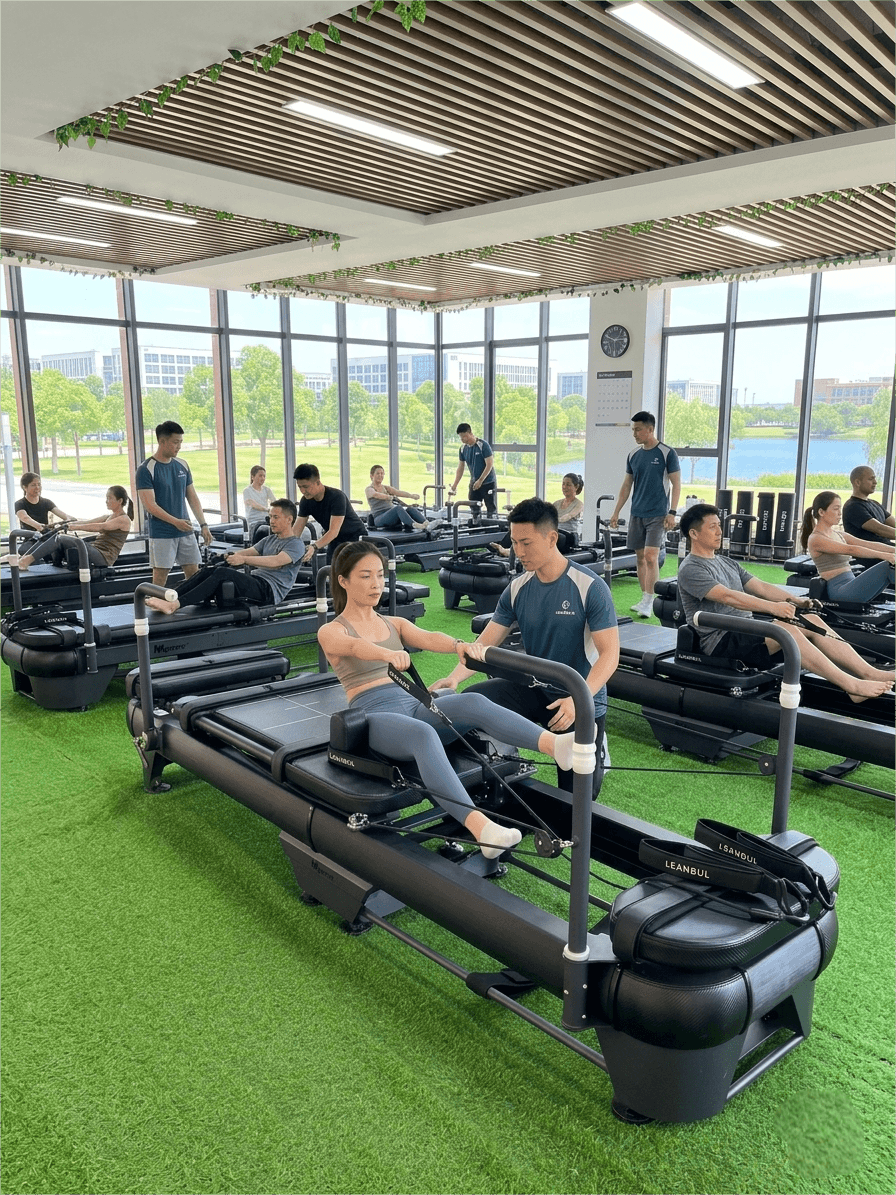
A retreat studio is a better asset than a hotel gym, for one reason: utilisation. A hotel amenity earns nothing directly. A retreat studio is part of a paid programme that fills several times a week across a season, and the same machines serve every group.
Run the rough maths. A twelve-guest retreat running eight machines, booked for most of a five-month season at roughly weekly changeovers, puts the fleet through more than twenty guest groups a year. Spread against a fleet cost in the €1,900–3,500 per unit range, the machines stop looking like a capital expense and start looking like the fixed part of a revenue engine. The payback comes from programme bookings, not from equipment resale.
There is also a quality angle that shows up in the reviews. Pilates retreat guests are experienced buyers. They know the difference between a reformer fleet that is adjusted and maintained and one that is not, and the difference appears in what they write afterwards. For a business built on repeat bookings and referrals, that is worth more than the cheapest quote.
FAQ
How many reformers does a wellness retreat need? Size the fleet to your busiest programme day. An eight to ten guest retreat usually runs six machines and two sessions a day; a twelve to sixteen guest retreat needs eight to ten; a twenty-plus programme should plan twelve to fourteen and split guests into streams. The rule is guests per session plus one or two spares, not guests per property.
What should a retreat look for in a reformer? Fast, repeatable adjustment for mixed-ability groups, a wide resistance range, a footprint that fits a converted building, low maintenance, quiet operation and corrosion resistance for coastal venues. Buy commercial-grade equipment rated to EN ISO 20957 Class S, with CE marking and a declaration of conformity.
Do retreats need commercial or home reformers? Commercial. A retreat reformer runs several sessions a day, all season, under paid-programme conditions. Home-rated machines are not built for that duty cycle, and using them in a commercial setting weakens your position if a guest is injured. The difference is a specification, not a price bracket.
Is buying reformers from an EU manufacturer better for a European retreat? For most retreats, yes. An intra-EU purchase from a manufacturer based in Spain means no customs duty, no border clearance, short delivery times and faster access to spare parts. For island and coastal venues, that shorten supply chain matters most when a spring set or carriage pad needs replacing mid-season.
How much do pilates retreats in Europe charge? Published rates in 2026 ran from about US$500 for a three to four day budget programme to US$2,500–3,400 for a boutique reformer week in Mallorca or Marbella, with accommodation and most meals included. Spain and Portugal tend to offer the best value, while island and luxury programmes price higher.
Equipping a Retreat Studio
If your retreat sells a pilates programme, the reformer studio is the product, and the fleet is what determines whether the programme can run at the capacity you sold. Get the count, the adjustment speed and the service access right, and the machines disappear into the background where they belong.
Leanbul manufactures commercial pilates reformers in Spain for European retreats, studios, hotels and clinics, supplied as EN ISO 20957 Class S equipment with CE marking. For a compact studio, start with the K10 commercial reformer; for a full programme that needs a premium machine, look at the K38 premium reformer; or browse the full collection. To size a fleet for your programme, contact us with your guest numbers and session timetable.
