What a Reformer Class Costs to Run in Europe: Instructor Models, VAT and the Break-Even Seat Count
A six-seat reformer class in Europe costs between about €18 and €48 to run. Almost all of that spread comes from two things: how you pay the instructor, and how much VAT you have to hand over on the ticket. The machine is not the variable. A €2,800 commercial reformer teaching 20 classes a week for five years costs roughly €1.30 per class.
Most studio owners I speak to can quote their rent to the euro and their class price to the euro. Very few can tell me their contribution per class, which is the number that decides whether adding a seventh machine makes money or just adds work.
This is a European arithmetic problem, and it behaves differently here than in the US. Same class, same price, same six clients — the net revenue can differ by 20% between two EU countries because of VAT treatment. That difference is larger than most studios’ entire equipment budget per class.
The three costs, ranked by what they can actually sink you
Per class hour, on a six-machine floor:
Instructor. €25 to €45 on a freelance per-class fee in most western EU markets. The single largest line, and the one with the least flexibility once the timetable is published.
Room. €15 to €35 per class hour once you divide rent, utilities, insurance and software across the week. Higher in capital cities, dramatically lower in secondary cities.
Machine. €1.00 to €2.00 per class hour, including springs, upholstery and the eventual replacement set. Sounds almost free. It is, until you finance it badly or buy the wrong class rating and start replacing carriages in year three.
The machine being cheap per hour is exactly why studio owners under-think it. It is also why the decision is mostly about capacity: how many bays you can keep busy at a class price the local market accepts.
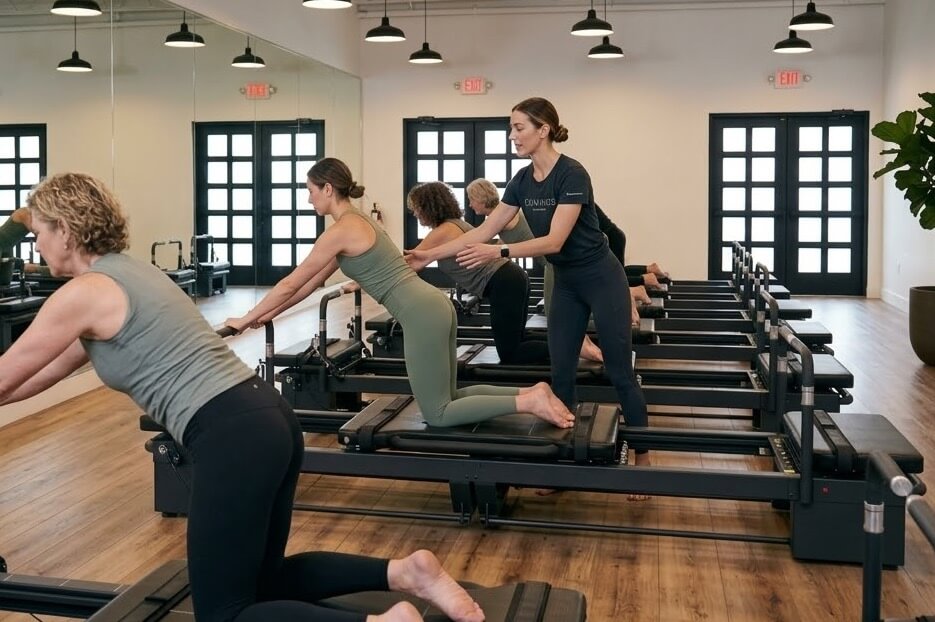
How European studios actually pay instructors
There is no single European model. The four that show up repeatedly behave very differently when a class runs half empty.
| Model | Typical cost per class (EU, 2026) | Who carries an empty class | Effect on your timetable |
|---|---|---|---|
| Freelance per-class fee | €25–45 | Studio | Flexible. You can add or drop slots monthly |
| Employed hourly | €18–30/hour plus 20–30% employer contributions | Studio | Fixed shifts, better retention, harder to unwind |
| Revenue share (instructor keeps 55–70% of the class) | Varies with fill | Shared | Strong incentive to fill seats, weak control over pricing |
| Room-and-machine hire (instructor rents the bay) | Studio receives €10–20/hour | Instructor | You become a landlord, not an operator |
A London studio paying £35 per class to a newly qualified instructor and £45 to £50 to someone with five years behind them is normal. Employed studio instructors in the UK sit in the £18,000 to £30,000 band, which looks cheaper until you add employer National Insurance, pension and paid holiday. In Spain, a freelance instructor invoicing €30 per class costs the studio €30. The same person on a payroll contract costs the studio closer to €38 once social security is added, and cannot be reduced in a quiet February.
Two structural traps sit under this table.
The first is false self-employment. Spain, Belgium, the Netherlands and Germany all police it. If you set an instructor’s hours, place of work and price, and they teach only for you, a labour inspector can reclassify them as an employee and bill you for years of unpaid contributions. The label on the invoice does not decide it. A freelance instructor with other clients, some control over their schedule and their own insurance does.
The second is scale economics in reverse. A per-class fee is fixed. Revenue is not. At 45% fill, an instructor paid €35 on a €24 ticket with 2.7 clients takes 54% of your net revenue. At 90% fill, the same fee is 27%. Nobody prices this in when they sign the fee agreement, and it is the reason two studios on the same street with the same prices can have completely different margins.
VAT decides your net ticket, not your price list
This is the part American content never covers, and it is the part that matters most here.
Under Article 132(1)(m) of the EU VAT Directive, sport and physical education services supplied by non-profit-making organisations can be exempt. Commercial studios do not qualify. So a municipal sports club and a private reformer studio can sell the same class in the same city at different VAT treatments, and the commercial studio absorbs the difference or passes it on.
Most member states then add their own carve-outs, which is why the picture is not uniform.
| Country | VAT applied to a commercial reformer class | Net revenue from a €24 ticket |
|---|---|---|
| Sweden | 6% (sports activities) | €22.64 |
| Finland | 13.5% (sports services, from 1 Jan 2026) | €21.15 |
| Germany | 19% | €20.17 |
| France | 20% | €20.00 |
| Spain | 21% | €19.83 |
| Netherlands | 21% | €19.83 |
| Italy | 22% | €19.67 |
| Ireland | 23% | €19.51 |
| Poland | 23% | €19.51 |
| Greece | 24% | €19.35 |
| Denmark | 25% (exemption removed 1 Jan 2026) | €19.20 |
| Hungary | 27% | €18.90 |
Read that again as a studio owner. The same €24 class nets €22.64 in Stockholm and €18.90 in Budapest. On 400 seats a month that is a €1,500 annual difference in revenue you never see on the price board.
Denmark is the live case. From 1 January 2026 the Danish exemption for commercial fitness, yoga and Pilates group classes ended, following CJEU case law. PureGym put 25% VAT on memberships for everyone over 30. Beatriders absorbed part of it and raised prices 8–23%. Every reformer studio in the country had to redo its pricing model inside one budget cycle.
There is a counter-intuitive upside, and it is worth understanding before you envy a tax-exempt operator. Exempt businesses cannot deduct input VAT. A Danish studio that was exempt before 2026 paid the full 25% on every reformer, spring set and mat with no recovery. Now it charges VAT and can reclaim it. For an equipment-heavy business buying €18,000 of machines, being taxable is often the better side of the line — which is why voluntary VAT registration is usually right for a new studio, even below the national threshold. Do the arithmetic with your accountant before assuming exemption is a gift.
A worked example: six machines, one instructor, €24 a seat
Assume: six reformers, 22 classes a week, 70% average fill (4.2 seats), €24 per seat, freelance instructor at €28 per class, VAT 21%.
| Line | Per class | Per month (95 classes) |
|---|---|---|
| Gross ticket revenue | €100.80 | €9,576 |
| VAT at 21% | −€17.49 | −€1,662 |
| **Net revenue** | **€83.31** | **€7,914** |
| Instructor fee | −€28.00 | −€2,660 |
| **Contribution** | **€55.31** | **€5,254** |
| Rent (110 m² at €16/m²) | −€1,760 | |
| Utilities, software, insurance, marketing, admin | −€1,050 | |
| Equipment depreciation and maintenance | −€400 | |
| **Operating profit before owner pay and tax** | **≈€2,044** |
Two numbers stand out. The instructor takes a third of net revenue at this fill rate — that is the number to renegotiate when you add classes, not the machine price. And room plus overhead is 2.5 times the equipment line. A studio that saves €300 per machine and loses 5% of fill has lost more than it saved.
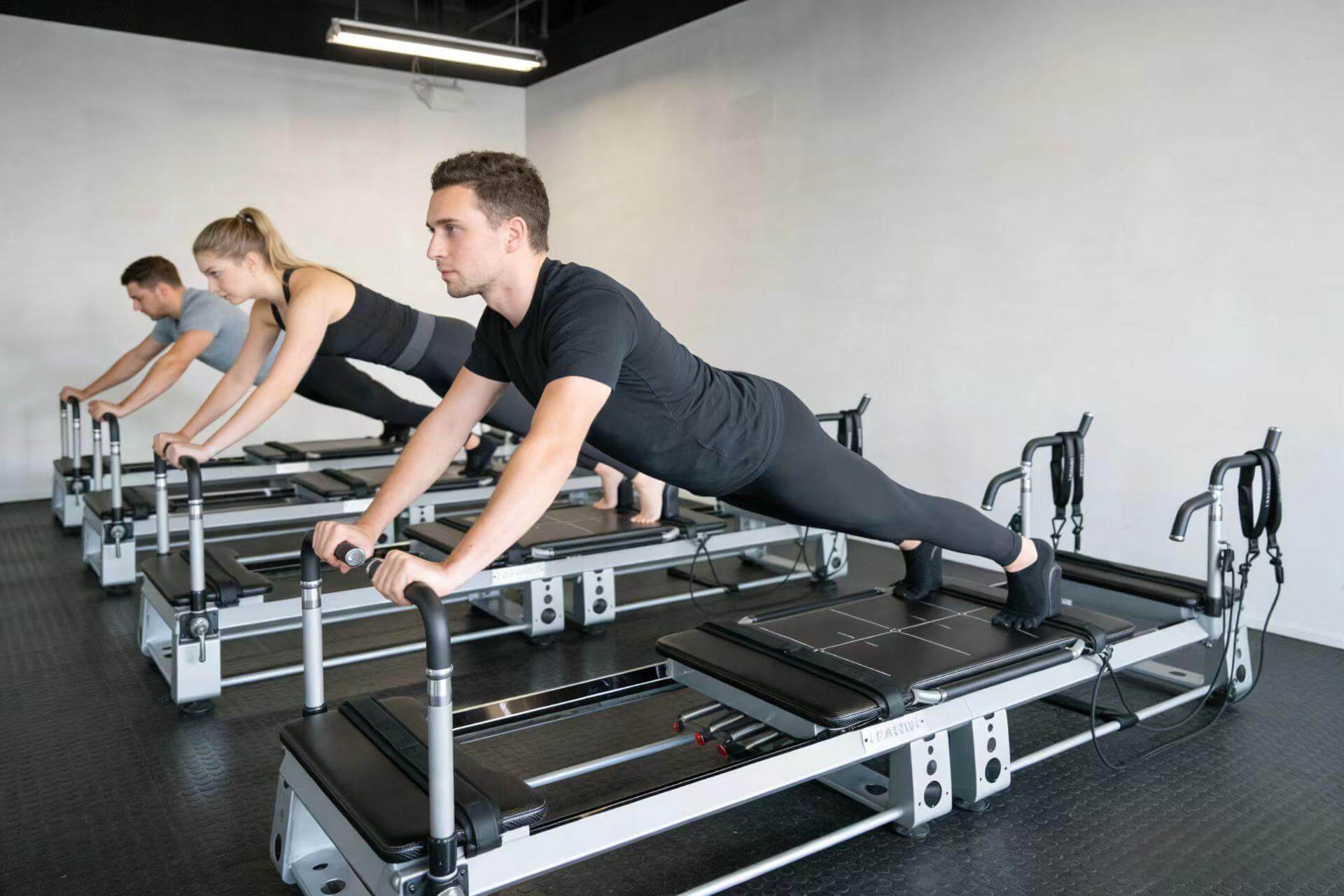
The break-even seat count, at three fill rates
Break-even here means covering all fixed costs, not just the instructor. Using the same cost base of €3,210 a month:
| Average fill (of 6) | Seats per class | Contribution per class | Classes needed per month | Classes per week |
|---|---|---|---|---|
| 50% | 3.0 | €31.50 | 102 | 24 |
| 70% | 4.2 | €55.31 | 58 | 13 |
| 85% | 5.1 | €73.11 | 44 | 10 |
The gap between 50% and 85% fill is the difference between needing 24 classes a week and needing 10. Most studios respond to a full timetable by adding classes. When fill is under 60%, adding classes usually lowers average fill and makes the arithmetic worse. Add capacity only when you are turning people away — that is the point where a seventh machine earns, and not before.
The benchmarks land where you would expect. Booking platform bsport, quoting BusinessDojo’s profitability data, treats 75–85% occupancy as the operating band: below 70% is lost revenue, above 90% means you are turning people away. Vibefam’s 2026 boutique-studio numbers put net margin at 10–25% and treat payroll above roughly 45% of revenue as the warning line. If payroll is over half your revenue and fill is under 65%, the problem is the timetable, not the machines.
Where the €2,800 machine fits
Take a €2,800 commercial reformer, five-year straight-line, 20 classes a week, 48 weeks a year. That is 4,800 class hours, or €0.58 per class in capital. Add a spring set every two years at €120–250, occasional re-covering, and the true cost is €1.00–1.60 per class hour.
Put differently: one extra client per class at €24 covers the machine cost of six reformers for that hour, several times over. The purchase decision is not “can I afford the machine”. It is “can I fill the bay 15 times a week at a price this market accepts”. If the answer is no, a cheaper machine does not fix it — you have bought a €1,900 problem instead of a €2,800 one.
What the machine does affect is your cost of downtime and your cost of replacement. A machine rated for commercial group use carries a 100,000-cycle endurance test under EN ISO 20957-1:2024 Class S. A home-rated machine tested to 12,000 cycles will not survive a 22-class week for five years, whatever the invoice says. The failure shows up as carriage play, rail wear and soft goods collapse in year two or three — right when you have no cash and no spare.
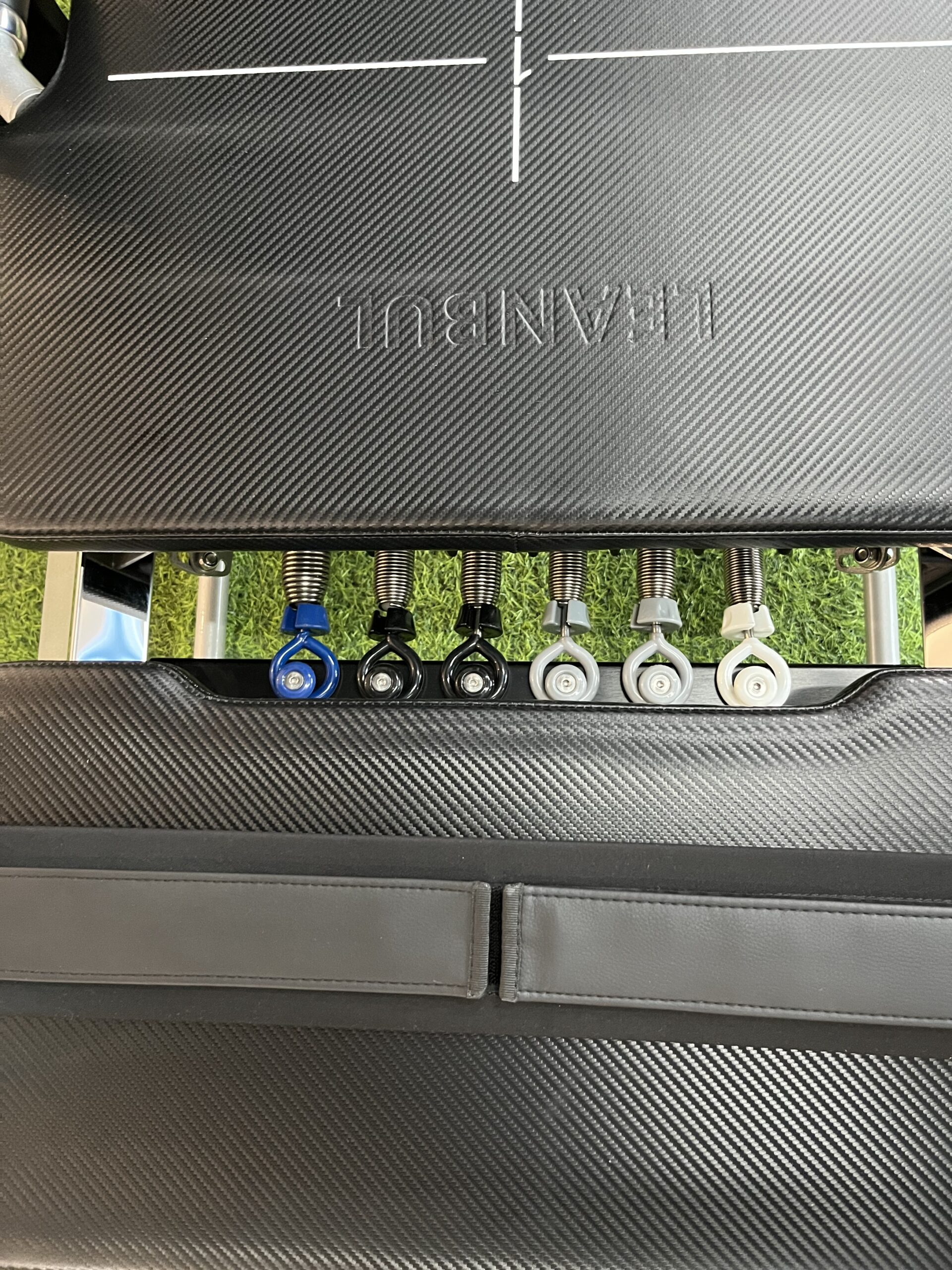
Three levers that change the arithmetic
Class size before class count. Going from six to eight bays raises contribution per class by a third without touching the timetable or the instructor fee. It needs floor area and ventilation capacity, not more staff. In most European cities the constraint is the room — 2.0 to 2.2 m² per machine including circulation.
Price the peak, discount the trough. A 10:00 Tuesday class and an 18:30 Tuesday class cost the same to run and do not earn the same. Off-peak pricing below the standard rate is not discounting your brand; it is monetising capacity that otherwise contributes nothing. Keep the peak full-price and let the quiet hours carry the fixed cost.
Instructor mix. Use revenue share on the experimental slots and a fixed fee on the proven ones. A new 14:00 slot is a bet; share the upside and the downside with the person teaching it. A Saturday 10:00 class that has run full for a year does not need a revenue share, it needs a reliable fee and a reliable instructor.
FAQ
How much does it cost to run one reformer class in Europe? Between roughly €18 and €48 for a six-person class, depending on the instructor model and the country. Instructor cost is €25–45 of that in most western EU markets; room and overhead add €15–35 per class hour; the machine adds €1–2.
Should I pay instructors per class or per hour? Per class for group reformer classes, because your revenue is per class. Hourly employment makes sense when you also need the instructor for reception, inductions or private sessions in the same block. Revenue share works for new time slots where you want the instructor invested in filling seats.
Does VAT apply to reformer classes in every EU country? For commercial studios, yes, at the national standard or reduced rate — with Sweden at 6% and Finland at 13.5% as the notable exceptions, and Denmark moving to 25% in January 2026. Exemptions generally apply only to non-profit organisations, schools and certain recognised providers.
How many clients do I need per class to break even? Two seats cover the instructor. Covering all fixed costs is a different question: at a €24 ticket, 21% VAT and a €28 instructor fee, a studio with €3,200 of monthly fixed costs needs about 58 classes a month at 70% fill, or 102 classes at 50% fill.
Is a cheaper reformer worth it if my margins are thin? Only if it is commercial-rated. The saving is €500–900 per machine once; the cost of a machine that cannot take 20 classes a week is downtime, replacement carriages and a fleet that looks tired in year three. Buy fewer, better machines before buying more, cheaper ones.
Working out your own numbers
If you are planning a fit-out or adding bays, we will send the machine specifications — carriage height, footprint, class rating, spring set and warranty terms — so you can put real numbers into the model above instead of estimates. Start with the K30 commercial reformer for boutique floors, the K38 premium reformer where the room allows a longer carriage, or look at studio solutions for multi-bay layouts.
Leanbul builds reformers in Spain for European studios, gyms and clinics. If you want a second opinion on the class economics of a specific room, send us the layout and we will tell you what fits — including when the honest answer is fewer machines than you asked for.
