How to Open a Pilates Studio in the Czech Republic in 2026: Legal Steps, VAT, Costs and Equipment
Opening a Pilates studio in Czechia is cheap to register and expensive to run, and the two facts are related. Setting up a sole proprietorship costs almost nothing, which is why most instructors start there. Staying compliant once you take on staff, charge VAT and sign a commercial lease is where the real work begins.
This is the practical route: which legal form to choose, how trade and tax registration actually work, when VAT becomes unavoidable, what the self-employed pay in 2026, what a Prague studio lease looks like, and what the equipment costs. It is written for a studio founder working in Czechia, not a general reader.
First decision: sole proprietorship or company
Czechia gives you two realistic structures. The sole proprietorship (živnost, or OSVČ) is the default for a single-instructor studio. A limited liability company (s.r.o.) is what you move to when you hire, take on a real lease and stop wanting your personal assets on the line.
| Sole proprietorship (živnost / OSVČ) | Limited liability company (s.r.o.) | |
|---|---|---|
| Liability | Unlimited — personal assets at stake | Limited to company assets |
| Minimum capital | None | From a symbolic 1 CZK; higher is recommended |
| Setup | Fast, low cost, single owner | Notary deed plus business-register entry |
| Income tax | 15% up to roughly CZK 1,935,552, then 23% | Corporate tax 21%, plus tax on dividends |
| Social & health insurance | Compulsory for the owner | Handled through the company for employees |
| Best for | First studio, one or two instructors | Multi-instructor studios, leases, investors |
Two practical notes. First, the 1 CZK minimum capital on an s.r.o. is real but misleading — partners and landlords expect something more substantial, and if total cash contributions stay under CZK 20,000 you do not even need a separate technical bank account, so it is easy to under-capitalise a company that trades on trust. Second, the sole proprietorship’s unlimited liability is not a small thing in a business where clients exercise on moving equipment; budget for liability insurance from day one either way.
Registration, step by step
- Decide the trade. Pilates teaching sits under a designated trade licence (“poskytování tělovýchovných a sportovních služeb v oblasti pilates”). Czech trade licences are either free (volná) or regulated (vázaná), and regulated ones require documented professional competence, so confirm which category applies and whether your qualification is recognised before you build a business plan around it.
- Register the trade. Sole traders register at the local Trade Licensing Office, or through the online Trade Licensing Portal. If you use a company, the notary deed and business-register entry come first, and you can submit the trade registration in parallel.
- Get your identification numbers. Registration generates the tax number (DIČ) and the trade-licence extract, which appears in the ARES register. You will need these for banking, invoices and lease negotiations.
- Register with the authorities. The trade office passes your details to the tax office and, for a sole proprietor, to the social security administration and your health insurance fund. Failing to register with the health fund on time is one of the most common first-year mistakes.
- Set up a business bank account. Not strictly mandatory for a small sole trader, but it makes the accounting and VAT work far simpler.
None of this is exotic, but it is sequential, and the qualification question at step one is the one that stops people, so resolve it first.
VAT (DPH): when it becomes mandatory
Czech standard VAT is 21%, with a reduced rate of 12% that does not apply to fitness services or equipment. As a studio owner you pay 21% on what matters.
The registration threshold is a rolling CZK 2,000,000 of turnover. Cross it during a calendar year and you must register for VAT, with registration generally effective from the start of the following calendar year. There is an immediate trigger too: turnover above CZK 2,536,500 forces registration from the following day.
For a reformer studio there is a clear argument for registering voluntarily before you need to. Six commercial reformers at €1,900–3,500 each is roughly €11,000–21,000, and 21% VAT on that is a serious input cost. If you are VAT-registered you reclaim it; if you stay under the threshold and unregistered you cannot. Model the numbers rather than assuming small is always cheaper.
On top of output VAT, remember that buying a reformer from another EU country is an intra-Community acquisition: no customs clearance, no import duty, and the VAT is handled by reverse charge on your own Czech return.
Social and health insurance in 2026
This is the fixed cost that surprises overseas founders. A Czech sole proprietor pays both health and social insurance from the first month, whether the studio is profitable or not, subject to annual minimums.
For 2026 the minimum monthly payments are CZK 3,306 for health insurance and CZK 5,005 for social insurance. The social minimum was reduced during 2026 and the change applied retroactively from 1 January, so anyone who paid the higher early-year figure was due a refund. If you opt for the flat-rate regime (paušální daň), the first band is CZK 9,162 per month, which bundles a fixed income tax with the insurance contributions.
For context on the scale, the Czech minimum wage for 2026 is CZK 22,400 per month. Minimum insurance contributions alone take a meaningful bite out of that, which is why most studios price membership above the bare minimum from the start.
Leasing a space in Prague
Czech commercial leases are freely negotiated — unlike Belgium or France there is no statutory minimum term — so everything that matters is in the contract: rent, indexation, notice period, and fit-out obligations. Read the indexation clause in particular, because it decides what your rent becomes in year three.
Rent is the largest controllable cost. iO Partners’ Prague office market data for the end of 2025 put prime city-centre rent at €30 per square metre per month, with inner-city locations at €18–20.50 and outer areas at €15–16.50. A reformer studio does not need Class A office space, so the inner and outer bands are the realistic reference, and a well-chosen non-central unit with good transport links is usually the sensible move.
Two less obvious items. You will need permission for a change of use if the unit was not previously approved for a fitness or sports operation — Czech building offices treat this as a planning matter. And if you play music in classes, you need a public-performance licence from the Czech collective rights bodies, OSA and Intergram. Both are routine, and both are easier to sort before you sign than after.
Insurance you should not skip
At minimum, a studio needs business liability insurance covering injury to clients and damage to third-party property, contents insurance for the reformers valued at replacement cost, and professional liability for instructors. Add employer’s liability once you hire.
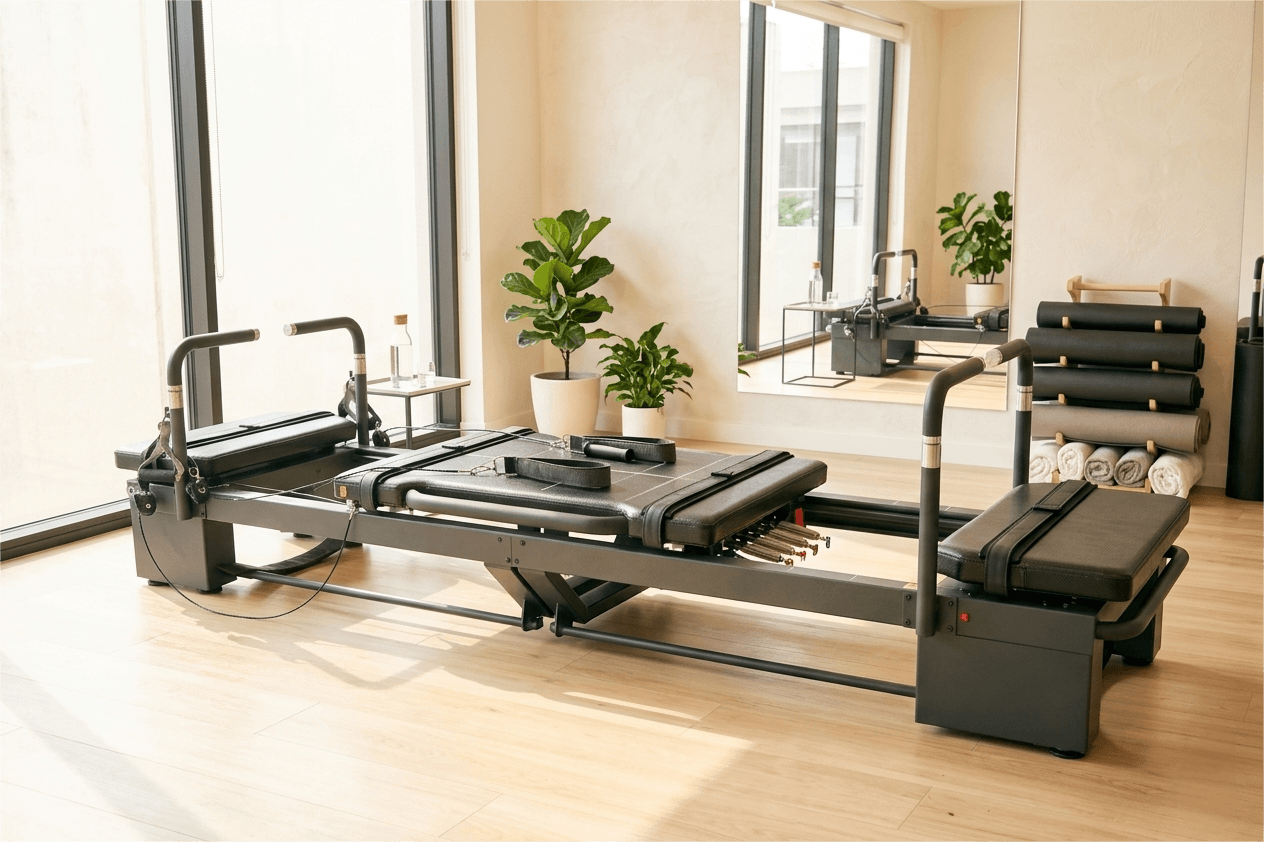
There is a reason to get the specification right as well as the cover. A reformer rated for home use and pressed into daily supervised classes is a claims risk, and insurers increasingly ask what standard the equipment is built to. Specify machines rated to EN ISO 20957 Class S with a declaration of conformity on file, and keep the maintenance records — they are your evidence if there is ever a claim. Our guide to European studio insurance covers this in detail.
What it costs to open
These are realistic 2026 ranges for a six-reformer boutique in a Czech regional city (add a premium for central Prague). The koruna has traded near 25 to the euro.
| Item | Indicative cost | Notes |
|---|---|---|
| Registration and legal setup | CZK 1,000–15,000 | Sole trader at the low end; s.r.o. higher |
| Accounting | CZK 1,500–2,500 per month | Outsourced; keep records 5+ years |
| Deposit and first rent | 3 months’ rent typical | Negotiable |
| Fit-out and flooring | €15,000–35,000 | Larger for a bare shell |
| Six commercial reformers | €11,400–21,000 | Factory-direct band of €1,900–3,500 each |
| Insurance, licences, launch marketing | €5,000–10,000 | Includes OSA/Intergram and initial ads |
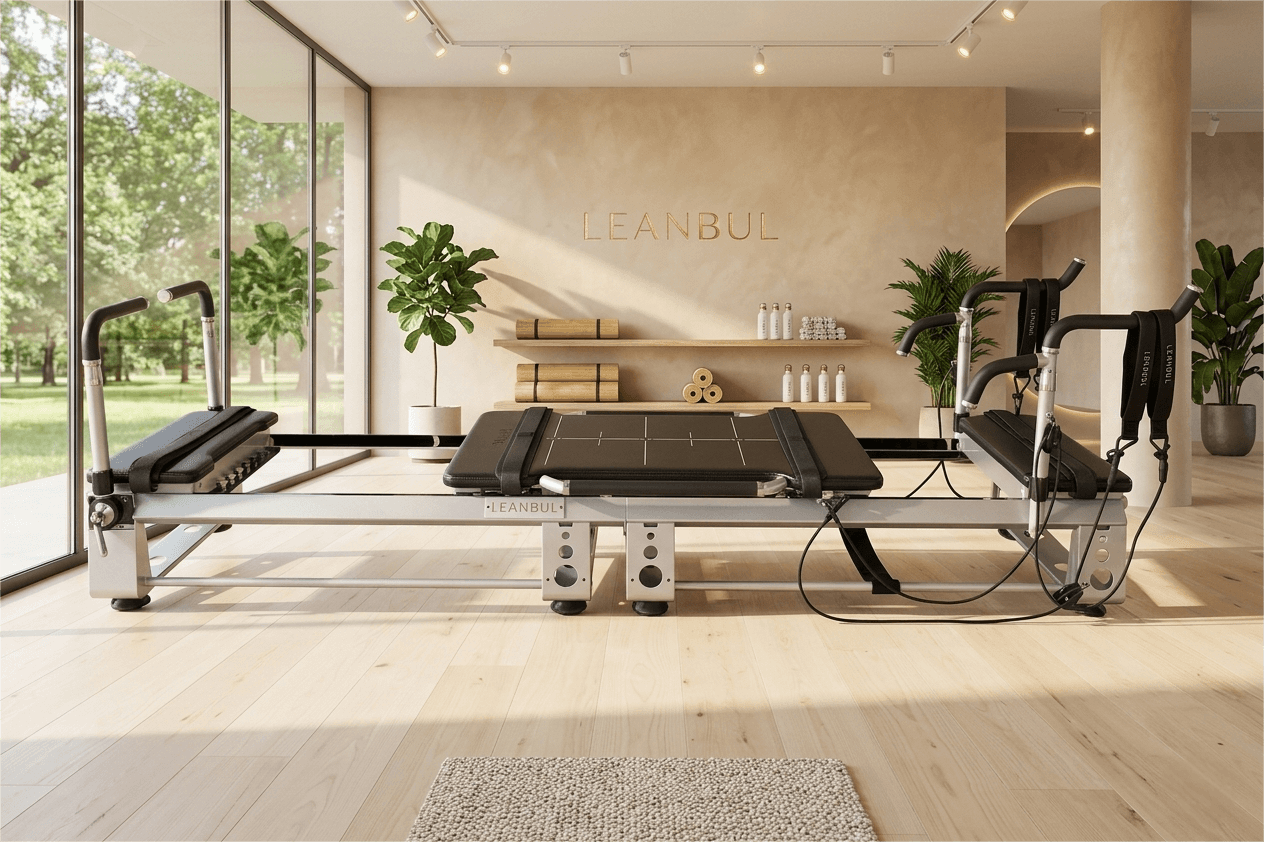
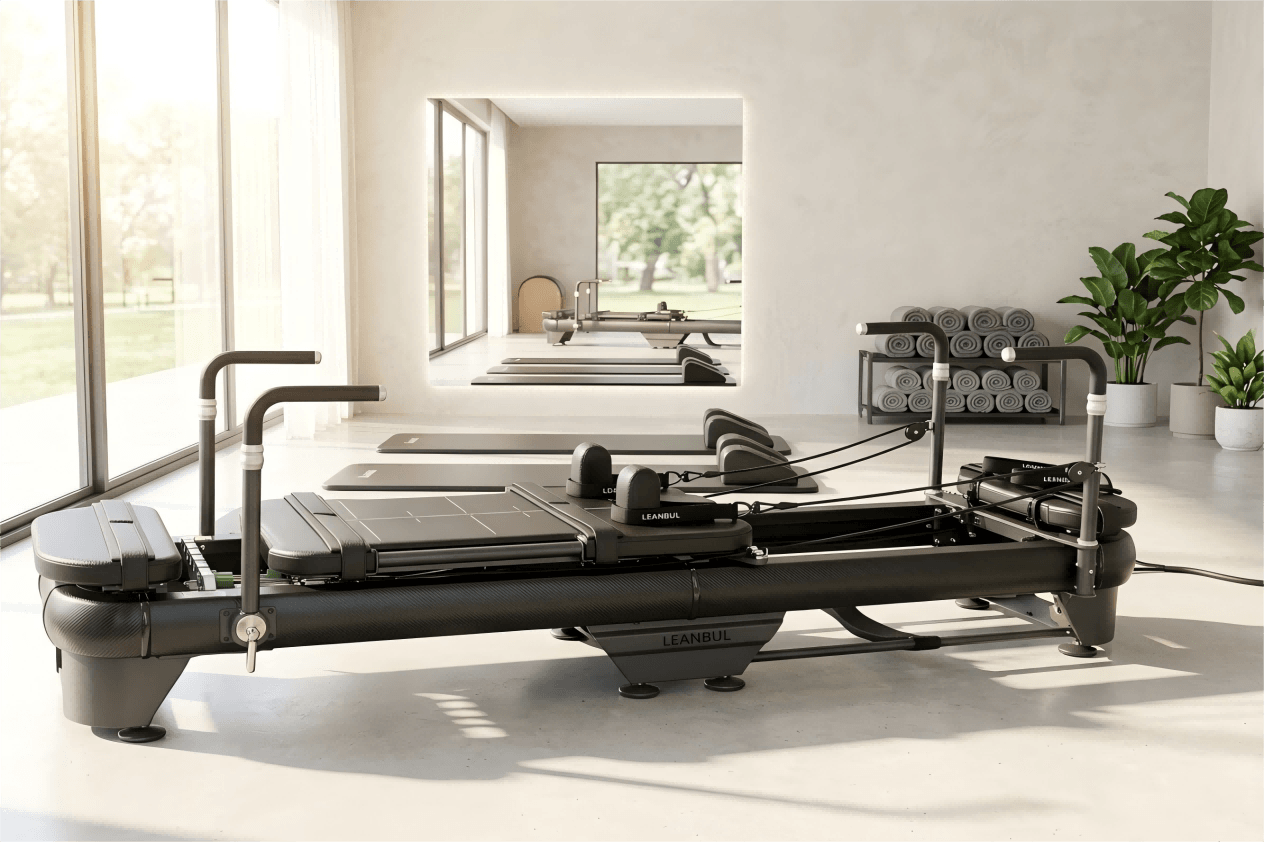
Budget on about 3 m × 1.5 m per reformer plus circulation; a six-machine boutique with a small reception and storage usually fits in 90–130 square metres. The K10 commercial reformer is built for exactly this footprint, and the K30 commercial reformer is the usual step up when a studio wants a wider carriage and a longer working life. Both are documented to EN ISO 20957 Class S, and our Pilates studio solutions page sets out full fit-out options.
Staffing and instructors
There is no single mandatory studio licence in Czechia, but instructors should be able to demonstrate recognised training, and if your trade registration is in the regulated category, professional competence is a legal condition rather than a nice-to-have. Expect to pay instructors per class, and check the contract type carefully: misclassifying staff as self-employed contractors is a compliance risk across the EU, and Czechia is no exception.
FAQ
Do I need a trade licence to open a Pilates studio in Czechia? Yes. Pilates teaching falls under a designated trade licence for physical education and sports services. Depending on the category, you may need to document professional competence, so confirm this before committing to a lease.
How much does it cost to register a Pilates business in Czechia? A sole proprietorship is inexpensive, in the low thousands of crowns. A limited liability company costs more because of the notary deed and business-register entry. The bigger financial decision is how much capital you put into the company, not the registration fee.
When must a Czech Pilates studio register for VAT? Once turnover exceeds a rolling CZK 2,000,000, with registration typically effective from the following calendar year, or immediately if turnover passes CZK 2,536,500. Many studios register voluntarily before that to reclaim input VAT on equipment.
What is the minimum social and health insurance for a self-employed studio owner? For 2026 the monthly minimums are CZK 3,306 for health insurance and CZK 5,005 for social insurance. The social minimum was reduced during 2026 and applied retroactively. The flat-rate regime’s first band is CZK 9,162 per month.
Can I buy reformers from another EU country without customs? Yes. Buying from a manufacturer inside the EU means no customs clearance and no import duty, and the VAT is handled under the reverse-charge mechanism. The one difference from a euro-zone buyer is currency: you pay in euros and earn in koruna, so fix the contract price and timing.
Getting started
The Czech setup itself is straightforward; the discipline is in the unit economics and the compliance trail. Leanbul is a Spain-based manufacturer of commercial reformers, which means a Czech studio buys from inside the EU — no customs friction, VAT handled by reverse charge, and equipment documented to the standards European studios and insurers expect. Start with the collection, review Pilates studio solutions, or contact us and we will quote a Czech studio fit-out in euros.
