Pilates Reformer Maintenance in Europe: Service Plans, Costs and What Studios Should Demand
A commercial reformer running 30 to 40 hours a week has a maintenance schedule whether you wrote one or not. Pilates reformer maintenance in Europe has turned into a market of its own — field-service partners who visit studios on contract, manufacturer service plans, and in-house routines that keep a fleet gliding. Studios that plan for it spend less than the ones that treat every squeak as a repair bill.
This guide is for studios, gyms, hotels and rehab clinics in Europe that own machines and need to keep them safe, quiet and consistent. It covers what actually wears out, how to size a service schedule to your duty cycle, the three service models available in Europe, what a contract should include, and what to budget. It comes from a Spain-based reformer manufacturer, so the parts and compliance side is written from the factory floor.
Maintenance Is an Operating Cost, Not a Repair Bill
Almost every “repair” on a commercial reformer is a maintenance failure wearing a disguise. A carriage that starts to judder, a footbar that won’t lock, a spring that feels dead — none of these appear overnight. Each is the end of a slow process that routine servicing catches early.
Specialist field-service providers put it bluntly: what a studio needs isn’t a repairman on call, it’s a system that runs on schedule. The economics are easy to follow. A scheduled inspection that swaps a worn roller costs a fraction of one cancelled class, and a cancelled class with eight booked clients costs more than a full spring set. Past five machines, unplanned downtime stops being an inconvenience and becomes a line on your P&L.
How Hard Does Your Fleet Actually Work?
Service intervals should follow the duty cycle, not just the calendar. A reformer in a private studio doing six sessions a week is a different machine from the same reformer in a 12-machine class studio running back-to-back groups.
UK manufacturer Align-Pilates uses a useful rule of thumb in its servicing guide: once a studio passes roughly 3,000 hours of equipment use per year, the fleet needs a more comprehensive service package. Above that level, wear develops faster and preventive work matters more than reactive repair.
| Usage profile | Weekly hours per machine | Annual hours | Sensible service level |
|---|---|---|---|
| Home / occasional | 2–5 | 100–250 | Annual visual check, springs inspected |
| Light studio | 10–15 | 500–750 | Annual service, springs on a 2-year cycle |
| Busy studio | 20–30 | 1,000–1,500 | Twice-yearly service, springs roughly annually |
| High-traffic studio / gym | 30–40 | 1,500–2,000 | Quarterly checks, full annual service |
| Commercial gym / class format | 40+ | 2,000–3,000+ | Contract service, spare parts held on site |
Figures are planning guidance based on common duty cycles, not a fixed rule. A reformer on a Mediterranean coast with salt air and no air conditioning ages differently from one in a climate-controlled room in Munich.
How long should the machine itself last? Equipment suppliers put the honest range like this: a commercial reformer under heavy studio use often needs a rebuild or replacement around 5 to 7 years, while a maintained machine in lighter use can run 15 to 20. The gap between those numbers is mostly maintenance, not build quality.
What Wears Out, and When
Reformers are simple machines with a handful of wear points. Knowing them is what turns a vague “service the fleet” into a plan.
| Component | What happens | Commercial interval | Warning signs |
|---|---|---|---|
| Springs | Metal fatigue, lost tension | Replace all springs on a 2-year cycle, sooner under heavy use | Kinks, gaps between coils, uneven tension, rust |
| Wheels & rollers | Flat spots, rough glide | Inspect at every service, replace proactively | Rattling on the return, carriage snagging |
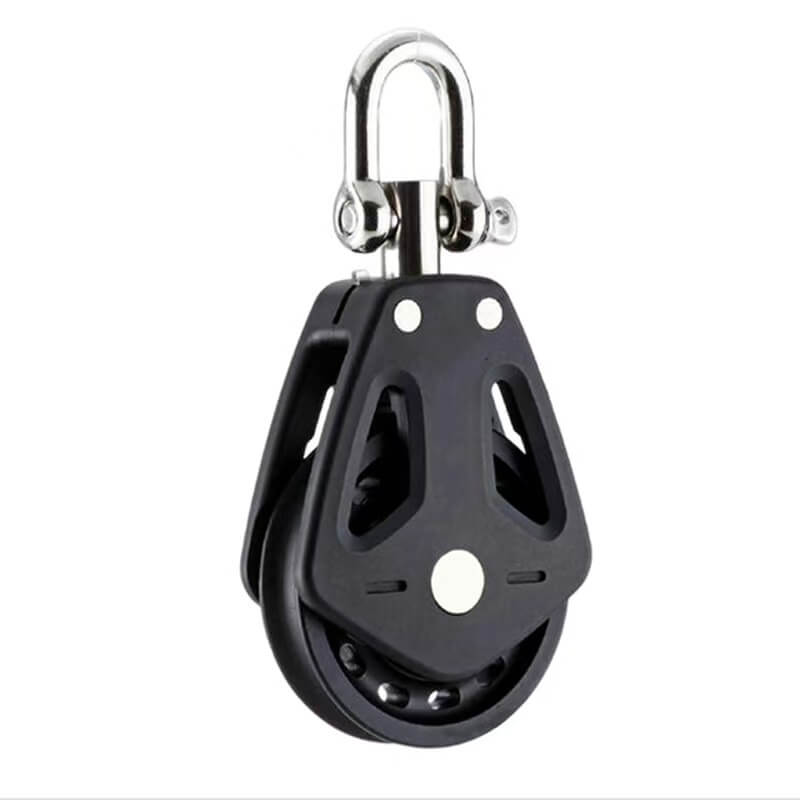
| Pulleys & ropes | Friction, fraying | Check tension and travel each service | Rope catching, unequal tension side to side |
| Carriage pads & upholstery | Compression, cracking | Replace when they no longer hold position | Slipping, visible wear lines |
| Footbar / gearbar | Mechanism loosens | Adjust and lubricate each service | Won’t lock, wobbles under load |
| Frame & fasteners | Bolts loosen over time | Torque check each service | Creaks, movement at joints |
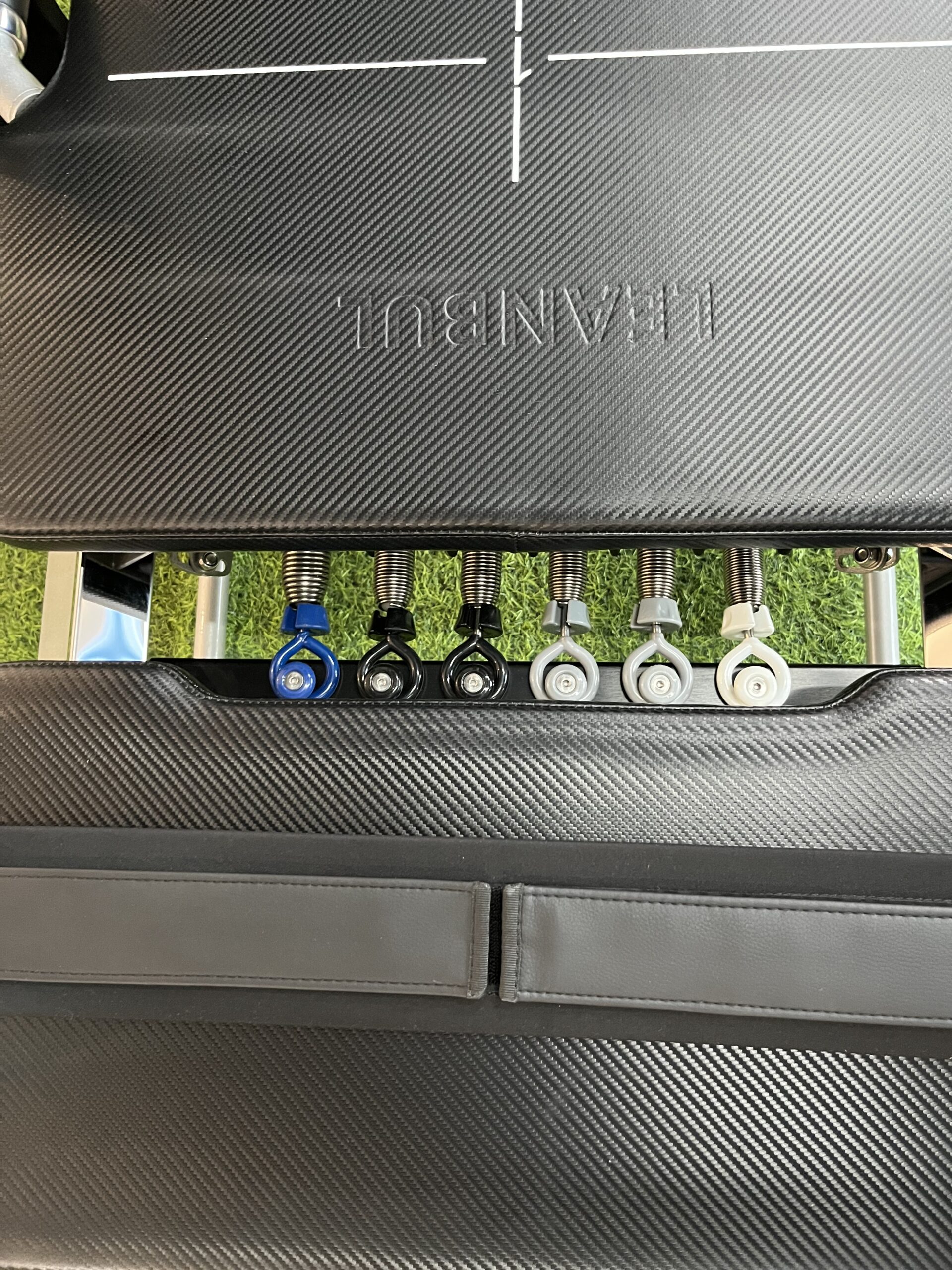
Springs are the one part you never stretch. They’re a safety component, and the industry agrees on the principle: replace all springs on a fixed cycle, and immediately if you see deformation, corrosion, damaged hooks or inconsistent tension. Metal fatigue is usually invisible from the outside, which is why a calendar beats an eyeball. BASI Systems’ maintenance guide recommends replacing all springs after two years regardless of whether they show wear, and heavy commercial studios often run a faster cycle than that.
There is no single correct replacement date, though. Spring life depends on usage volume, resistance selection, user weight, storage conditions and humidity, and each spring design ages differently. That’s exactly why the schedule follows your duty cycle rather than a number pulled from a brochure.
The Three Service Models Available in Europe
In-house
Staff handle daily and weekly checks — wiping rails, inspecting springs, tightening visible fasteners, logging anything odd. This is not optional; it’s the layer that catches problems before they become service calls. It’s also not enough on its own, because a full service means pulling the carriage, checking wheel alignment and torqueing the frame, and most studios don’t have the time or the parts.
Manufacturer service plan
Buying from a manufacturer that supports the machine after the sale changes your position. A plan normally covers scheduled preventive visits, genuine springs and parts held in stock, and a named contact when something fails. For European studios this is where a Spain-based manufacturer with EU-wide road freight has an edge over an imported brand whose support routes through a distributor in another country.
Third-party field-service partner
A dedicated servicing sector has grown across Europe. Pilates Reformer Care, for instance, runs on-site maintenance, repair and installation for premium studios, hotels and multi-site chains across France and Europe, and works as Merrithew’s on-site technical partner in France. That role exists precisely because no manufacturer has a technician in every country. If your fleet spans several markets, an independent field partner plus a manufacturer parts agreement is often the most practical setup.
| Model | Best for | Strengths | Limits |
|---|---|---|---|
| In-house | Every studio | Cheap, immediate, builds staff knowledge | No deep servicing, no spare parts |
| Manufacturer plan | Single-brand fleets | Genuine parts, known specs, single contact | Coverage varies by country |
| Field-service partner | Multi-site and hotel fleets | Local presence, cross-brand experience | Needs clear parts supply agreement |
What a Serious Service Contract Should Include
If you’re signing a contract, these are the clauses that matter. Vague promises to “service the equipment” are worth nothing when a machine is down.
- A defined preventive schedule — how many visits a year, and what happens on each one, not just “as needed.”
- A response time for breakdowns, in hours or working days, with a penalty or credit if it’s missed.
- Genuine springs and parts, with the part numbers and source named in the agreement.
- A written report after every visit — machine by machine, what was inspected, adjusted and replaced.
- Spare-part availability, ideally with wear items held in stock either at the studio or with the provider.
- Coverage for every location if you run more than one site, and a single report across the fleet.
One shortcut worth knowing: some European rental and leasing arrangements bundle maintenance, delivery and installation into a monthly fee. As a reference point, Rental.Fitness lists professional reformers from around €150 per month including maintenance, which removes the servicing decision entirely at the cost of owning nothing at the end.
Why Maintenance Is Now a Compliance Issue Too
In Europe, servicing isn’t only about performance. It’s tied to the paperwork that makes the machine legal and insurable.
- CE and EN ISO 20957. Commercial reformers are sold as Class S equipment under EN ISO 20957, and the manufacturer’s maintenance and inspection instructions are part of the technical documentation. Following them, and recording that you did, is part of keeping the machine in its declared condition.
- GPSR (EU 2023/988). The product-safety rules that apply since December 2024 put traceability and post-market responsibility on manufacturers and importers. For operators, it sharpens the expectation that equipment is maintained and monitored in line with its instructions.
- Insurance. This is the practical one. After an incident, an insurer will ask how the machine was maintained. A dated maintenance log is evidence; an empty folder is not. Our guide to studio insurance in Europe covers how equipment condition feeds into premiums and claims.
Maintenance is also where the savings hide. Skipping a €120–250 spring set isn’t saving €200; it’s gambling a machine that a client loads with their full body weight, several times a day, at commercial speed.
What Maintenance Costs in Europe
European service pricing isn’t standardized, so treat these as planning numbers rather than quotes:
- Spring set replacement: roughly €120–250 per reformer, depending on model and spring count. This sits alongside the wider machine costs in our European price guide.
- Annual preventive service: normally quoted per machine or per site. A studio fleet serviced once a year usually pays a fraction of what a single emergency repair costs, once you count lost sessions.
- Rental / lease with maintenance included: from around €150 per machine per month on some European B2B rental terms.
- Time-and-materials callouts: for models not under contract, labour is billed by the hour. Specialist US rates sit around $125 per hour for setup and servicing, and European rates land in a similar bracket.
The planning rule for a studio owner is simple: give the fleet its own annual maintenance line, sized to the duty-cycle table above. Treating it as an emergency expense is how a €2,000–6,500 machine gets run into the ground a decade early.
The Spring Question Deserves Its Own Read
Springs drive the feel of the whole reformer, and replacing them on time is about consistency as much as safety. A machine with fresh matched springs has evenly calibrated resistance; a machine with one tired spring feels different from one side to the other, and your clients notice before you do. If you’re choosing or specifying machines, our breakdown of springs vs cords vs magnetic resistance explains how each system ages and what that means for a commercial fleet.
FAQ
How often should a commercial Pilates reformer be serviced? It depends on hours, not weeks. A machine run under 750 hours a year is fine on an annual service. Studios passing roughly 3,000 hours of equipment use per year should move to a comprehensive plan with several visits a year. Daily and weekly checks by staff sit on top of any schedule.
Can my own staff maintain the reformers, or do I need a specialist? Both, in layers. Staff should handle daily cleaning, spring inspection and obvious checks. The deeper work — pulling the carriage, checking wheel alignment, torqueing the frame, replacing springs — needs someone with parts and training. A service contract covers that layer; in-house work covers the gaps between visits.
When do reformer springs need replacing? BASI Systems recommends replacing all springs after two years regardless of appearance, and heavy commercial use calls for a faster cycle. Replace immediately if you see kinks, gaps between coils, corrosion, damaged hooks or inconsistent tension. Springs are the component most tied to safety and to how evenly the machine resists.
Does skipping maintenance affect my warranty or insurance? It can affect both. Warranties typically exclude wear items and damage from neglect, so a machine that clearly hasn’t been serviced can fall outside cover. On the insurance side, a documented maintenance log is evidence of care after an incident; its absence works against you. In Europe, following the manufacturer’s maintenance instructions is also part of keeping CE / EN ISO 20957 equipment in its declared condition.
Is maintenance available across Europe, or only in big markets? Coverage is uneven. Big markets have specialist field-service companies, and some manufacturers maintain service partners in specific countries. Where a local technician isn’t available, the practical answer is a manufacturer parts plan plus a generalist fitness-equipment service provider. If continuity matters, check the after-sales footprint before you buy, not after.
Build a Maintenance Plan Before You Need One
A reformer fleet is the largest capital item in most studios after the lease, and it’s the one that quietly earns or loses money every week it’s in service. Get the schedule right and you get quiet, even, long-lived machines and a maintenance log your insurer is happy to see. Get it wrong and you spend a decade paying for the same problem twice.
Tell us your fleet size, your locations and your weekly hours, and we’ll send a maintenance and spare-parts plan with an equipment proposal to match. Request a plan, see our studio solutions, or browse the collection.