Buying an Existing Pilates Studio in Europe: The Fleet, the Lease and the VAT
Buying a pilates studio is not buying reformer machines. The machines are the cheapest line in the deal and the easiest thing to argue about. What you are actually paying for is a lease you can live with, a timetable that already sells, a client list that keeps turning up in January, and instructors who know the clients’ backs.
That reframing changes what you spend the negotiation on. If the asking price is €120,000 and the eight machines are worth €9,000 second-hand, the fleet is 7% of the deal and the lease is most of the rest. Studios that fail after a change of owner rarely fail because the springs were tired. They fail because the remaining lease was shorter than the payback, or the seller’s prepaid class packs walked out as an unfunded liability, or three instructors left in month two.
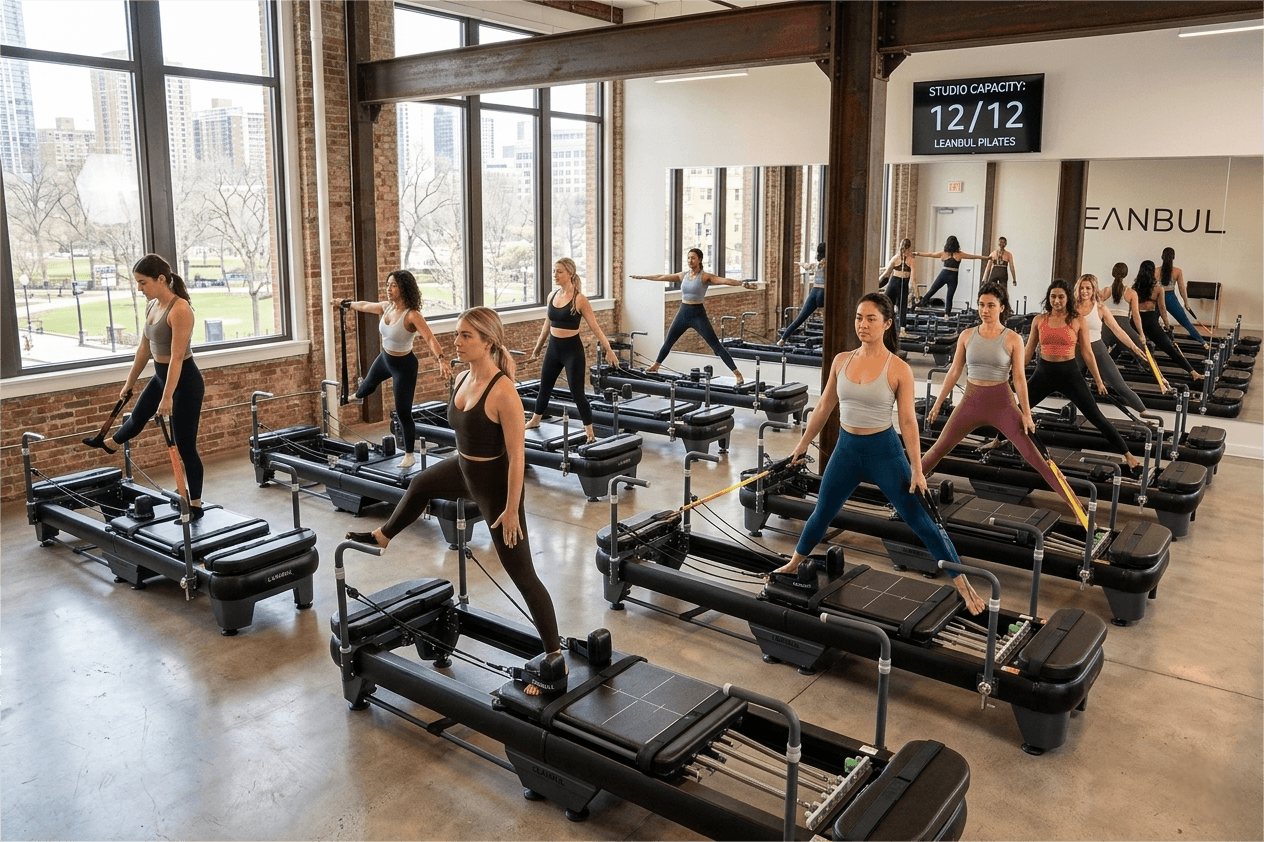
Before you buy a pilates studio: four assets and one liability
Strip the branding away and a small studio sale contains four assets and one liability:
- The lease: remaining term, rent, indexation, deposit, and the landlord’s attitude to a new tenant.
- The timetable: slots that already have names on them. A Tuesday 18:30 class with a waiting list is an asset; an empty Tuesday 14:00 slot is a cost.
- The membership base, with its average revenue per member and churn rate.
- The equipment, including whether it is commercial-rated and documented.
- The liability: classes paid for and not yet delivered, gift cards, refunds, and any employee who transfers with the business.
Most first-time buyers over-weight the fourth and under-weight the fifth.

Asset deal or share deal
There are two ways to buy, and the choice affects what you inherit.
| Asset deal | Share deal | |
|---|---|---|
| What you buy | Machines, goodwill, name, lease rights, selected contracts | The company itself |
| Historic liabilities | Stay with the seller, unless you agree otherwise | Come with you |
| Tax debts, fines, arrears | Generally stay behind | Inherited |
| Employment contracts | Transfer automatically if it is a transfer of an undertaking | Transfer with the company anyway |
| Activity licence, VAT number, contracts | Need re-papering or assignment | Continue unchanged |
| Speed | Slower, more documents | Faster, one signature |
| Best when | Seller is a clean single-site business | You need the entity, the licence history or the staff contracts intact |
For a one-room studio with six to ten machines, the asset deal is usually right: you want the lease and the timetable, not the seller’s tax history. The exception is where a premises licence or subsidy is tied to the legal entity in a way that cannot be re-papered cheaply.
Either way, two things travel with the business whether you like it or not: the employees, and the machines’ documentation.
What the fleet is really worth
Price a used fleet the way an insurer does, not the way the seller does. Start from what it costs to put the same thing in the room next month, then subtract for age, wear items and documentation gaps.
| Fleet state | How to describe it | Share of new price |
|---|---|---|
| Under 2 years, matched set, full paperwork | Near-new | 70–80% |
| 3–5 years, serviced, springs within interval | Good commercial used | 40–60% |
| 5–8 years, cosmetic wear, original springs | Project fleet | 20–35% |
| Mixed brands, unmatched springs, no DoC | Parts value | 10–20% |
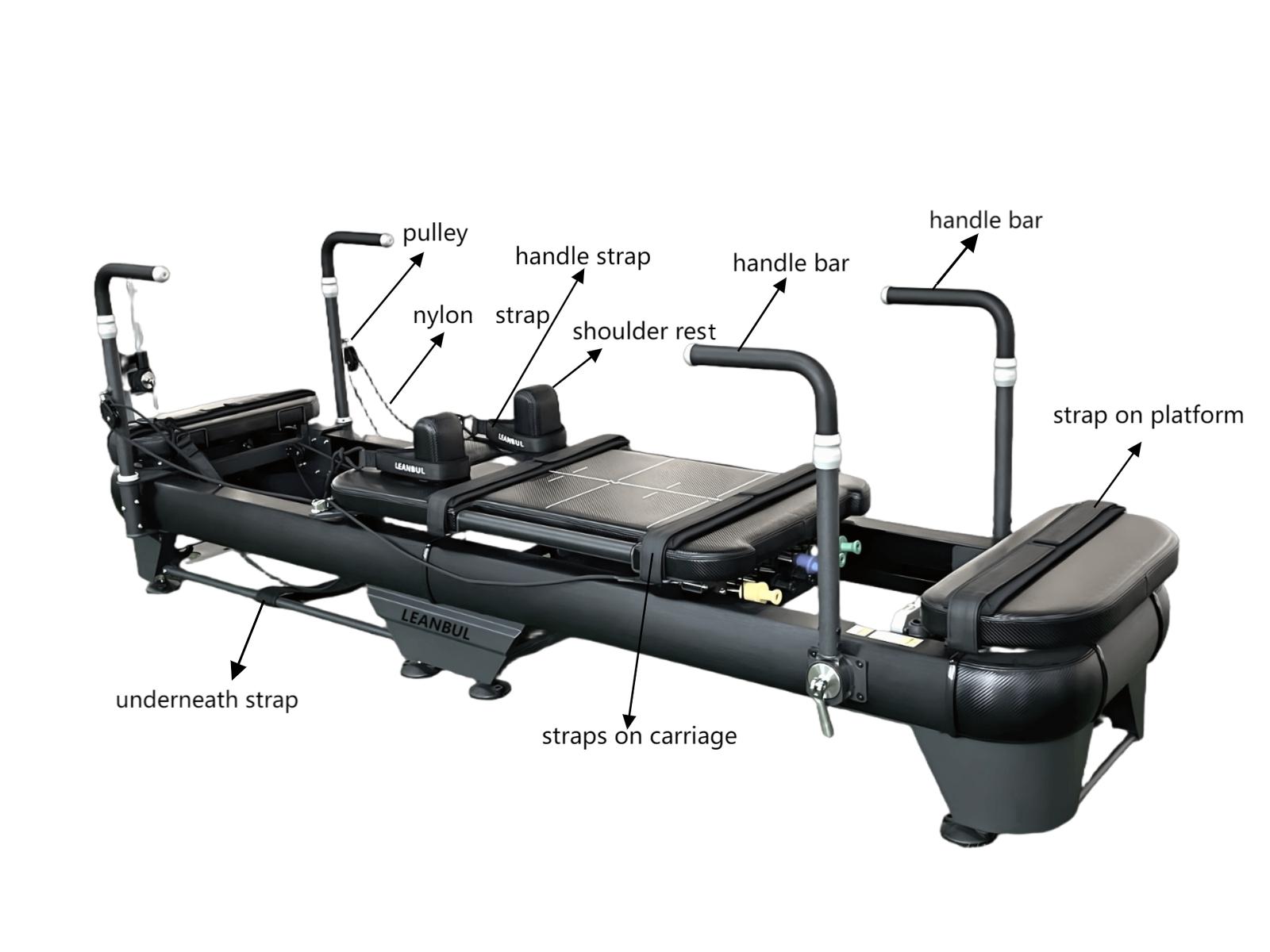
An eight-machine boutique fleet costs roughly €15,000–28,000 new depending on model and quantity: a K10 compact at the bottom, a K38 with tower at the top, with volume between six and twelve machines pulling the per-unit price down. Five years later a well-kept set of eight is worth €7,000–12,000 on a private sale, and less if the buyer has to collect it from a third floor with a lift that will not take a 2.5 m crate.
Then subtract the work it needs:
| Item | Cost per machine | When it is due |
|---|---|---|
| Full spring set | €120–250 | Every 18–24 months in commercial use |
| Re-upholstery with labour | €200–450 | 5–10 years in a busy studio |
| Wheels, bearings, rope and pulleys | €300–700 | 5–8 years |
| Full strip-down refurbishment | €700–1,300 | Year 8+ |
A “fully serviced, springs replaced last year” fleet and an “as-is, we think the springs are fine” fleet can differ by €4,000–6,000 at the same asking price. That is where the conversation belongs, not in arguing €500 off the goodwill.
Four questions separate a fleet you can run from a fleet you will replace within eighteen months:
- Is it Class S? Commercial studios need equipment rated for commercial use (EN ISO 20957-1:2024 Class S), and that rating lives in the declaration of conformity, not the brochure.
- Are the springs a matched set? Unmatched springs mean every class feels different and no instructor can cue reliably. It is also the first sign of a fleet maintained by whoever was cheapest.
- Is the model still supported? A discontinued model with no spare parts supply is a five-year machine, whatever the frame looks like.
- Has anything been structurally modified? Welded repairs, drilled rails, swapped carriage assemblies. A modified machine is no longer the machine that was certified, and if you resell it commercially you may take on manufacturer obligations under the General Product Safety Regulation.
And if the seller is bundling in home-rated units bought during a growth spurt, price them at zero and budget removal. That is a liability with a plug on it.
The VAT question that moves the price more than the machines
Here is the part of a studio purchase that nobody puts in the listing and that both accountants need to answer in writing before you sign: is this a transfer of a going concern?
Under Article 19 of the VAT Directive 2006/112/EC, member states may treat the transfer of a totality of assets (a business, or an independent part of one) as not being a supply of goods at all, with the buyer treated as the seller’s successor. Every member state has taken up that option in some form. The Court of Justice defined the concept in Zita Modes (C-497/01): the assets must form a functional whole capable of carrying on an independent economic activity, and the buyer does not have to run the same kind of business, but must intend to use the assets for taxable activity.
Why it matters to your bank balance:
- If it is a TOGC, no VAT is charged. Good for cash flow, bad for deduction: no VAT invoice means no input VAT to reclaim.
- If it is not a TOGC and the seller is VAT-registered, VAT is charged on the assets and you deduct it if you are taxable. On a €20,000 fleet that is €4,200 at 21%, real money in and out of the account.
- If the seller is under a small-business exemption (Spain, the Netherlands, Germany and Italy all have turnover thresholds), no VAT is charged either way, and the price has already absorbed it.
So a TOGC is not automatically better. For a VAT-registered buyer it can cost more than a taxable asset sale, because the deduction disappears. That is a price adjustment argument, and it belongs before signature, not after the notary.
Two rules. Get a written position from both sides’ accountants rather than a verbal “it’s a business sale, it’s fine”. And make the price conditional on it: state which VAT treatment the price assumes and what happens if the tax authority disagrees later.
The lease decides whether the deal works
A studio lease is the single largest variable in the purchase and the one buyers read last. Check these in this order:
- Remaining term against your payback. If the fleet and fit-out take five years to pay back, a lease with three years left and no renewal option is not a studio purchase, it is a countdown.
- Assignment versus sublease. Assignment transfers the tenancy; sublease makes you a tenant of the seller. Landlords prefer assignment with a guarantee, and many charge a fee for consent.
- The landlord’s consent mechanics. Consent is usually required and can be refused if your covenant is weaker than the seller’s. Ask for the landlord’s position in writing before you spend money on due diligence.
- Personal guarantees. If the seller gave one, it does not transfer; you will be asked for your own. Understand what you are personally on the hook for.
- Arrears, deposits and service charges. Get a statement from the landlord, not from the seller.
- Approved use and occupancy limit. The activity licence is normally attached to the premises and the activity rather than to the company, but the approved use, the permitted occupancy (aforo in Spain, similar limits elsewhere) and the ventilation and fire provisions were signed off for the previous operator’s business model. If the seller ran mat classes for eight and you plan twelve reformers, you may need to vary the licence before your first class, and that is a planning question, not a paperwork question.
- Reinstatement and alterations. If the fit-out is yours to remove, the removal cost is part of your purchase price.
One pattern from the supplier side: studios that change hands and add machines in month three discover the electrical capacity, ventilation and floor questions too late. If the plan includes more stations, answer the building questions in due diligence.
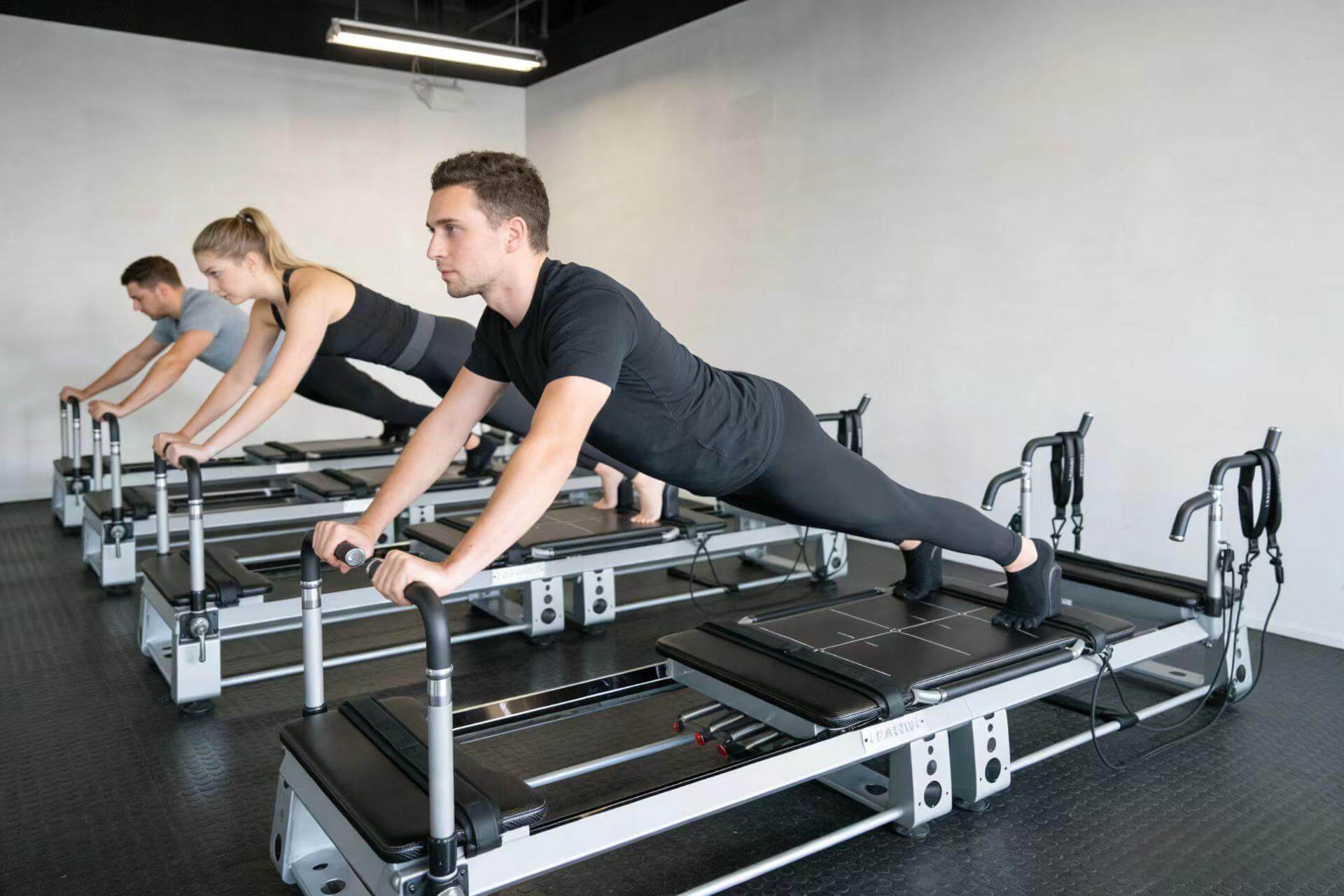
The staff come with the business
In the EU, employees transfer automatically when an undertaking, or part of one, is transferred. Directive 2001/23/EC provides that the seller’s rights and obligations under the employment contracts pass to the buyer, that the transfer itself is not valid grounds for dismissal, and that the transferor and transferee must inform and consult employees’ representatives in good time before the transfer. You cannot contract out of it, and a clause saying the buyer takes on no staff liability is worth very little.
For a studio with two or three employed instructors this is manageable but not optional. What actually costs money is the seller’s employment structure:
- Freelance instructors who behave like employees. Spain, Germany, the Netherlands and Belgium all actively police false self-employment. If you buy the client base and keep the same instructors on the same terms, the exposure can follow the work.
- Unpaid holiday, overtime and notice. These transfer with the contracts.
- Key-person risk. If the studio’s reputation is one instructor’s reputation, find out whether that instructor is staying and put a realistic notice period in the contract. A timetable that depends on one person is a timetable you are buying from that person, not from the company.
One inherited employment claim can exceed the value of the fleet. This is where an hour of local employment advice pays for itself several times over.
Prepaid classes are a liability with a nice name
Class packs are sold as revenue and delivered as obligation. At handover you are buying the obligation and, if you are not careful, not the cash.
Ask for:
- Active members and average revenue per member per month.
- The credit balance sitting in the booking system on the completion date, in classes rather than euros.
- Expiry policy, and how many credits are already expired but still being honoured as goodwill.
- Gift cards and vouchers outstanding.
- Corporate or wellness-card arrangements, and what they actually pay per visit rather than per month.
- Refund policy, and any disputes in the last twelve months.
Then subtract. A studio that collected €30,000 in December for packs delivered in January looks wildly profitable in December and is carrying a delivery obligation into the new year. Price the business on cash collected minus obligations to deliver, not on the bank statement.
The due diligence list that matters
| Document | Why you want it |
|---|---|
| Three years of accounts and VAT returns | Revenue that is not declared cannot be valued or financed |
| 24 months of bank statements | The only version of revenue that does not lie |
| Booking system export: members, credits, churn | The real asset and the real liability |
| Lease, amendments, landlord statement | The biggest variable in the deal |
| Activity licence, fire documentation, occupancy limit | Your right to run the timetable you are buying |
| Equipment list with serial numbers, purchase invoices, declarations of conformity | Age, class, provenance, and what your insurer will ask |
| Maintenance and repair log | Distinguishes a serviced fleet from a tired one |
| Employment contracts, payroll, holiday balances | What transfers, and what it costs |
| Instructor agreements and non-compete terms | Whether your timetable survives the seller’s exit |
| Insurance history and claims | Underwriting reality for the new entity |
| Supplier and software contracts | Assignability, notice periods, exit fees |
| Any disputes, complaints, refunds | The cheapest red flag to find early |
Five red flags that should stop the deal
- Revenue that only exists in the seller’s spreadsheet. No bank statements, no business to buy.
- A lease with less runway than the payback. Walk, or talk to the landlord directly before signing anything with the seller.
- Machines without documentation. No declaration of conformity, no serial numbers, mixed brands, springs of three different ages. That is an inspection problem, not a fleet.
- A timetable that depends on the seller’s following. Check how many members joined for the studio and how many for a named instructor.
- A licence that does not cover the business you intend to run. Different class format, more stations, longer hours, a hotter room: any of these can reopen the approval file.
Sequence, not speed
| Stage | What happens | Typical duration |
|---|---|---|
| Indication and exclusivity | Price range, scope, deposit for exclusivity | 1–2 weeks |
| Due diligence | Documents, equipment inspection, accountant and lawyer | 3–5 weeks |
| Landlord consent | References, covenant check, guarantee negotiation | 2–6 weeks |
| Employee information and consultation | Required before the transfer | 2–4 weeks, country-dependent |
| Contract and completion | Asset list, VAT position, price adjustment mechanism | 1–2 weeks |
| Handover | Booking system, keys, serial numbers, documentation, spare parts | 1 week |
| Transition | Rebrand, timetable changes, client communication | 4–8 weeks |
The two stages people compress are landlord consent and equipment inspection. Both are cheap done properly and expensive discovered late.
After you own it
Do not refurbish anything in the first month. Run the fleet as it is for four to six weeks and note which machines the instructors avoid, which ones squeak on the return, which stations are always booked. Wear is not evenly distributed: the two machines nearest the mirror do most of the work.
Then decide machine by machine whether to service, re-cover or replace. Our guides on how to test a reformer and repair, refurbish or replace do the arithmetic; the short version is that a machine needing rails, springs and upholstery at year eight is a replacement, not a project.
If you plan to standardise a mixed fleet, standardise in one order rather than five. Eight matched K30 reformers with one spring specification and one spare parts list run a timetable more predictably than ten machines from four brands, and instructors stop relearning the equipment every time they change room. Where the design calls for a heavier frame, the K38 takes the same spring logic with more mass.
FAQ
How much is a pilates studio worth in Europe? Small single-site studios are priced on assets plus a multiple of the owner’s earnings. Brokers specialising in boutique fitness commonly quote 2–3× seller’s discretionary earnings for a single location, higher where there is a long lease and management that is not the owner. In practice most European sales under ten machines close nearer asset value plus 12–24 months of profit, because the buyer is also taking on the lease.
Do I pay VAT when buying a studio? It depends on whether the transfer qualifies as a transfer of a going concern under Article 19 of the VAT Directive. If it does, no VAT is charged and you get no input VAT to reclaim. If it does not, VAT is charged on the assets. Get both accountants to confirm the position in writing before you sign, and make the price conditional on it.
Do the staff transfer automatically? Yes, where the transaction is a transfer of an undertaking under Directive 2001/23/EC. Contracts and accrued rights pass to the buyer, and dismissal because of the transfer is not permitted. Both sides must inform and consult employee representatives in good time. National implementations differ in procedure, not in principle.
Are the machines worth anything in the deal? Yes, but less than sellers expect and more than buyers offer. A five-year-old, well-maintained commercial fleet is typically 40–60% of new price on a private sale, before deducting springs, upholstery and transport. Machines without a declaration of conformity or serial numbers are parts value.
Should I buy the company or just the assets? For a clean single-site studio, an asset purchase usually gives you what you want (lease, timetable, equipment, name) without inheriting the seller’s tax and employment history. A share purchase makes sense when contracts, licences or staff arrangements cannot practically be re-papered.
The blunt summary
Value the lease first, the membership base second, the timetable third and the machines last. Get the VAT treatment in writing. Check every serial number and every piece of paperwork. Treat prepaid credits as a debt. And hold contingency for the first four months, because the first thing a new owner learns is which instructor was holding the studio together.
We build reformers in Spain and sell across Europe to studios, clinics and hotels, so we see both sides: buyers inheriting a fleet and buyers starting clean. If you are mid-purchase and want a second opinion on what a used fleet is worth, send the model list and serial numbers through our contact page and we will tell you what we would pay. For multi-station projects, new or standardising after an acquisition, studio solutions covers layout, delivery access and fleet sizing. Leanbul is a Spain-based manufacturer: every machine leaves with its serial number and its declaration of conformity, which is what your lawyer, your insurer and your next buyer will ask for.
