Pilates Reformers for Senior Living and Care Communities in Europe: A 2026 Buying Guide for Operators
A pilates reformer for senior living is not a stripped-down studio machine. It is a low, stable piece of resistance equipment built for people who need help getting on and off it, who train slowly and under supervision, and whose main goal is staying steady on their feet. Across Europe, care home groups, retirement communities and assisted living operators are putting reformers into their wellness rooms, and the reasons are practical rather than fashionable: falls are the single biggest injury risk their residents face, and progressive resistance training is one of the few interventions with solid evidence behind it. This guide covers what to buy, what to specify, what to avoid, and what it costs.
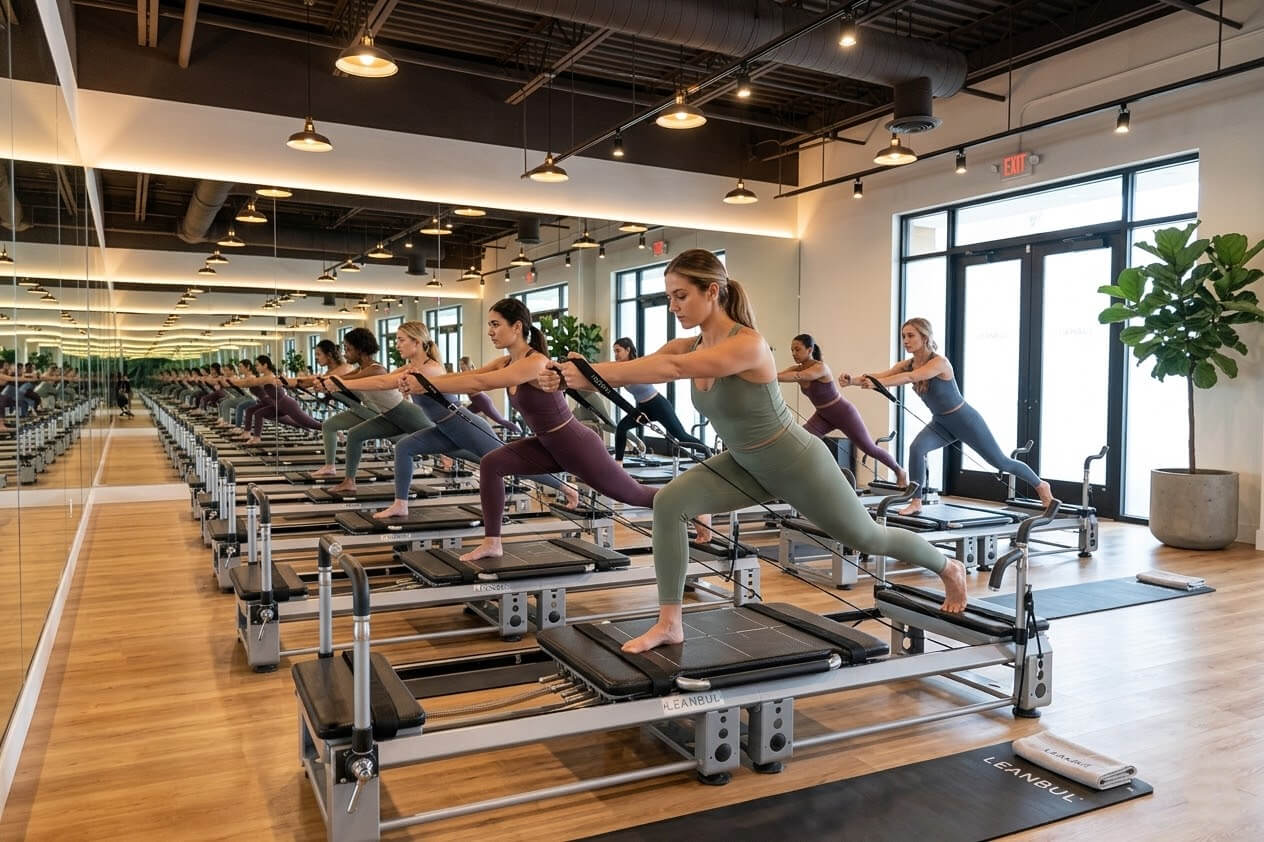
Why Senior Living Is Buying Reformers Now
The demographic case does not need much dressing up. On 1 January 2025, people aged 65 and over made up about 22% of the EU population, roughly 99 million people, according to Eurostat’s demography of Europe data. That share keeps rising, and it is the segment most likely to need structured, low-impact strength work.
The safety case is stronger still. The World Health Organization puts fatal falls at around 684,000 a year globally, making falls the second leading cause of unintentional injury death after road traffic. The WHO also notes that death rates from falls are highest among adults over 60, and that in countries like the United States, 20% to 30% of older people who fall suffer moderate to severe injuries such as hip fractures or head trauma. In the community, 30% to 40% of people aged 65 and over fall at least once a year. Inside care settings the frequency is higher again, because residents are frailer and the environment is shared.
Now look at the infrastructure. Eurostat counted approximately 3.6 million beds in nursing and other residential long-term care facilities across the EU in 2024, with the highest density per head of population in the Netherlands, Sweden, Belgium, Malta and Finland. That is a very large installed base of buildings, each of which now competes on quality of life and on demonstrable outcomes. A reformer is one of the few pieces of wellness equipment that speaks directly to the thing families and regulators worry about most: whether a resident stays mobile and upright.

The Evidence You Can Honestly Cite
Care operators answer to clinicians, families and inspectors, so the pitch has to survive scrutiny. Here is the honest version.
| Claim | What the research actually supports | Strength of evidence |
|---|---|---|
| Reformer Pilates reduces fall risk in healthy older adults | A systematic review and meta-analysis found Pilates training reduced fall risk factors in healthy older adults, with the clearest effects on balance and lower-limb strength | Moderate, but based largely on mat and small-equipment protocols |
| Reformer equipment specifically helps balance and mobility | A randomised controlled trial by Roller and colleagues tested a structured Pilates Reformer programme in older adults and assessed balance, mobility and fall-risk measures over a 10-week period | Limited, single RCT, authors called for more reformer-specific studies |
| Pilates improves strength, flexibility and function | A 2021 meta-analysis in the journal Physiotherapy concluded Pilates improves physical performance and decreases fall risk in older adults, with typical protocols of two to three sessions a week at 45 to 60 minutes | Moderate across the mixed literature |
| Reformer work replaces clinical treatment | It does not. It is a supervised exercise modality, not a therapy or a medical device | Not supported |
The pattern is worth naming. Mat-based Pilates has the deepest evidence base in older adults. Reformer-based work is studied but thinner, and the honest position is that the reformer is a well-tolerated, well-controlled way to deliver the same principles with more support and less load on the joints. If a supplier promises clinical outcomes as if they were proven device claims, treat that as a warning sign. If a supplier cannot explain the difference, keep looking.
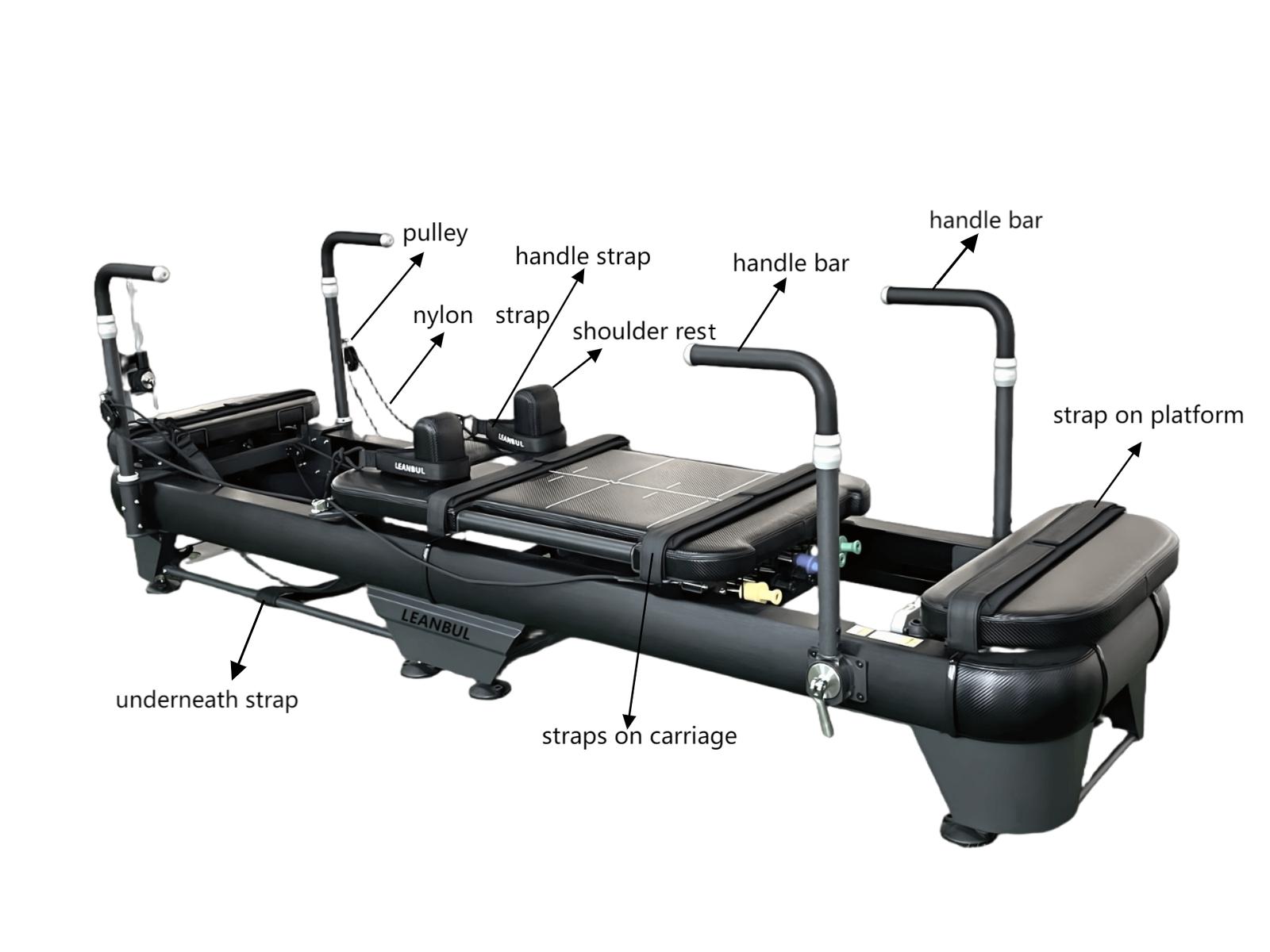
What a Pilates Reformer for Senior Living Actually Needs to Do
A standard studio reformer assumes a reasonably mobile adult who can lie down, hook their feet, and get up unaided. A care community cannot make that assumption. Four requirements change the spec.
Entry and exit safety. The carriage height, the step-over distance and the presence of a stable standing platform matter more than resistance range. A resident with reduced balance needs to sit down on the carriage before lying back, and to push up from a solid surface. Ask the supplier for a demonstration of how a person with limited mobility actually gets on and off.
Assisted transfers. Staff or instructors will frequently help a resident onto the machine. That means the frame has to be strong enough to be leaned on, with no sharp edge where a hand naturally lands, and nothing that tips under sideways load.
Adjustability across a wide body range. A single wellness room serves residents from 1.5m to 1.9m tall and from very light to heavy. Footbar positions, headrest settings and spring gradations need to work at both ends of that range without asking staff to rebuild the machine between users.
Gentle, well-graded resistance. You want the ability to drop to a soft, light resistance for a deconditioned beginner, then step up gradually. Springs that jump in large increments make that impossible.
| Specification | What senior living needs | Why it matters |
|---|---|---|
| Frame material | Powder-coated aluminium or quality hardwood | Aluminium resists corrosion in cleaning-heavy environments and is lighter to reposition |
| Carriage height | Low enough for seated transfer, with a stable platform | Reduces the risk of a fall during mounting |
| Footbar adjustment | Multiple close positions, easy to reach | Accommodates short and tall residents without strain |
| Spring gradation | Fine steps, at least 5 settings | Allows truly gentle starting loads |
| Weight capacity | Commercial rating, not home-user rating | Safety margin matters when transfers are assisted |
| Certification | EN ISO 20957 Class S, with CE documentation and a technical file | Class S is the commercial standard; home-rated machines in a shared care setting are a compliance problem |
That last row is the one operators most often get wrong. A machine rated for home use and installed in a shared care community is a mismatch between the equipment’s rated duty and how it is used. Under European product safety law, and under the General Product Safety Regulation that applies across the EU, the operator also carries duties as a distributor or economic operator. Buying a properly rated, properly documented machine protects residents and protects the organisation.
Four Ways Care Communities Deploy Reformers
There is no single right format. Most operators pick one of these and adapt it.
- A group wellness room. Four to eight reformers in a dedicated light-filled space, used for supervised classes of six to ten residents. This is the model that mirrors a boutique studio, run at a gentler pace, and it works best in larger retirement communities with an on-site activity budget.
- A small rehab and mobility nook. Two or three machines beside a physiotherapy space, used one-to-one or in pairs. This suits assisted living and care homes where residents have clinical needs and a visiting therapist runs sessions.
- A shared wellness suite. The community provides the equipment and partners with a local studio or instructor who brings clients in during quiet hours. The asset earns its space back.
- A demonstration machine. One reformer used for assessments, family tours and short taster sessions, with residents referred to a partner studio for ongoing work. Low cost, high marketing value.
Most European communities we quote start with two to four machines and expand once they see usage. A single machine in a corner with no programming behind it is the classic mistake, and it is an expensive one.
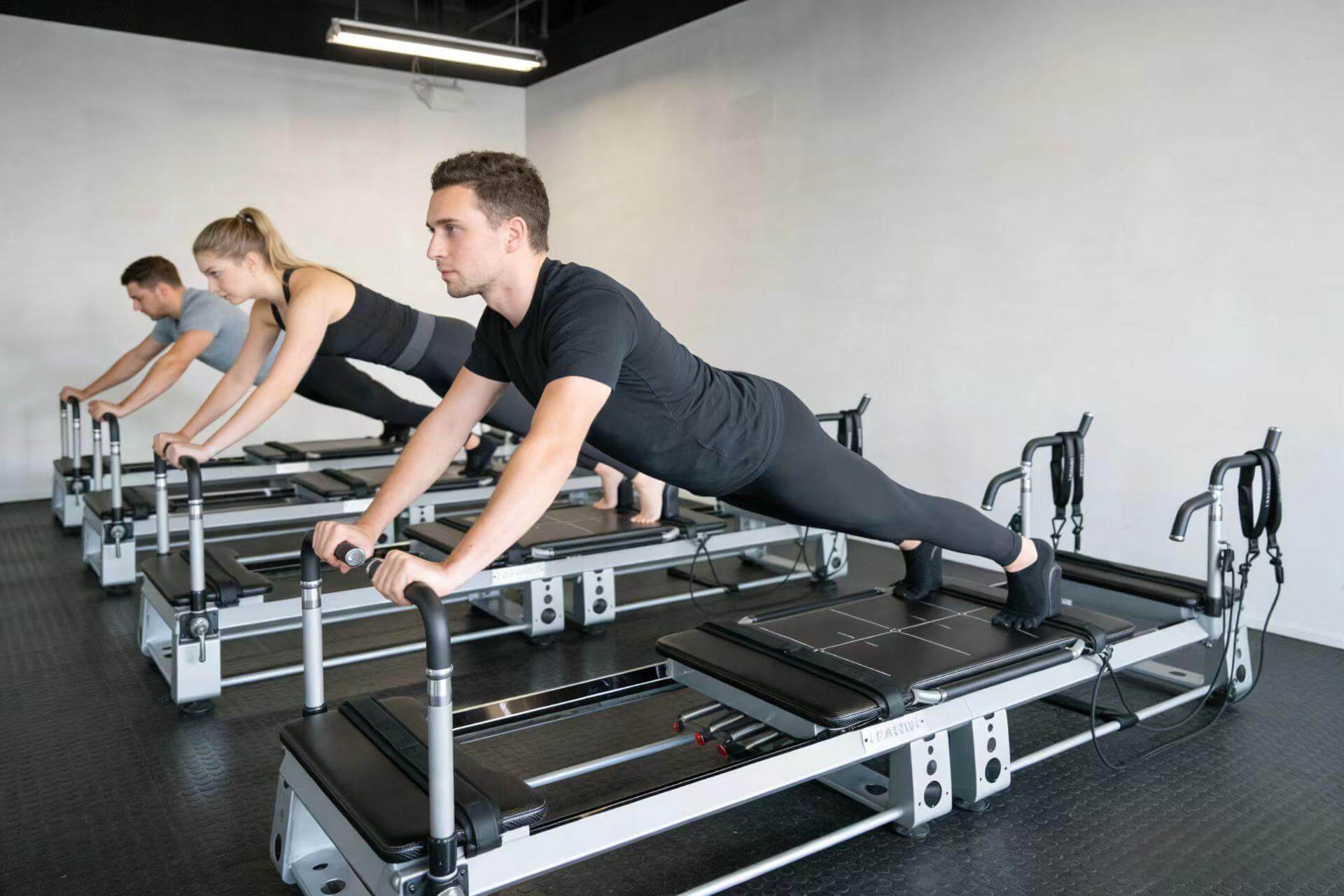
Room Planning, Supervision and Insurance
Space and staffing decide whether a reformer programme succeeds as much as the equipment does.
Plan on roughly 3m by 1.5m of working area per machine, including the space a helper needs alongside. A four-machine room therefore needs around 60 to 70 square metres once you add circulation, storage and a clear exit route. Flooring should be non-slip and forgiving, and the room should be well lit with no trailing cables. The machine is low to the ground, so a fall from it is more survivable than a fall from a treadmill, but the surrounding surfaces still matter.
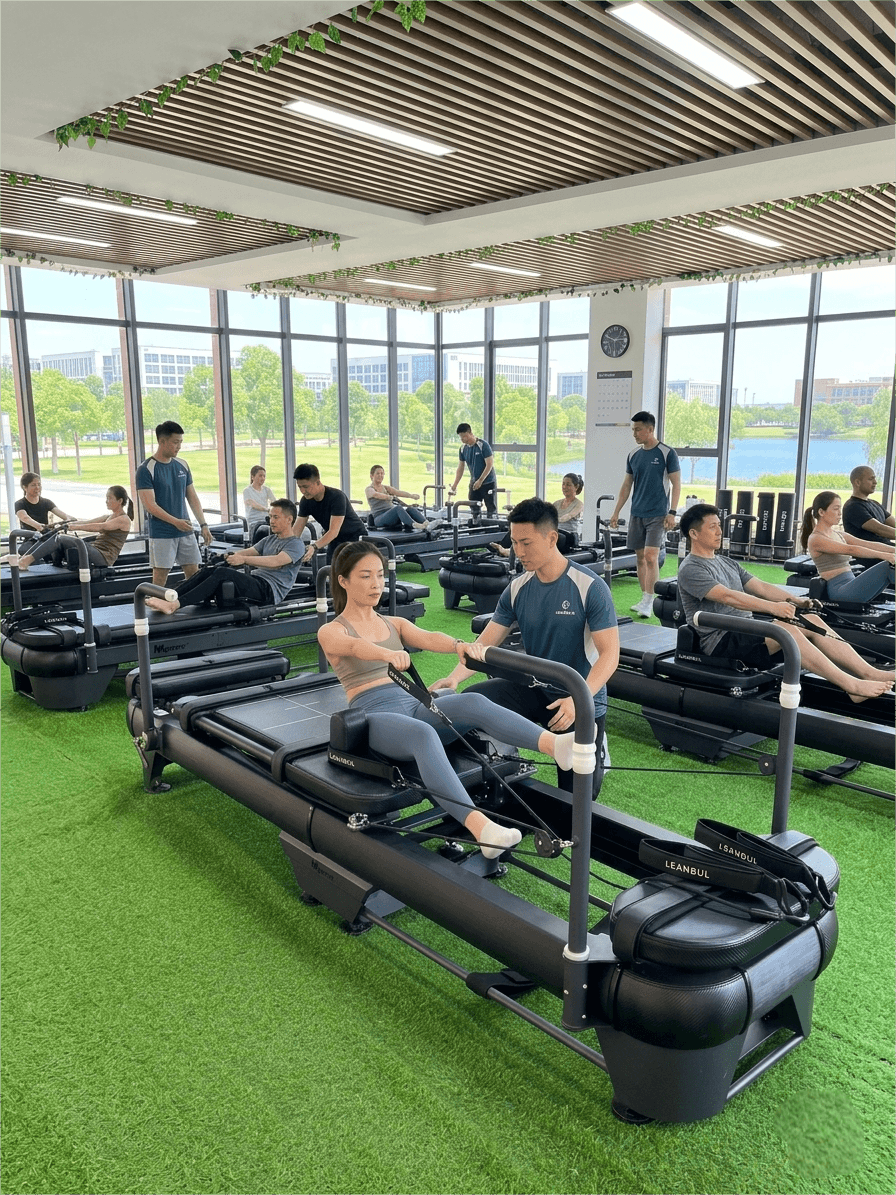
Supervision is not optional. The evidence points to structured, instructor-led programmes producing better and more consistent results than unstructured use, and other research on exercise adherence shows that the people who need it most often drift away from self-directed programmes. In a care setting this is even more true. One certified instructor per six to eight residents is a sensible starting ratio, with a movement screen before anyone begins.
Check two things with your insurer before installation. First, that your liability and contents cover reflects the replacement value of the new equipment, because underinsuring a 10-machine room by even a modest amount can void a claim. Second, that your instructors’ professional cover and any partner studio’s cover extend to working on your premises. We cover the insurance angle in more depth in our guide to pilates studio insurance in Europe, and the same logic applies to a care community.
Procurement, Funding and Compliance in Europe
European care operators rarely pay full list price out of a wellness budget, and there are routes worth exploring.
- Prevention funding. In Germany, statutory health insurers are required to subsidise certified prevention courses, and movement categories that include Pilates qualify. Similar exercise-referral and prevention schemes exist in several other member states. Equipment that supports a certified programme can sit behind that funding.
- Intra-EU purchasing. If you buy from a manufacturer based in the EU, there is no customs duty and no import VAT to reclaim at the border. The supplier charges VAT under the reverse-charge mechanism for business buyers, which keeps the landed cost predictable. This is the single biggest reason European operators now buy from European manufacturers rather than importing.
- Documentation. Ask for the declaration of conformity, the EN ISO 20957 test reference and a technical file, not just a badge on the frame. A properly documented machine is easier to defend at an inspection and easier to insure.
- Whole-life cost. Springs, straps and carriage pads are wear parts. Ask what they cost and how quickly they are available from within Europe, because a machine that needs a three-month parts shipment is a dormant machine.
What It Costs
Expect commercial-grade, EN ISO 20957 Class S reformers in the roughly EUR 1,900 to EUR 3,500 per unit range when bought directly from a manufacturer in a small fleet, and toward the lower end when a community orders six or more. Entry-level machines exist below that band, but they tend to be home-rated, and for a shared care setting that is a false economy.
A realistic four-machine wellness room lands somewhere between EUR 9,000 and EUR 14,000 for equipment, before flooring, lighting and programming. Compare that with the cost of a single serious hip fracture in terms of care hours, family distress and reputation, and the arithmetic is not difficult. For the full pricing picture across machine classes, see our 2026 European reformer cost guide.
FAQ
Can residents with limited mobility use a reformer safely? Yes, with supervision and adaptations. Because the user lies down, the reformer removes balance demands that standing exercises impose, which is exactly why it suits deconditioned residents. Entry and exit still need to be planned, and a movement screen should come first.
Do we need a medical device certification to install reformers in a care home? No, provided you present the reformer as exercise equipment and not as a treatment. The reformer is a fitness machine governed by EN ISO 20957 and general product safety law. The moment you make therapeutic or diagnostic claims, you enter medical device territory and a different regulatory framework.
How many reformers should a community start with? Two to four is the usual starting point. That is enough for small supervised groups or one-to-one sessions, and it lets you measure usage before committing to a full room.
Which machines are best suited, wood or aluminium? For a care environment, aluminium has an edge because it is lighter to reposition and easier to clean and disinfect. There is a full comparison in our wood vs aluminum reformer guide.
How long do we need to run a class to see benefit? The protocols in the research typically run for ten weeks or longer, at two to three sessions a week. Meaningful change in balance and strength usually shows up across that window, not in a fortnight.
Choosing a Supplier from Europe
For a care community, the supplier matters almost as much as the machine. You want a manufacturer inside the EU, so VAT and logistics stay simple, with spare parts held in Europe and a service partner who can reach you in days rather than months. Leanbul builds commercial reformers in Spain for exactly this kind of project, from two-machine wellness nooks to full community rooms. If you are scoping a senior living installation, our pilates studio solutions page shows how we configure mixed fleets, the K30 commercial reformer is the model most care and medical operators choose, and you can raise a specific requirement through our contact page. We would rather help you specify the right room than sell you a machine that sits unused.
