Importing a Pilates Reformer into Serbia, Bosnia, Montenegro and Albania: The 2026 Buyer’s Guide
If you run a studio in Belgrade, Sarajevo, Podgorica or Tirana, importing a pilates reformer from Spain is not the same transaction your colleague in Slovenia makes. You are importing. That single fact sits on top of everything else: the price you negotiate is not the price you pay, the warranty is harder to enforce, and the spring that breaks in month fourteen has to cross a border to reach you.
None of this makes the purchase a bad idea. A commercial machine from inside Europe still lands in these markets cheaper than an equivalent American brand, and often cheaper than a Chinese unit once you count the freight, the spares and the second-hand value. But you need to plan the import deliberately, because the four countries below have four different tax regimes, four currencies and one shared problem: service.

The four markets at a glance
| Serbia | Bosnia and Herzegovina | Montenegro | Albania | |
|---|---|---|---|---|
| EU member | No (candidate) | No (candidate) | No (candidate) | No (candidate) |
| Currency | RSD | BAM, currency board at €1 = 1.95583 | EUR (adopted unilaterally in 2002) | ALL |
| Standard VAT | 20% (reduced 10%) | 17%, single rate | 21% (reduced 7%) | 20% (reduced 6%) |
| Preferential EU trade | Yes, via the Stabilisation and Association Agreement | Yes, via the SAA | Yes, via the SAA | Yes, via the SAA |
| Who is the importer | Your company, with a local customs agent | Your company, through a customs broker | Your company | Your company |
| Practical headache | Cash-flow timing of import VAT | Two entities, one customs system, slow paperwork | Small market, few brokers handle fitness equipment | Customs valuation queries on high-value single units |
The VAT figures come from the authorities themselves: Bosnia’s Indirect Taxation Authority sets a single 17% rate with no reduced bands, Serbia runs 20% and 10%, and PwC’s 2026 tax summary for Albania confirms 20% with a 6% reduced band. Montenegro applies 21% and 7% and, since 2002, uses the euro without being in the eurozone — which is convenient for pricing but does not make it an EU market.
What changes when you import a pilates reformer into Serbia or its neighbours
Inside the EU, buying a reformer from Spain is almost boring. No duty, no customs agent, VAT handled as an intra-community acquisition on your own return, delivery in one to three weeks on a groupage pallet. Cross into Serbia or Albania and four new layers appear.
Duty, and the paperwork that removes it. Each of these countries has a Stabilisation and Association Agreement with the EU that establishes a free trade area, so goods originating in the EU can enter at a preferential rate. The word doing the work is originating. Your supplier has to give you a proof of preferential origin — normally a EUR.1 movement certificate, or an origin declaration on the invoice for smaller consignments — and the machine has to meet the origin rules, not merely be shipped from Spain. Without that document you pay the third-country rate, which is where importing gets expensive and where a lot of studios lose the margin they thought they had negotiated.
Ask for this before you sign. “Can you supply a EUR.1?” is a five-word question that separates manufacturers who export regularly from manufacturers who do not.
VAT at the border, paid in cash. Import VAT is charged when the goods clear, not when you sell your first class. If your business is VAT-registered locally you recover it, but the money is gone for a month or two. On four machines at €2,400 net that is roughly €9,600 of goods and around €1,900 of VAT sitting with customs for a while. Studios that order a fleet in the same month they sign a lease are the ones who discover this the hard way.
You are the importer of record. That makes you responsible for the declaration, the classification, the valuation and the accuracy of all three. A customs broker in Belgrade or Sarajevo charges €80 to €200 per clearance; on a single-machine shipment that is real money, on a six-machine container it is noise. This is the strongest argument for ordering the fleet once rather than adding machines one at a time.
Safety documentation becomes contractual instead of legal. CE marking and the General Product Safety Regulation are EU law. In Serbia or BiH nobody will stop your machine at customs for lacking a declaration of conformity. But your insurer, your corporate client and your landlord’s risk assessor may all ask for the same paperwork, and a Class S commercial rating under EN ISO 20957-1:2024 is what proves the machine was built for 100,000 test cycles rather than 12,000. Treat the test report as a commercial asset, because that is what it is.
The cost nobody models: service and spares
The thing that decides whether the purchase works over seven years is not the price. It is the parts pipeline.
A studio in Lyon with a broken carriage bearing calls the distributor, gets the part in four days under EU rules, and pays nothing at the border because there is no border for goods. A studio in Niš orders the same bearing, and it becomes an import: a commercial invoice, a customs declaration, a broker fee, and — on a €40 part — a clearance cost that can exceed the part. If the part is upholstery, add lead time: Gratz Pilates quotes around ten days for most non-upholstered parts but up to three months for upholstered items, and those are US lead times before export paperwork.
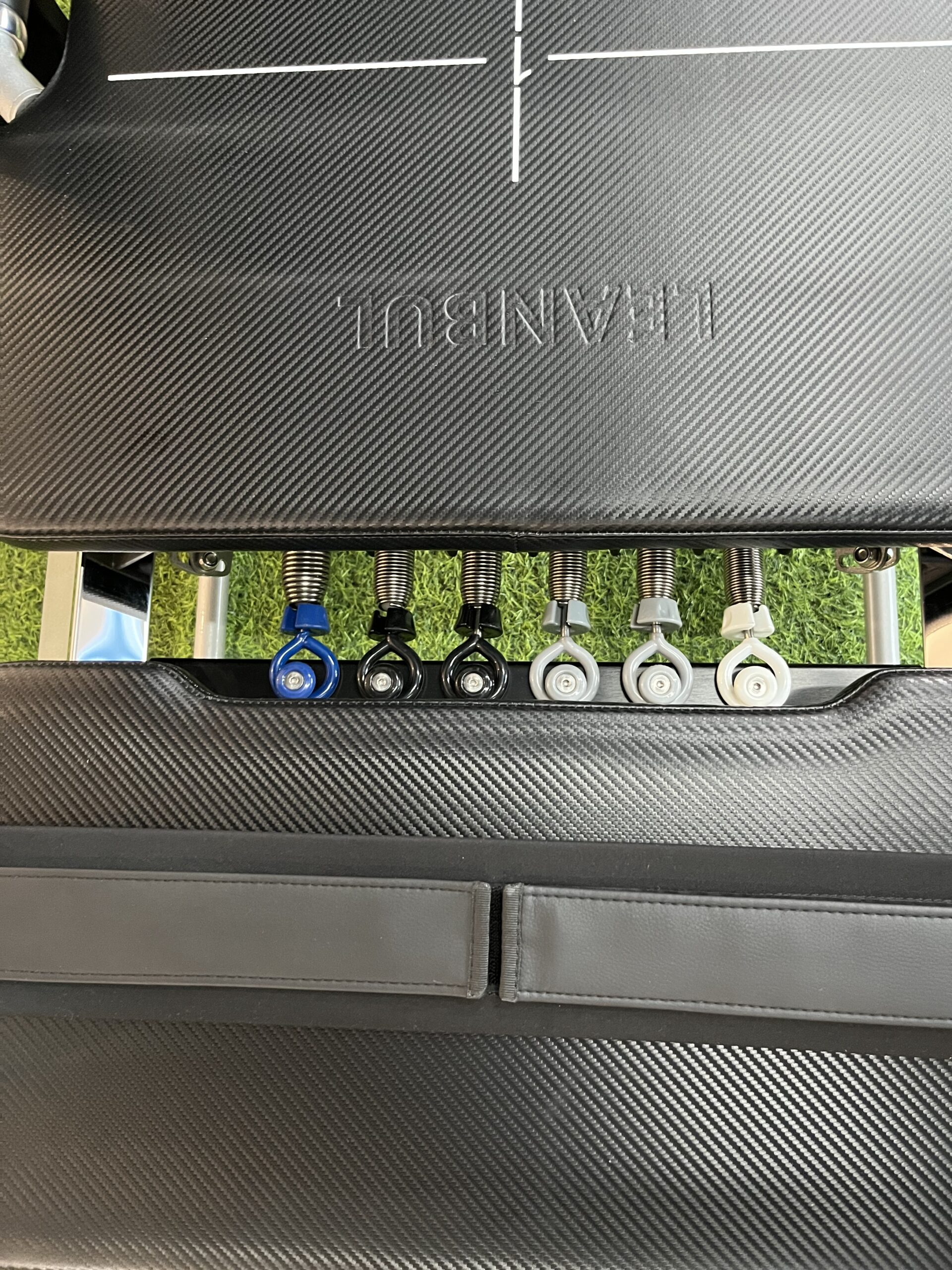
So buy the first spare-parts kit with the machines, on the same invoice, in the same customs entry. Springs, ropes, wheels, a pulley set, a footbar pad. Then the parts are already in the country, duty-paid, and the only cost of a failure is the labour to fit them.
Order the machines this way and the arithmetic works in your favour:
| Line | Four reformers, delivered DAP Belgrade |
|---|---|
| Machines, net | €9,600 |
| Freight, Spain to Serbia, pallet group | €500–900 |
| Import duty with valid EUR.1 | 0% |
| Import duty without proof of origin | third-country rate applies |
| Import VAT, recoverable | ~20% of dutiable value, cash out 1–2 months |
| Broker and clearance | €150–300 |
| First spare-parts kit | €350–600 |
| Indicator of total cash needed at delivery | €12,500–13,500 |
The last line is the number to take to your bank, not the €9,600.
Country notes that change the plan
Serbia. The largest of the four markets and the most straightforward to import into, provided your paperwork is clean. VAT registration is compulsory once turnover passes RSD 8 million — around €68,000 — and Serbia’s e-invoicing system (SEF) is part of doing business there, so your accountant needs to be in the loop before the first invoice, not after. Pay in euro if you can; the dinar leg only adds a conversion cost nothing else.
Bosnia and Herzegovina. A single 17% VAT rate administered at state level is the simple part. The complication is that the country has two entities and a district, and while indirect taxation is centralised, company registration, permits and inspections are not. Budget extra weeks for the first import and use a broker who has done fitness equipment before. The currency board has held the mark at 1.95583 to the euro for decades, which makes euro pricing stable but does not remove the conversion step.
Montenegro. Euro in your pocket, small market, and a coastline with heavy seasonal demand. A studio in Budva and a studio in Podgorica have completely different utilisation curves and should not buy the same fleet in the same month. Because the market is small, few brokers specialise in fitness equipment, so confirm the HS classification with the customs administration before shipping rather than arguing about it at the terminal.
Albania. 20% VAT, and the customs conversation that catches people is valuation: a single high-value machine attracts more scrutiny than a container of mixed goods. Keep the proforma invoice, the freight invoice and the payment record consistent — the classic delay is a declared value that does not match what the bank transferred.
What to put in the contract
Five clauses do most of the work when you are buying across a border.
- Delivery term. DAP to your door is the sane default: the supplier handles export and freight, you clear import in your own name. DDP sounds simpler but usually means the supplier needs a local importer of record, which most EU manufacturers do not have in Belgrade or Tirana.
- Proof of origin. Named explicitly, with the certificate type, and a commitment to reissue if customs rejects the first one.
- Spare parts with the shipment. Listed by part number, priced, and shipped on the same invoice.
- Warranty execution by parts shipment. Frame and structural warranty in years, wear items excluded, and — the clause that matters — a stated response time for sending a replacement part by courier, because a warranty that requires returning a 90 kg machine to Spain is not a warranty.
- Parts availability in writing. A commitment to supply wear parts for a set number of years after the model is discontinued. Ask what happens in year eight.
Standards and insurance, since nobody at customs will ask
The absence of enforcement is not the absence of risk. If a spring anchor fails during a class and a client is injured, the question your insurer asks is whether the equipment was suitable for commercial use and properly maintained. A CE declaration, an EN ISO 20957-1:2024 Class S test report, a maintenance log and matched replacement springs are the four documents that answer it.
Studios that buy on price alone often cannot produce any of the four, and they discover it at the worst possible moment.
FAQ
Is it cheaper to buy a reformer from China than from Spain, for a studio in Serbia? Usually not, once you count the full picture. Sea freight to a Balkan port, customs, a longer replacement-parts pipeline and lower resale value eat most of the difference. Where Chinese units do win is on very small orders where the EU supplier’s minimum order quantity pushes the unit price up.
Do I need CE marking to sell reformer classes in Serbia or Albania? Not legally — CE is EU market legislation. Do you need documented commercial-grade construction? In practice yes, because insurers, franchise partners and corporate clients ask for it.
Can I claim back the import VAT? If your studio is VAT-registered in the country of import, yes, through your regular return. If you are below the registration threshold, the VAT becomes a real cost, which can change the buy-versus-lease decision.
How long does delivery take? From Spain, allow three to five weeks to a Balkan address for a stock model, plus one to two weeks of clearance if your broker is new to the product. Factory orders run six to twelve weeks before freight.
What if the machine arrives damaged? Photograph the crate before opening, note the damage on the carrier’s delivery document, and notify the supplier the same day. A damage claim that is reported after the pallet is unpacked is much harder to win.
Buying from a manufacturer inside Europe
We build commercial reformers in Spain and ship them across Europe, including to studios outside the EU. What we can do for a buyer in Serbia, Bosnia, Montenegro or Albania is narrower than what we do in Germany — but the parts that matter are the same: a Class S machine, a EUR.1 for preferential entry, a spare-parts kit on the same invoice, and a documented answer for your insurer.
If you are pricing a fleet and want the landed cost for your city rather than a list price, send us the machine count and the delivery postcode through our contact page, or start from the K30 commercial reformer and the K38 premium model. Studios fitting out a full room usually find the studio solutions page more useful than the single-product pages, because the layout and the parts list matter as much as the machine.
