The Pilates Market in the Czech Republic in 2026: Growth, Studio Trends and Equipment Demand
Czechia is a small country with a surprisingly dense reformer scene in its capital, and that mismatch is the whole story for anyone selling equipment here. Prague has more boutique reformer studios than its population would suggest, while outside the capital the market thins out fast, and the national exercise statistics are below the European average. So this is a market you enter selectively.
This is what the pilates market in the czech republic looks like in 2026, what a reformer class costs in Prague, where the demand actually concentrates, and what it means if you are buying equipment for a studio.

A mid-sized market with a concentrated premium tier
Czechia has a population of roughly 10.9 million, and about 1.3 million of those people live in Prague. That concentration matters more here than in Germany or France, because premium reformer pricing depends on the kind of white-collar, expat and higher-income client base that clusters in the capital.
The national picture is less encouraging. A study published by the Czech National Sports Agency (NSA) in 2025 found regular exercise participation below the European average, with Czechs reporting 38% regular exercisers against an EU figure of 42%. State spending tells a similar story: the Czech Statistical Office puts public sport expenditure at around CZK 9.3 billion in 2024, just 0.42% of the state budget.
At European level the sector is growing. EuropeActive and Deloitte’s European Health & Fitness Market Report 2026, covering 2025, put the continent at 75.5 million club members, 67,515 clubs and €39.1 billion in revenue, with market penetration of 9.3%. Czechia sits inside that trend but below its leaders, which is exactly why the boutique reformer tier is still being built rather than defended.
The practical result: the premium tier is a Prague story first, a Brno story second, and quieter everywhere else.
The studios and operators setting the pace
The Czech market has two layers. On one side sits the big domestic gym chain; on the other, a growing set of independent reformer studios.
Form Factory is the largest Czech fitness chain and the one that normalises reformer work for a mainstream audience. It runs Pilates Reformer classes as a paid add-on rather than part of the standard membership, and it accepts MultiSport cardholders. That is a useful signal: a big chain has decided reformer is worth charging separately for.
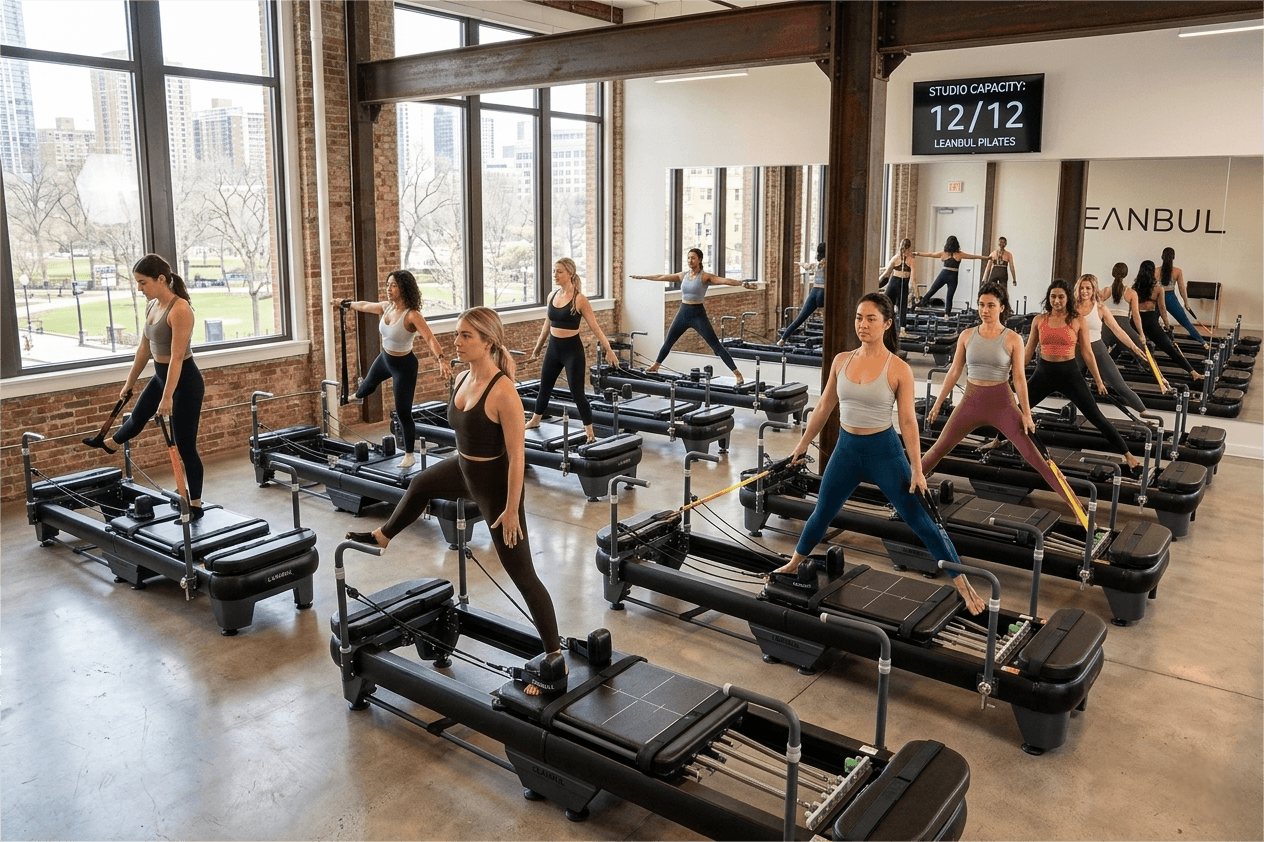
ReformerX, on Jungmannovo náměstí in central Prague, is the boutique benchmark. It uses Merrithew machines and has started selling its concept onwards: a turnkey studio, including space, reformers, a booking website, instructor recruiting and marketing, from CZK 1,600,000. When a studio starts franchising its format, the category has stopped being experimental.
Joia Studio, near Ve Smečkách in the centre, prices a reformer class at 500 CZK and a mat class at 315 CZK, and rents its reformer room out at CZK 1,200 per hour for a capacity of ten. That rental line is worth noting on its own: instructor space-sharing is now a real part of the Prague market, not a side hustle.
Pilates & Flow runs reformer classes for groups of five at 500 CZK, or 460 CZK with a class credit, and private sessions from 1,000 CZK. Pilates Praha sells one-to-one sessions and pitch packs that settle around 1,350 CZK per class across a ten-class block.
Two structural features keep showing up. First, the boutique end runs small: three to five machines is common, and a Prague studio guide published in 2026 draws the line explicitly between small studios of 3–5 reformers and larger ones with 10 or more. Second, the format is riding a wider wave. Mariana Tek, the booking platform behind a large share of boutique fitness, reported 15 million reformer bookings worldwide in 2025, up 66% on 2024, and named reformer its most-booked workout format. Czechia is catching that wave rather than leading it.
What a reformer class costs in Prague
Prague pricing sits below Western capitals but is not cheap in local terms. For reference, the koruna has traded around 25 to the euro, so a 500 CZK class is roughly €20.
| Studio | Published price (2026) | Format |
|---|---|---|
| Joia Studio | 500 CZK per reformer class; 315 CZK mat | City-centre boutique, individual and group |
| Pilates & Flow | 500 CZK reformer (460 with credit); private from 1,000 CZK | Reformer groups of 5 |
| Pilates Praha | 1,350 CZK per class across a 10-class block; 1,500 CZK single | One-to-one |
| ReformerX | Premium boutique pricing; concept franchise from CZK 1,600,000 | Premium boutique, Merrithew machines |
Group reformer classes in Prague mostly land between 350 CZK and 500 CZK depending on studio, time and instructor, with at least one studio moving its single-class price from 350 CZK to 390 CZK during 2026. Private sessions run from 1,000 CZK to 1,500 CZK.
The studio economics that decide the purchase
A reformer studio here lives on the same four numbers as anywhere else: rent per square metre, class price, machine utilisation and the cost of the machines.
| Lever | Typical picture in Czechia (2026) | Why it matters |
|---|---|---|
| Rent | Prime Prague office space near €30 per m² per month in the city centre, €18–20.50 inner city, €15–16.50 outer | Rent is the fixed cost that punishes a half-full room |
| Class price | roughly 350–500 CZK per group reformer class | Sets revenue per slot |
| Machine footprint | about 3 m × 1.5 m per reformer plus circulation | Caps how many machines a given rent bill can carry |
| Equipment | factory-direct commercial reformer in the €1,900–3,500 band | Determines payback time and replacement cycle |
The rent figures come from iO Partners’ Prague office market data for the end of 2025, which put prime city-centre rent at €30 per square metre per month. A studio does not need Class A office space, so the outer-city band is the realistic reference for a reformer room.
The point is the same as everywhere in Central Europe. A cheap reformer that needs replacing after five years is a worse deal than a commercial machine that lasts fifteen, because a young studio cannot absorb both the downtime and the re-purchase while it is still building its client base.
What this means for reformer demand
Three things follow for studios and gyms buying in Czechia.
The boutique tier is still forming, not just renewing. Western Europe is largely a replacement market in 2026. Czechia still has genuinely new reformer demand in Prague and Brno, alongside the ordinary replacement cycle, which is unusual in the EU.
Class S commercial specification is the baseline. A studio running supervised group classes is a commercial operation. That means machines built and documented to EN ISO 20957 Class S with a declaration of conformity on file. The newer fitness-club framework in EN 17229:2026 also touches how equipment is placed and supervised in a club setting; we covered it separately in our guide to EN 17229.
Buying inside the EU beats importing from further away. Czechia is in the single market, so a reformer bought from a manufacturer in Spain crosses the border with no customs clearance and no import duty, and the VAT is handled by reverse charge on the buyer’s own Czech return. The wrinkle is currency: Czechia uses the koruna, not the euro, so unlike a euro-zone buyer there is real CZK exposure to plan for. That is an argument for fixing the contract price and the payment timing, not for buying from further away.
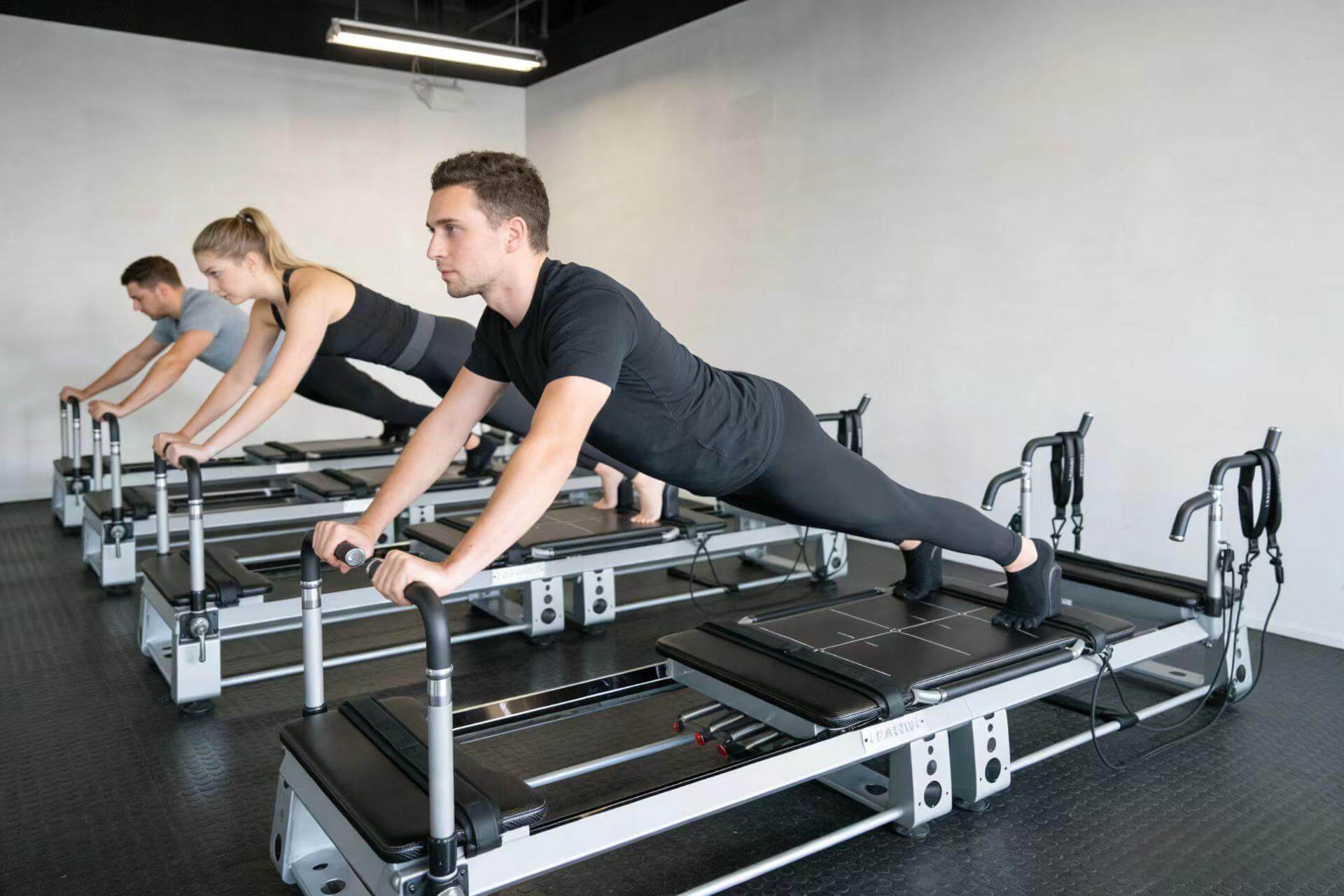
For layout, budget roughly 3 metres by 1.5 metres per machine plus circulation. A six-reformer boutique with a small reception and storage usually lands between 90 and 130 square metres. Our collection sets out the range, and the K30 commercial reformer is the machine most small-footprint studios start with.
Geography decides the competition
Prague dominates. The city supports distinct clusters — Vinohrady and Žižkov in Prague 3, Nusle and Pankrác in Prague 4, Smíchov and Dejvice further west — and a studio there competes on format and instruction, not on being the only option in town.
Brno is the clear second market, with a university population and a growing boutique scene. Ostrava, Plzeň and Olomouc have thinner reformer supply; a single well-run studio can own the local market there, but the pool of clients willing to pay premium reformer prices is smaller and more price-sensitive. Czechia rewards a studio that picks its city deliberately rather than one that chases the biggest population.
FAQ
Is the Pilates market in the Czech Republic growing? Yes, but unevenly. Prague’s boutique reformer scene is expanding and starting to franchise, while national exercise participation runs below the European average, so growth is concentrated in the capital and a few regional cities rather than spread across the country.
How much does a reformer class cost in Prague? Group reformer classes mostly run from about 350 CZK to 500 CZK, with premium studios at the top of that range. Private sessions run from roughly 1,000 CZK to 1,500 CZK.
Is Czechia a good place to open a Pilates studio? It can be, especially in Prague and Brno, where demand for reformer work is proven. The caution is that national participation trails the EU average and wages lag Western Europe while central-Prague rents have caught up, so the numbers work only with disciplined pricing and high machine utilisation.
Do Czech studios need CE-marked reformers? Yes. A reformer placed on the EU market carries CE marking and a declaration of conformity, and a commercial studio should specify machines rated to EN ISO 20957 Class S. Insurers and, increasingly, the EN 17229 fitness-club framework both push in this direction.
Are there VAT consequences when buying a reformer from another EU country? Yes, and they are favorable. Intra-Community acquisitions are not subject to import duty or customs clearance, and the Czech buyer accounts for VAT under the reverse-charge mechanism, reporting and reclaiming it on the same return. The live variable is the koruna-euro exchange rate, which you can manage through contract terms.
Building the case
Czechia is a market of one strong city and a handful of secondary ones, and it rewards a studio that treats it that way. The premium tier in Prague is competitive and now professionalising; everywhere else is still open. Leanbul is a Spain-based manufacturer of commercial reformers. We ship across the EU without customs friction, document every machine to the standards European studios are held to, and quote in euros. See the full collection, explore Pilates studio solutions, or get in touch and we will price a Czech studio fit-out for you.
