The Pilates Market in Poland in 2026: Growth, Studio Trends and Equipment Demand
Poland is the biggest fitness market in Central Europe and one of the least saturated in the EU, and that combination is now pulling reformer Pilates into the mainstream. Membership penetration sits near 7%, well below the European average, while the large operators keep opening clubs and the boutique reformer tier keeps multiplying in Warsaw, Kraków and the Tricity. For anyone weighing up a reformer purchase, Poland in 2026 offers headroom that the mature Western markets no longer have.
This is what the pilates market in poland looks like in 2026, what a reformer class costs, where the demand actually sits, and what it means if you are buying equipment for a studio.

A large country that is still under-penetrated
Poland has a population of around 36 million, which makes it the largest market in the region by some distance. What matters for equipment is that a much smaller share of those people hold a gym membership than in Germany, the Nordics or Iberia.
- Polish fitness penetration runs near 7%, against roughly 9.3% for the whole of Europe in 2025. The gap is not a rounding error; it is the reason every chain in the region is still opening new sites.
- For scale, EuropeActive and Deloitte put Europe at 75.5 million members, 67,515 clubs and €39.1 billion in revenue for 2025, with revenue growing 9.1% year on year.
- More than seven million Poles live in a municipality with no chain-operated club at all. That is the base the operators are chasing.
The result is a market where the supply of clubs is expanding faster than the habit of joining one, which is good news for anyone selling into it but bad news for a studio that cannot differentiate. In Poland, reformer Pilates is one of the clearer ways to differentiate.
The operators setting the pace
Three groups shape the Polish market, and their plans are the reason equipment demand keeps growing.
Benefit Systems runs the MultiSport benefit card, and it has been buying and building its own clubs to feed that programme. Its stated strategy targets 370 to 400 company-owned clubs in Poland by 2027, serving 1.9 to 2 million sports card users, with the wider group aiming for 600 to 650 clubs including its foreign segment. The group’s Polish revenue rose about 17% to roughly USD 771 million in 2025, and it plans to add around 130,000 sports cards in 2026.
Xtreme Fitness is now the largest fitness chain in the country by site count. It is adding more than 80 clubs this year to reach roughly 250, plus about 40 Xtreme Kids locations, with a longer-term ambition of some 750 sites across Europe.
Medicover operates Well Fitness and Just Gym under an ownership model, giving it a multi-brand position in the mid-market.
The consultancy Ken Research expects the Polish sports equipment and fitness clubs market to reach about USD 4.29 billion by 2032, growing at a 6.6% compound annual rate from 2025. Its own note on where that growth concentrates is telling for reformers: recurring memberships, corporate benefit contracts, compact clubs in underserved municipalities, and premium commercial equipment.
Where reformer Pilates actually sits
Poland does not have a national reformer chain on the scale of Club Pilates or JETSET, and that is precisely what leaves room for independents. The boutique reformer tier is concentrated in Warsaw, Kraków, Wrocław, the Tricity (Gdańsk, Gdynia, Sopot), Poznań and the Silesian conurbation around Katowice.
Two structural features show up again and again.
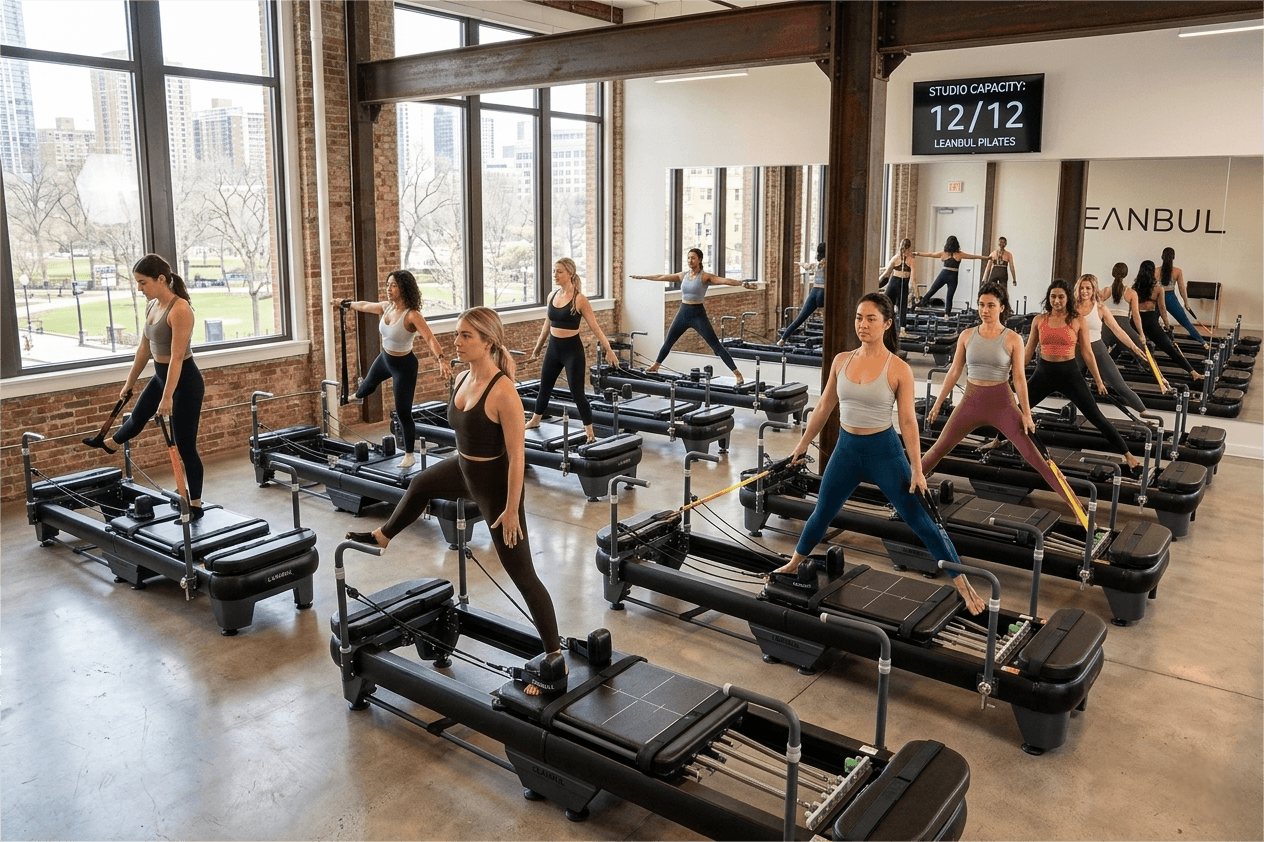
Studios run small groups. Six to eight machines is the common model, not twelve, because Polish clients buy personal attention rather than volume, and because the room economics only work at premium pricing when the group is small.
The format arrived late but is moving fast. Mariana Tek, the booking platform behind a large slice of boutique fitness, reported 15 million reformer bookings worldwide in 2025, a 66% jump on 2024, and named reformer the most-booked workout format on its platform. Poland is riding that wave rather than leading it, which for a supplier means the growth curve is still ahead.
What a reformer class costs in Poland
Polish reformer pricing has climbed toward Western European levels in the big cities, even though average wages remain lower. That gap is why unit economics matter so much here: the equipment has to earn its place quickly.
| Studio | Published price (2026) | Format |
|---|---|---|
| VoyAform, Warsaw | from 62 zł for new clients, 85 zł standard | Group reformer, small groups |
| Pilates Cave, Warsaw | 79 zł first class | Groups of up to 6, near Rondo Daszyńskiego |
| Studio Change | 4 group reformer classes per month from 300 zł; private from 250 zł (60 min) | Membership plus 1:1 |
A quick read across Warsaw studios puts the typical single group class somewhere between 62 zł and 120 zł depending on studio, time and instructor. That is real money in a market where a group class in Berlin averages a little less, which tells you Polish clients are paying premium prices for a format they value.
The studio economics that decide the purchase
A reformer studio in Poland lives or dies on four numbers: rent per square metre, class price, utilisation per machine per week, and the cost of the machines themselves.
| Lever | Typical picture in a Polish city (2026) | Why it matters |
|---|---|---|
| Rent | Class A office space in central Warsaw runs about €19–27.50 per m² per month; service units in residential districts sit lower | Rent is the fixed cost that punishes a half-full room |
| Class price | roughly 62–120 zł per group class | Sets the revenue per slot |
| Machine footprint | about 3 m × 1.5 m per reformer plus circulation | Caps how many machines a given rent bill can carry |
| Equipment | factory-direct commercial reformer in the €1,900–3,500 band | Determines payback time and replacement cycle |
The point is simple. In a market where wages are rising but still below the Western average, a cheap reformer that needs replacing after five years is a worse deal than a commercial machine that lasts fifteen, because the studio cannot absorb the downtime and re-buy while it is still building its client base.
What this means for reformer demand
Three things follow for studios and gyms buying in Poland.
Expansion, not just replacement. With chains adding clubs and independents still opening, Poland is one of the few EU markets where genuinely new reformer demand sits alongside the replacement cycle. That is unusual in 2026, when much of Western Europe is a replacement market.
Class S commercial specification is the baseline. A studio running supervised group classes is a commercial operation. That means machines built and documented to EN ISO 20957 Class S with a declaration of conformity on file, not consumer machines used out of context. The newer fitness-club framework in EN 17229:2026 also touches how equipment is placed and controlled in a club setting; we covered it separately in our guide to EN 17229.
Buying inside the EU beats importing. Poland is in the single market, so a reformer bought from a manufacturer in Spain crosses the border with no customs clearance and no import duty, and the VAT is handled by reverse charge on the buyer’s own Polish return. The one wrinkle is currency: Poland uses the złoty, not the euro, so unlike a euro-zone buyer there is real PLN exposure to plan for. That is a reason to fix the contract price and the payment timing, not a reason to buy from further away.
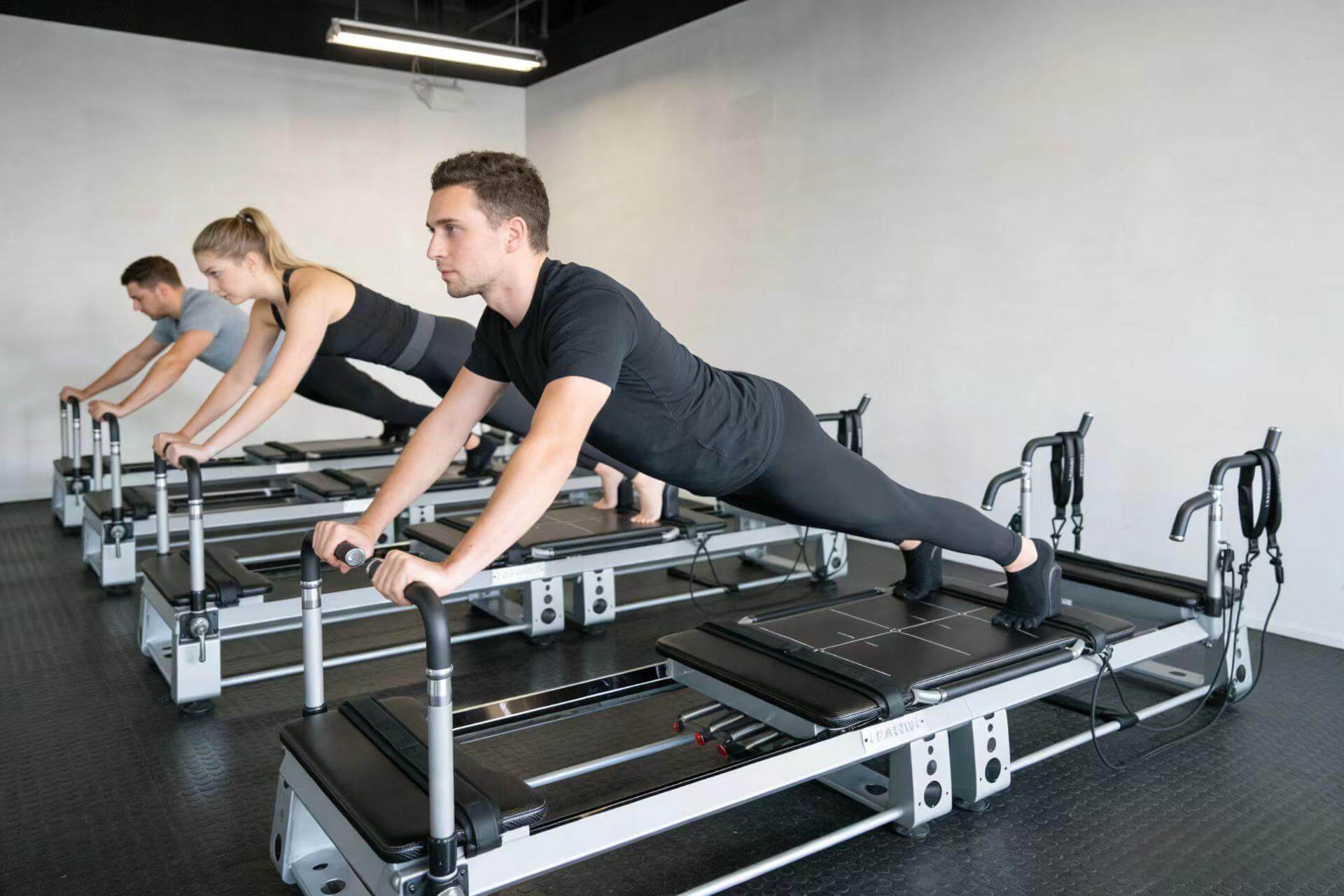
For layout, budget roughly 3 metres by 1.5 metres per machine plus circulation. A six-reformer boutique with a small reception and storage usually lands between 90 and 130 square metres. Our collection sets out the range, and the K30 commercial reformer is the machine most small-footprint studios start with.
Geography decides the competition
The demand is heavily geographic. Warsaw carries the deepest boutique market and the most competition; Kraków, Wrocław and the Tricity are close behind, and each has a well-defined studio scene. In secondary cities, a single well-run reformer studio can own the local market, but the pool of clients willing to pay premium reformer prices is smaller and more price-sensitive. Poland rewards a studio that picks its city deliberately rather than one that chases the biggest population.
FAQ
Is the Pilates market in Poland growing? Yes. Fitness penetration is only around 7%, below the European average, while the major operators are still adding clubs at pace, and reformer Pilates is one of the fastest-growing formats within boutique fitness. The growth is real but concentrated in the larger cities.
How much does a reformer class cost in Poland? In Warsaw, single group reformer classes typically run from about 62 zł at the lower end to roughly 120 zł, with new-client offers often below that. Private sessions start around 250 zł for an hour.
Is Poland a good place to open a Pilates studio? It can be, especially in Warsaw, Kraków, Wrocław, the Tricity and Silesia, where demand for reformer work is proven. The caution is that wages still lag the West while prime-city rents have caught up, so the numbers work only with keen pricing and high machine utilisation.
Do Polish studios need CE-marked reformers? Yes. A reformer placed on the EU market carries CE marking and a declaration of conformity, and a commercial studio should specify machines rated to EN ISO 20957 Class S. Insurers and, increasingly, the EN 17229 fitness-club framework both push in this direction.
Are there VAT consequences when buying a reformer from another EU country? Yes, and they are favorable. Intra-Community acquisitions are not subject to import duty or customs clearance, and the Polish buyer accounts for VAT under the reverse-charge mechanism, reporting and reclaiming it on the same return. The live variable is the złoty-euro exchange rate, which you can manage through contract terms.
Building the case
Poland is the rare EU market in 2026 that still has room for new reformer demand rather than only replacement. The catch is that it demands discipline on price, utilisation and equipment quality, because the premium tier is competitive in the big cities and thinner everywhere else. Leanbul is a Spain-based manufacturer of commercial reformers. We ship across the EU without customs friction, document every machine to the standards European studios are held to, and quote in euros. See the full collection, explore Pilates studio solutions, or get in touch and we will price a Polish studio fit-out for you.
