The Pilates Market in Denmark in 2026: VAT Changes, Studio Trends and Equipment Demand
Denmark’s Pilates market is small, wealthy and more mature than its size suggests, and in 2026 it has one big new variable: VAT. From 1 January, commercial Pilates, fitness, yoga and personal training for adults stopped being VAT-exempt and now carry the standard 25% Danish moms. That single change resets how a studio prices a class, how a membership is modelled, and how quickly the next reformer pays for itself. The rest of the market is intact: very high gym penetration, a premium boutique tier, and a budget-chain duopoly at the bottom. The tax line is what moved.
This is what the pilates market in denmark looks like in 2026, what the VAT shift actually means for a studio, and what it implies if you are buying or replacing reformer equipment.

A small country with an outsized fitness habit
Denmark passed six million residents in June 2025, and by August 2026 its population stood at 6,032,304, according to Statistics Denmark. That is a small country. What makes it matter for equipment is what those people do with their time and money.
- Gym membership penetration runs around 18.9%, one of the highest rates in Europe and behind only Sweden and Norway, both around 22%.
- The European average is 9.3%, so Denmark is roughly twice as “joined up” as the continent as a whole. The EuropeActive/Deloitte European Health & Fitness Market Report 2026 puts Europe at 75.5 million members across 67,515 clubs, with €39.1 billion in revenue and growth of 9.1% year on year.
- GDP per capita was €64,400 in 2022, well above the EU average, and the employment rate was 76.6%, the highest in the EU27 group (EURES, drawing on Eurostat data).
High pay, high participation and a habit of paying for structured exercise is a good combination if you sell into studios. It also makes Danish buyers picky. They compare machines, springs and frame stiffness, not brochures.
The 2026 VAT change, in plain terms
This is the story of the Danish year. After EU Court of Justice rulings, Denmark’s tax agency stopped treating commercial instruction in fitness, yoga, Pilates, dance and CrossFit as VAT-exempt. From 1 January 2026 those services carry 25% VAT. Personal trainers and physiotherapists who run group training are caught by the same change.
Three carve-outs are worth holding on to:
- Amateur sports clubs and associations keep their exemption, because they register as “amateur sport” rather than “instruction”. BDO’s summary of the Danish practice change spells this out.
- Instruction for children and for people under 30 stays VAT-exempt.
- The exemption for genuine professional and vocational training actually widened, but that is a different subject.
Registration kicks in once taxable turnover passes DKK 50,000 over a rolling 12 months.
How operators reacted says a lot about how thin the margins are. PureGym told members that 25% VAT would be added to all memberships from 2026 once they turn 30. The Copenhagen studio Beatriders went the other way, absorbing part of the tax itself and lifting prices by 8% to 23% depending on the service.
| Service | Before 1 Jan 2026 | From 1 Jan 2026 |
|---|---|---|
| Adult group Pilates / reformer class | VAT-exempt | 25% VAT |
| Adult personal training | VAT-exempt | 25% VAT |
| Gym membership (over 30) | VAT-exempt | 25% VAT |
| Instruction for under-30s and children | Exempt | Still exempt |
| Amateur sports club membership | Exempt | Still exempt |
The real decision for a studio is not whether to charge VAT. It is whether to absorb it. Pass it on and your headline price jumps by up to a quarter, which in a market where clients can compare every studio online is a visible jump. Absorb it and you are funding the tax from gross margin, which on a reformer class is thinner than most owners assume once instructor time, rent and the machine itself are all counted.
What a reformer class costs in Denmark
Denmark already sits in the premium half of Europe on price, before VAT is loaded on top.
| Studio | Published price (2026) | Note |
|---|---|---|
| DGI Byen, Copenhagen | DKK 395 / month | Reformer membership, 60+ weekly classes to choose from |
| Energii | DKK 349–399 (4 classes) / 599–699 (8) / 799–899 (unlimited) | Two price tiers, under 30 and over 30 |
| Rama Reformer Club | DKK 700 (4 classes) / DKK 1,300 (8) | Premium boutique |
| Train, Copenhagen | First class free | Boutique reformer and strength |
Read those figures with the new tax in mind. A DKK 395 monthly membership that has to carry 25% moms becomes either a DKK 494 membership or a DKK 316 net-revenue membership. Neither outcome is neutral, and both change how fast a studio can justify adding a reformer to the row.
Budget duopoly, premium fringe
The Danish market has an unusual shape. The budget end is close to a duopoly. PureGym, which absorbed the Danish chain Fitness World in 2021, leads low-cost membership, and SATS holds a strong mid-market position. On top of that, a genuine boutique reformer tier has formed, clustered in Copenhagen, Frederiksberg and Aarhus.
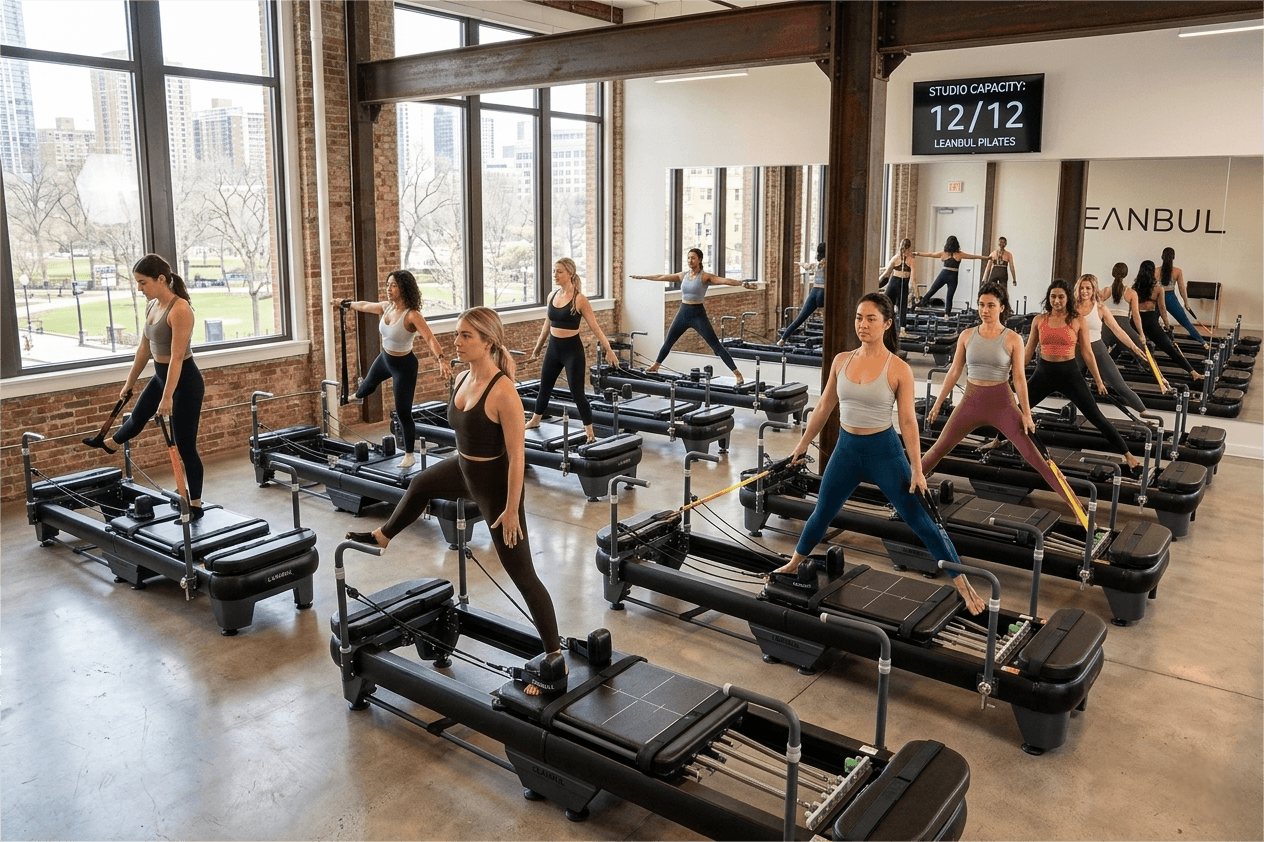
That tier is small. Industry trackers put the number of standalone yoga and Pilates studios in Denmark in the mid-thirties, and ClassPass ranks only about nine reformer studios nationally. The names that come up again and again include Energii (studios in Copenhagen and two in Aarhus, with 40 and 30 reformers respectively), CoreReformer, Ohm Yoga, DGI Byen and Rama Reformer Club.
The point is not that Denmark is a volume market. It is not. A boutique reformer studio competes here on quality and retention, not price, and that shapes what goes on the floor.
What this means for reformer demand
Three things follow for anyone supplying or buying reformers in Denmark.
Replacement and premium expansion, not mass rollout. With penetration this high and a mature boutique tier, most demand is a studio upgrading, adding a second row or replacing worn machines, rather than a wave of new openings. The 2026 VAT change adds a new trigger: studios that have to raise prices will want to justify it with visibly better equipment.
Class S commercial specification. A studio running reformer group classes is a commercial operation. That means machines designed and certified to EN ISO 20957 Class S, with the declaration of conformity kept on file. Consumer-grade reformers that work fine in a spare room do not belong in a shared, supervised studio, and insurers increasingly ask.
EU-internal buying is the default. Denmark is inside the single market. A reformer bought from a manufacturer in Spain ships without customs clearance or import duty, and the VAT is handled by reverse charge: the Danish studio accounts for it on its own return and reclaims it in the same period. The krone is pegged tightly to the euro, so there are no currency surprises either. For a studio comparing a factory-direct European purchase with an import from outside the EU, the landed-cost gap is real.
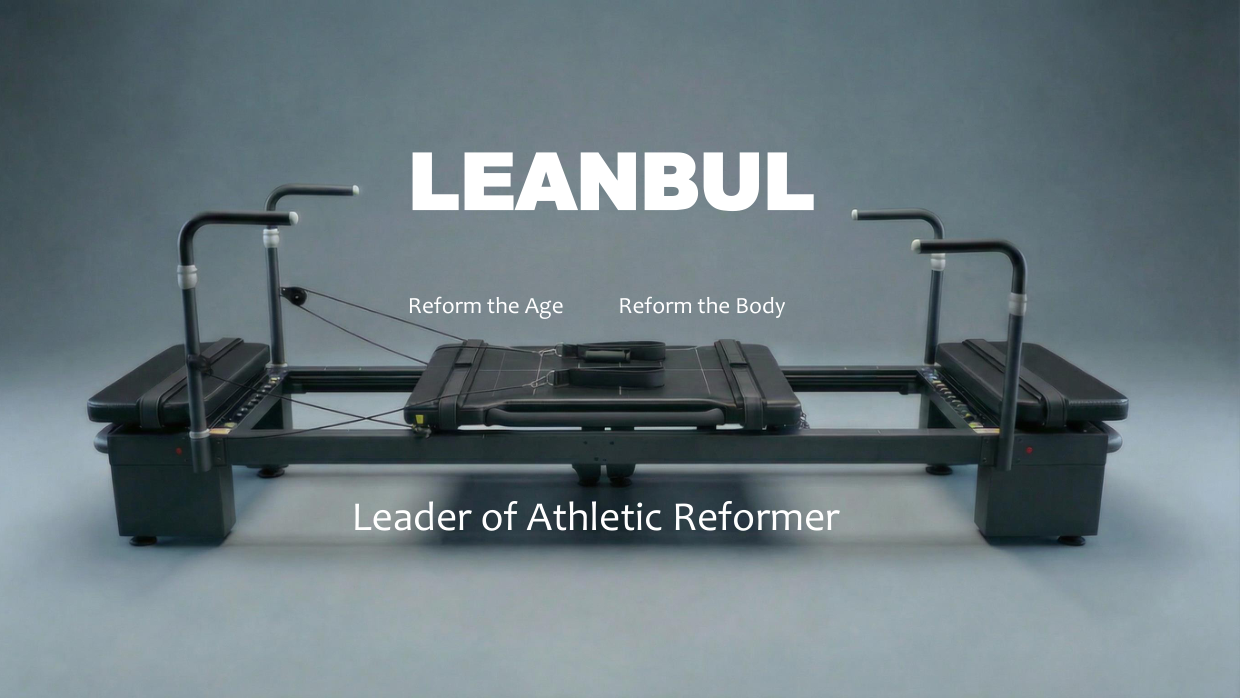
When you size the room, plan roughly 3 metres by 1.5 metres of working space per reformer, plus circulation. A six-machine boutique lands somewhere around 90 to 130 square metres including a small reception and storage. Our collection shows the range, and the K30 commercial reformer is the model most Danish boutiques gravitate to.
A note on geography
Demand is not spread evenly. Greater Copenhagen, Frederiksberg and Aarhus carry the boutique reformer market, and those are the three places a new studio can expect genuine competition for clients. Outside the bigger cities the picture is thinner: a single well-run studio can own a town, but the pool of clients who will pay premium reformer prices is small, and the VAT change makes that pool more price-sensitive, not less. A studio in a secondary city lives and dies on retention and on keeping its instructor roster tight.
FAQ
Is Pilates VAT-free in Denmark? No. Since 1 January 2026, commercial adult Pilates instruction carries 25% Danish VAT, following a change in how the tax agency applies EU case law. Amateur sports club activity and instruction for people under 30 remain exempt.
Is Denmark a good market for a Pilates studio? Yes, at the premium end. Membership penetration is around 18.9% and incomes are high, but the budget segment is locked up by large chains. The opening is boutique reformer work, not cheap volume.
Do I need to charge VAT if I run a small studio? Only once taxable turnover passes DKK 50,000 over 12 months. Below that you can stay outside the VAT system, though you then cannot reclaim VAT on your equipment. Many studios register voluntarily, because the input VAT on a reformer fleet is worth recovering.
What reformer specification do Danish studios need? Commercial machines rated and certified to EN ISO 20957 Class S, with documentation on file. Home-rated machines used in a shared studio create both a safety and an insurance problem.
How much space does a reformer studio need in Denmark? Budget about 3 by 1.5 metres per machine for movement and circulation. A six-reformer boutique typically fits in 90 to 130 square metres with reception and storage.
Building the case
Denmark rewards a studio that gets the numbers right and punishes one that guesses. With VAT now baked into every class price, the equipment decision matters more, not less. A well-built commercial reformer that lasts fifteen years spreads its cost far better than a cheap import that needs replacing in five, and in a market this close to margin, that difference shows up fast. Leanbul is a Spain-based manufacturer of commercial reformers. We ship across the EU without customs friction, and every machine comes with the technical file to match. See the full collection, explore Pilates studio solutions, or get in touch and we will price a Danish studio fit-out in euros.
