Pilates Reformers for Women’s Health Clinics and Menopause Programmes in Europe
A reformer bought for a menopause or women’s health programme is not the same machine you would buy for a general studio. The clients are mostly women in their forties, fifties and sixties. Many are dealing with joint stiffness, changing bone density, pelvic floor symptoms or sleep and mood disruption. They are not chasing a personal best. They want to feel strong and capable through a transition that the fitness industry spent decades ignoring.
That mismatch is an opportunity. Across Europe, menopause care is moving from a private embarrassment into a funded service line, and clinics, studios and women’s health centres are building reformer programmes to meet it. This guide covers who is buying, what to specify, the evidence you can honestly point to, and what it costs.
Why Women’s Health Is the Segment to Watch
The numbers are moving in one direction. Market research on the European menopause market puts it at roughly $25 billion in 2024, rising to over $38 billion by 2033. That figure covers supplements and treatments, but it tells you how much attention, money and clinical infrastructure now surrounds midlife women’s health.
Three things are pushing the shift:
- Public health policy. The UK’s Women’s Health Strategy made menopause care a stated priority, and NHS menopause services have expanded accordingly. Where policy leads, private clinics and insurers follow.
- Workplace policies. Employers are starting to treat menopause as a retention issue, not a private matter. A 2024 NHS Confederation report estimated the direct economic impact of menopause-related unemployment in the UK at around £1.5 billion a year. German estimates run into the billions of euros.
- A generation that trains. Women now entering menopause are far more likely to have exercised for years. They expect a structured option, not a leaflet.
For a studio or clinic, that adds up to a client group with willingness to pay, a clinical reason to attend and a long engagement window. Menopause is not a six-week programme. It is years.
What Reformer Pilates Does for This Client Group
Be careful here. The evidence is real but it is not the same as a drug trial, and overselling it will backfire with the clinicians you want to refer to you.
A randomised controlled trial published in 2025 looked at pilates in postmenopausal women and found significant improvements in menopausal symptom scores, quality of life and sexual function in the pilates group compared with controls. Earlier work cited in the same paper found improvements in bone mineral density and reductions in body fat in postmenopausal participants. A separate 2026 network meta-analysis in the Journal of Sport and Health Science compared exercise modalities for bone mineral density in postmenopausal women, and mind-body exercise including pilates came out as one of the relevant options, with the honest caveat that effects differ by skeletal site.
What that supports is a careful claim: reformer pilates is a well-tolerated, low-impact option that helps with strength, function and several menopause-related symptoms. It is not a substitute for hormone therapy or medical care, and the best women’s health programmes say so out loud. That honesty is what earns referrals.
Who Buys Reformers in This Space
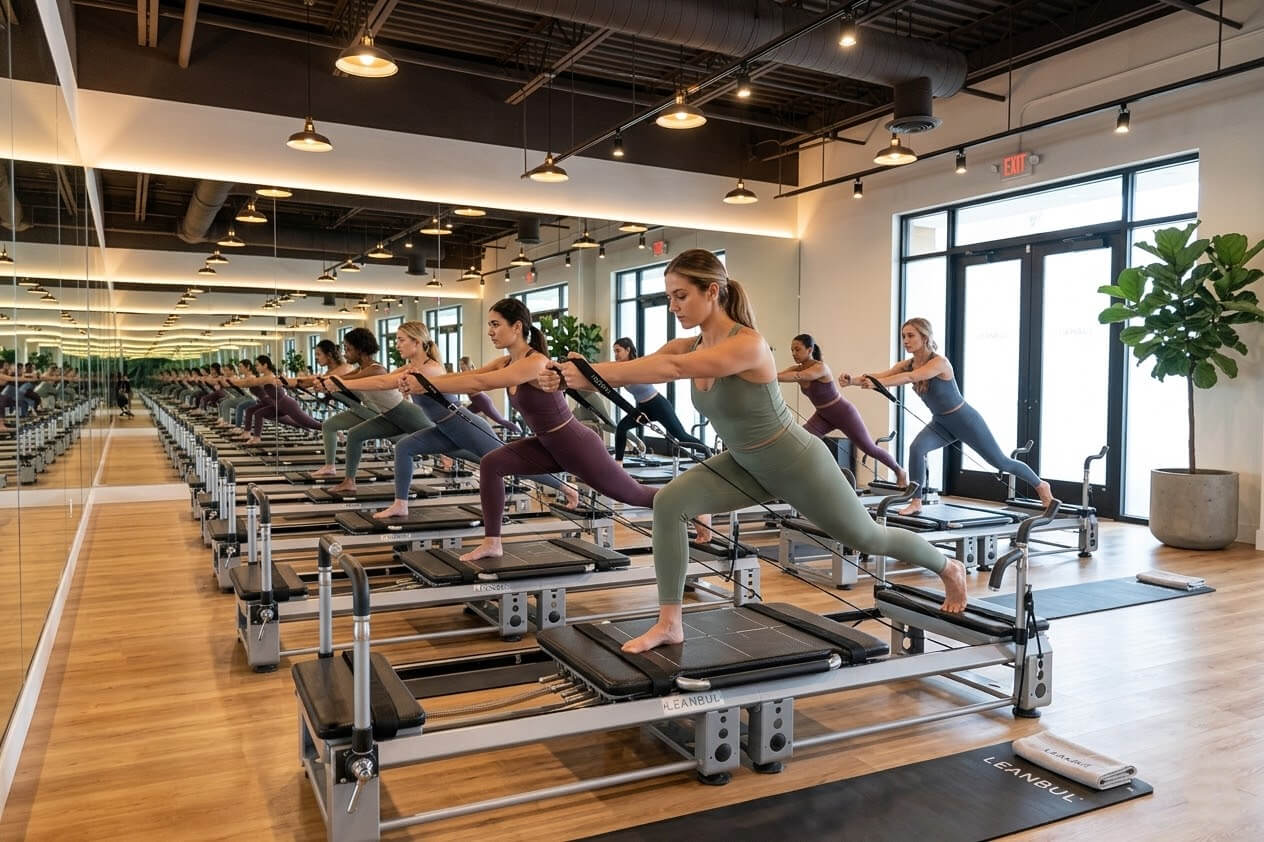
The buyer is rarely a traditional fitness operator. In practice we see four types:
- Private women’s health and menopause clinics adding supervised exercise as a service line next to consultations and prescriptions.
- Women-only or women-led studios building menopause and perimenopause programming as a distinct class type, often alongside prenatal and postnatal work.
- Physio-led pelvic health clinics using the reformer for the strength and coordination half of pelvic floor rehabilitation.
- Corporate and occupational health providers offering menopause support on site, usually a small reformer room with a visiting instructor.
Each buys differently. Clinics buy a handful of machines and care about documentation. Studios buy in groups of six to twelve and care about class flow and appearance. Both should care about the same underlying spec.
How the Spec Differs
| Factor | General studio | Women’s health / menopause programme |
|---|---|---|
| Client profile | Mixed, wide age range | Mostly women 45 to 65, varied ability |
| Priority | Throughput, progression | Comfort, low-entry resistance, adjustability |
| Resistance use | Broad range, up to heavy | Concentrated at the lower half of the spring range |
| Padding and support | Standard | Comfort matters; sessions run 45 to 55 minutes |
| Privacy | Open studio | Often separate or screened room |
| Hygiene | Standard wipe-down | Higher expectation; easy-clean upholstery |
| Equipment class | EN ISO 20957 Class S | Class S |
The single biggest specification point is the low end of the resistance range. A programme where most clients spend most of their time on the lightest one or two springs needs those springs to be genuinely light and repeatable, not a nominal “extra light” that is really a cruising load.
What to Specify
- Fine resistance steps at the low end. Ask for the resistance curve of each spring. Pelvic floor and bone-health work starts light and progresses slowly.
- Comfort that survives a full session. Padding thickness, headrest shape and footbar covering matter when a client is on the machine for 50 minutes.
- Ease of entry and exit. A stable standing platform and a frame you can step over confidently reduce the fear that keeps older clients away.
- Adjustability without fuss. Footbar, headrest and shoulder blocks should move quickly and lock firmly, because a menopause class often has more variation in body size and mobility than a standard one.
- Quiet, smooth carriage. Clients doing breath-led pelvic floor work notice a noisy carriage, and noise signals cheapness in a clinical setting.
- Easy-clean upholstery. A practical requirement when the machine is shared between physio and group use.
Programme Design Beats Equipment
Here is the part equipment sellers often skip. A reformer alone does not create a menopause programme. The instructor qualification and the programme structure do most of the work.
- Train instructors in the client group, not just the machine. Menopause-aware coaching, pelvic health basics and an understanding of bone-loading principles change what happens in the room. A general reformer certification is a starting point, not the finish line.
- Design for progression over months, not weeks. Bone and muscle respond slowly, especially after menopause. A programme that peaks in six weeks has no reason to exist in month seven.
- Build in the clinical link. Where a client’s GP, gynaecologist or physiotherapist is involved, share programming and keep it consistent. This is what separates a women’s health clinic from a gym with soft lighting.
- Say what the reformer is not. No claim of preventing osteoporosis outright, no promise to replace HRT. Clinicians refer to people who are accurate.
If your programme is genuinely clinical in nature, our guide to reformers for physiotherapy and rehab clinics covers the treatment-side considerations, and the resistance systems comparison explains why spring resistance suits this work better than most alternatives.
Compliance, Data and Insurance
Because this sits close to healthcare, three EU topics come up repeatedly.
- CE marking and EN ISO 20957. Class S commercial equipment is the correct grade for a clinic or studio room. Keep the declaration of conformity and test report on file. Our CE guide explains what to request.
- GPSR. Regulation (EU) 2023/988 has applied since December 2024 and follows the product through the supply chain. You need a traceable manufacturer and an EU economic operator.
- Health data under GDPR. Menopause and pelvic health information is health data, and under Article 9 of the GDPR it is a special category. Any intake form, symptom questionnaire or progress tracker you use needs a lawful basis, a retention policy and proper handling. This is a real exposure for small clinics that treat it casually.
- Insurance. A programme aimed at clients with health conditions needs cover that matches. Tell your insurer the client group, the supervision model and the referral pathway. Our studio insurance guide covers what to disclose.
What It Costs
Prices are ex-VAT for EU buyers, manufacturer-direct.
| Item | Typical range | Notes |
|---|---|---|
| Commercial reformer | €2,800 to €6,500 | Class S |
| Small clinic fleet (2 to 4 units) | €2,200 to €4,000 per unit | Lower volumes |
| Studio fleet (6 to 12 units) | €1,900 to €3,500 per unit | Volume pricing |
| Delivery and installation | €250 to €700 per machine | Intra-EU freight |
| Instructor menopause / pelvic health training | €600 to €2,500 per person | Varies widely by provider |
| Annual maintenance | €120 to €400 per machine | Springs, ropes, wheels |
A six-reformer studio programme typically lands between €14,000 and €30,000 for equipment, before fit-out and training. A two-machine clinic setup can start around €5,000 to €9,000.
Space and Fleet Size
Reformer programmes for this client group run smaller than mainstream classes, because clients need more room to mount and more attention from the instructor.
| Format | Reformers | Working area |
|---|---|---|
| Clinic treatment room | 1 to 2 | 12 to 20 m² |
| Menopause class, women-only studio | 6 to 8 | 45 to 75 m² |
| Larger women’s health centre | 8 to 12 | 70 to 110 m² |
Allow about 3 m by 1.5 m per machine as a working footprint, and keep a clear walkway. Where possible, put the reformer room behind a screen or in a separate space. Clients in this segment value privacy, and it lets you run clinical work in the same room at different times.
Buying From the Right Manufacturer
For this segment, the questions are slightly different from a general studio purchase.
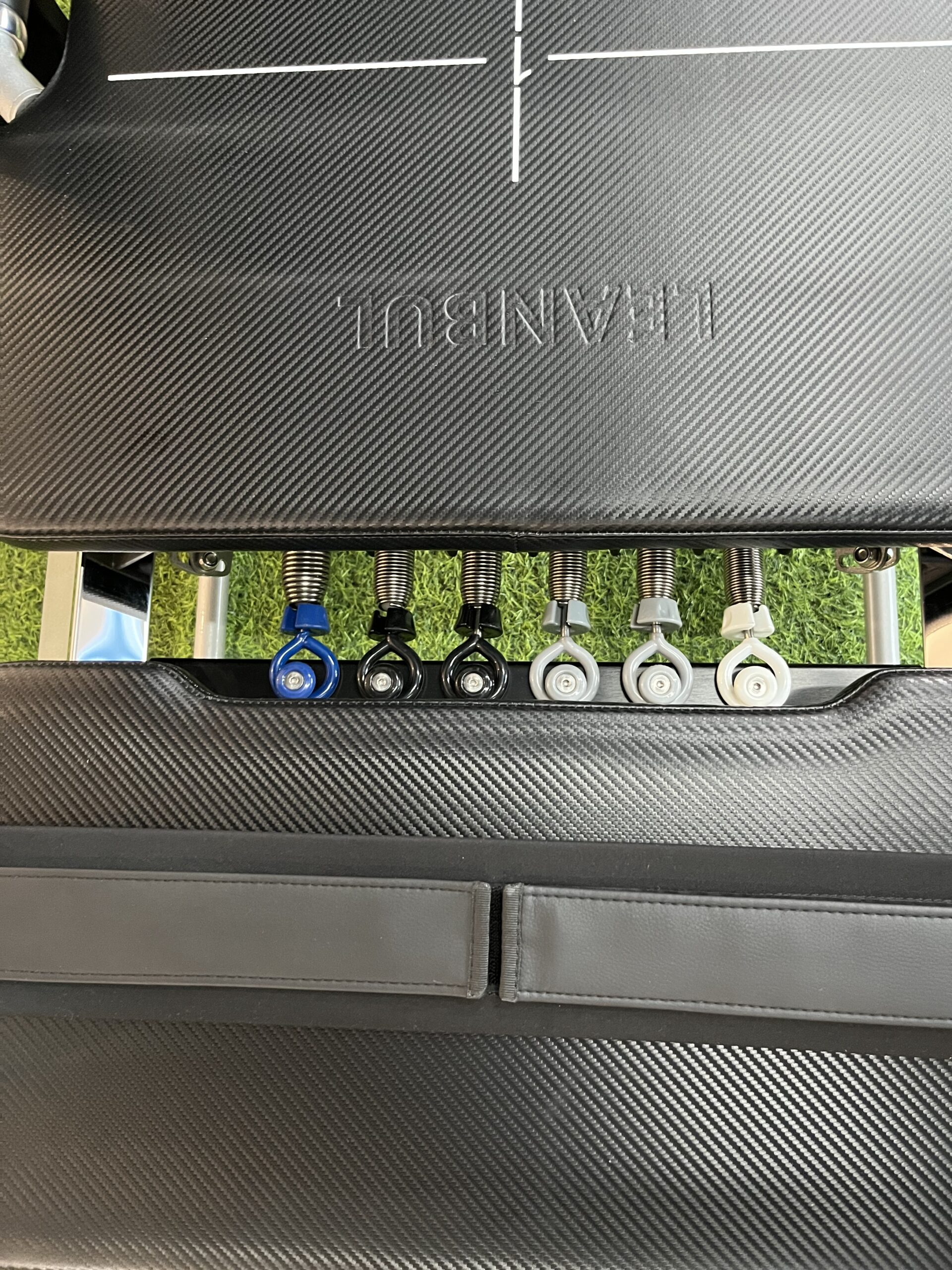
- Is the low-resistance end of the range genuinely useful? Test it. Ask for numbers.
- Will they supply spares inside the EU? Springs and ropes are consumables, and a stalled class means lost revenue.
- Do they understand clinical-adjacent use? A manufacturer who can talk about documentation, test reports and service contracts is easier to work with when a clinician asks questions.
- Can they advise on fleet sizing for small rooms? A two-machine clinic has different needs from a ten-machine studio.
Leanbul is a Spain-based manufacturer supplying studios, clinics and women’s health programmes across the EU. The K30 commercial reformer is the common choice for small group programmes, the K38 premium reformer suits busier and larger rooms, and the compact K10 fits clinics working in a single treatment room. Our studio solutions service covers room planning and fleet sizing.
FAQ
Is reformer pilates suitable for women going through menopause? Yes, for most women. It is low-impact, adjustable and well tolerated, and a 2025 randomised trial found improvements in menopausal symptom scores and quality of life in postmenopausal participants. It is not a replacement for medical care, and any programme should complement, not compete with, clinical treatment.
Can a reformer help with bone density after menopause? Exercise is one of the few non-pharmacological tools that supports bone health. A 2026 network meta-analysis found mind-body exercise including pilates to be a relevant option for bone mineral density in postmenopausal women, with effects varying by skeletal site. Progressive resistance work combined with appropriate impact is the standard recommendation.
What qualification should the instructor hold? A recognised reformer certification plus specific training in menopause, midlife women’s health or pelvic health. A general group fitness qualification is not enough for a clinical-adjacent programme, and clinicians will ask.
Do I need Class S commercial equipment for a women’s health clinic? If the machine is used by multiple clients at commercial volumes, yes. Home-grade equipment is not built for that duty cycle and may not satisfy your insurer. Keep the CE documentation and declaration of conformity on file.
How much space does a small menopause programme need? A clinic treatment room with one or two reformers needs roughly 12 to 20 m². A six- to eight-machine class needs 45 to 75 m², with about 3 m by 1.5 m per machine as a working footprint including mounting clearance.
Getting the Room Right
Women’s health is one of the few segments in fitness where demand, clinical credibility and willingness to pay line up at the same time. The reformer is a good fit for it, but only if you buy the right one and build the programme around it properly.
If you are equipping a menopause programme, women’s health clinic or pelvic health room and want help with specification, get in touch. We build commercial reformers in Spain and support them across Europe.
