Pilates Reformers for Public Leisure Centres and Municipal Fitness in Europe: A 2026 Buying Guide
A public leisure centre buys a pilates reformer for different reasons, and by different rules, than a private studio does. The machine still has to be commercial-grade. But the money is public, the purchase usually runs through a procurement process rather than a card payment, and the facility carries duties a boutique studio never has to think about: accessibility for disabled users, safeguarding for children and vulnerable adults, and a duty to show value for money measured over the machine’s whole life, not just its invoice price.
So this is a guide to buying a pilates reformer for leisure centres in Europe: how machines get specified in the public sector, what tender evaluations actually reward, and where suppliers most often lose the deal before a single class is taught. It is written for municipal gyms, council-owned leisure centres, community sports facilities and public leisure trusts.

Why a public leisure centre buys differently
The buying logic splits cleanly from the private sector.
- The buyer is a public body or a trust, spending public money. Purchases usually follow a procurement route, with published criteria and a paper trail.
- The justification is policy, not just revenue. Physical activity targets, active ageing, social inclusion and health inequality all sit behind the equipment decision.
- The facility has statutory duties. Disability access, safeguarding, and health and safety apply to the premises and the classes.
- Budgets are cyclical. Approvals may run to annual or multi-year cycles and need committee sign-off.
- Decisions are scored, not felt. A private studio owner can buy on a hunch. A public centre has to demonstrate why it chose you.
That last point is the one suppliers underestimate. In the public sector, being the best machine is necessary but not sufficient. You also have to be the easiest supplier to justify.
The European public procurement context
Public authorities across the EU spend around €2.6 trillion a year — roughly 15% of EU GDP — and there are more than 250,000 of them, according to the European Commission’s internal market directorate. Fitness and leisure equipment is a small part of that, but it buys through the same machinery.
The practical rules follow from this.
- Above EU thresholds, contracts must follow the EU public procurement rules (Directive 2014/24/EU) and be advertised EU-wide on TED (Tenders Electronic Daily).
- Below the thresholds, national and local rules apply, but they still have to respect general EU principles of transparency and non-discrimination.
- Framework agreements let centres buy without running a full tender each time. Being on a national purchasing framework is often the single most useful thing a supplier can do.
- Awards are normally decided on the most economically advantageous tender (MEAT) — price plus quality — rather than lowest price alone.
For a centre, the implication is straightforward: you may be able to buy off a framework quickly, or you may need to run a mini-competition. Either way, the specification you write determines who can bid and what you end up with.
What a public tender actually scores
Public buyers reward evidence. The table below is the shape of a typical fitness equipment evaluation.
| Criterion | What the buyer looks for | What the supplier must provide |
|---|---|---|
| Price / whole-life cost | Purchase price plus servicing, parts and expected lifespan | Maintenance schedule, spares list, service-life statement |
| Quality and specification | Class S commercial rating, durability, adjustment range | CE declaration of conformity, EN ISO 20957-1 Class S, test reports |
| Service and support | Repair response times, on-site service, warranty | Service-level proposal, spare-part lead times, warranty terms |
| Sustainability | Repairability, recyclability, packaging, local sourcing | Material data, repairability, EU-based supply chain |
| Social value | Local employment, apprenticeships, inclusion outcomes | Social value commitments tied to the contract |
| Accessibility | Usable by disabled and older members | Adjustment range, transfer height, adaptive options |
A cheap import can win on headline price and still lose the evaluation, because it cannot answer the service, spares and sustainability lines. That is where a European manufacturer tends to score.
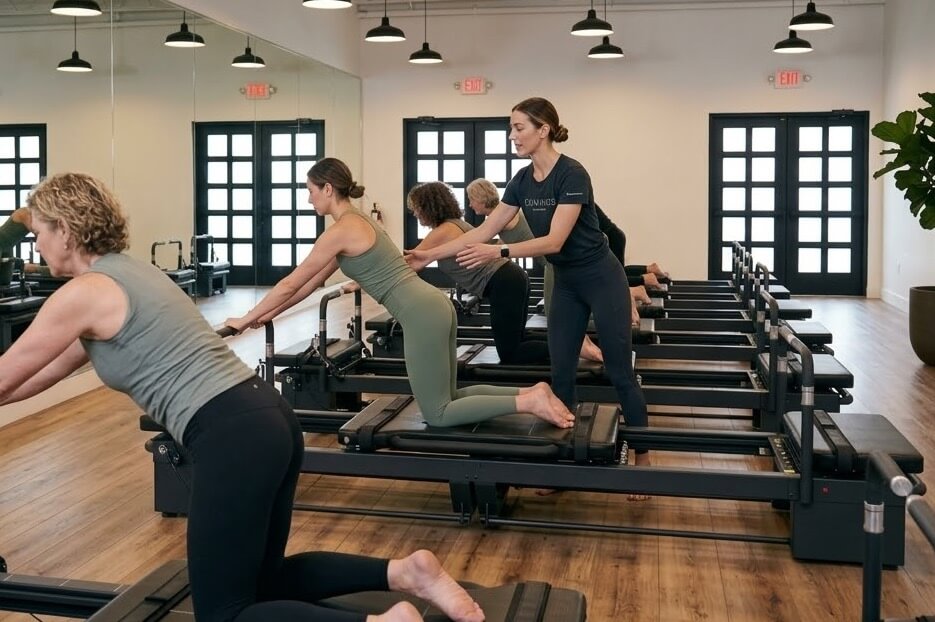
Specifying a pilates reformer for a leisure centre
Public facilities are shared by far more people than a private studio, and that changes the specification.
- Class S commercial rating with CE marking. A public centre is a high-traffic environment. Home-rated machines are out of specification and a liability risk.
- A wide resistance and adjustment range. The same room may host a 16-year-old athlete and an 80-year-old beginner in consecutive sessions. Fast, repeatable spring and footbar changes matter.
- A duty cycle built for long days. A public centre can run 12–14 hours a day, six or seven days a week. That is closer to a gym than a boutique.
- Low maintenance and quick parts. Springs, straps, pads and wheels are consumables. Confirm lead times before you commit.
- Quiet, safe operation. Some areas are lightly supervised, so a machine that behaves predictably and quietly is easier to manage.
- An inclusive footprint. Easy transfer on and off the carriage, adjustable headrest and footbar, and enough clearance for assisted movement.
Fleet sizing and layout
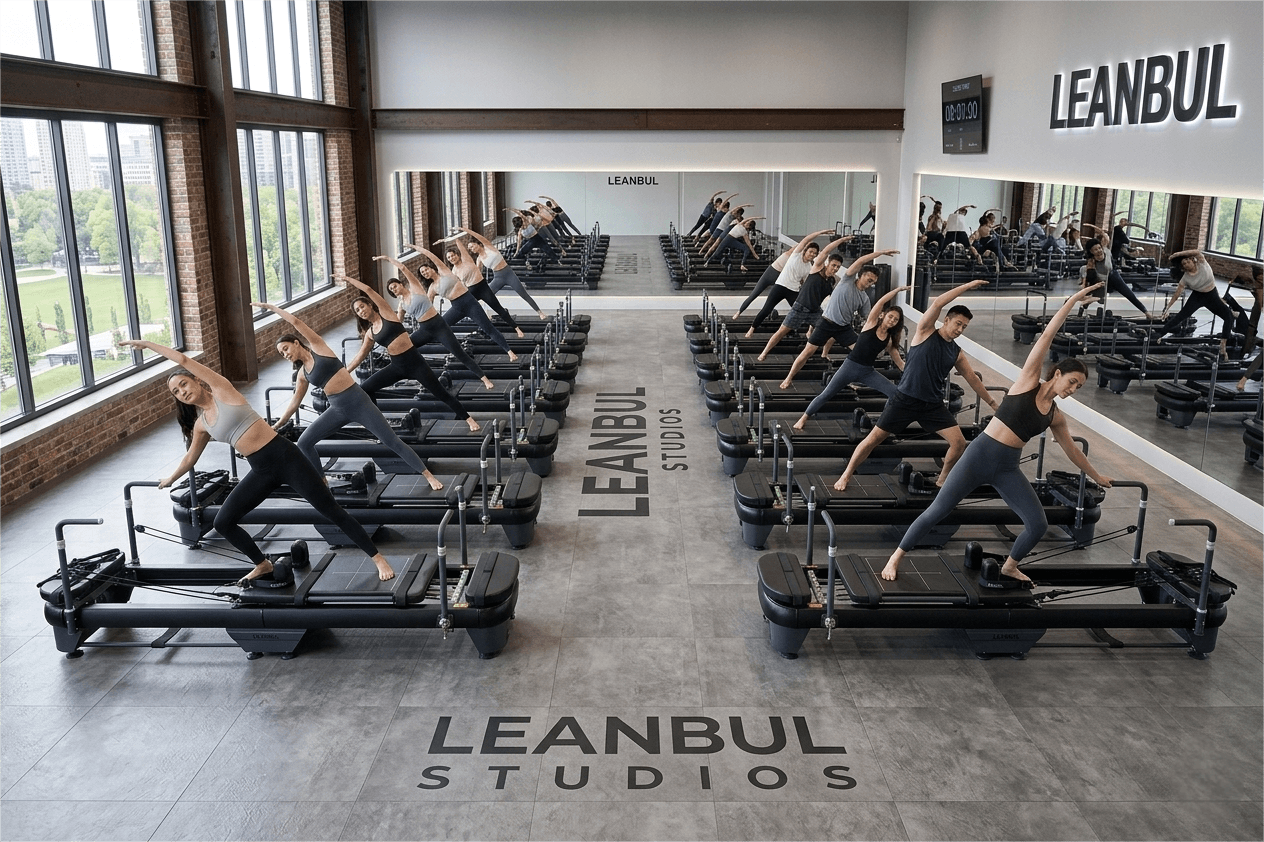
Size the fleet by the timetable, then check it against the floor.
| Public centre format | Reformers | Room guide |
|---|---|---|
| Scheduled studio classes | 8–12 | 90–140 m² |
| Small group and rehab sessions | 5–8 | 60–100 m² |
| Multi-purpose activity room | 4–6 | 50–80 m² |
| Dedicated reformer centre | 14–20 | 200–280 m² |
As a rule of thumb, allow a working area of about 3m × 1.5m per machine including circulation, on top of the 2.4m machine length itself. A converted room in an older building often constrains the layout more than the budget does.
Accessibility and safeguarding
These two duties sit behind much public-sector reformer demand, and they show up in the specification.
- Disability access is a legal duty, and it covers the equipment as well as the building. Adjustable machines, staff trained in inclusive instruction, and a route to the reformer that works for wheelchair users and people with limited mobility.
- Safeguarding applies to any setting with children or vulnerable adults. In Ireland and the UK that means Garda/DBS-equivalent vetting for staff and volunteers, clear age policies, and supervision rules for the reformer room.
- Risk assessments and instruction. A public centre should be able to show a documented process for introducing new users to the equipment.
If your reformer programme targets active ageing — one of the strongest justifications for a public fleet — our guide to reformers for senior living and care communities covers the supervision and compliance side in more depth.
Buying from a European manufacturer
For a public body, supplier stability is part of the evaluation, not an afterthought.
- Intra-EU purchase means no customs, no import duty and VAT handled by reverse charge.
- Spare parts and service stay inside the single market, which keeps response times defensible and repairs documented — useful when a maintenance log is part of your insurance and compliance picture.
- Compliance documentation — CE marking, EN ISO 20957 Class S and the GPSR information duties — arrives in a form a procurement officer can file.
- Framework readiness. A manufacturer that can supply references, service data and social value on paper is easier to put on a framework, or to justify in a mini-competition.
Public buyers rarely get to choose on personal taste. They choose on the evidence a supplier puts in front of them, and European supply chains are simply easier to document.
FAQ
Do public leisure centres actually buy pilates reformers? Yes. Reformers fit the policy goals public facilities are funded to deliver — physical activity, active ageing, rehabilitation and inclusion — and they give a centre a differentiated class format. The purchase is more likely to arrive through a framework or tender than through a direct sale.
What specification should a council or leisure trust require? Commercial-grade equipment rated to EN ISO 20957-1 Class S, with CE marking and a declaration of conformity, a wide adjustment range for mixed-ability groups, a duty cycle suited to long opening hours, documented maintenance and spare-part lead times, and inclusive design for disabled and older users.
How are fitness equipment contracts awarded in the EU? Above the EU thresholds, public contracts must follow Directive 2014/24/EU and be advertised on TED. Below the thresholds, national rules apply. Awards are normally made on the most economically advantageous tender — price combined with quality, service, sustainability and sometimes social value — rather than on lowest price alone.
Can a small supplier bid for public sector reformer contracts? Yes, and frameworks are often the easiest route. A smaller supplier can win mini-competitions under a framework agreement without financing a full open tender each time, provided it can document compliance, service levels and spare-part provision.
What is whole-life cost and why do public buyers use it? Whole-life cost is the purchase price plus everything spent over the machine’s life — servicing, replacement parts, downtime and disposal. Public buyers use it because a cheaper machine that needs more servicing and fails sooner often costs more than the one that looks expensive on the invoice.
Equipping a Public Leisure Centre
A public reformer fleet is bought with public money, justified against policy goals, and expected to keep running for years in a shared, high-traffic building. Get the specification, the evidence and the service plan right, and the equipment decision becomes easy to defend — which, in the public sector, is half the battle.
Leanbul manufactures commercial pilates reformers in Spain for European studios, gyms, clinics, hotels and public facilities, supplied as EN ISO 20957 Class S equipment with CE marking. For a compact space, look at the K10 commercial reformer; for larger group studios, the K38 premium reformer; or browse the full collection. To discuss fleet specification, framework supply or tender documentation, contact us.
