How to Open a Pilates Studio in Croatia in 2026: Legal Steps, VAT, Costs and Equipment
Opening a pilates studio in Croatia comes down to three decisions that are hard to undo: whether you register as an obrt or a d.o.o., whether you enter the VAT system before you buy machines, and what your lease says about alterations. Get those right and the rest is a fit-out schedule. Get them wrong and you will spend your first year paying for a structure that does not fit a business selling €25 reformer classes.
The country has 96 pilates studios and 48 of them are in Zagreb, which tells you two things at once. Reformer pilates is still early here, so a well-run studio is not fighting for the same clients as a chain gym. And outside the capital you are often the first reformer room in town, which is a marketing advantage and a cash-flow risk in the same sentence.
We build commercial reformers in Spain and sell into Croatia and the rest of the EU, so we see the equipment side of these launches. This guide covers the legal and tax structure you have to pick before a single machine ships, with the 2026 official numbers.
The short answer: what opening a pilates studio in Croatia costs
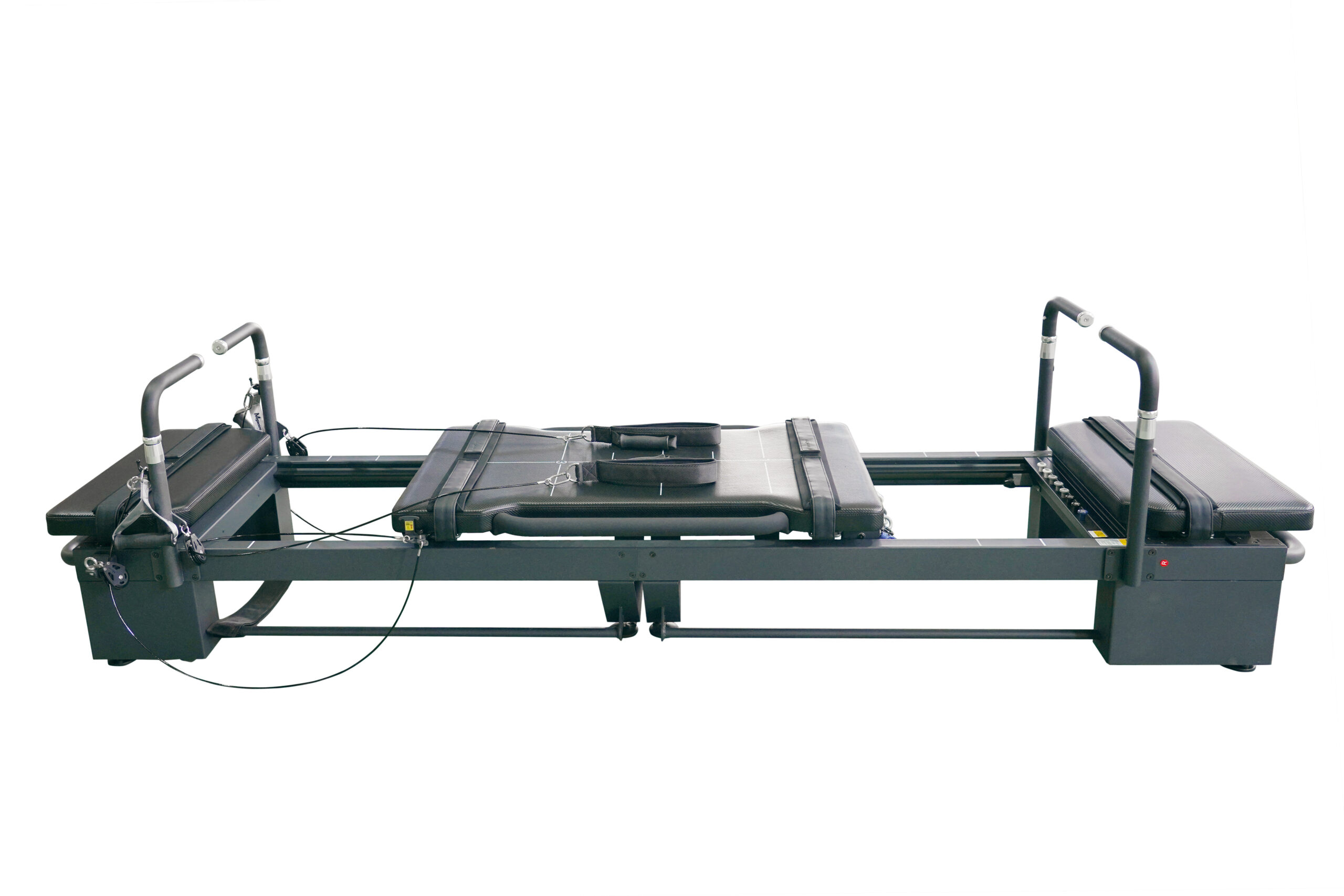
A four to six machine studio in Zagreb costs roughly €40,000 to €75,000 to open, including deposit, fit-out, machines and three months of working capital. The cheapest legal setup (paušalni obrt) is usually the wrong one for a reformer studio, for a reason most startup guides skip: it locks you out of VAT recovery on the machine purchase and caps your revenue at €60,000.
Here is the 2026 comparison, using the contribution bases published by the Croatian Chamber of Trades and Crafts for the year.
| Paušalni obrt (flat-rate trade) | Obrt on actual income | d.o.o. (limited company) | |
|---|---|---|---|
| Registration cost | €0 via e-Obrt | €0 via e-Obrt | ~€300–900 in fees, €2,500 minimum share capital |
| Minimum monthly contributions (2026) | €290.98 | €472.84 | €800.20 as owner-manager on a “poduzetnička plaća” |
| Income tax | 12% on a fixed bracket base, €203.40–1,080 per year | Progressive income tax on profit | 10% corporate tax under €1m revenue, 18% at or above |
| Equipment deductible | No | Yes, through depreciation | Yes, through depreciation |
| Can register for VAT | No, structurally excluded | Yes | Yes |
| Revenue ceiling | €60,000 | None | None |
| Fits a reformer studio when | Solo instructor, 1–2 machines, no growth plan | 3–6 machines, owner-operated | Multi-instructor, partners, or expansion |
Those monthly contribution figures are not estimates. They come from the 2026 contribution base order: €797.20 for a flat-rate trader, €1,295.45 for a trade taxed on income, and €2,192.30 for a company owner drawing a managerial salary, with 20% pension (split 15% + 5%) and 16.5% health on top.
Decision one: the €60,000 flat-rate trap
The flat-rate regime is genuinely attractive on paper. You pay 12% on a fixed income figure set by your revenue bracket, you keep one simple sales ledger instead of full books, and your contributions are €181.86 a month lower than a trade taxed on income. Over a year that is €2,183 saved.
Then you buy reformers.
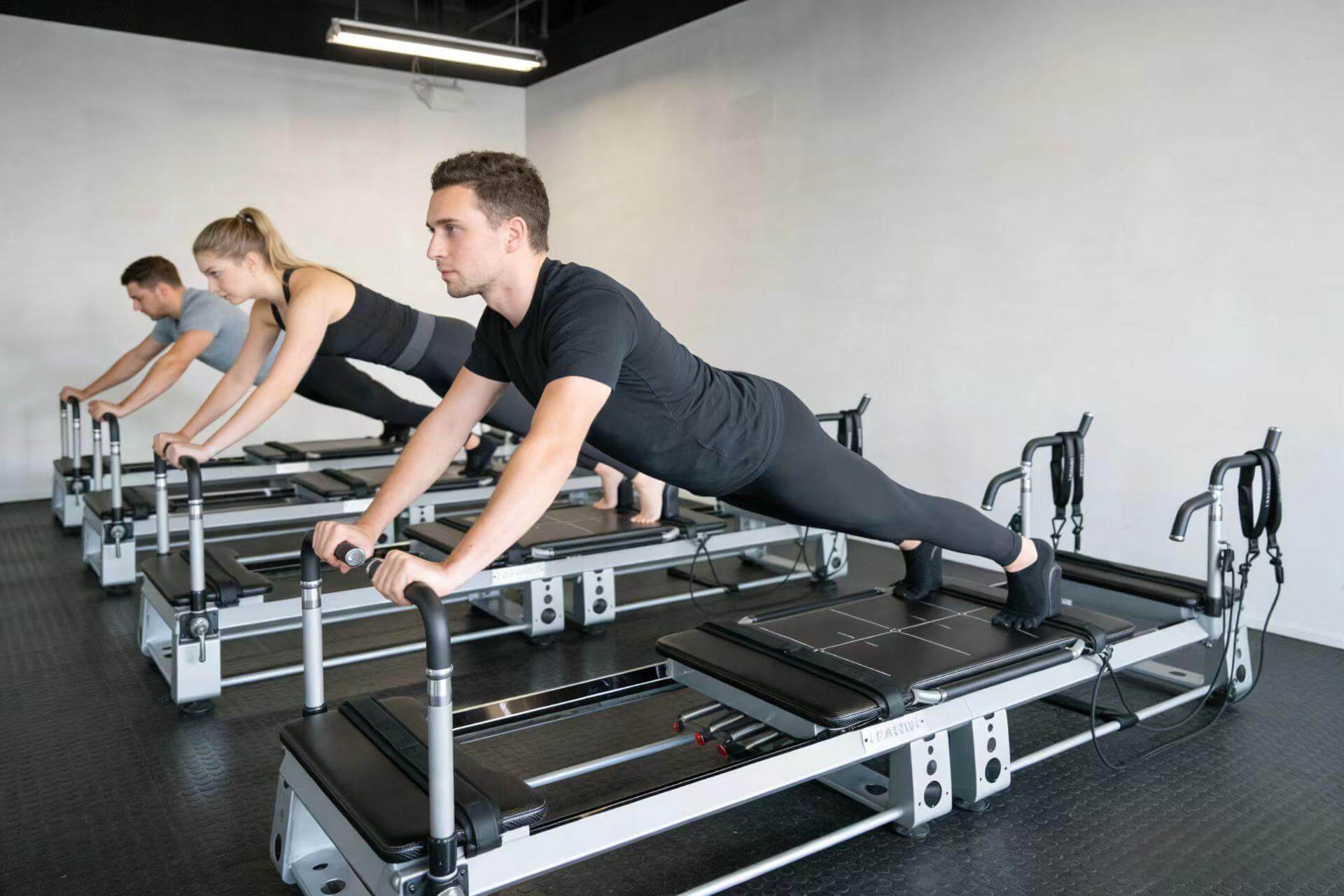
Six commercial machines land between €11,400 and €21,000 before VAT. A flat-rate trader cannot deduct that purchase, because flat-rate taxation by definition ignores your costs. A trade on income, or a company, depreciates it. And there is a second, larger loss: because flat-rate status requires staying outside the VAT system, the 25% Croatian VAT on those machines becomes a permanent cost instead of a reclaim.
| Machine count | Purchase, ex-VAT | VAT at 25% | Recoverable as obrt / d.o.o. | Recoverable as paušalist |
|---|---|---|---|---|
| 4 | €7,600–14,000 | €1,900–3,500 | Yes, in full | No |
| 6 | €11,400–21,000 | €2,850–5,250 | Yes, in full | No |
| 8 | €15,200–28,000 | €3,800–7,000 | Yes, in full | No |
Compare that to the €2,183 annual contribution saving and the answer is clear. The flat-rate regime pays for itself only if you never buy a machine fleet, or if you buy second-hand from a private seller and never register for VAT anyway.
There is a revenue test too. Six machines running four classes a day at €25 a head, six days a week, is north of €180,000 a year at full occupancy, and even a half-full schedule blows through €60,000. Crossing the ceiling mid-year throws you out of the regime and into full bookkeeping with a tax recalculation, which is an administrative mess you do not want in month nine.
Our recommendation for anything with three machines or more: register as an obrt taxed on income, or a d.o.o. if there is more than one owner, and register for VAT voluntarily before you place the equipment order. Voluntary VAT registration is allowed even below the €60,000 threshold, and it is the only way to recover the VAT on the fit-out and the machines.
Decision two: register, in the right order
Registering a trade in Croatia has been free since September 2021, when the administrative fee for trade registration was abolished. You can file online through e-Obrt using your e-Građani credentials, or in person at the county economy office, or the City of Zagreb office if you are in the capital.
The sequence that avoids rework:
- Get your OIB (tax number) if you do not have one, and a Croatian bank account.
- Register the trade or company. For a d.o.o. you need the €2,500 minimum share capital paid into a temporary account before the commercial court registration, which is why the company route takes days rather than an afternoon.
- Register in the tax register within eight days of starting activity, and decide flat-rate or actual-income taxation at the same time.
- Join the Croatian Chamber of Trades and Crafts. Membership is automatic for trades and carries a small income-based contribution.
- Register for VAT if you are buying equipment, and get the VAT identification number for intra-EU acquisitions. That number is separate from VAT registration itself, and you need it before your Spanish or Italian supplier can invoice you without VAT.
- Set up e-invoicing. From 2026, businesses in Croatia have to be able to receive and fiscalise domestic B2B eRačuni. The obligation for the smallest taxpayers to issue them starts on 1 January 2027.
Budget €120 to €250 a month for a bookkeeper. It is not optional at this scale, and a Croatian accountant will cost less than the mistakes you make without one.
Decision three: read the lease before the fit-out
Croatian business premises are governed by the Act on the Lease and Sale of Business Premises, and three articles in it matter more than the rent.
Article 15 says a tenant may not make alterations that change the construction, layout, floor area, use or external appearance of the premises without the landlord’s explicit written consent. A pilates fit-out changes layout, adds mirrors and often changes use. Get consent in writing, in the lease, with the fit-out drawings attached as an annex. A verbal yes from the agent is worth nothing.
Article 20 requires you to hand the premises back in the state you received them, unless the lease says otherwise. That is a reinstatement obligation, and it applies to the mirror wall you bolted on and the sprung floor you laid. Negotiate it explicitly: either the landlord accepts the fit-out as an improvement, or you price the removal now.
Article 23 sets a floor on indefinite leases: an open-ended lease cannot be terminated by notice in the first year, unless the contract says otherwise. Article 24 then sets the default notice period at 30 days, with notice only valid on the 1st or 15th of a month.
That combination is unusual in Europe, and it cuts both ways.
| Country | Default commercial lease position |
|---|---|
| Croatia | Indefinite lease cannot end by notice in year one; 30-day default notice; notice on 1st or 15th |
| Belgium | 9-year standard, exit at year 3 or 6; indexation only if written into the contract |
| Italy | 6+6 years minimum, rent indexation capped at 75% of the ISTAT index and cannot be waived |
| Netherlands | Statutory protection only for “middenstandsbedrijfsruimte”, typically 5+5 years |
| Spain | Term free for commercial premises; statutory deposit of two months’ rent under Article 36 LAU |
For a Croatian studio, the practical read is this. If you take an indefinite lease you are committed for at least a year and then have a cheap exit, which suits a first studio where you are still testing the location. If a landlord insists on three or five years, you are giving up that flexibility and should be paid for it in rent-free months, not in promises.
On the coast the calculation changes again. A studio in Split, Zadar or Dubrovnik can do a large share of its annual revenue between June and September, and coastal landlords know it. Push for either a lower year-round rent or a seasonal rent structure. What you do not want is a year-round fixed rent on a business that earns its money in sixteen weeks.
Two more local items. Playing recorded music in classes needs a public performance licence from HDS ZAMP. And a change of use, or a fit-out that touches structure or fire routes, needs the relevant municipal or county approval before work starts. Budget time for it, not just money.
Sizing the room and the fleet
The physical planning is identical to anywhere else in Europe: allow about 3 m by 1.5 m of working space per reformer, plus circulation, plus a small reception and a place to store springs and boxes. Six machines including reception and back-of-house needs roughly 90 to 130 m². A four-machine boutique can work in 70 to 90 m².
Fleet size should follow the season, not the brochure.
| Setup | Machines | Why |
|---|---|---|
| Zagreb, year-round, group classes | 6–10 | Demand is stable; utilisation decides profitability, not season |
| Zagreb, private and duet sessions | 3–4 | Higher price per session, fewer machines needed |
| Coastal studio, seasonal peak | 4–6 | Peak weeks run flat out, winter runs at a fraction |
| Coastal hotel or resort contract | 2–4 | Serves in-house guests, not the public |
Coastal rooms have two equipment-specific problems worth planning for. Salt air attacks anything with exposed steel, so an aluminium frame with anodised rails ages better than a powder-coated steel frame, and springs want a wipe-down and a light oil at the end of the season rather than in June. Second, if the studio is closed or near-idle for three months, springs should be de-tensioned and stored rather than left loaded.
What the machines have to carry
Croatia is in the eurozone and in the EU, so a reformer bought from another member state arrives without customs clearance and without import duty. Your supplier invoices net of VAT under the reverse-charge mechanism, you self-assess 25% Croatian VAT and deduct it in the same period, assuming you registered. That is the strongest practical argument for sorting VAT status before you order.
Specification side, the things to insist on are not glamorous:
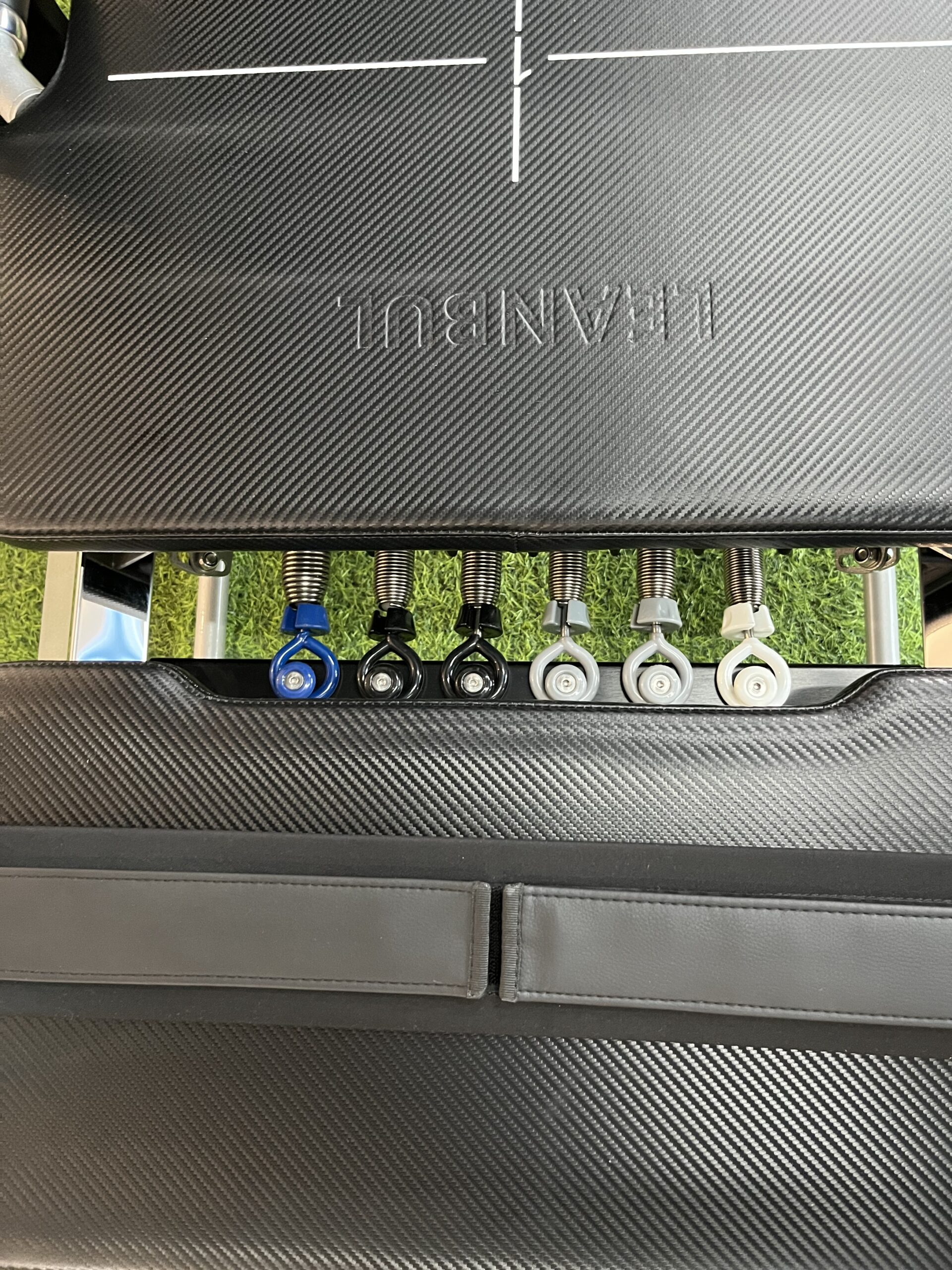
- EN ISO 20957-1:2024 Class S certification, with the test report and declaration of conformity, not just a badge on the frame. Class S is the commercial grade, tested to 100,000 cycles against 12,000 for home equipment.
- An EU economic operator for the GPSR, the product safety regulation that has applied since December 2024. If your supplier is outside the EU, someone inside the EU has to carry the responsible-person obligations. A Spanish manufacturer does this by default.
- Spring sets priced and available as a consumable. Assume a full set every 18 to 24 months on a busy commercial floor, at €120 to €250 a set.
- Lead time of 6 to 12 weeks on a factory-direct order, plus delivery to the door. For a coastal studio that means ordering in March for a late-May opening, not in May.
Setup budget
A four to six machine studio in Zagreb, in 2026, looks roughly like this. Rent is your own number; the example uses €1,800 a month for about 110 m², which is a street-level unit outside the very centre.
| Line | Low | High |
|---|---|---|
| Registration and legal | €0 | €900 |
| Deposit and first rent (3–4 months) | €5,400 | €8,800 |
| Fit-out: floor, mirrors, lighting, paint, reception | €12,000 | €28,000 |
| Reformers, 4–6 machines | €7,600 | €21,000 |
| Delivery, installation, spare springs | €1,000 | €2,300 |
| Insurance: liability, contents, equipment | €600 | €1,300 |
| Booking software and card terminal | €600 | €1,400 |
| Launch marketing | €1,500 | €3,000 |
| Working capital, 3 months | €6,000 | €9,000 |
| **Total** | **€34,700** | **€75,700** |
Two line items people forget. Insurance covers more than the room: six machines and public classes need liability cover that names the equipment, and underwriters increasingly ask for the CE paperwork. And the deposit is usually three months, sometimes more for a tenant with no trading history.
FAQ
Can a foreigner open a pilates studio in Croatia? EU and EEA nationals are generally treated the same as Croatian citizens when registering a trade. Non-EU nationals usually find the company route more practical, since a d.o.o. can be owned by a foreign person, while a trade registration ties the business to a person’s residence and status. Either way you need an OIB and a Croatian bank account, and it is worth using a local accountant for the filing.
Do I need a qualification to teach Pilates in Croatia? There is no single Pilates licence. What matters is whether the specific activity you register is classified as a tied trade requiring proof of professional qualification, which the county economy office will confirm when you file. In practice, recognised reformer certifications help twice: with the registration, and with insurance underwriting.
Is Pilates VAT-exempt in Croatia? No. Commercial reformer classes are a standard-rated service at 25%. Croatia has not followed the Danish route of newly taxing fitness, because it never exempted it in the first place. Do not assume a sports or education exemption covers a commercial studio; confirm the classification with your accountant before you set prices.
Do I have to register for VAT if I am under €60,000? No, but you probably should if you are buying machines. Registration is what lets you recover the 25% VAT on equipment and fit-out, and it lets you buy from other EU suppliers without paying their VAT up front.
What do studios charge in Zagreb? Drop-in reformer classes sit around €22 to €30, and class packs bring the effective price down to roughly €18 to €24 per session. That pricing supports a six-machine room at moderate occupancy, but not a large fleet on a €60,000 revenue ceiling.
Where to start
If you are planning a studio in Croatia, the order is: decide the structure, register for VAT while you are at it, sign a lease you can leave, then order machines. Most of the expensive mistakes happen in the first three steps, and none of them involve a reformer.
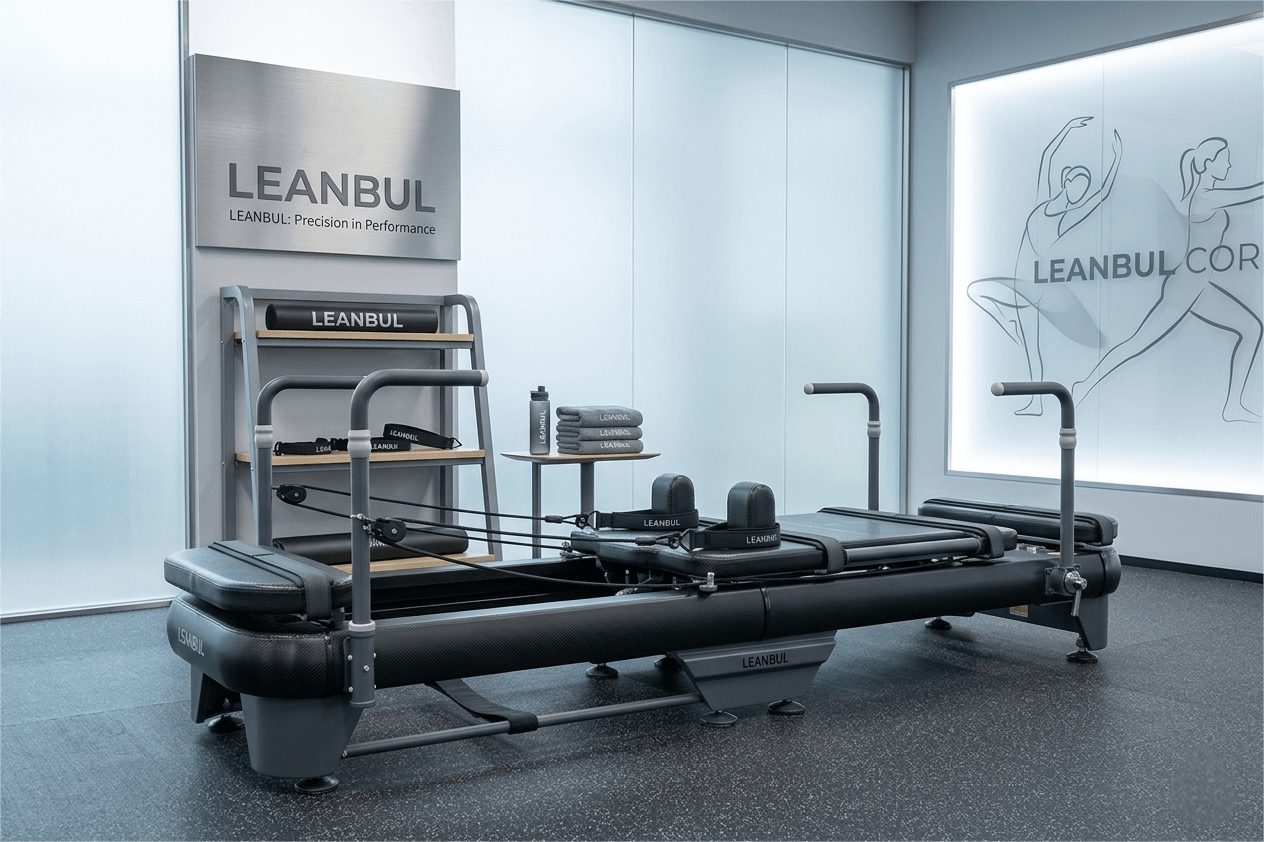
For equipment, our K30 commercial reformer is the machine most European boutique studios start with, the K38 premium reformer is the one that goes into higher-traffic rooms and hotel projects, and the K10 compact reformer covers smaller rooms and private studios. You can see the full range in our collection or read how we handle studio fit-outs end to end. If you want a quote delivered to a Croatian address with the compliance paperwork attached, send us the room dimensions and machine count and we will come back with a landed price.
