How to Open a Pilates Studio in Bulgaria in 2026: Legal Steps, VAT, Costs and Equipment
Opening a pilates studio in Bulgaria is cheap by EU standards and slow to become profitable. Registration can cost under €20 as a sole trader, a four-machine room fits in 70–90 m², and the whole fit-out can be financed for €25,000 to €45,000. What decides the outcome is not the setup cost, it is whether you can sell enough €13 to €16 sessions in a market where the price leader charges €6.63.
This is the operating sequence, in the order that keeps you out of trouble: legal form, registration, tax and social insurance, VAT, premises, equipment, then the numbers.

Step 1: choose the legal form
Bulgaria has four realistic options for a studio. The differences that matter are liability, capital and how much accounting you buy.
| Form | Minimum capital | Liability | Tax | Registration |
|---|---|---|---|---|
| Self-insured person (самоосигуряващо се лице) | none | unlimited, personal | 10% personal income tax | BULSTAT + NRA, no Commercial Register |
| ET — sole trader (Едноличен търговец) | none | unlimited, personal | 10% personal income tax | Commercial Register; state fee €15 in person, €8 online |
| EOOD — single-member LLC | €1 (BGN 2) | limited to capital | 10% corporate tax, 5% on dividends when distributed | Commercial Register; notarised articles, capital deposit |
| OOD — multi-member LLC | €1 | limited to capital | 10% corporate tax | Commercial Register; partner agreement |
The 10% flat rate applies either way, so the tax line rarely decides it. Two other things do.
Liability. An ET signs the lease and the equipment contract personally. If a client is injured, or the studio closes owing rent, the exposure goes to the owner’s own assets. An EOOD contains that, at the cost of a few hundred euros of setup and a heavier monthly accounting file.
Hiring. The moment you employ an instructor, payroll, contributions and the labour code arrive. Many Bulgarian studios stay as ET or self-insured while they are a one-person operation and switch to an EOOD when they take on staff, a long lease, or a bank loan. Switching later is normal and not expensive.
Non-EU nationals can register a company; the sole-trader routes are simpler if you already have a Bulgarian personal number.
Step 2: register
Commercial Register. ET and EOOD registrations go through the Registry Agency, online with a qualified electronic signature or in person. An ET can be filed in a day or two. An EOOD needs articles of association, a notarised signature, proof of the capital deposit and a manager’s consent, then typically three to seven working days. Agencies quote from around €400 for a package including state fees and bilingual documents.
BULSTAT and the revenue agency. A self-insured person registers with BULSTAT (fee BGN 10, about €5) and files a declaration with the National Revenue Agency declaring which social risks they insure for: pension only, or pension plus general illness and maternity. Miss the declaration and the fines start at BGN 50.
Bank account and accounting. Bulgarian accounting for a small service company typically runs €120 to €250 a month, more if you have payroll. Budget for it from month one; the filings are monthly, not annual.
Step 3: social insurance, which is the real fixed cost
A self-insured owner pays contributions on a declared base, and that base cannot go below the statutory minimum:
- Minimum insurable income: €550.66 from January to July 2026, rising to €620.20 from 1 August 2026.
- Contribution rate: 27.8% for pension and health, 31.3% if you add voluntary unemployment cover.
- Maximum insurable income: €2,111.64 until 31 July, €2,300 after.
At the floor, that is roughly €172 a month, or €194 with the unemployment add-on. At the ceiling it is around €640. The contribution is due whether or not the studio made money that month, which is why a slow first winter hurts more than the registration fees ever will.
If you hire, employer contributions run 18.92% to 19.62% on gross, capped at the same maximum base, and the minimum wage is €620.20 from 1 January 2026. A full-time instructor at the minimum costs roughly €740 a month before any payroll administration.
Step 4: decide on VAT before you buy machines
This is the step Bulgarian studio owners most often get wrong, and it costs them thousands.
The standard rate is 20%. Mandatory registration kicks in at €51,130 of taxable turnover in a calendar year, and you have seven days from crossing it. Below that, registration is voluntary.
Voluntary is usually correct for a new studio, for one reason: a four-machine fleet at €2,400 to €3,800 each carries €1,920 to €3,040 of VAT, and a six-machine fleet carries up to €4,200. Registered, you deduct it. Not registered, that money is gone, permanently. You also cannot deduct VAT on the fit-out, the mirrors or the flooring.
There is a second trap. The €51,130 threshold covers domestic turnover. Buying goods from another member state triggers the intra-Community acquisition rules, which carry their own threshold: €10,000 in most member states, with Bulgaria applying the converted equivalent. A €12,000 order from a Spanish manufacturer can require you to be VAT-registered just to report the acquisition, whatever your local turnover. Ask your accountant whether you are already obliged to register before you place the order. The practical answer for most new studios: register first, order second.
Filing is monthly, by the 14th, through the revenue agency’s portal, with VIES reporting for intra-EU supplies. The VAT number keeps the BG prefix and your company number; only the currency changed in January.
Step 5: premises, permits and the lease
Bulgaria has no single “pilates studio licence”. What it has is a set of building and safety obligations that attach to the premises, and they are checked at different moments.
Use permit. The unit needs a commissioning document (разрешение за ползване or удостоверение за въвеждане в експлоатация) showing an approved use that covers your activity. A former shop or office is not automatically a fitness space. If the approved use does not match, you are looking at a change-of-use procedure, design documentation and possibly a construction permit before anything opens.
Fire safety. Evacuation routes, extinguishers, signage and, in larger or basement units, more. The fire service inspects. A studio in a residential building with one narrow staircase is the classic problem case.
Zoning and neighbours. Mixed-use buildings are common in Sofia. Check the zoning plan, then think about impact sound and the residents below. We wrote a separate piece on studio soundproofing because this is the single most common complaint pattern in retrofit units.
The lease itself. Bulgarian commercial leases fall under the Obligations and Contracts Act, and the parties can agree almost anything: rent, term, renewal, repairs, indexation. There is no statutory minimum term, unlike Belgium’s nine years or Italy’s six-plus-six. Private leases are capped at ten years; commercial leases can run longer.
Three clauses to get right:
- Repairs. The tenant is responsible for repairs arising from normal use, the landlord for everything else, unless the contract says otherwise. Get the boundary written down, especially for HVAC.
- Subletting. Allowed unless the contract prohibits it. If you plan to rent the room to other instructors on quiet mornings, put it in the contract at signature.
- Registration. Register the lease with the Registry Agency. An unregistered lease can be terminated with one month’s notice if the building is sold.
Deposits are commonly two to three months. Rents in Sofia for the kind of unit a studio needs run from roughly €8 to €18/m²/month depending on district, floor and condition: Class A office space quotes around €9 and Class B around €5, while street-level commercial in a central district trades higher. A 104 m² central unit we looked at lists at €1,700 a month. Residential districts such as Mladost or Ovcha Kupel are cheaper and, judging by where the reformer studios actually are, work better.
Music. Recorded music in a class needs public performance licences from Musicautor (authors) and PROFON (performers and producers). It is a small annual cost and an easy thing to forget until an inspector asks.
Step 6: equipment
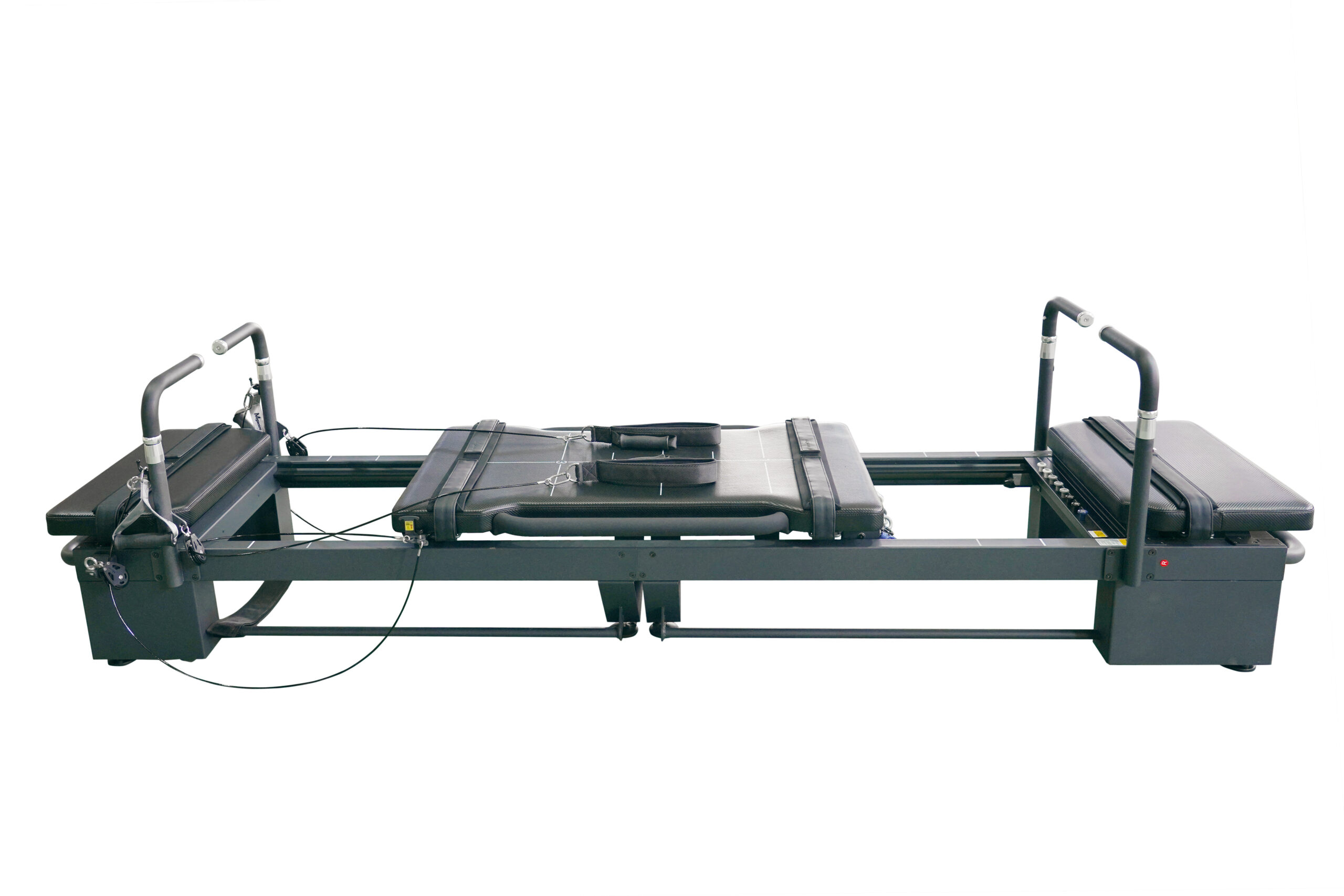
A realistic Bulgarian studio is three to six machines, not twelve. Factory-direct pricing for European buyers sits at €1,900 to €3,500 per machine on six to twelve units and €2,400 to €3,800 on three to five.
| Item | 3 machines | 4 machines | 6 machines |
|---|---|---|---|
| Reformers (factory-direct) | €7,200–11,400 | €9,600–15,200 | €11,400–21,000 |
| Freight inside the EU | €300–600 | €400–800 | €600–1,200 |
| Mats, boxes, small props | €400–700 | €500–900 | €700–1,300 |
| Optional Cadillac / chair | €2,500+ | €2,500+ | €2,500+ |
No customs, no import duty, no clearance agent: this is an intra-Community supply, and the only tax movement is the reverse-charged 20% VAT that a registered studio deducts.
Two specification decisions matter more than the brand:
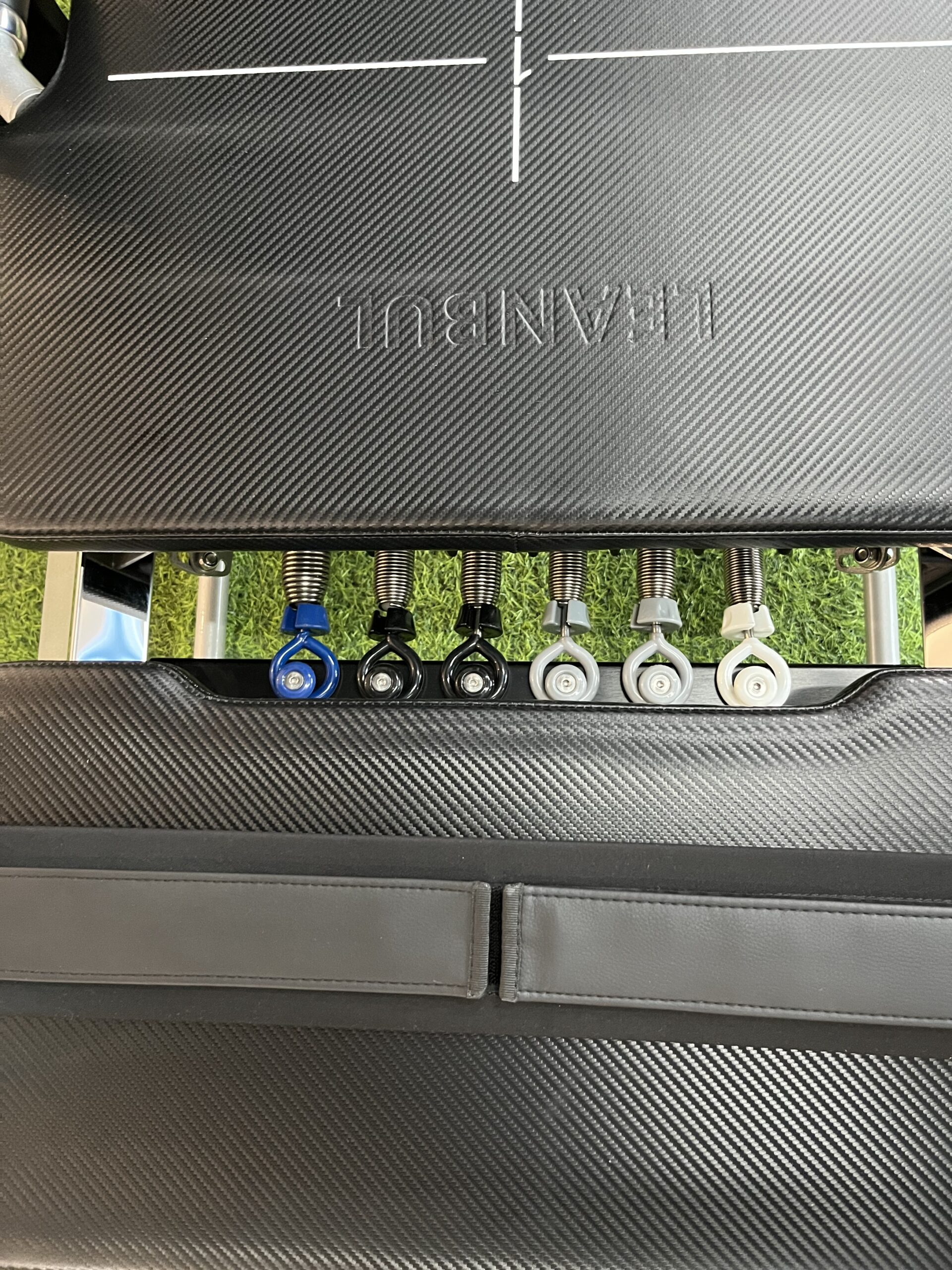
Spring set. Group classes run springs through thousands of cycles a year. Ask for the spring rate in newtons at a stated extension, and for the replacement interval in hours rather than years.
Warranty split. Frames are warrantied for years; springs and upholstery are wear items with months. Get both numbers in the quote, in writing. Our warranty guide for European studios explains what to demand, and the spec sheet template is the document to send suppliers so their quotes come back comparable.
Step 7: what it costs to open a pilates studio in Bulgaria
A four-machine boutique in a Sofia residential district, planned conservatively:
| Line | Amount |
|---|---|
| Registration, notary, agency fees | €0–900 |
| Accounting (first three months) | €400–750 |
| Deposit plus first rent (three months) | €3,000–5,500 |
| Fit-out: mirrors, flooring, reception, changing, lighting | €8,000–20,000 |
| Four reformers plus freight and props | €10,300–16,500 |
| Insurance, booking software, launch marketing | €1,500–3,000 |
| Working capital (three months) | €4,000–7,000 |
| **Total** | **€27,000–54,000** |
The fit-out line is the one to interrogate hardest. Bulgarian construction labour is cheaper than in Spain or Germany, so quotes can come in low, but a unit without HVAC or with a single toilet will eat the difference. Get three local quotes and check what is excluded.
Then the operating number. At €14 a head with four clients on the machine, a class grosses €56. Pay an instructor €20–25 and you keep €31–36. Fixed costs (rent, utilities, insurance, software, accounting, your own €172 of contributions, marketing) land near €2,400 a month for a 110 m² unit. That needs about 70 classes a month to break even, roughly three a day, six days a week, at 100% occupancy.
Nobody runs at 100%. At 75% occupancy you need about 95 classes a month, or four a day. That is achievable in a well-located studio with a trained client base, and it is brutal in a first quarter with neither.
Which is why the format question comes before the machine question. If you cannot staff four classes a day with a qualified instructor, a screen-guided or semi-guided model at a lower price point may be the honest answer, and that changes what you should buy.
FAQ
How much does it cost to open a pilates studio in Bulgaria? Between €27,000 and €54,000 for a four-machine boutique in Sofia, including deposit, fit-out, equipment and three months of working capital. A two-machine room in a secondary city can be done for under €20,000.
Do I need a licence to teach pilates in Bulgaria? There is no single pilates licence. What you need is a premises with the right approved use and fire safety compliance, and instructors holding recognised certification. Clients and insurers ask for it, and the new EN 17229:2026 club standard expects documented trainer competence.
Should I register for VAT if I am below €51,130? If you are buying a fleet, usually yes: 20% of €10,000 to €21,000 is real money and it is only recoverable while registered. If you are a solo instructor with a mat and one reformer, the admin may not be worth it.
Is a Bulgarian ET or an EOOD better for a studio? ET if you are alone, want the lowest admin and are comfortable with personal liability. EOOD once you hire, sign a multi-year lease or borrow. The limited liability is worth the setup cost and the heavier accounting.
Can I import reformers from Spain without a customs agent? Yes. Goods moving between EU member states are not imported; there is no duty and no clearance. The supplier invoices without VAT under the intra-Community rules and you account for 20% VAT in your Bulgarian return.
Fitting out the room
If you are planning a studio in Sofia, Plovdiv, Varna or a smaller city, the useful first step is a floor plan with the machine positions marked and an honest count of how many class slots a day you can staff. Send both and we will tell you what fits, including where a compact machine saves a slot.
The K30 covers most boutique rooms at three to six units, the K10 is the compact unit for tight footprints, and the K38 is for rooms running near-continuous classes. We manufacture in Spain, deliver across the EU without customs formalities, and quote in euros with VAT treatment stated on the quote.
Start with the contact form, see the full collection, or read the Bulgarian market overview for the pricing and format side of the same decision. If you are still sizing the budget, the cost guide for European studios has the per-machine bands by fleet size.
