How to Open a Pilates Studio in Belgium in 2026: Legal Steps, Costs and Equipment
To open a pilates studio in Belgium you pick a legal form, register with the BCE/KBO, join a social insurance fund, sort out 21% VAT, find a unit the municipality will approve for fitness use, and buy commercial-rated reformers. A solo start as an eenmanszaak or entreprise individuelle is cheap and fast; once you sign a long lease or hire instructors, an SRL/BV usually makes more sense.
Budget €40,000 to €120,000 for a boutique opening. The lease and the machines are the two numbers that matter; the rest is smaller but fiddly, and the fiddly parts are where first-time studio owners lose weeks.
Here is the process in the order you will actually do it.

Why open a pilates studio in Belgium now
Belgium has roughly 1.18 million active paid fitness memberships and a penetration rate of about 10% of the population. Germany runs at 14.8% and the European average is 9.3%, so Belgium sits below both. A wealthy, densely populated country with below-average gym penetration is the profile that pulls in franchise capital.
The reformer niche is young. Club Pilates signed a master franchise agreement in January 2025 covering Belgium, Luxembourg and Monaco, committing to at least 36 studios over ten years. The master franchisee already holds the rights for France, Ireland and Switzerland.
At the same time the mainstream gym chains have started adding reformer rooms and folding reformer classes into standard memberships. That cuts both ways. It introduces thousands of members to the machine, and it sets a price anchor: a €40-a-month gym membership that includes reformer classes is a hard reference point for a boutique studio charging €25 a class.
If you open now, you are helping build the category rather than fighting for share of an established market, as long as you price against the gyms rather than against London.
Step 1: Choose your legal form
Two structures cover almost every new studio in Belgium.
The eenmanszaak (Dutch) or entreprise individuelle (French) is a sole proprietorship. No capital, no notary, no financial plan. You register, you are in business. The catch is unlimited personal liability: if a client is injured or you cannot pay a supplier, your personal assets are on the line.
The SRL (French) or BV (Dutch) is the Belgian limited company. No legal minimum capital, but the law requires a financial plan showing you can fund the first two years. Setup runs €1,500–3,000 excluding capital, mostly notary and publication fees.
| Eenmanszaak / Entreprise individuelle | SRL / BV | |
|---|---|---|
| Setup cost | €109–190 (registration plus VAT activation) | €1,500–3,000 excl. capital |
| Minimum capital | None | None, but a financial plan is mandatory |
| Liability | Unlimited and personal | Limited to company assets |
| Accounting cost | ~€1,500–2,500 per year | ~€3,500–5,500 per year |
| Social contributions | Self-employed (INASTI/RSVZ) system | Director’s own self-employed contributions |
| Best for | Solo instructor testing the market | Studio with a lease, staff or partners |
The honest advice: start as a sole trader if you teach alone in a rented room. Move to an SRL/BV when you sign a multi-year lease or put instructors on payroll, because the company costs more in accounting every year and only earns its keep once you have real liability and real contracts.
Step 2: BCE registration, social insurance, and VAT
These three are separate processes. People treat them as one and get confused.
BCE/KBO registration. Every business registers with the Crossroads Bank for Enterprises through an accredited business counter (Acerta, Xerius, Securex, Liantis, UCM and others). You get a 10-digit enterprise number that becomes your identity in every transaction. The regulated BCE fee is €111.50 in 2026 and is the same everywhere; only the counter’s service fee varies.
Social insurance fund. You must join one. In 2026 the minimum quarterly contribution for a main-occupation self-employed person is €890.42, up to a maximum of €5,103.05. Starting as your main activity with low income, the primostarter rate applies: €341.30 first quarter, €459.82 after. You owe contributions even in a loss-making year, and the first years run on provisional amounts based on income from three years ago, corrected later.
VAT. Standard Belgian VAT is 21%. If your turnover stays under €25,000 a year you can apply for the small-business exemption scheme in your e604A declaration and stop charging VAT on classes. The federal government approved a rise of that threshold to €30,000 in April 2026, but it needs the legislative change to Article 56bis of the VAT Code to be enacted before it applies, so check the current position with your accountant. The trade-off is real: inside the exemption you cannot reclaim input VAT on your reformers.
That decides a lot. Eight machines at €3,000 each is €24,000 plus €5,040 of VAT, and whether you recover that €5,040 depends on your VAT status. For most studios buying a fleet, registering for VAT voluntarily and reclaiming the input tax is the better call. The Belgian tax authority’s own guidance on the VAT exemption scheme for small businesses sets out the thresholds and the pro-rata rule for a first partial year.
One useful quirk: buying from a manufacturer elsewhere in the EU is an intra-EU acquisition, not an import. No customs, no duty, and the VAT is handled by reverse charge. You account for it and deduct it in the same return.
Step 3: Permits, and why this is regional
Belgium’s permitting is split across three regions, and the rules in Flanders are not the rules in Brussels or Wallonia. Two separate permissions can come into play.
Planning permission covers changing what a building is used for. Converting a former office, retail unit or apartment into a fitness studio usually triggers it. In Wallonia and Brussels this is the permis d’urbanisme; in Flanders it sits inside the omgevingsvergunning.
Environmental or operating permission applies where the activity involves classified installations. In Brussels this is the permis d’environnement, and the triggers include ventilation and air-conditioning systems, boilers over 100 kW and similar equipment. A studio with a proper HVAC system will often need one, even though nothing about pilates is dirty or dangerous. Where both permissions are needed, the regions offer a combined procedure Brussels calls a permis mixte.
Three things to check on the unit itself, before you sign anything:
- Ceiling height and floor loading. An upstairs unit can fail on noise transmission to the flat below, and a reformer room needs circulation space around each machine, not just floor area.
- Noise and hours. Mixed residential buildings sometimes allow a studio with conditions on operating hours. Get them in writing before you commit.
- Landlord consent for the stated use. Most commercial leases restrict what you may do in the unit and control subletting, which matters if you plan to rent the room to other instructors.
hub.brussels gives free, personalised help with planning and environmental permits to Brussels businesses, and each region has an equivalent.
Step 4: The lease is usually the biggest number
Belgian commercial leases work differently enough from most countries that the lawyer’s fee to review one is money well spent.
The core rule: a commercial lease has a minimum term of nine years, and a lease written for less is treated as if it were nine. The standard “3/6/9” gives break options at the end of years three and six, so you are not locked in unless you choose to stay. Indexation only applies if the contract says so; if it is silent, the rent stays flat for the nine years aside from the triennial revision, and case law reads an ambiguous indexation clause in the tenant’s favour.
Indicative rents for small commercial and office units in 2026 put Brussels CBD Grade A space at roughly €300–400 per m² per year, Antwerp at €170–220 and Ghent at €130–175, with Grade B units 20–35% cheaper. A studio rarely needs prime frontage, so most operators look at secondary and Grade B units well below those numbers. Add service charges of €30–60 per m² per year and a deposit of three to six months’ rent.
Negotiate two things beyond the rent:
- A schedule of condition before you sign. It sets the standard the unit must be in when you hand it back, and stops a landlord charging you for wear that was already there.
- A rent-free fit-out period. Three to six months is normal in this sector and routinely worth more than any discount on the headline rent.
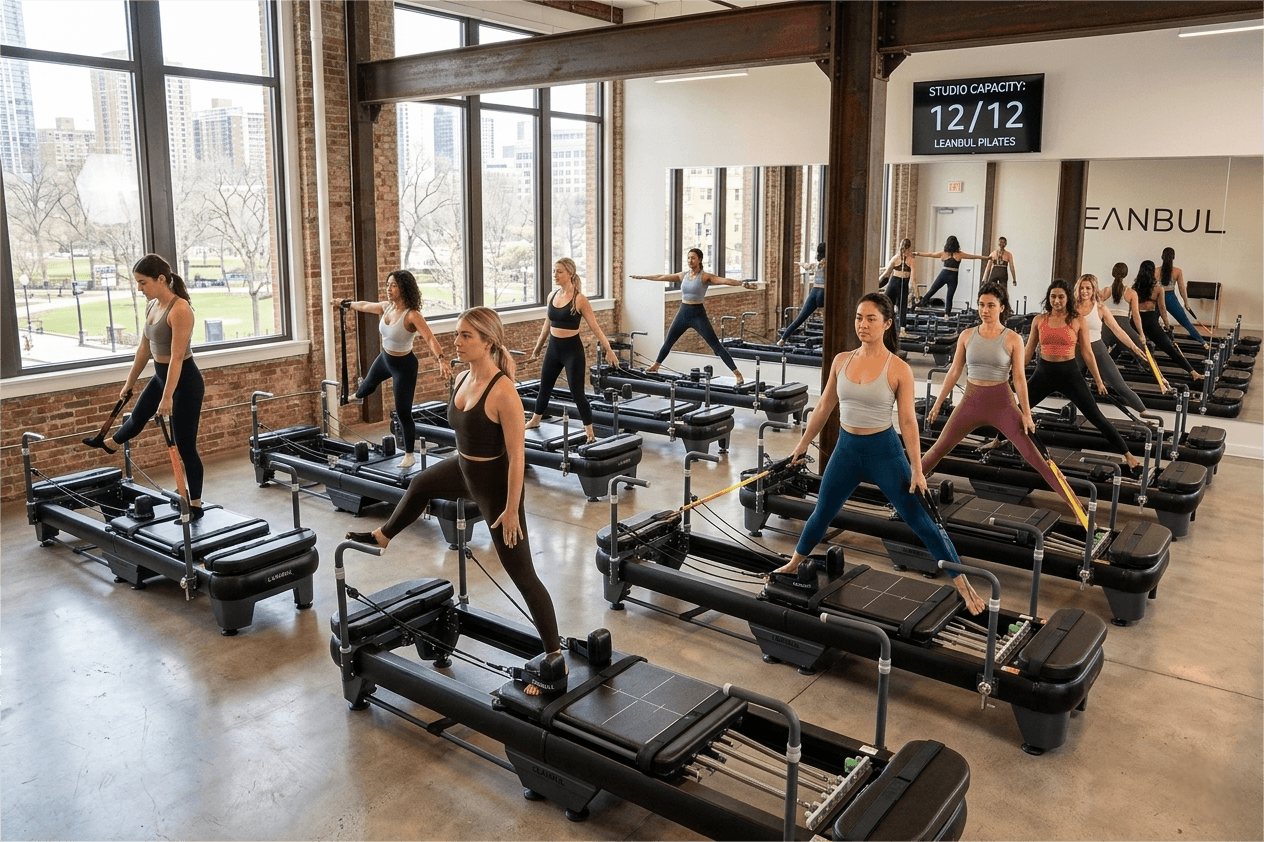
For the fit-out, allow €15,000–35,000 for flooring, mirrors, lighting, ventilation, a small reception and storage, and €10,000–20,000 more if you take a bare shell rather than a fitted former retail unit. Plan the room around the machines: each reformer needs about a 3 m × 1.5 m working area once you allow for the moving carriage, the client and the instructor, plus circulation. A six-reformer boutique including back of house wants roughly 90–130 m².
Step 5: Equipment, commercial-rated and bought inside the EU
The specification is settled: for a studio you want EN ISO 20957 Class S machines. Class S is the commercial standard; Class H is for home use. A home-rated reformer in a shared studio is a compliance problem and, after an accident, an insurance problem.
What you actually pay for commercial reformers in Europe in 2026:
| Fleet size | Typical price per reformer | Notes |
|---|---|---|
| 1–2 units | €2,800–6,500 | Retail single-unit pricing |
| 5+ units | €1,900–3,500 | Manufacturer-direct fleet pricing |
| Spare spring set | €120–250 | Consumable, budget for it |
| Delivery within EU | Included or quoted | Pallet freight; 981 kg per machine |
Two decisions separate a studio that ages well from one that does not. Standardise on one model, because mixed fleets look fine on day one and become a spare-parts problem by year three. And order your consumables (springs, straps, carriage pads) with the machines. Buying from a manufacturer inside the EU also means no customs clearance, no import duty, VAT by reverse charge and short pallet-freight delivery. Set the delivery term clearly: DDP means the manufacturer delivers to your door, DAP means you handle the final leg.
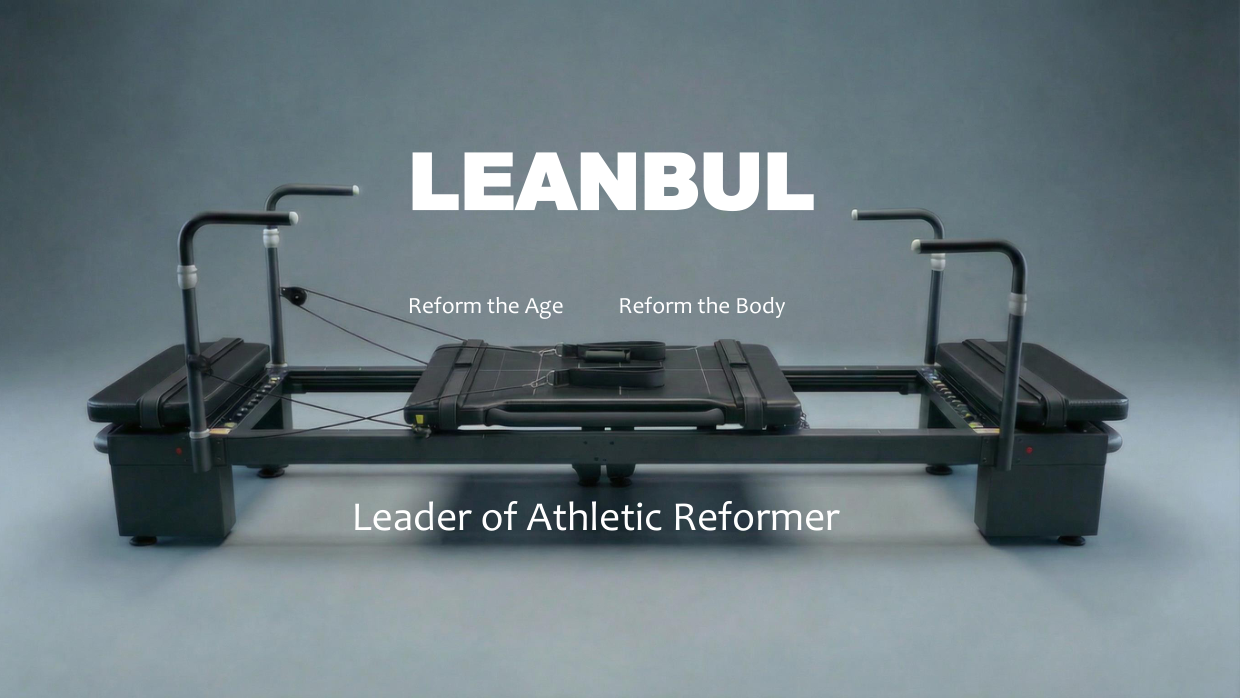
For a first room, a compact commercial reformer like the K10 suits a small footprint, the K30 is the workhorse most multi-site operators standardise on, and the K38 premium reformer is built for high-spec boutique and hotel installations.
Step 6: Pricing, class numbers and break-even
Belgian reformer pricing has a wide spread, because the market is split between boutique studios and gyms that fold reformer classes into a normal membership.
| Studio type | Published price |
|---|---|
| Boutique (Brussels, Antwerp) intro offer | €99 for 3 classes |
| Boutique 4-week membership | €329 |
| Boutique 10-class pack | €449 |
| Value-positioned studio first class | €19 |
| Value-positioned 3-class trial | €49 |
| Value-positioned membership | €40.19 per month (4×/week) |
That gap tells you most of what you need to know. Belgium has a premium segment and a gym segment, and very little in the middle. Decide which one you are in before you sign a lease, because the rent you can afford depends on the answer.
A simple break-even calculation: eight reformers, four sessions a day per machine at €22 a place, five days a week, is roughly €3,500 a week in capacity at full utilisation. Year-one utilisation is closer to 50–60%, so call it €1,925 a week, or about €8,300 a month before rent, salaries, VAT and equipment finance. Belgian rents and 21% VAT are what turn that from comfortable to tight.
Step 7: Staff, insurance and language
Three practical points that catch people out.
Instructor qualifications. Sport instruction is regulated at regional level, and the rules differ between Flanders, Brussels and Wallonia. Check the current requirements with your regional sport administration rather than relying on a blog, including this one.
Insurance. You need liability cover for a facility where the public uses equipment, and your instructors need their own professional liability cover. Make sure the policy covers commercial reformer use, and that you can show CE documentation and maintenance records if asked.
Language. A Brussels studio serving EU institutions and an international population will usually need instructors who work in French and English, often Dutch too.
One risk worth naming: hiring instructors as independent contractors when they work only for you and on your terms is a fake self-employment problem (schijnzelfstandigheid, faux indépendants) that has been enforced in Belgium. Set the working relationships up with your accountant from the start.
What the whole thing costs
| Item | Realistic range (excl. VAT) |
|---|---|
| Legal setup (sole trader to SRL) | €109–3,000 |
| Fit-out (flooring, mirrors, HVAC, signage) | €15,000–35,000 |
| Reformers (6–10 units, fleet price) | €12,000–35,000 |
| Consumables, spare springs, small equipment | €1,000–3,000 |
| Rent deposit | 3–6 months’ rent |
| Insurance, professional fees, opening marketing | €3,000–8,000 |
| Working capital buffer (6 months) | €10,000–25,000 |
| **Total** | **€40,000–120,000** |
The single biggest lever is the unit. A Grade B secondary location with six months’ rent-free build-out can take €30,000 off that total.
FAQ
Do I need a licence to teach pilates in Belgium? Teaching qualifications are regulated regionally, so there is no single national pilates licence. Confirm the current rules with your regional sport administration and your insurer before you open.
How much does it cost to open a pilates studio in Belgium? €40,000–120,000 for a boutique studio, depending on the city, the unit and how many reformers you start with. A solo instructor in a rented room can start for a fraction of that.
Do I need an SRL/BV, or can I stay a sole trader? Stay a sole trader if you teach alone and rent a room. Move to an SRL/BV when you sign a long lease, hire instructors or take on a partner. The company costs more in accounting, so it only pays off once you have real contracts and real liability.
Can I reclaim VAT on my reformers? Only if you are VAT-registered. Inside the small-business exemption scheme you do not charge VAT on classes and you cannot reclaim input VAT on equipment. For most studios buying a fleet, voluntary VAT registration is worth it.
Next step
If you are planning a Belgian studio, tell us the city, the room size and how many reformers you need, and we will put together a layout and a fleet quote. We are a Spain-based manufacturer selling direct into Belgium, so your machines arrive inside the EU with no customs and reverse-charge VAT. Send the details through our contact page or start from the commercial reformer collection.
