How to Open a Pilates Studio in Portugal in 2026: Legal Steps, Costs and Equipment
Opening a Pilates studio in Portugal in 2026 is cheaper than in most of Western Europe, and the demand is real. Lisbon, Porto and the Algarve all have growing reformer scenes. But there is no single “Pilates licence” you can tick off and forget. What you need is four things in order: the right legal structure, a municipal licence for the premises, a qualified technical director, and certified instructors. Sort those out before you sign a lease and a small reformer studio can be running within a few months.
Here is the practical sequence, the numbers behind it, and how much to set aside for reformers.
Why Portugal, and Why Opening Costs Less Than You Expect
Portugal’s fitness market is small but growing fast. A 2026 market study by the Lisbon studio MySelf counted around 1,282 gyms, 780,000 members and €345 million in revenue, with revenue up roughly 27.6 percent year on year. Reformer Pilates has moved from niche to normal: Club Pilates opened its first Portuguese studio in Lisbon in 2023, Prescription Pilates now runs five locations across Lisbon and Porto, and Lisbon alone has seven or eight dedicated reformer studios.
The cost advantage is structural. Commercial rent outside prime central addresses is lower than in France, Germany or the Netherlands. The licensing route for a studio is lighter than for a full gym. And buying equipment from a European manufacturer inside the single market avoids customs altogether. That combination is why a well-planned studio here can open for a fraction of the €200,000+ builds quoted for US cities.
Step 1: Choose a Legal Structure Before Anything Else
You have two realistic routes, and the choice affects your tax, your liability and how easy it is to raise money later.
- Empresário em nome individual (sole trader, “recibos verdes”). The lightest setup. You register the activity with the tax authority and issue electronic invoices for your services. Cheap to start, minimal accounting, but you are personally liable and it is harder to scale or bring in a partner.
- Sociedade por quotas (Lda), including the single-shareholder version. A limited company. More paperwork and accounting cost, but liability sits with the company, and it is the structure you want if you plan to take on investors, lease a large space, or open a second site.
For a first studio run by an owner-instructor, the sole-trader route is often enough to test the model. For anything with staff, a large lease, or outside investment, the Lda pays for itself.
Step 2: The Licences and the People
The premises need the right licence
A studio cannot legally operate in just any unit. You need a licença de utilização from the local municipality confirming the space is approved for sports or services use. If a landlord tells you “it will be fine”, verify it yourself with the câmara municipal before signing. Changing the use of a unit after the fact is slow and expensive.
Most standard fitness or Pilates studios are licensed at municipal level. Full IPDJ registration as a specialised instalação desportiva, with technical floor plans and a review that can take 30 to 60 days, is aimed mainly at specialised facilities such as pools or climbing walls. Rules are applied case by case, so confirm directly with your municipality and IPDJ before you commit.
You need a technical director
Under Portuguese rules, a facility delivering guided exercise needs a Diretor Técnico holding a sport science degree or an IPDJ-issued technical title. In a small studio the owner usually fills this role, or an experienced instructor does.
Your instructors need an IPDJ title
Anyone delivering guided physical exercise in Portugal needs the professional title Título Profissional Técnico de Exercício Físico (TPTEF) issued by the IPDJ (Instituto Português do Desporto e Juventude), renewed through continuing-education credits. Pilates is not separately state-licensed the way mainstream fitness trainers are, but insurers, studios and clients expect recognised certification. For a reformer instructor that usually means 400+ hours of mat-and-reformer training. Do not skip it. It affects your insurance validity and your credibility with the clientele you want.
Step 3: Tax and Social Security, in Plain Numbers
| Item | What applies (2026, mainland Portugal) |
|---|---|
| VAT (IVA) standard rate | 23%, lower in Madeira and the Azores |
| Small-business VAT exemption | Article 53: exempt below €15,000 annual turnover |
| Self-employed social security | About 21.4% of relevant income, often reduced in the first year |
| Simplified income-tax regime | Available up to €200,000 turnover, roughly 75% of income taxed |
| Corporate structure | Lda taxed on profits at the corporate rate |
Two practical points. First, the €15,000 Article 53 threshold is a VAT exemption, not an income-tax or social-security exemption. Cross it and you start charging and filing IVA. Second, if you buy equipment as a registered business you can normally deduct the input VAT, which changes the real cost of a reformer fleet. Check your specific case with a contabilista before you buy.
What It Costs to Open a Pilates Studio in Portugal
Ranges below are indicative for a small reformer studio of roughly 100 to 160 m² in a Portuguese city, outside the most expensive central streets.
| Line item | Typical range | Notes |
|---|---|---|
| Fit-out and works | €15,000 to €60,000 | Flooring, mirrors, changing area, power, AC |
| Licences, legal and gestor | €1,500 to €4,000 | Company setup, licença de utilização, accountant |
| Reformers (6 to 8 units) | €17,000 to €40,000 | See the equipment section below |
| Props, mats, storage | €2,000 to €6,000 | Boxes, jumpboards, rings, rollers |
| Booking software and website | €1,500 to €4,000 | First-year cost |
| Insurance | €600 to €2,000 | Public liability and contents |
| Branding and launch marketing | €2,000 to €8,000 | Signage, photos, launch campaign |
| Rent deposit and 3 months | €6,000 to €18,000 | Varies sharply by city and street |
| Working capital (6 months) | €10,000 to €25,000 | Do not open without it |
Buying an existing studio as a trespasse can shortcut the list. Fully equipped small gyms in the Porto area have been listed in the €35,000 to €80,000 range, and a Pilates studio trespasse usually costs less. The trade-off is inheriting someone else’s equipment, lease terms and reputation.
Equipping the Room: How Many Reformers and What to Pay
The reformer count is the decision that caps your revenue. Unlike mat classes, a reformer class has a hard ceiling set by the number of machines on the floor.
| Studio format | Reformers | Realistic equipment budget (ex-VAT) |
|---|---|---|
| Single room or shared space | 2 to 3 | €8,000 to €16,000 |
| Small boutique | 5 | €13,000 to €27,000 |
| Standard studio | 8 | €20,000 to €44,000 |
| Full reformer studio | 10 to 12 | €24,000 to €55,000 |
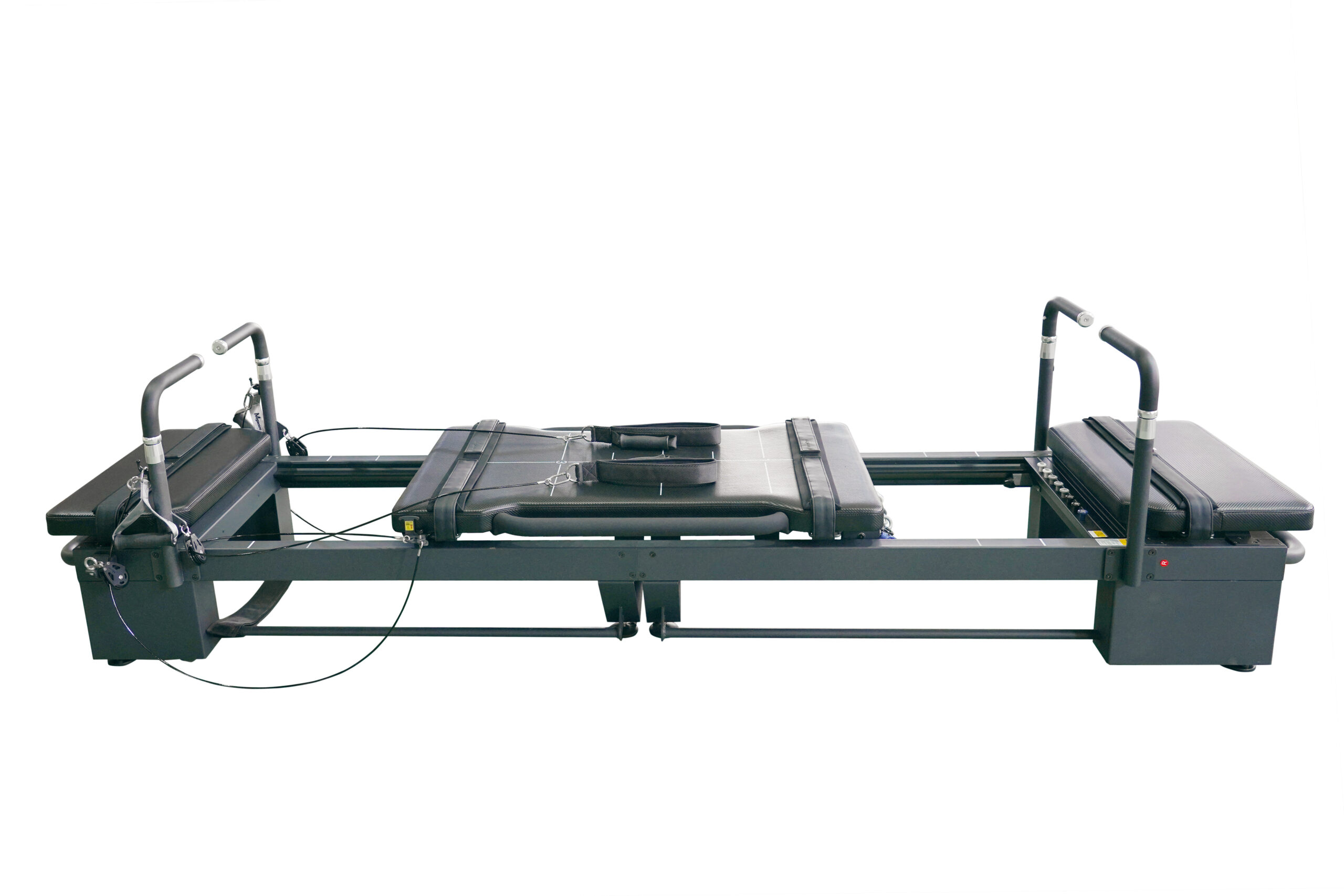
Two things move these numbers more than anything else. Buying manufacturer-direct beyond five units removes distributor markup. And taking proper CE and EN ISO 20957 Class S documentation protects both your insurance and your resale value. Our European cost guide breaks the price tiers down in detail.
Because Portugal sits inside the EU single market, buying from a European manufacturer means no import duty and no customs delay, just standard intra-EU VAT handling. That is a real advantage over importing. Our guide to reformer delivery in Europe explains what a normal lead time looks like.
Pricing Your Classes
Lisbon is the best benchmark for what clients will pay in 2026.
| Package | Typical Lisbon price |
|---|---|
| Drop-in class | €12 to €18 |
| 5-class pack | €40 to €60 |
| 8 to 10 class pack | €70 to €110 |
| Unlimited monthly | €60 to €95 |
| Multi-venue platforms | from about €33 per month, revenue-shared |
The math that makes a small studio work: eight reformers running around 30 classes a week at 70 percent occupancy and €15 a class generates roughly €84,000 a year in group revenue, before private sessions. Get occupancy to 85 percent and the same room earns meaningfully more. Fill rate, not class price, is the number to watch in year one.
A Realistic Timeline
- Weeks 1 to 2: legal structure, tax registration, accountant.
- Weeks 2 to 6: premises search, licença de utilização verification, lease.
- Weeks 4 to 10: fit-out and equipment order.
- Weeks 6 to 12: instructor certification checks, insurance, software, branding.
- Week 12 onward: soft launch, then full schedule.
Equipment lead times and fit-out are the usual bottlenecks. Ordering machines early, with a confirmed delivery window, is the simplest way to avoid paying rent on an empty room.
FAQ
Do I need a licence to open a Pilates studio in Portugal? There is no single Pilates licence. You need a municipal licença de utilização for the premises confirming sports or services use, a qualified technical director, and instructors holding the IPDJ professional title. Check zoning with your câmara municipal before signing a lease.
Do Pilates instructors in Portugal need a qualification? Anyone delivering guided physical exercise needs the IPDJ TPTEF title, renewed through continuing education. Pilates is not separately state-licensed, but insurers and studios expect recognised certification, often 400+ hours of mat-and-reformer training.
How much does it cost to open a small Pilates studio in Portugal? A lean 5 to 8 reformer studio typically lands in the €60,000 to €130,000 range once you include fit-out, equipment, licences and working capital. Buying an existing studio as a trespasse can cut the upfront figure but inherits its equipment and lease.
Should I open as a sole trader or a company? For a first studio run by an owner-instructor, the recibos verdes route is often enough. Choose a Lda once you take on staff, sign a larger lease, or plan to raise money or open a second site.
What VAT applies to reformers I buy for a Portuguese studio? VAT on equipment is charged at the standard Portuguese rate, but a registered business can normally deduct input VAT. Buying from a manufacturer inside the EU avoids customs duty entirely. Confirm the treatment with your accountant.
Next Step
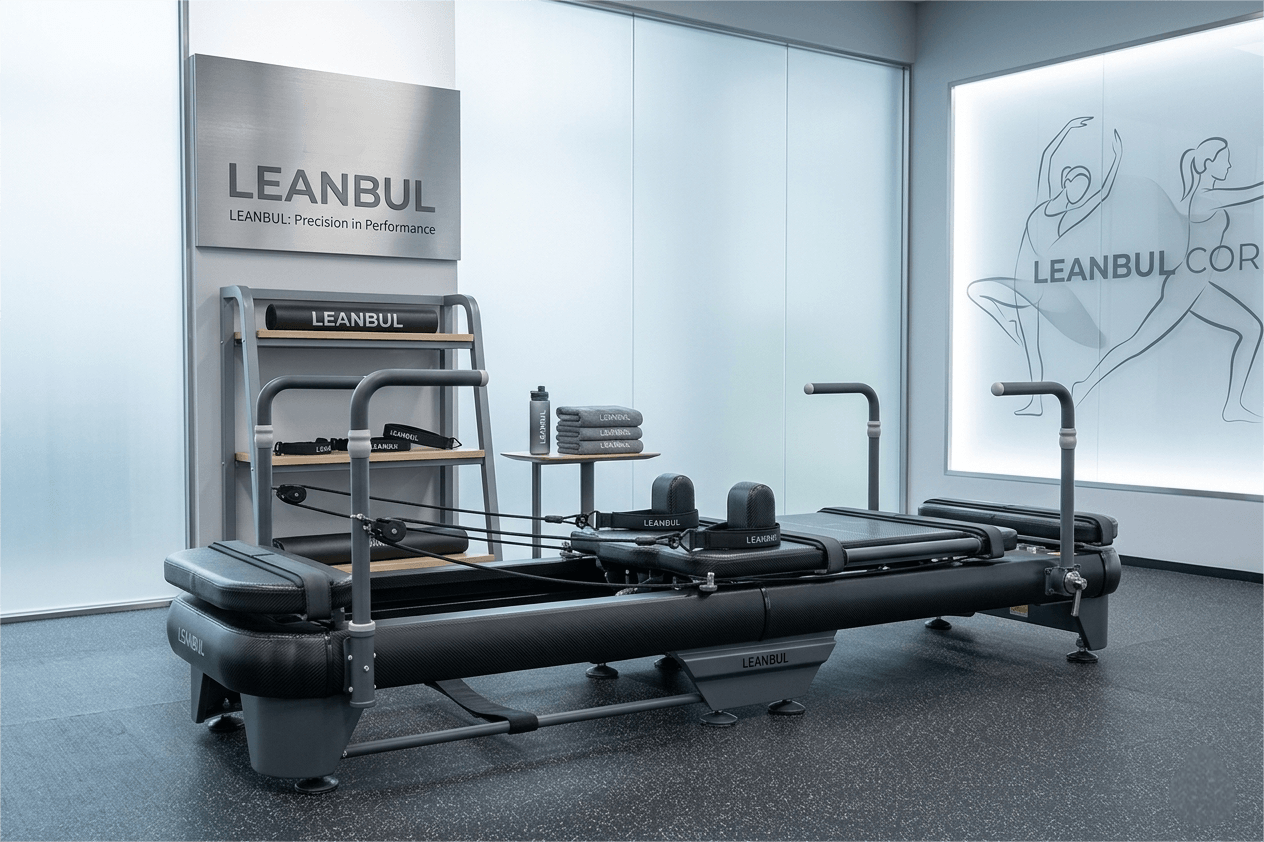
If you are opening in Portugal, the equipment decision comes earlier than most people expect. Lead times and configuration set your opening date. Leanbul is a Spain-based Pilates reformer manufacturer serving studios, gyms, rehab centres and hotels across Europe, and we ship into Portugal as standard intra-EU freight. The K30 commercial reformer is the common workhorse, the K38 premium reformer suits premium rooms, and the K10 compact reformer fits tighter spaces. Browse the full collection or contact us with your machine count and city, and we will send an itemised euro quote with CE documentation and delivery included.