Importing a Pilates Reformer into the Baltics: Estonia, Latvia and Lithuania
There is no customs declaration, no import duty and no border queue when a reformer travels from Spain to Tallinn. Estonia, Latvia and Lithuania have been in the EU since 2004 and in the euro since 2011, 2014 and 2015 respectively. Goods move under the same rules as a delivery to Germany.
Importing a Pilates reformer into the Baltics is therefore a freight and documentation exercise, not a border one.
The interesting part starts once the customs question disappears. The last 1,000 kilometres run through Poland and the Via Baltica, the buyer’s language is one of three that your manual is not printed in, and the nearest technical support is a two-day courier away.
This guide covers what actually differs across the three countries: three different VAT rates, a freight leg that is priced and scheduled nothing like a delivery to France, a product-language obligation that GPSR made explicit, and the after-sales question that decides whether a cheap machine stays cheap.
The three markets at a glance
| Estonia | Latvia | Lithuania | |
|---|---|---|---|
| VAT standard rate | 24% (since 1 July 2025) | 21% | 21% |
| Currency | Euro since 2011 | Euro since 2014 | Euro since 2015 |
| Population | ≈1.37 million | ≈1.87 million | ≈2.9 million |
| Main studio cities | Tallinn, Tartu | Riga, Jūrmala | Vilnius, Kaunas, Klaipėda |
| Road distance from Valencia | ≈3,700 km | ≈3,500 km | ≈3,300 km |
| Typical groupage transit | 9–13 days | 8–12 days | 7–11 days |
| Instructions language required | Estonian | Latvian | Lithuanian |
Combined, the three countries hold just over six million people. That is smaller than Madrid’s metropolitan area, and it explains most of the commercial behaviour in the region: small studios, three to six machines rather than twelve, buyers who compare against a Polish or Finnish price before they commit, and equipment suppliers who cover all three countries from one warehouse rather than opening three showrooms.
No customs, but three different VAT outcomes
Because the machine crosses no external border, the transaction is an intra-Community acquisition, not an import. No EORI number, no customs agent, no duty. Article 138 of the VAT Directive zero-rates the supply when the buyer is a VAT-registered business in another member state and quotes a valid VAT number, which the seller validates through VIES. The invoice then shows zero VAT and a note that the customer accounts for the tax under the reverse charge. The studio declares the acquisition in its own VAT return, and in most cases deducts the same amount in the same period, so the net cash effect is nil.
That is the clean case, and it is the case for any established studio with a VAT number.
The messy case is the new studio that has not registered yet, or the operator deliberately staying under the registration threshold. Then it is not a B2B supply at all. It is an intra-EU distance sale of goods, and the €10,000 annual EU-wide threshold decides who charges what:
| Buyer status | Who charges VAT | At what rate | Can the studio reclaim it? |
|---|---|---|---|
| VAT-registered business, valid VIES number | Nobody on the invoice; reverse charge | Buyer self-assesses | Yes, in its own return |
| Not VAT-registered, order pushes seller over €10,000 EU distance-sales total | The seller, under the destination-country rules | 24% Estonia, 21% Latvia, 21% Lithuania | No |
| Not VAT-registered, under the seller’s threshold | The seller, under Spanish rules | 21% Spanish VAT | No |
The practical difference between the second and third rows is three percentage points, and between Estonia and Latvia it is the same three points. On a €3,000 machine that is €90. Not a reason to choose a supplier, but worth understanding before you compare a Spanish quote with a Polish one and conclude that one of them is hiding something.
One further point that surprises studios: if you are VAT-registered, buying from another EU country is often better than buying at home, because the reverse charge produces a deduction immediately and there is no duty. If you are not registered, buying from a Spanish manufacturer and buying from a local reseller who imported the same machine end up at a similar total, and the difference is margin rather than tax.
Why importing a Pilates reformer into the Baltics is a freight question
A reformer crate is 2.4 to 2.5 metres long, around 90 to 140 kg, and awkward. It is not a parcel. That rules out most of the pricing structures people expect from e-commerce and puts the order into groupage freight, where your pallet shares a trailer with somebody else’s cargo and is handled at each hub along the way.
For the Baltics the route is consistent: Spain, France, Belgium or Germany, Poland, then north through Lithuania. Most groupage consolidates at hubs in Poland or at Kaunas, which has become the region’s logistics centre. From there:
- Vilnius is usually the first stop and the cheapest. Roughly 3,300 km, 7 to 11 days door to door on standard groupage.
- Riga adds around 300 km and a day.
- Tallinn adds another 300 and typically lands at 9 to 13 days.
- Islands and secondary towns (Saaremaa, Klaipėda, Tartu, Jūrmala) can add two to five days and a transshipment onto a smaller vehicle.
Three things routinely go wrong, and all three are predictable.
Winter. From November to March the Via Baltica is passable and ploughed, but ice slows schedules and a missed hub connection can cost three days. If your opening date is fixed, order earlier than you would for a French or German delivery.
Unloading capability. A groupage trailer arrives with a tail lift and a pallet truck, or it arrives with neither. On a cobbled street in Riga’s old town, or a rural retreat with a gravel drive, the truck may not be able to reach the door at all, and the driver will not hand-carry a 130 kg crate up two flights. Ask the freight forwarder, in writing, what the delivery vehicle is, whether the driver unloads, and what happens if access fails. The answer determines whether you need to hire a van and two people for the last 200 metres.
Storage at the hub. Free waiting time at a Baltic hub is usually short. If your premises are not ready, the pallet starts accruing storage, and the clock runs from the day it arrives, not the day you notice.
| Item | Typical budget, 6 machines to Riga | Note |
|---|---|---|
| Equipment, 6 × €2,400 | €14,400 | Manufacturer-direct, mid commercial specification |
| Groupage freight, Spain to Riga | €700–1,100 | Pallet positions, not weight, drive the price |
| Transit insurance | €50–90 | All-risk, declared value basis |
| Tail-lift delivery and inside placement | €0–250 | Depends on whether the driver unloads |
| Local transshipment if access fails | €150–400 | Van plus two handlers, arranged locally |
| Installation and commissioning | €0–900 | Usually a two-day visit, or self-assembly with remote support |
None of these numbers include VAT, because in the B2B case there is none on the invoice to pay.

Work backwards from the delivery address
Most failed deliveries in this region are not freight failures. They are access failures that nobody surveyed.
Before ordering, walk the route the crate will take and write down:
- Street access. Can a 12-metre trailer stop within 30 metres of the door, legally? Old town centres in Riga and Tallinn have pedestrian zones with delivery windows, and some streets are physically narrower than a trailer.
- Door width and height. A 2.5 m crate does not go through a 2.0 m door, and it does not turn in a 1.2 m corridor. Measure the narrowest point, not the widest.
- Lift dimensions. Crate length against lift diagonal is the calculation people get wrong. A 2.5 m crate needs roughly 2.6 m of internal diagonal to enter and rotate. Many European residential lifts are 1.4 × 1.1 m with 2.1 m height, which is fine diagonally for a 2.5 m crate only if it can be stood on end.
- Stairs. Width, turns, and whether there is a landing wide enough for two people to reposition. A 130 kg crate on a stair corner is where damage happens.
- Floor protection if the machine is going into a finished studio, and whether the machine is assembled on site or partly assembled at the door.
We ask for these five answers before quoting delivery to the Baltics, because the alternative is a machine sitting on a pallet in a Kaunas warehouse while three people argue about whose problem it is.
The language question GPSR made explicit
Under the General Product Safety Regulation, Regulation (EU) 2023/988, a manufacturer must supply instructions and safety information in a language that consumers in the destination member state can easily understand, and it is the member state that determines which language that is. Importers carry the same duty, and distributors are required to check it before making the product available.
For reformer sales into the Baltics that means:
- Estonia: Estonian.
- Latvia: Latvian.
- Lithuania: Lithuanian.
What the regulation does not do is require a fully translated manual in every language for every order. What it does require is that the safety information the user needs is intelligible. In practice, studios end up with a bilingual arrangement: a full technical manual in English, plus a translated safety and quick-start sheet in the local language, both supplied with the machine and both kept with the technical file.
Two notes worth knowing before you rely on English alone. Russian is widely spoken in Latvia and Estonia but is not an official language, so it does not substitute for the local-language safety information in a regulatory file. And for a B2B sale to a professional studio, the practical risk is lower than for consumer sales, but the documentation obligation does not disappear because the buyer is a business.
If you are importing several machines for a studio, ask the supplier for the local-language safety sheet as part of the order, not as a favour afterwards. A manufacturer who ships regularly to the region will have them on file for all three countries.
Who do you call in year three?
This is the part that separates a good Baltic purchase from a cheap one, and it never appears in a quotation.
The region has no shortage of Pilates equipment distribution. Balanced Body covers Estonia, Latvia, Lithuania, Finland and Poland through a single distributor based in Poland. Peak Pilates lists separate distributors for Estonia and Latvia. Specialist resellers ship from Spain into all three countries with four to six week lead times. What the region does not have is a dense network of brand-owned service centres, so the question of where the technician comes from is answered by the supplier’s business model, not by geography.
Three scenarios, three different outcomes:
A local reseller with stock. Fastest response, usually the highest price, and the reseller may not stock spare parts for the specific model you bought.
A European manufacturer shipping direct. Spare parts arrive by courier in three to five working days to Vilnius, Riga or Tallinn, which is genuinely quick for springs, ropes, wheels and upholstery. Technical visits are planned rather than immediate: a two-day trip is scheduled, not dispatched overnight.
A low-cost import with no European presence. Cheapest at the invoice, and in year three a worn spring set or a damaged upholstery panel becomes a project. Springs are wear items, upholstery is the first thing to fail in a commercial setting, and neither is covered by a frame warranty.
Ask three questions before signing: what is the response time for a warranty claim in writing, where are the spare parts held, and who pays the freight on a part shipped to the Baltics. A supplier who answers all three has done this before.
Price benchmarks in the region
Baltic studios price classes lower than Western Europe, which compresses what they can spend on equipment. Reformer group classes in Vilnius are advertised from around €11.50 for an introductory session, and specialist resellers active in the region quote professional reformers from about €3,490 including delivery, with home models from €2,200 and studio packages from €16,800.
That last figure is the useful one. A six-machine studio package at €16,800 to €18,000 sets the reference point, and any quote meaningfully above it needs to explain what the extra money buys: heavier frame, better upholstery, longer warranty, spare parts in the region, or a service commitment.
Run the payback quickly. Six machines at 60% fill and €20 per class produce €72 per session before costs. Ten sessions a week is €720, so the equipment pays for itself in gross revenue terms in about 25 weeks.
That math punishes downtime. One machine out of service for a month is roughly €290 of gross revenue gone, plus the awkward conversation with the client who booked it. Which is why a spare spring set on the shelf matters more in Vilnius than in a market with a technician twenty minutes away.
FAQ
Do I pay customs duty on a reformer shipped from Spain to Estonia, Latvia or Lithuania? No. All three countries are in the EU customs union and the single market, so the machine moves as an intra-Community supply. There is no duty, no customs declaration and no import VAT at the border.
What VAT applies to a reformer bought for a Baltic studio? For a VAT-registered studio with a valid VIES number, the invoice is zero-rated and the studio accounts for VAT under the reverse charge, typically deducting the same amount in the same return. Estonia’s standard rate is 24%, Latvia and Lithuania are both 21%, and a non-registered buyer ends up paying the destination rate inside the price.
How long does delivery to Tallinn or Vilnius take? Roughly 7 to 11 days door to door to Vilnius on standard groupage, 8 to 12 to Riga, and 9 to 13 to Tallinn, assuming production is complete. Winter weather, island destinations and access problems add days. If your opening date is fixed, add a buffer.
Do the instructions have to be in Estonian, Latvian or Lithuanian? Safety information and instructions must be in a language the local consumer can easily understand, and each member state sets which language. In practice that means a local-language safety and quick-start sheet, with the full technical manual in English. Russian does not satisfy the requirement even where it is widely spoken.
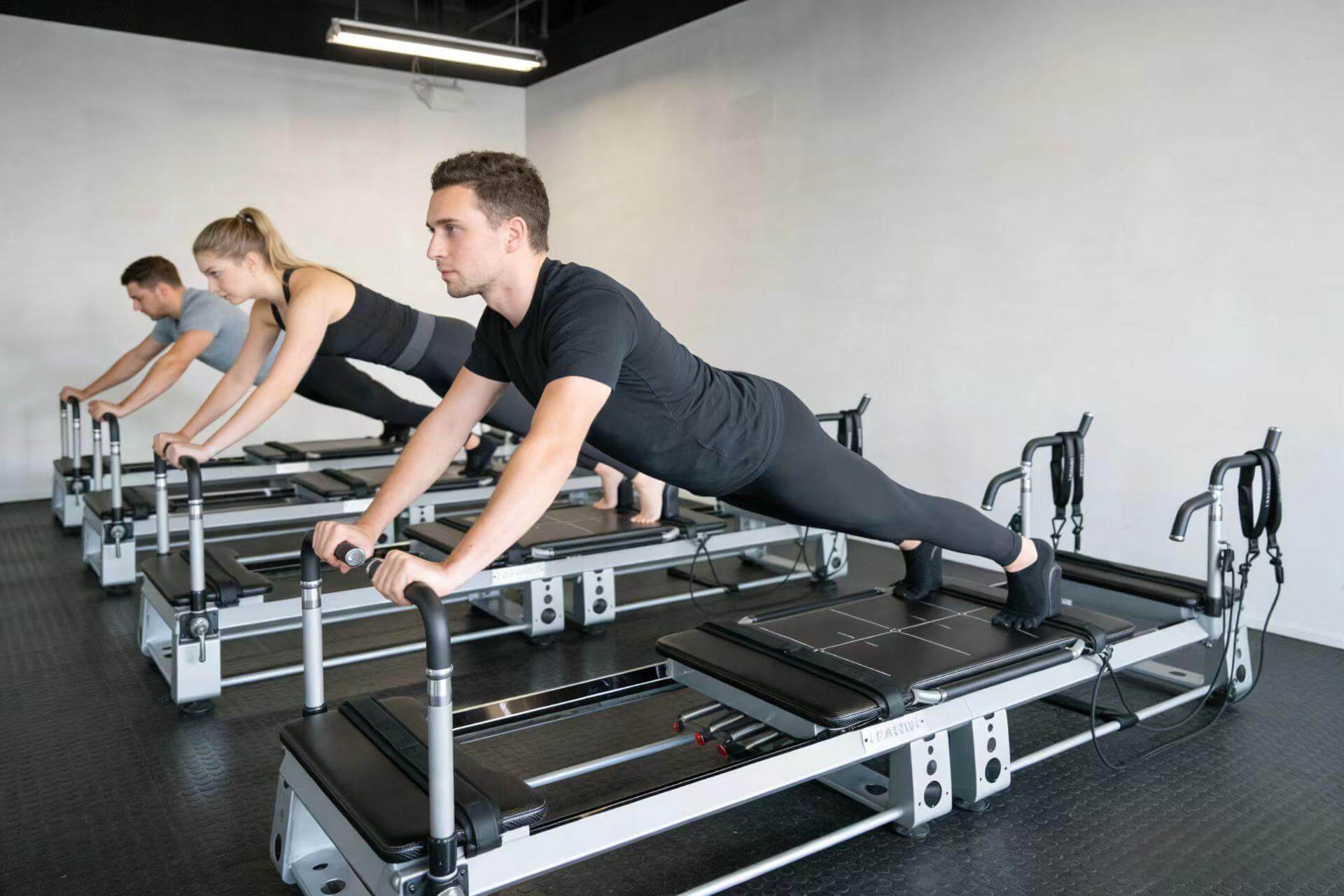
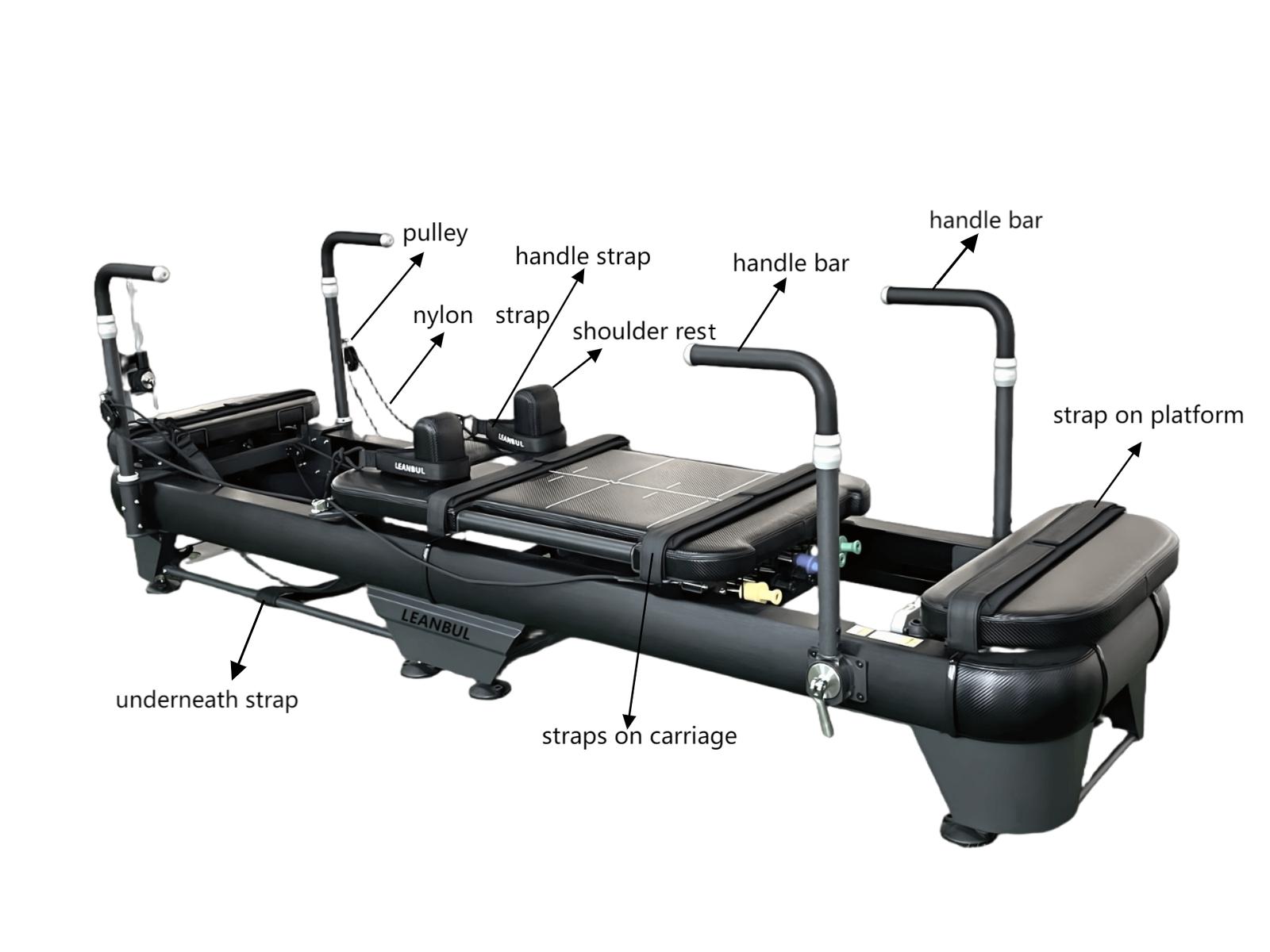
Can I install a reformer myself in the Baltics? Yes for most models. Commercial reformers ship partly assembled, with the carriage, springs and footbar to fit on site. Two people, a level floor and about two hours are usually enough, and a video call with the factory resolves most questions. What self-installation does not solve is a warranty claim that depends on an installation record, so photograph each stage.
Getting a Baltic order right
The order of priorities for this region is different from a German or Dutch project. Access matters more than price. Language documentation matters more than it does in a market where everyone reads English. And the supplier’s spare-parts model matters more than the frame warranty, because the nearest technician is a flight away.
We build reformers in Spain and ship them to Estonia, Latvia and Lithuania with the local-language safety documentation, the technical file your own compliance obligations depend on, and a spare-parts list agreed before the first pallet leaves. If you are planning a studio in Tallinn, Riga, Vilnius or anywhere between, send the delivery address and access details through our contact page and we will confirm what the truck can reach before you commit to a date.
For six-station and larger projects, studio solutions covers fleet specification, layout and staged delivery. The K30 commercial reformer is the model most Baltic studios settle on, with the K38 premium reformer for flagship rooms where the design brief is heavier. Leanbul is a Spain-based manufacturer; every machine ships with its declaration of conformity, its serial number and documentation your insurer and your landlord can read.
