EN 17229:2026 Explained: What Europe’s New Fitness-Club Standard Means for Pilates Studios
EN 17229 is a new European standard for running a fitness club, and it now applies to the studios most people would not expect: Pilates and reformer studios, not just big gyms. Published in March 2026, it sets out what a club has to do on operations, management and supervision, how it selects and positions its equipment, and what skills its trainers must have. It is not law. It does not replace the machine-safety standard EN ISO 20957. It is, however, becoming the benchmark that certifiers, insurers, corporate clients and public buyers increasingly point to, which is why it is worth understanding now rather than after a client asks.
Here is what it actually says, what it does not, and what a reformer studio should do about it.

What the EN 17229 fitness club standard actually is
EN 17229 is a European Standard (EN) produced through CEN, the European Committee for Standardization, and adopted nationally (in the UK, for example, as BS EN 17229:2026). The approved version runs to 64 pages and was released on 30 March 2026. It is classified under “Services for consumers” and “Sports equipment and facilities in general,” which is a fair summary of what it does: it governs the running of the facility as a service.
The official scope is worth reading carefully, because it is broader than the title suggests. The standard, in its own words, “specifies the minimum requirements for the provision of physical exercise by fitness clubs,” covering:
- the operational, managerial and supervision requirements for delivering services, including externally related services
- the selection and positioning of exercise equipment
- the essential skills required by fitness trainers
- the environmental and procedural requirements for safe physical exercise
Two things follow from that. First, EN 17229 is a standard for the operator, not the machine. Second, equipment is inside its scope: not the safety design of a reformer, but how the studio chooses machines and where it puts them.
It is a standard, not a law
Voluntary standards are easy to dismiss until they start showing up in contracts. EN 17229 is not EU legislation, and no authority will fine you for ignoring it. But three groups already treat it as a practical requirement: certification bodies, insurers assessing risk, and larger clients (banks, corporates and public bodies) that build their procurement around recognised standards. For a studio chasing a corporate wellness account or a public leisure contract, “we work to EN 17229” is becoming the answer to a question that used to be “are you qualified?”
Who it covers, and who it does not
The standard applies to all publicly accessible fitness clubs where exercise takes place in groups or individually, irrespective of the size of the club, and to clubs open to subscription or pay-as-you-go services. Size is not a defence. A six-reformer boutique is in scope in the same way a large gym is.
There is one significant carve-out. EN 17229 expressly does not cover clubs that are “exclusively secondary businesses and offered in addition or as a complement to their primary service.” In practice that means a hotel gym, a residential amenity room or an office wellness space, where the fitness offering is a side feature of a different business, sits outside the standard. The moment a facility’s main purpose is selling exercise to the public, it is inside.
The standard also flags that where a club is accessible to people with special needs (including people with disabilities, impairments or minors), national guidelines on those groups come into play on top of the standard’s own requirements.

What it asks of a reformer studio
You will not find a reformer-specific checklist inside EN 17229; that is not what it is. What you find is a set of obligations that land directly on how a Pilates studio is run. Read against a reformer room, the load-bearing parts are these:
- Documented risk assessment. The operating environment and the equipment have to be assessed for risk, in writing, not just handled on instinct.
- Supervision. Who is present, when, and how users are overseen while they exercise is part of the standard, not an afterthought.
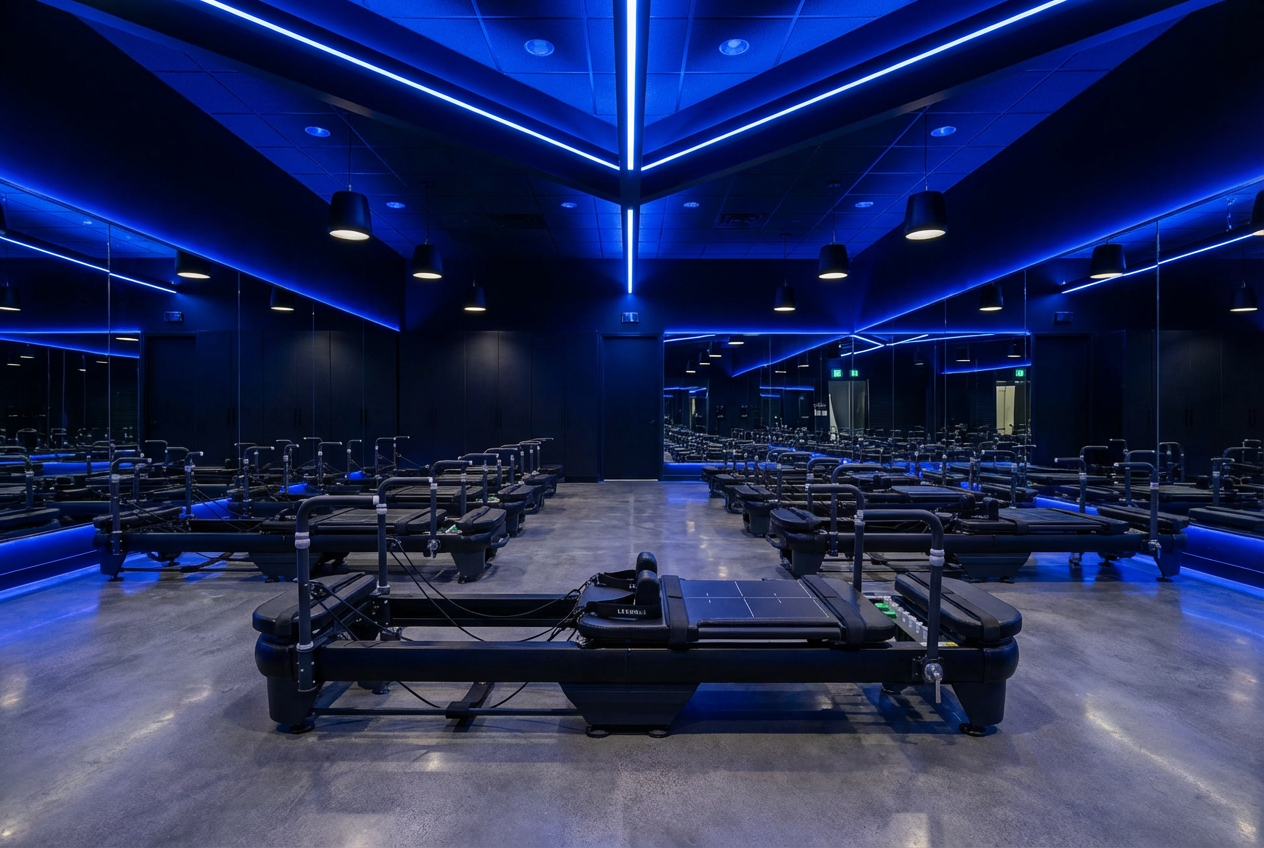
- Equipment selection and positioning. How machines are chosen and where they are sited is explicitly in scope. For reformers, that covers the commercial-vs-home question and how much space sits around each machine.
- Trainer competence. The essential skills a fitness trainer must hold are specified. In a reformer studio, that means more than enthusiasm: recognised training and a maintained qualification.
- Environmental and procedural requirements. Ventilation, cleanliness, emergency procedures and the like, plus how users are informed about safe exercise.
For the equipment half of that, the standard points to the existing product-safety series rather than replacing it. Machine safety still runs through EN ISO 20957, the indoor fitness equipment standard that commercial reformers are built to and certified against.
EN 17229 vs EN ISO 20957: two different questions
The confusion between these two standards is worth clearing up, because they govern different things and different people.
| EN 17229:2026 | EN ISO 20957 | |
|---|---|---|
| Subject | How the club is operated and managed | How the equipment is designed and built |
| Applies to | The studio and its operation | The individual machine |
| Who is responsible | The studio operator | The manufacturer (CE marking) |
| Covers | Risk assessment, supervision, equipment selection and siting, trainer skills, environment | Springs, frame, load capacity, stability, markings, labelling |
| Route to assurance | FITcert certification scheme | Testing, declaration of conformity, CE marking |
The practical reading for a studio buyer: EN ISO 20957 is the box your reformer has to tick when it arrives, and it is the manufacturer’s job, not yours. EN 17229 is the box your studio has to tick, and it is entirely yours. A perfect machine in a badly supervised room does not satisfy EN 17229 any more than a well-run room redeems a home-rated reformer used commercially.
The certification route: FITcert
The European industry body EuropeActive has built its club certification scheme, FITcert, on EN 17229. Through FITcert, clubs are assessed against the standard by independent certification bodies, and the findings are registered on the IFCI register. The scheme is delivered through recognised certification organisations, and it recognises levels of compliance; a club certified to the top level has demonstrated full compliance with EN 17229 across facility, operations and supervision.
Whether a six-machine Pilates boutique needs to pursue formal certification is a commercial judgement call. For many small studios the honest answer is no: the cost outweighs the benefit. But even without certifying, the standard is a useful audit framework. It tells you exactly which documents and habits a larger client, an insurer or a franchisor will eventually ask you to produce, and it is cheaper to have them ready than to build them in a hurry.
What a Pilates studio should do now
None of this requires a consultant. It requires a folder and about a day of work. The studio-side checklist reads like this:
- Write the risk assessment down. Room, equipment, client profile, the exercises you teach. One honest document beats a template nobody has read.
- Set a supervision policy. State who is on the floor, the instructor-to-client ratio, and how new clients are inducted before their first reformer class.
- Keep an equipment selection and siting file. Record that you specified EN ISO 20957 Class S commercial machines, keep the declarations of conformity, and note the working space around each reformer.
- Hold trainer qualifications in one place. Certificates, insurance and continuing education, for every instructor.
- Document user information. Signed inductions, contraindication screening and a plain-language safety briefing.
- Run an incident and maintenance log. Every near-miss, every spring replacement, every service visit.
- Line it up with your insurance. The documentation that satisfies a standard is much the same documentation an insurer wants after a claim.
The single most common gap in small studios is the first one. Operators carry risk assessments in their heads and never write them down. EN 17229 is, at heart, a demand that the good habits you already have become visible and auditable.
Why this matters for equipment buyers
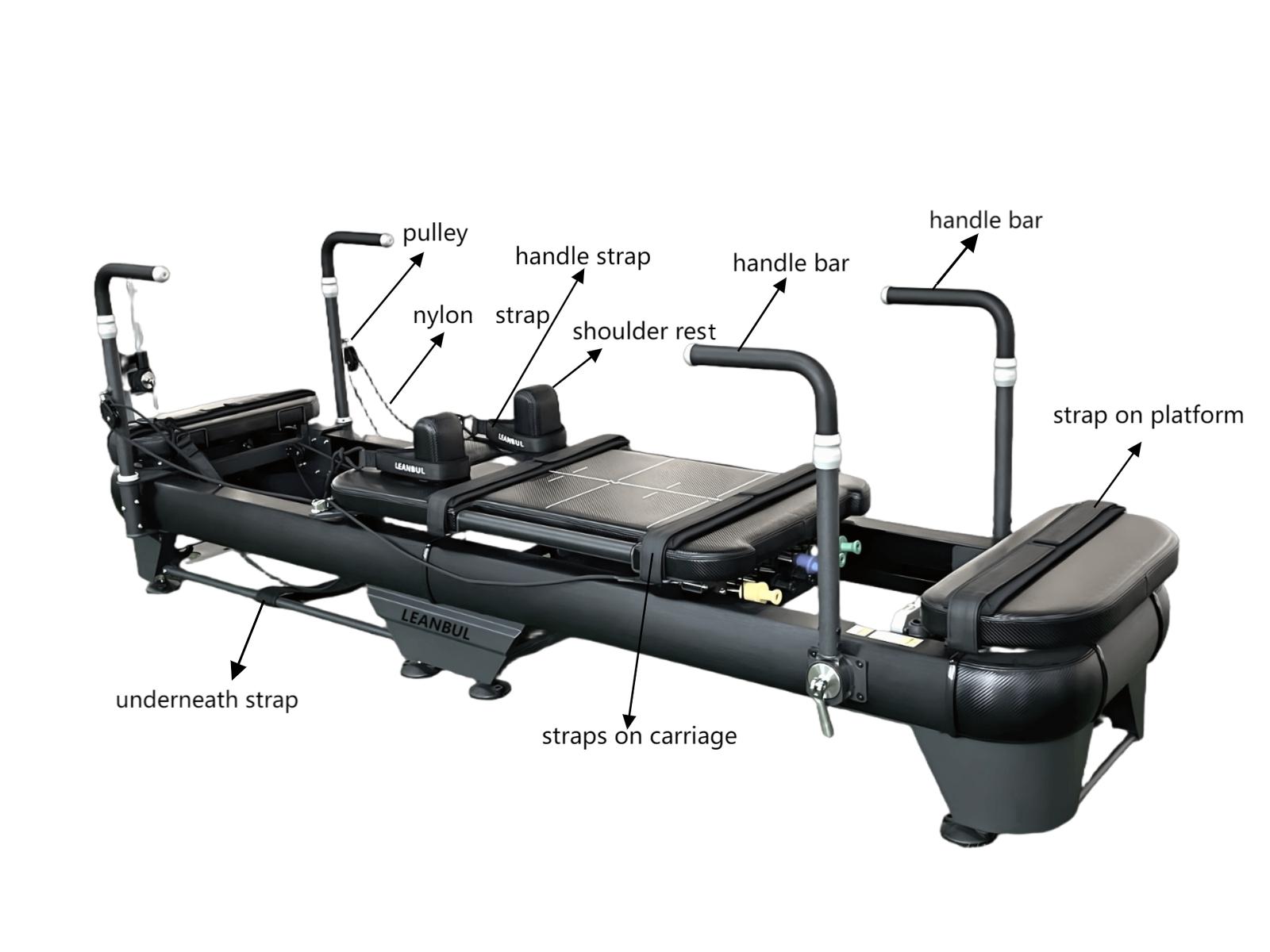
The standard connects three decisions that studios usually make in isolation. Equipment specification is one: EN 17229 expects equipment fit for commercial supervision, which is why a home-rated machine in a shared room creates a double problem, both under EN ISO 20957 and under the club standard. Risk and insurance is another: the documentation trail is the same trail an insurer follows after an incident, a subject we go into in our guide to pilates studio insurance in Europe. And supplier choice is the third: a manufacturer who supplies the declaration of conformity, the test evidence and clear warranty terms makes the studio’s own file easier to assemble.
For the machine side, the detail lives in our CE certification guide for EU studios, and the after-sales side in what to demand on warranty in Europe. The short version for a reformer buyer is unchanged: specify EN ISO 20957 Class S, keep the paperwork, and buy from a supplier who can back the certificate with documentation.
Frequently asked questions
Is EN 17229 a legal requirement for Pilates studios? No. It is a voluntary European standard, not law, so no authority enforces it directly. It matters commercially instead: certification bodies, insurers and larger corporate or public clients increasingly reference it in their assessments and tenders.
Does EN 17229 apply to small Pilates studios, or only big gyms? It applies to any publicly accessible fitness club where people exercise in groups or individually, irrespective of size. A six-reformer boutique is in scope. The main exclusion is a facility whose fitness offering is purely secondary to a different business, such as a hotel gym or a residential amenity room.
How is EN 17229 different from EN ISO 20957? EN ISO 20957 is about the machine: its safety design, springs, frame, load capacity and markings, and it is the manufacturer’s responsibility under CE marking. EN 17229 is about the studio: risk assessment, supervision, equipment selection and positioning, trainer skills and environment, and it is the operator’s responsibility.
Do I need FITcert certification for my studio? Not necessarily. FITcert is EuropeActive’s certification scheme built on EN 17229, and it suits clubs that need to prove compliance to corporate or public clients. Many small studios get the value without certifying by using the standard as an internal audit framework.
What should a reformer studio do first? Write down the risk assessment, then set a visible supervision policy and start an equipment and maintenance log. Those three steps cover most of what EN 17229 asks at the studio level, and they are the documents an insurer or a corporate client will ask for first.
Next step
If you are equipping or re-specifying a European studio and want machines that come with the documentation your EN 17229 and insurance file will need, look at the Leanbul reformer collection or the models built for studio rooms: the K30 commercial reformer for full-size studios, the K38 premium reformer for premium and rehab programmes, and the K10 compact reformer where floor space is tight. Leanbul is a Spain-based manufacturer, so your fleet ships from inside the EU with the declarations of conformity, EN ISO 20957 Class S certification and European spare parts behind it. See pilates studio solutions for fleet layouts, or contact us for a quote.
