How to Choose a Pilates Reformer Manufacturer: Wholesale, OEM & Quality Guide
Choosing the right pilates reformer manufacturer matters more than choosing any individual machine model. If you are a studio opening multiple locations, a fitness chain, a distributor, or an instructor building a branded equipment line, the factory behind your reformers decides your cost, your quality, your delivery dates, and your after-sales experience for years. Get this decision right and your equipment program runs itself. Get it wrong and you will be replacing springs, chasing missing parts, and explaining delays to clients.
Here is the short version: a reliable pilates reformer manufacturer should be able to show you certifications, a real quality-control process, transparent pricing with clear MOQs, honest lead times, and a written warranty with spare-parts support. We will walk through each of these in detail — including how to tell a genuine factory from a trading company, and the red flags that should end a negotiation.
Manufacturer vs. Trading Company: Know Who You Are Actually Buying From
The single biggest mistake buyers make is not checking whether their supplier is the factory or a middleman. Trading companies and agents can be legitimate and useful, but they add a markup, have no control over production, and cannot answer detailed technical questions about your machines.
| Check | Genuine manufacturer | Trading company |
|---|---|---|
| Factory visit or live video tour | Possible, and welcomed | Usually refused or vague |
| Production-line photos/videos | Specific, current | Generic stock images |
| Technical answers | Detailed (frame specs, spring grades, tooling) | Surface-level |
| Export/license documents | Factory export license, real | Often resells under a different name |
| Pricing | Factory-direct (lowest realistic level) | Includes their margin |
| QC control | Direct control over production | Depends on the factory they use |
How to verify quickly: ask for a live video walkthrough of the workshop and a copy of the factory’s business license and export documents. Then ask a genuinely technical question — for example, what grade of aluminum is used in the frame, or how springs are calibrated. A real manufacturer answers specifics without hesitation.
The Five-Point Manufacturer Checklist
1. Certifications and Compliance
Commercial pilates equipment sold in professional settings should carry the right compliance marks for your market. In Europe, CE marking and EN ISO 20957 compliance are the relevant standards; in North America, buyers typically look for tested, documented equipment that meets local safety expectations. Ask to see certificates and test reports — not just claims. A manufacturer that cannot produce documentation for its own machines is a manufacturer you should not bet a studio opening on.
2. Materials and Components
A reformer is only as good as its parts. Ask specifically about:
- Frame: aluminum vs. steel, grade, wall thickness, and corrosion treatment. Aluminum frames are standard in modern commercial machines for their strength-to-weight balance.
- Springs: real coil springs with consistent tension. Ask how springs are tested and what the expected lifespan is under daily studio use.
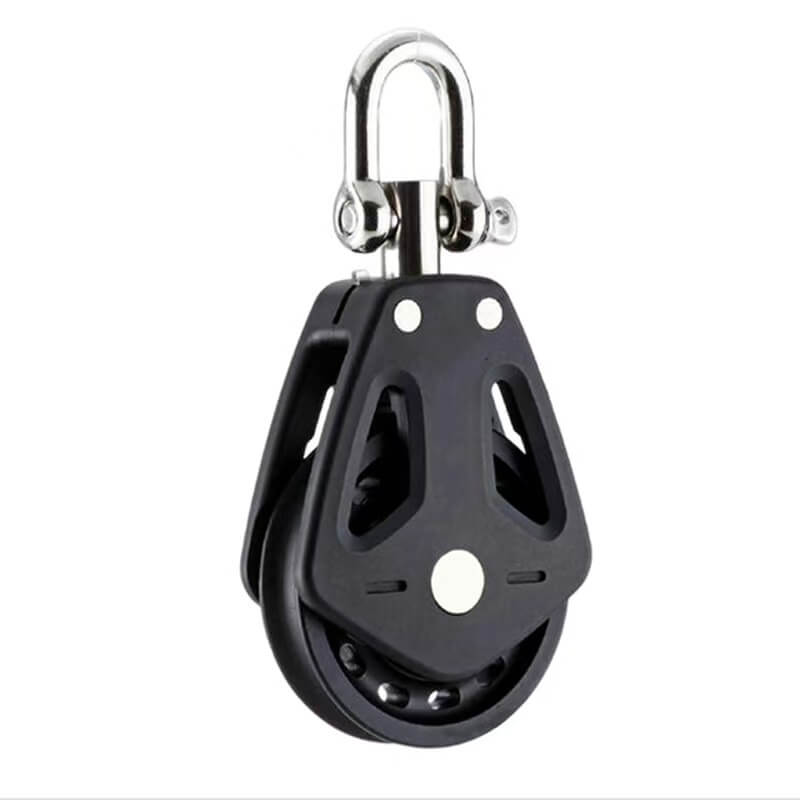
- Carriage and rails: precision rails, sealed bearings or quality wheels, and the rated weight capacity of the carriage.
- Padding: density, wear resistance, and whether covers are replaceable.
3. Quality Control Process
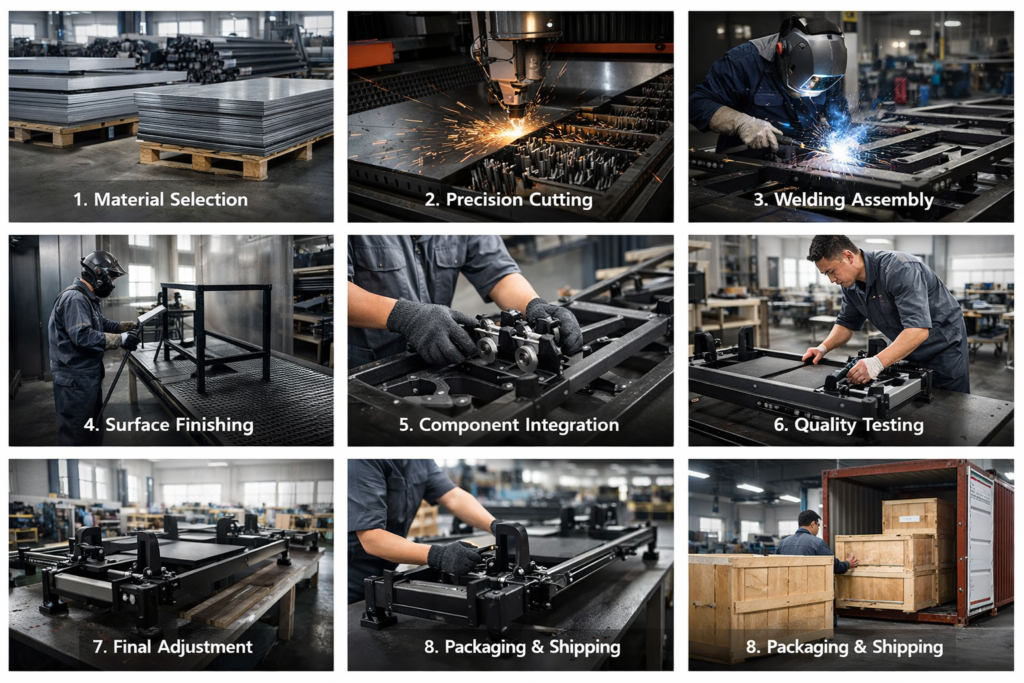
Anyone can show you a nice showroom photo. The question is what happens between your order and your delivery. A serious manufacturer has a documented QC process: pre-production checks on materials, in-line inspection during assembly, and a final pre-shipment inspection — ideally with the option of third-party inspection by a company you choose (SGS, TÜV, or similar). Ask for photos or videos from the production line of your own order, not from someone else’s.
4. MOQ, Pricing, and Payment Terms
Pricing transparency is a strong signal. A good manufacturer quotes itemized prices: machine, configuration options, packaging, and freight separately. Clarify:
- Minimum order quantity (MOQ) — many factories start at 1–5 units for standard models, higher for custom work.
- Volume price breaks at 10, 20, 50 units.
- Payment terms — typical arrangements use a deposit (30–50%) with the balance before shipment. Be cautious of anyone demanding full payment upfront with no inspection option.
- Incoterms — make sure you know whether the quoted price includes freight, insurance, and customs handling, or only the goods.
5. Lead Time, Shipping, and After-Sales
Ask for a written production timeline: sample confirmation, production start, inspection, and shipment. Standard production runs for reformers typically take 2–6 weeks depending on order size and configuration, with sea freight adding 3–6 weeks to the US or Europe depending on the port.
Then ask the questions that matter after delivery:
- What does the warranty cover (frame, springs, parts) and for how long?
- Are spare parts stocked and available for years after purchase?
- How do you handle a defective unit — replacement, repair, or credit?
- Is there a contact who answers within a day, not a week?

OEM and Private Label: Building Your Own Brand
If you want your own brand on the machines — many studios and distributors do — look for a manufacturer that offers OEM or ODM work. This typically includes:
- Custom logo placement (frame, padding, packaging, user manuals)
- Brand color and finish options
- Custom packaging and carton printing
- Optional model customization (configurations, accessories, even frame design for larger volumes)
Good OEM partners will show you previous private-label projects and walk you through the tooling and setup costs, which usually amortize over your order volume. Be wary of partners who promise unlimited customization with no discussion of costs — customization always has a price, and a transparent partner will show you exactly where it sits.
Red Flags That Should End the Conversation
- Pricing 30–50% below every other quote, with no explanation of what is cut. There is always a cut.
- No certifications or test reports, or a vague promise that “we can get them.”
- No QC process, or inspection “not possible.”
- Vague factory details: no real address, no video tour, inconsistent business names.
- Warranty that only exists in the sales conversation, not in the contract.
- Pressure to pay in full upfront with no inspection or sample option.
- Slow, evasive answers to technical questions.
None of these are automatically fatal on their own — but two or more of them together is a strong sign you are talking to a reseller with no skin in the game.
The Typical Buying Process, Step by Step
| Step | What Happens | Typical Timing |
|---|---|---|
| 1. Inquiry | You send machine count, models, configuration needs | Day 1 |
| 2. Quotation | Itemized quote with MOQ, pricing tiers, freight options | Days 2–5 |
| 3. Sample / spec confirmation | Sample unit or detailed spec sheet review | 1–3 weeks |
| 4. Order confirmation | Contract, deposit, production schedule | After approval |
| 5. Production | Manufacturing with progress updates and photos | 2–6 weeks |
| 6. Inspection | Pre-shipment check, optional third-party inspection | Before shipment |
| 7. Shipping | Sea freight or air, tracking, customs docs | 3–6 weeks (sea) |
| 8. After-sales | Installation support, warranty, spare parts | Ongoing |
A professional manufacturer will keep you updated at every step and will not go quiet for weeks mid-production.
FAQ
What is a typical MOQ for commercial pilates reformers? For standard models, many factories accept orders starting at 1–5 units. Custom OEM work (logo, colors, packaging) usually starts around 10–20 units. Always ask for the MOQ per model, because it varies.
How long does it take to get reformers from a manufacturer? Production typically takes 2–6 weeks depending on order size and configuration, and sea freight adds roughly 3–6 weeks to the US or Europe. Air freight is faster but significantly more expensive per unit.
What certifications should a pilates reformer have? For the European market, CE marking and EN ISO 20957 compliance are the relevant standards. Ask any supplier for their certificates and test reports in writing.
Can I put my own brand on reformers? Yes. OEM/private label is standard: logo, colors, packaging, and manuals can be customized, usually with tooling or setup costs that depend on your order volume.
How do I verify a manufacturer is real? Ask for a live video tour of the workshop, the business license and export documents, and detailed technical answers. If they hesitate on any of the three, keep looking.
Finding a Manufacturer You Can Build On
Your reformer supplier is a long-term partner, not a one-time vendor. The right manufacturer makes your studio expansion predictable — fixed costs, reliable delivery, and a warranty that actually responds. That is the standard we hold ourselves to at Leanbul: a Spain-based Pilates reformer manufacturer with over a decade of equipment production behind it, more than 5,000 reformers delivered to studios, fitness chains, and distributors worldwide, and a team that answers in hours, not weeks.
If you are planning a studio opening, a chain rollout, or a private-label line, see the Leanbul collection or contact our team with your order size and configuration. We will show you the itemized quote, the production timeline, and the certifications before you commit to anything.